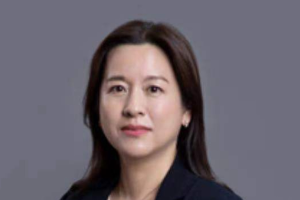
Drawing on over two decades of leadership industry across Asia, Cecilia Qi reflects her transition from global pharma to leading DCH Auriga. She shares insights on the company’s evolution into an integrated market management partner, the strategic role of Hong Kong, and the future of healthcare distribution in Asia.
What prompted your transition from a long career in pharmaceuticals to leading Auriga?
I trained as a medical doctor before moving into the pharmaceutical industry in the early 1990s, starting as a sales representative before progressing through marketing, commercial leadership and general management roles. Over more than twenty years with GSK, I held various leadership roles across Asia, including General Manager in Hong Kong & Macau and mainland China. Later, I managed regional business strategies for the Vaccines business from Singapore. These experiences provided a broader perspective on how to accelerate market access of innovative healthcare solutions across very different healthcare systems, especially in Asia.
My move to Auriga was driven by a desire to impact the final link in the healthcare value chain. The underlying mission remains the same, which is to improve patient access and healthcare outcomes. In pharmaceuticals, the focus is often on innovation via advancing research and commercialising certain portfolios. DCH Auriga operates as a platform to ensure that innovations actually can reach healthcare providers and ultimately patients smoothly and efficiently.
We partner with multiple principals and a wide range of healthcare solutions. This broader perspective enables us to serve the industry at scale, focusing on patient outcomes and healthcare system efficiency. For me, it is a different way of serving the same industry, while remaining firmly dedicated to generating health impact.
How did your perspective shift when you moved from a pharmaceutical operating model to distribution and market management?
Transitioning to distribution and market management required some new perspectives. In pharmaceuticals, much of the effort is directed towards R&D, portfolio strategy, market access, brand building, life-cycle management and brilliant commercial execution. In distribution and market management, operational discipline and execution excellence are paramount. Margins are tighter, competition is immediate, and competitiveness depends on efficiency, technology adoption and reliability.
Operational excellence now encompasses a broader meaning. Today, our principals expect more than just efficient delivery. They look closely at how a business is governed, how resilient its systems are, and how seriously it takes ESG responsibilities. Running a distribution business now involves balancing efficiency with sustainability, transparency and long-term credibility. Compared with earlier stages of the industry, the requirements are more complex and demand a more holistic approach to operations management.
One of the most critical mindset changes for leading distribution and market service business is all about partnership and serving our principals to success. Our role is to act as a service partner, sharing the same objectives with our principals and tailoring solutions to their needs. Agility, in this context, is not just about speed – it’s about deeply understanding each partner’s business needs and designing tailored operating models. This is where Auriga differentiates itself from other larger players in this sector. Open to new challenges with Agility.
How is Auriga structured to support healthcare and life sciences partners across Asian markets?
Auriga is an Asia-based integrated market management and logistics service provider with a dedicated focus on healthcare. While the business has its origins in logistics and distribution, its scope today extends well beyond those foundations. We support healthcare and life sciences partners across Asia with regulatory, market access and commercialisation services that enable products to move from regulatory approval to real-world clinical usage. Asia sits at the core of our identity. Our history, capabilities and long-term commitment are rooted in the region, and healthcare represents a strategic vertical within the broader DCH group.
In operational terms, this translates into an end-to-end model designed for the complexity of Asian healthcare markets. We support partners with regulatory and import processes, help navigate the local healthcare system and requirements, and work with healthcare institutions and authorities to facilitate access to approved therapies. In markets such as Hong Kong, this can include participation in health authority tenders and, for highly innovative products, early access mechanisms such as named-patient arrangements. Beyond access, we provide commercial execution through contract sales, pharmacy channel coverage across Southeast Asia, and increasingly digital and e-commerce capabilities where they are appropriate.
The defining feature of this model is Agility. We start by understanding what each partner needs and then build the operating model around that. Some partners ask us to manage warehousing and distribution only. Others rely on us as a full agent, where we can hold the local marketing authorisation and support registration, marketing and sales in the absence of a local presence. Many partnerships sit between those two ends of the spectrum, with partners retaining strategic control while we act as the local execution arm. That ability to adapt by product and by market underpins how Auriga works and how we help partners maximise reach across Asia.
Which markets does Auriga currently operate in, and how do you approach geographic focus and expansion?
Auriga operates across ten Asian economies, with a footprint shaped by both history and strategic choice. Our presence spans Greater China, including Hong Kong, Macau and mainland China, alongside Southeast Asia, where we operate in Singapore, Malaysia, Brunei, Indonesia and the Philippines, as well as an Indochina sub-cluster covering Thailand and Vietnam.
That footprint reflects a deliberate approach. Rather than pursuing rapid expansion through acquisition, we have focused on building depth, capability and long-term partnerships in the markets where we are established. In Hong Kong and Macau, we hold a strong position, while in Southeast Asia, we operate alongside larger regional players such as Zuellig Pharma and DKSH. Our priority has been to strengthen execution and reliability in each market, rather than to chase scale for its own sake in the short term.
How are pharmaceutical companies rethinking their approach to emerging markets in Asia, and how is that changing the role of partners like Auriga?
Asia is a highly diverse region, and companies increasingly differentiate their approach by market maturity and strategic importance. In more developed markets such as Hong Kong, Macau and Singapore, and in mainland China, many pharmaceutical companies continue to operate directly through their own organisations. In parts of Southeast Asia, however, there is a growing willingness to partner or outsource, particularly for mature or non-core portfolios, while internal resources are concentrated on priority assets and innovation.
Two broader trends are reinforcing this shift. Globally, many multinational pharmaceutical companies are narrowing their geographic and portfolio focus, concentrating on top-tier markets, which creates opportunities for partners to take on commercial responsibility elsewhere. At the same time, particularly in Hong Kong and Macau, more Chinese-originated pharmaceutical and biotechnology companies are looking beyond mainland China for international growth. For many, working with a local partner offers a faster and lower-risk route to registration and market entry than investing to build capability from scratch. With our headquarters in Hong Kong and deep connections to mainland China, Auriga is well-positioned to act as a bridge, supporting Chinese innovations into Hong Kong and Macau, then onward into Southeast Asia, and increasingly positioning Hong Kong as a launch point for Chinese innovation into the wider region.
How do you view the growing presence of Chinese-originated medicines in Southeast Asia?
Southeast Asia has a distinct healthcare profile. Local manufacturing capacity remains limited, so most markets rely on imports, either from global pharmaceutical companies offering patented, premium-priced products or from low-cost generics sourced from markets such as India. Between those two ends of the spectrum, a meaningful middle segment is taking shape. Chinese-originated healthcare products are increasingly well-positioned to address this space, combining technology and quality that have been proven at scale in China with a more competitive cost base. Over time, the region is likely to evolve into a three-layer structure, with global innovators at the top, Chinese products serving the middle, and low-cost generics covering basic therapies.
For Auriga, this dynamic represents a strategic opportunity rather than a constraint. We already work closely with global pharmaceutical companies across Southeast Asia, and our operating model is built around agility. We design service models market by market, ensuring that commercial expectations, cost structures and performance measures remain aligned. Our Hong Kong base adds an important advantage, as it gives us direct connection with both international pharmaceutical standards and Chinese business practices. This allows us to engage effectively with Chinese innovators as they expand beyond mainland China, while preserving the operational discipline and quality that underpin Auriga’s business.
What advantages does Hong Kong offer as a base for managing healthcare operations across the region?
Hong Kong’s proximity to mainland China and its role as a global hub make it ideal for healthcare supply to China. The city’s disciplined workforce, operational reliability and bilingual capabilities strengthen its position. Compared to other hubs like Singapore, Hong Kong’s logistics heritage and cultural fluency make it a natural headquarters for Auriga’s regional strategy.
What priorities are guiding Auriga’s development as you shape the next phase of the business?
Our priorities are twofold: modernising logistics and warehousing through adopting new technology and expanding end-to-end capabilities to meet evolving partner expectations.
That means making more systematic use of technology to enhance competitiveness, including automation and robotics. In Hong Kong, we have already introduced advanced warehouse systems, and the next step is to reduce manual processes where possible while improving efficiency, accuracy and resilience across the operation.
Meanwhile focus is to further strengthen capabilities that respond to how partner expectations are evolving. Increasingly, companies are looking beyond pure logistics support and want partners that can manage the full value chain, including regulatory, commercial and, where appropriate, medical promotion activities. Developing and integrating these end-to-end capabilities is essential if we are to remain relevant and create long-term value for our partners.
Another critical strategy is supporting Chinese-originated pharmaceutical and healthcare companies as they expand beyond mainland China. This mirrors the path many global pharmaceutical companies followed decades ago, when distributors played a key role in helping them understand new markets before they decided whether to establish their own local presence. That flexibility remains highly valuable today. Working with a distributor allows principals to decide how deeply they engage in a market and to adjust their model over time. Auriga’s role is to provide that optionality, acting as a trusted partner at different stages of a company’s regional development, while maintaining the operational discipline and quality that underpin sustainable growth.
How does Auriga engage with companies that are exploring Asia for the first time, particularly those based in the US or Europe?
This is very much within scope for Auriga. Historically, the organisation has been known primarily through long-standing relationships and word of mouth, rather than through a proactive business development approach. Now we will focus on articulating who we are, what we can support, and being open to dialogue with companies that are interested in Asia but cautious because of regulatory complexity, market fragmentation and the operational burden of managing multiple local requirements. It is about being visible, accessible and credible for partners that see Asia as part of their longer-term strategy.
For many US and European biotechs, Asia represents a meaningful opportunity, but also a significant challenge. Each market comes with its own regulatory processes, timelines and access pathways, which can be difficult to manage without a local footprint. In that context, working with a regional partner can offer a practical and lower-risk entry point. It allows companies to explore markets such as Hong Kong, Greater China and Southeast Asia while remaining focused on their core priorities and resources.
What principles define the value Auriga offers to partners across its three service pillars?
The guiding principle is customer focus, supported by agility and customer needs. We recognise that a standardised operating model may not work well across a product portfolio or markets. Instead, we take the time to understand each principal’s priorities and then design solutions tailored to their priorities, combining market management, supply chain execution.
Our partnership with Vantive is a typical example: we support home-based dialysis, which requires a very different model from traditional hospital or clinic distribution. In Hong Kong, we have managed complex home delivery for renal dialysis patients for several years, coordinating patient-specific packaging and deliveries into often challenging residential environments. When a major residential fire recently affected some dialysis patients, our teams responded immediately together with the principal’s team to locate those patients, arrange alternative dialysis options and ensure continuity of delivery at no charge. That experience captures what we mean by closing the last mile, by true partnership and dedication to patient care.
As therapies become more specialised, including advanced modalities such as cell and gene-based treatments, the need for precision, reliability and customisation becomes even more critical. What differentiates Auriga is not scale, but the ability to adapt. Our agility comes from deeply understanding each principal’s requirements in each market and translating that understanding into tailored, dependable execution. That mindset, rather than size alone, defines the value we bring to our partners.
What final message would you share with global stakeholders who may still underestimate Hong Kong’s role in life sciences and healthcare?
I would encourage them to reassess Hong Kong’s strategic relevance with a broader lens. Hong Kong is an effective bridge for any companies expanding into China and Asia, and increasingly for Chinese Innovation seeking global reach. Its regulatory and legal frameworks support innovative products and streamline early access. The city’s dual role – as gateway into China and platform for Chinese innovation – will only grow in importance as policy, capital and innovation activities strengthen.
Our sector as a critical part of the health care value chain, we need to ensure continuity as pharmaceutical strategies evolve and fill gaps with greater emphasis on partnering with principals, shaping business development and translating those discussions into high-quality, cost-effective execution on the ground.