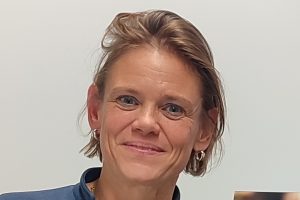
With France at the forefront of rare disease expertise yet increasingly challenged on patient access, Amicus Therapeutics finds itself at the heart of both progress and paradox. In this interview, Caroline Yau, General Manager for France & Benelux, discusses her transition from Big Pharma to biotech, the realities of operating in one of Europe’s most complex healthcare markets, and Amicus’s ambition to expand its impact globally.
What is your professional background, and how has your move from Big Pharma to Amicus Therapeutics shaped your perspective?
I spent more than two decades in Big Pharma, beginning in medical functions before moving into commercial leadership and eventually heading a business unit. My decision to dedicate my career to healthcare was reinforced by a personal experience: a close friend whose child had a rare disease reminded me that our mission as pharmaceutical professionals is to save children like his. That conversation left a lasting impression and continues to guide me today.
Six years ago, I joined Amicus Therapeutics, a biotech founded in 2002 by John Crowley, whose own children live with Pompe disease, a rare genetic disorder. His story captures the essence of Amicus: nobody arrives here by chance. Every member of our team has a personal connection or strong motivation linked to rare diseases, which makes our work deeply patient focused. I initially took on the role of Commercial Director for France and Country Lead for Belux, before being appointed General Manager for both markets two years ago.
The transition from Big Pharma to a biotech environment has been significant. While regulatory requirements remain the same, the culture is entirely different. In a smaller organisation, decisions carry immediate and visible consequences, whereas in larger companies outcomes are often diluted through layers of approval. At Amicus, we operate with an entrepreneurial mindset, taking initiative, holding ourselves accountable, and remaining closely connected to physicians and patients. This proximity allows us to design highly focused action plans that address specific patient needs, rather than broad programmes targeting large populations, and it is this direct impact that makes the work so meaningful.
How would you characterise the rare disease ecosystem in France, and what do you see as its main strengths and challenges?
France has built one of the most structured and collaborative rare disease ecosystems in Europe, largely through successive National Rare Disease Plans. Over the years, reference centres (Centres de Référence Maladies Rares, CRMR) and regional competence centres have been established and linked into a national network, enabling the exchange of expertise and the organisation of multidisciplinary discussions to coordinate patient care. In areas such as Fabry and Pompe disease, the national reference centre works hand in hand with expert hubs to develop clinical guidelines, share knowledge, and ensure continuity of treatment. This framework has fostered a very high level of expertise among French healthcare professionals, which is widely recognised by colleagues abroad and allows France to remain at the forefront of new strategies and approaches.
Another of France’s great strengths lies in its excellence in genetics and genomics, disciplines that are essential to identifying mutations across thousands of conditions. The fourth National Rare Disease Plan (PNMR4, 2023-2030) has also introduced an important new priority: the application of digital and artificial intelligence tools. With around 7,000 rare diseases, no healthcare professional can master them all, yet AI has the potential to transform diagnosis, whether through imaging technologies or integration into hospital systems. France has set itself the ambition to lead in this field, and this is a welcome and necessary step.
Yet these scientific and organisational achievements stand in contrast to the significant obstacles patients face in terms of pricing and market access. Current evaluation frameworks, overseen by the HAS (the French National Authority for Health) and the CEPS (the national pricing authority), are designed for common diseases. In rare conditions, where populations are small and the standard primary endpoints are not always the most relevant, a broader and more clinically nuanced perspective is required, including the consideration of secondary outcomes. Unfortunately, this has not been sufficiently integrated into current processes, and the situation has become progressively more restrictive.
Recent developments illustrate this worrying trend. Rules around the Early Access Programme (EAP) have tightened, leading in some cases to refusals for innovative therapies. At the same time, certain products risk being excluded from the liste en sus, the hospital formulary that provides reimbursement for medicines outside the standard budget. If excluded, patients who depend on hospital-based care may lose access to treatments they critically need. While it is understandable that healthcare budgets must be controlled, the reality is that rare disease patients are often the first to suffer the consequences. France therefore finds itself in a paradoxical position: it possesses one of the most advanced scientific and clinical infrastructures for rare diseases, yet patients are increasingly confronted with barriers to accessing the very therapies this system is designed to support.
Many rare disease therapies show strong clinical results but never reach patients because they are considered commercially unviable. How is this reality affecting biotechs such as Amicus?
This has become an increasingly common problem, and for biotechs that may depend on a single product, the consequences are profound. Without securing market access, we simply cannot sustain a presence in France. Galafold, our treatment for Fabry disease, demonstrates what is possible when access is achieved: launched a decade ago, it has changed patients’ lives and remains a cornerstone of our work. On that basis, we were prepared to introduce Pombiliti + Opfolda for Pompe disease, where the unmet need is just as critical.
Despite our best efforts, however, we have not been able to reach an agreement with the authorities. What is particularly disheartening is that France is now the only major Western European country where patients do not have access. The therapy is already available and reimbursed in Portugal, Italy, Spain, Germany, and the Netherlands. In the past, even when negotiations were difficult, there was usually a way forward, whether through price adjustments or restricted access for a limited number of patients. Over the last two years, that room for compromise has disappeared. The guidance is applied with such rigidity that discussions effectively end before solutions can be found, leaving French patients waiting while their counterparts elsewhere in Europe benefit from new treatment options.
What role does Europe, and specifically France and the Benelux region, play for Amicus, and how would you describe the company’s current momentum?
Like many US biotechs, Amicus is structured between the United States and the rest of the world, with international headquarters in Marlow, near London. Western Europe is by far the most significant part of this portfolio, accounting for close to 80-90 percent of revenues outside the US. From the outset, we chose to establish affiliates with dedicated teams in each major European market, rather than depend solely on distributors, although some emerging markets remain managed through partnerships. Within this framework, France alone contributes around 15 percent of European revenues, reflecting its strategic weight.
The launch of Galafold was highly successful, with sales now almost evenly divided between the US and Europe. In 2023, Amicus reported global revenues of USD 528.3 million, a 33 percent increase year-on-year, and 2025 is expected to mark our first year of profitability. This reflects not only the sustained performance of Galafold but also the momentum behind our pipeline. Globally, attention is now focused on our new therapy for Pompe disease, with the expectation that we can replicate the impact achieved in Fabry.
In France, however, we face a more difficult reality. Patients can access Galafold but not Pombiliti + Opfolda. Unless the framework changes, this is unlikely to improve in the near term; realistically, it may take three to four years, supported by further real-world evidence or perhaps by European-level pricing discussions. Physicians share this concern, noting that France is increasingly becoming an exception, but in the wrong direction. Rare diseases cannot be judged by the same criteria as common conditions. They require expert clinical review and a more nuanced approach to pricing. If authorities such as the CEPS were open to European-level dialogue, it could offer a constructive solution. In the meantime, our priority in France remains to build on the strength of Galafold and continue working with the national network of reference and competence centres, while globally the Pompe launch is one of our most important strategic focuses.
How does Amicus engage with patient associations and healthcare professionals within the French rare disease ecosystem?
Over the past few years, we have built close relationships with both patient associations and healthcare professionals. The associations are highly organised and effective in representing the patient voice, while physicians are structured within the FILNEMUS network – the national neuromuscular rare disease network, which includes Pompe – ensuring strong coordination and expertise. When we informed these groups that no agreement had been reached with the authorities on Pompe disease, their disappointment was profound. Yet even with their support, solutions could not be found. Many feel that decisions are now shaped more by administrative and budgetary priorities than by patient needs or clinical expertise, and that their voices are not sufficiently heard. This is a growing concern, and the signals in recent months have only reinforced it.
At the same time, our collaboration extends beyond market access. Together with expert centres and patient organisations, we support initiatives that improve daily care and patient management. However, despite their expertise and commitment, their role in national-level access decisions remains limited, making it difficult for patients and clinicians to influence the outcome of these critical discussions.
What are Amicus’s strategic priorities, and how do global and local partnerships support this vision?
Our scientific focus has consistently centred on lysosomal storage diseases, particularly Fabry and Pompe, while we also continue to invest in gene therapy, which remains at the preclinical stage. Partnerships play a complementary role and are an important part of our growth strategy. Earlier this year, for example, we signed an agreement with Dimerix to license DMX-200, a Phase 3 investigational therapy for focal segmental glomerulosclerosis (FSGS), a rare kidney disease. This agreement covers only the US market, but it demonstrates how external collaborations can expand and diversify our portfolio. We are optimistic about concluding further partnerships, especially in Europe, over the coming months.
In France, partnerships are generally conceived as part of global or regional strategies rather than negotiated at the national level. That said, the French ecosystem offers fertile ground for local initiatives, particularly in areas such as diagnostic innovation. We are already engaged in promising projects with start-ups, including the application of artificial intelligence to rare disease diagnosis. While these initiatives are not treatment-focused, they provide valuable tools for improving patient care. Our aim is to nurture such projects locally – particularly in Fabry disease, which remains a strong focus in France – and then extend the most effective models to other countries within our network.
You mentioned Amicus’s entrepreneurial culture. How do you cultivate this mindset and ensure you recruit people who embody it?
It begins with recruitment. The first quality we look for is a genuine commitment to patients. In interviews it quickly becomes clear who has taken the time to understand conditions such as Fabry or Pompe disease. Even a basic awareness – for example, recognising their multisystemic nature – shows curiosity and empathy, which are essential to working in rare diseases.
The second dimension is entrepreneurship. At Amicus, people are not simply asked to execute global directives; they are expected to take initiative, propose ideas, challenge assumptions, and accept responsibility for outcomes. Successes are important, but the ability to acknowledge setbacks, learn from them, and build on the experience is equally vital. If a candidate with many years of experience can only point to successes and never to failures, it suggests a lack of accountability. For us, true entrepreneurial spirit is defined by both. This is why culture starts with the people we bring on board and is reinforced every day by the way we operate.
Finally, what message would you like to leave about Amicus’s mission and ambition for the future?
Our ambition is simple yet profound: that all patients living with rare and debilitating diseases should one day have access to treatment. This mission guides everything we do and unites us as Amicus.