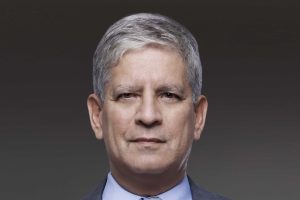
Carl Wegner, President of AmCham Taiwan, reflects on his first months in the role, highlighting the chamber’s advocacy mission, the strength of its committees, growing US–Taiwan engagement, and major opportunities in healthcare, public-private partnerships, and innovation, especially around the Healthy Taiwan initiative.
You have been leading AmCham for several months now. What new perspective have you brought to the organisation?
I have been in this role for five months now, though I have been in Taiwan on and off for 43 years, primarily working in the financial sector. My career has taken me through Standard Chartered Bank, Deutsche Bank, and Bank of Boston, as well as FinTech and blockchain start-ups. While I have had assignments in Shanghai, Beijing, Hong Kong, and most recently Singapore, Taiwan has always been home. I served on the AmCham board about 15 years ago, which gave me an outside perspective. Now, being on the inside is quite different.
What strikes me most is the calibre of the team. The number of publications and research we produce is remarkable. AmCham Taiwan has just over 500 members—slightly more than half are American companies, whilst approximately 45 per cent are Japanese, Taiwanese, and European firms. Our focus is distinctly industry-based, organised through 24 committees. The medical committees—pharmaceuticals, medical devices, and public health—are among our most active.
We are fundamentally about advocacy rather than social networking. Our mission centres on helping members navigate market access challenges in Taiwan. Each committee identifies three to five key challenges annually, which we compile into a comprehensive white paper. This document is published bilingually in June, with translations that must be absolutely precise.
We present it to the National Development Council, which distributes it across relevant ministries. Currently, we are reviewing ministry responses, identifying areas where interpretations differ or where additional discussion may be needed to ensure shared understanding.
Beyond the Taiwan White Paper, we conduct an annual door-knock in Washington, meeting with Congress, committees, and think tanks. This year we held 46 meetings across Capitol Hill. What struck me most was the bipartisan understanding of and support for Taiwan. We emphasise that Taiwan’s contributions extend far beyond semiconductors, medical devices, and pharmaceuticals represent significant areas of collaboration.
Our largest annual event is the Hsieh Nien Fan Thanksgiving dinner each March, which draws 900 attendees, including 100 to 120 government officials. The President typically attends and speaks. Throughout the year, we facilitate approximately 150 committee meetings and 250 total events.
Many international observers tend to associate Taiwan primarily with geopolitical concerns. In your view, what risks should international investors genuinely be mindful of when considering investments in Taiwan?
Each year, we conduct a business climate survey that tracks member concerns over time. Interestingly, the biggest challenge is not what most people assume. Cross-strait issues do not top the list. Energy—specifically energy stability and predictability—represents the most significant concern, particularly for manufacturing operations and companies investing in Taiwan.
When considering risks for international investors, I would argue these are challenges common to investing anywhere in Asia—whether Hong Kong, Japan, or the Philippines. The geopolitical relationship with China affects the entire region. Taiwan simply happens to be geographically closer. However, our survey data shows that 90 per cent of members plan to invest equal or greater amounts in Taiwan in 2025 compared to previous years, suggesting this is not deterring investment.
The new administration has taken resilience seriously, developing stronger contingency planning for potential challenges.
How have your member companies responded to President Lai’s Healthy Taiwan Initiative, and what opportunities do you see emerging for them as a result?
The Healthy Taiwan initiative represents the most significant development for the medical sector. President Lai, being a physician himself, brings extraordinary insight to healthcare policy. When Taiwan claims to have the world’s number one healthcare system, I completely agree.
I attended an event during my third week in this role where a minister discussed the Healthy Taiwan agenda—catching diseases earlier, improving quality of life, and addressing our ageing population. After his speech, I found myself genuinely moved, thinking how fortunate I am to be living in Taiwan right now.
Our members view this initiative as presenting tremendous opportunities, though perspectives vary depending on where companies sit in the ecosystem. Taiwan offers a unique proposition. The national healthcare system has operated for decades, creating a data environment that is both comprehensive and reliable. This represents one of the best opportunities globally for pharmaceutical companies, whether for selling products, conducting trials, or leveraging real-world evidence. The historical depth of data, combined with full population coverage, is genuinely unmatched.
How do you evaluate the prospects for public–private partnerships in Taiwan’s healthcare sector? Where do you see the most promising areas of collaboration?
We work extensively with members on public-private partnerships across multiple sectors. In clinical research and biotech co-development, we see substantial potential. Taiwan is not only advancing in pharmaceuticals but also on the technical side—semiconductors are just one component of a much broader innovation ecosystem.
Taiwan is unique in healthcare, shaped significantly by not being a member of the WHO. Due to the SARS epidemic and subsequently COVID-19, Taiwan developed independent strengths and research capabilities that it can share with the world. However, this also means Taiwan is not always privy to global best practices. This creates an important role for private companies to engage with the government and share experiences from other markets.
The single-payer system represents both a great advantage and a challenge for bringing in innovation. Taiwan often requires companies to conduct their own trials here to introduce new treatments. However, there are increasing opportunities for simultaneous approval with the US or Europe.
Which clinical areas are seeing the most activity from your members?
Oncology represents one significant area, particularly earlier screening and trial access. This aligns well with the Healthy Taiwan initiative. We have access to real-world evidence and the National Health Insurance database for research purposes.
Cardiovascular care is another substantial focus. Trans-catheter therapies offer opportunities to shorten hospital stays whilst implementing global best practices. Robotic surgery platforms continue advancing as well. We visited Chang Gung Memorial Hospital, which reportedly trains approximately 1,000 foreign doctors and healthcare professionals. The level of physician expertise in Taiwan, particularly for clinical trials, is truly unmatched.
Taiwan’s exclusion from the WHA remains a genuine challenge. Taiwan is only a member of two international organisations: the WTO and the International Olympic Committee. WHA membership would benefit not just Taiwan but the entire world. During our Washington door-knock, we actively advocate for Taiwan joining international organisations. Taiwan’s COVID-19 response was exemplary—we went nearly a year with virtually no COVID cases.
Taiwan is globally recognised for its technology sector, and increasingly for its healthcare expertise. Do you see significant opportunities at the intersection of these two fields?
The intersection presents fascinating opportunities. As an organisation representing numerous industries, we do see cross-committee collaboration, though more commonly third-party companies initiate these convergences—suggesting ways to combine technological capabilities with medical applications.
Taiwan excels at scaling. If Israel is the start-up nation, Taiwan is the scale-up economy. OEM and ODM manufacturing have been Taiwan’s strength for decades. What fundamentally underlies Taiwan’s success across sectors, including healthcare, is trust. TSMC represents the perfect example—the world’s biggest competitors all provide their designs, trusting TSMC not to share them with rivals. This trust factor extends into the National Health Insurance and medical care system. Companies conducting trials here can be confident that intellectual property will be protected. Taiwan takes consumer data protection extremely seriously.
Outside semiconductors and healthcare, which other Taiwanese industries do you believe are performing particularly well? Where do you see the greatest potential for growth and investment?
Taiwan also excels in precision machinery. Machine screws, for instance, 70 to 80 per cent of high-end machine screws globally are manufactured in Taiwan. When BMW or Siemens needs precision components for CT scanners, Taiwan supplies them.
Taiwan hosts numerous SMEs specialising in precision machinery. These operations do not require massive workforces but remain globally competitive through careful quality control. However, they now face greater challenges from tariffs. Unlike TSMC, which benefits from universal name recognition, SMEs lack the same visibility. The government has provided financial support to help these companies navigate these difficulties.
With ongoing trade tensions and shifting tariff policies, how is AmCham supporting its members in navigating these uncertainties?
Everyone desires the same thing: predictability. Once you understand the parameters, you can plan accordingly. Unfortunately, that predictability does not yet exist. During our June door-knock, tariffs were supposedly being resolved the week before we arrived. That was June. We are still discussing them.
Taiwan faces the same tariff challenges as any country, but with one specific disadvantage: we cannot send the Prime Minister or President to Washington for direct negotiations. Taiwan must work through intermediaries or lower-level officials. President Lai cannot speak directly with President Trump.
Where does Taiwan stand in the regional dynamics with Singapore, China, and Korea in terms of innovation and investment?
I have personal perspective from spending three to four years in Singapore. Singapore is well known for FinTech innovation, but it is a very small country where initiatives can be managed more easily.
Taiwan’s opportunities and challenges stem from being a democratic nation. You cannot simply mandate a four-year strategy as you might in countries without regular elections. This makes long-term strategic planning more challenging for any democracy.
For innovation, we are seeing increasing numbers of people coming to Taiwan—technology companies related to the chip sector, AI, and data centres. Amazon recently announced a $5 billion data centre investment here. I am encountering more potential members from companies on the periphery of the technology sector who are spending increased time in Taiwan because they recognise opportunities here.
Looking ahead to the next five years, how do you anticipate economic and trade relations between the US and Taiwan evolving?
Predicting five years ahead is difficult, but Taiwan has been a strong US partner for decades, and that relationship remains very close. The US is Taiwan’s closest partner.
We work closely with both the American Institute in Taiwan and the Taiwan government. We host one or two US delegations weekly—Senate delegations, Congressional delegations, political groups coming to learn about Taiwan. This connection remains quite strong.
Predicting beyond three and a half years is challenging, but the dialogue is constant. This is a strong partnership. The US is Taiwan’s number one partner for technology, resilience, and virtually everything at present. Taiwan is the seventh largest US trading partner, which is remarkable given our size.
What message would you like to convey to US or international companies that are contemplating expanding into Taiwan?
Taiwan remains very open to investment. It is welcoming and opportunity-rich. The challenges companies face are typically not on the business side—energy remains the one business-related concern people consistently raise.
The bigger challenges are often personal rather than professional. Foreigners in Taiwan do face certain difficulties, such as opening bank accounts. Yet Taiwan is extraordinarily welcoming. People arrive intending to stay six months and find themselves here 25 years later.
The government has created a Gold Card programme allowing entrepreneurs to obtain permanent residence or three-to-five-year visas. They are making progress, but it remains a process. Some of Taiwan’s challenges simply reflect democratic governance—things must move through proper channels.
This is precisely where AmCham membership provides value. We had a major technology company approach us after unsuccessfully engaging with government. One ministry was treating them somewhat unfairly. When they contacted us and we said we represented multiple stakeholders, suddenly senior officials became involved. The issue was resolved within four days.
AmCham possesses remarkable access to government officials at all levels. In these dynamic times, our bridging role becomes even more critical.
You have mentioned energy several times as a central issue. Could you elaborate on the energy challenge facing Taiwan?
The energy challenge affects every company investing here. Businesses want predictability, scalability, and sustainability. Some decisions, such as closing nuclear power plants, cannot simply be reversed overnight under democratic processes. Foreign companies need clarity on energy availability, reliability, and sourcing.
To assist companies with planning, we recently launched an energy calculator on our website. Users can adjust variables—perhaps 30 per cent wind or other renewable sources—input their total energy requirements, and perform calculations.
Everyone is asking these same questions. The government fully understands the challenges and is working to address them. If Taiwan is to continue supporting chip manufacturing or helping the US compete in AI, substantial work can be done here, but adequate power infrastructure is essential.
One interesting statistic: Less than half of Taiwan’s energy consumption goes to the resident population. More than half supports manufacturing—essentially serving the world. Most of this energy powers export manufacturing for a population of only 22 to 24 million.
On a personal note, what motivates you in this role?
The responsibility we carry, combined with the access we possess, is extraordinary. AmCham is by far the largest chamber in Taiwan. The access we have to government officials at all levels is remarkable—I am still building relationships with ministers.
The trust placed in America and in AmCham as a neutral party to discuss sensitive issues is both amazing and occasionally daunting. Next year marks AmCham’s 75th anniversary, and we have significant celebrations planned.
Leading this organisation offers a tremendous way to give back. Taiwan has been my home longer than the US has been my home. This position allows me to meet people differently and engage with new communities.
It is tremendously rewarding, though sometimes exhausting, given the meeting schedule. Tomorrow I am attending the sunrise ceremony for National Day at the Presidential Palace, followed by a dinner that evening. When would one ever otherwise have the opportunity to work alongside ministers, ambassadors, and executive committee members? It is quite remarkable.
Is there anything else you would like to add about opportunities in Taiwan?
I should mention our recent AI Connect event, which exemplifies the healthcare-technology convergence. We host numerous seminars, mentoring programmes, healthcare-focused gatherings, including our Healthy Ageing Forum, Cancer Summit, and Health Equity events.
AI Connect represents our newest seminar series, examining artificial intelligence applications across industries. Interestingly, two of the three presenting companies were healthcare firms using AI—one for predicting lung cancer, another offering remarkable efficiency improvements. This second company can take a single test and run it through five different analytical iterations, effectively replacing five separate tests. Instead of requiring multiple doctor visits to check lungs, liver, brain, and spleen separately, they can accomplish everything with one test, making the diagnostic process five times more efficient.
AI Connect has proven successful, and it appears healthcare applications are dominating the conversation, a very positive development for Taiwan’s future.