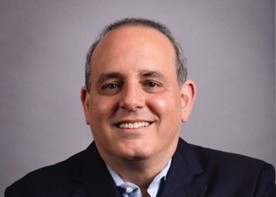
Basil Khalil, Vice President of Operations at FedEx, highlights the company’s expansion of healthcare logistics in Latin America, including CEIV Pharma-certified facilities, dedicated flights, and end-to-end cold-chain infrastructure. Investments in technology, sustainable operations, and workforce training aim to ensure reliable, patient-focused service while supporting the region’s growing pharmaceutical market.
First, can we discuss the key highlights for FedEx in Latin America over the past year?
Healthcare logistics demands the highest quality standards, so we have been rolling out our Global Healthcare Quality program worldwide, including across Latin America. In pharmaceuticals, expectations are particularly stringent, with IATA’s CEIV Pharma certification recognised as the gold standard.
As of May 2025, a total of 22 FedEx facilities worldwide are operating under the CEIV Pharma quality framework, and that includes many in Latin America. When we last spoke in Puerto Rico, we had received CEIV Pharma certification in two locations – our ramps in San Juan and Aguadilla on the other side of Puerto Rico, which gave us the redundancy and capabilities that pharmaceutical customers needed. We have now added Costa Rica, the Dominican Republic, and Panama, and we are moving to expand to more locations around Latin America by the end of this fiscal year.
How is FedEx adapting its network and operations to support Latin America’s pharmaceutical market, projected to grow from USD127 billion in 2024 to USD 230 billion by 2033?
From a network perspective, we have strengthened connectivity across the region with new dedicated flights. One now links Argentina, Chile, and Ecuador with the US, while another connects the US with Honduras and Guatemala. These routes are operated on our own aircraft, giving us full operational and custodial control.
Both connect through Miami, our main hub, where we operate a 70,000-square-foot cold-chain facility – roughly the size of 25 tennis courts – with dedicated zones for pharmaceutical products across multiple temperature ranges. This end-to-end control is essential for international pharmaceutical shipments, where compliant infrastructure is required not only at origin and destination, but throughout the entire journey.
Beyond the network, healthcare quality remains paramount. We have spent considerable time training our workforce, ensuring they understand that these packages or pallets save lives. In Miami and many other locations, we are adding cold room infrastructure to support the growing healthcare needs of nearly half a billion people in Latin America.
How consistent is FedEx’s GXP and GDP footprint throughout Latin America? What are your priorities for upgrading infrastructure and services for end-to-end, patient-level healthcare logistics across the region?
It begins with infrastructure in our facilities. That is why we have made investments in Miami, Puerto Rico, Costa Rica, the Dominican Republic, Panama and several other South American markets. The cold room infrastructure helps ensure the right temperature expectations on the ramps.
We have also made investments in vehicles, because it is not just about getting products on the plane and to the ramps – you have to deliver them. We have invested in our own temperature-controlled reefers and partnered with key players to make sure we can maintain temperature all the way to customer delivery.
Pharmaceutical products require very specialised temperatures, so we have also invested in active and passive temperature packaging solutions such as temperature-controlled containers already well-integrated into the cold chain journey, temperature-controlled trailers at San Juan and Aguadilla ramps in Puerto Rico, and thermal blankets for pallets of freight that help to maintain a constant temperature range of 15°C to 25°C (+/- 5°C) and provide protection against direct sunlight, rain, humidity and tarmac heat.
Managing logistics across Latin America – including markets as large and complex as Brazil – is certainly challenging, but also exciting. As new products come to market with increasingly sensitive requirements, having the right end-to-end infrastructure is critical. That is what we continue to build, improving day by day in line with our customers’ needs.
How does FedEx maintain consistent global quality standards while adapting to local regulations, customs processes, and infrastructure across Latin America when supporting multinational and biotech companies in the region?
It requires a thorough understanding of requirements. Certifications like CEIV Pharma take into account different rules and regulations around the world and harmonise them so that we can meet all of them. Whether it is EU GDP standards, the FDA, ANVISA in Brazil, or Technical Rule 147 in Chile, these are specific requirements in those markets that we need to comply with.
We have teams examining these to ensure we meet government requirements. Equally important are the manufacturers and what is required for their particular products, so that patients have the best possible outcomes.
Given Latin America’s geography and sometimes fragile infrastructure, how far can the air-to-ocean shift realistically go in this region?
After the pandemic, many companies focused on finding the most cost-effective solutions. The ocean is excellent because most global commerce flows on water, but that does not work for all products. Air represents a very small percentage of the total global commerce, but it is typically used for high-value items that are highly perishable and cannot sit on the water for many days.
New medicines, personalised medicine, temperature-controlled vaccines, and other high-value perishables – it simply does not make economic sense to put them on ocean freight if they need to arrive quickly. There will be products that make sense on the ocean, but others will need to continue to be on air and get there as quickly and reliably as possible.
We can offer ocean solutions, but our strength is in the air. We are working to meet our customers’ needs in that space, particularly for high-value goods that need to arrive within specific time and temperature expectations.
How does FedEx align its 2040 carbon-neutral goals with the operational realities and infrastructure constraints across Latin America?
FedEx was one of the first transportation companies to commit to carbon neutrality by 2040 – much faster than what most others in the transportation industry are attempting. Several years ago, we made substantial investments in our aircraft. We have one of the newest fleets in the industry. The Boeing 767s are among the newest in the market.
We have added what we call feeder aircraft – turboprop aeroplanes that are smaller, very fuel-efficient, cargo-capable, and connect to the Caribbean, Central America, and smaller markets. This reduces our carbon output substantially.
We are already investing in sustainable aviation fuels, with Miami among the first markets using SAF to power aircraft serving the region. We are also expanding our electric vehicle fleet across Mexico, Argentina, Chile, Colombia, Brazil, and Puerto Rico. Rolling out EVs requires more than vehicles alone – it demands the right charging infrastructure. We have been investing in our facilities to ensure they are ready to support large-scale electrification.
How is technology such as 24/7 monitoring, IoT sensors, and real-time temperature tracking being adopted across Latin American healthcare supply chains, and where do you see the fastest uptake as well as the most persistent bottlenecks?
We are seeing tremendous progress in artificial intelligence and the Internet of Things. IoT is sensor-based technology, and we have developed technologies being rolled out across all markets in Latin America.
We have something called SenseAware ID – a small device that can be placed on packages, tracking in real time where the package is moving across our network. It is rolled out across all 50 countries and territories we serve in Latin America. This is tied to a visibility portal we call FedEx Surround®.
This gives customers the ability to see their packages in near real time. They can monitor and intervene – they can say they need to do something special to that package, and we will consequently make the appropriate intervention.
Customers now gain full visibility into their supply chains, allowing them to make real-time adjustments. We use data like weather patterns to anticipate disruptions and support alternate decisions. Tools like FedEx® Sustainability Insights also show CO₂ emissions from shipping choices, enabling informed actions to reduce environmental impact.
Customers have been very appreciative. In healthcare, where patient outcomes are critical, the ability to quickly course-correct and ensure packages reach the right temperature-controlled cold rooms is transformative. These capabilities did not exist before, and they are helping improve patient outcomes – ultimately the goal of our services.
How is FedEx addressing skills gaps in advanced logistics, cold chain management, and digital operations across Latin America, while building a pipeline of life science–ready talent and integrating diversity and inclusion priorities into its regional strategy?
Our philosophy is People- Service- Profit. If you treat your people right, they will deliver exceptional customer service, which will ultimately drive profitability that you can then invest again in your people.
We are prioritising investment in our workforce to drive the best customer outcomes. This includes modernised training for over half a million team members globally, focusing on effectively using artificial intelligence in their daily roles to enhance performance and efficiency.
We also focus on our communities and our future workforce. We have a strong internship program, bringing students from local universities as the younger generations are growing up with these technologies and can help our team members, so there is a dual benefit.
Part of our FedEx Cares investments involves working with several partnerships. In Mexico, we work with the International Youth Foundation on a program called “Jóvenes con Entrega”, which embeds logistics training into public education systems.
What I love about working in this company is that we operate in 220 countries and territories. Our team members live in all the communities we serve. We need to serve them not only by delivering packages and goods, but also by being part of that community. Nearly every employee makes investments in supporting our communities and helping them understand more about logistics.
In terms of life sciences specifically, how important is Latin America and the Caribbean for the whole group?
It is absolutely critical. When you look at Latin America, the manufacturing hub of the Americas for pharmaceuticals is Puerto Rico. For medical device products, you have countries like Costa Rica, the Dominican Republic, and Mexico manufacturing tremendous amounts. Consumption markets like Brazil and Argentina are critical for a global understanding of healthcare needs.
Latin America plays a critical role in healthcare, which is why we are seeing it grow. We must not forget – it is almost 600 million people living in Latin America, which is a substantial portion of the global population that cannot be overlooked.
Supply chains are becoming more regionalised, and there is far more focus on nearshoring. When you consider the US and North America, which represent a huge percentage of global GDP, we are finding significant interest in expanding pharmaceutical, medical device, and healthcare capabilities across the hemisphere to support growing demand.
How can governments, healthcare companies, and logistics providers align by 2030 to make Latin America a trusted, competitive hub for the global life science supply chain?
We are trying to do our part to increase the connectivity and reliability of this region to the rest of the world. What I have found is that regardless of where you go across Latin America and the Caribbean, you find some of the most educated, most talented people with the greatest drive to contribute to society.
Latin America will, I believe, play a significant role. We want to make sure that as long as the connectivity is there, decisions on where to establish pharmaceutical healthcare capabilities can continue to favour Latin America, and Latin America can be a leader for the world.
What would you like your final message to be for our global readers?
FedEx recognises the importance of healthcare to society, and we intend to provide the type of temperature-controlled capabilities necessary for the new pharmaceutical innovations emerging today. Our focus is to ensure reliability and consistency with the quality level expected, to ensure proper and positive patient outcomes.
On a more personal level, what keeps you motivated after 28 years at FedEx?
I am currently pursuing my PhD with a focus on temperature-controlled logistics. I can tell you, this is an exciting time to witness the transformation happening in this company and in the industry. It is exciting for me to come to work every day and learn from our customers and our team members.