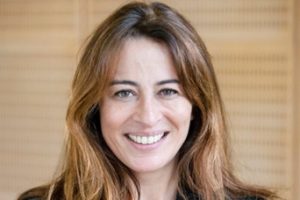
Kyowa Kirin’s new head for France and Benelux steps into the role at a time when rare diseases, regulatory expectations and scientific modalities are all shifting at speed. In this interview, Aurelie-Anne Chausse reflects on the recent strategic transition toward a fully rare-disease-focused organisation, the growing pressure to identify patients earlier, and the importance of preserving France’s leadership in access and clinical excellence. She also outlines how the group’s next scientific phase, driven by advanced modalities and a renewed partnership culture, is reshaping the organisation’s global trajectory.
What led you to leave Sanofi after twenty years and take on your first full-scope leadership role at Kyowa Kirin?
After two decades at a Big Pharma, I felt ready for a role that offered broader accountability and a more immediate connection to patients and teams. Being able to operate in a fully integrated organisation like Kyowa Kirin’s structure in France and Benelux allows for a strong impact on patients and teams. I was curious as well to learn from a different environment, by its size and culture, whilst being attached to my speciality care roots. I wanted a setting where decisions move quickly and where proximity to people and to the work is tangible. After holding a global role, I realised how much I missed the direct and visible impact you have when you operate at the local level.
When I began exploring the position, the Orchard Therapeutics acquisition immediately caught my attention. The deal, completed in January 2024, signalled a strong ambition in rare diseases and gene therapy. It prompted me to look more closely at Kyowa Kirin’s scientific direction, financial profile and international strategy. What I found was a consistent and disciplined approach: a solid scientific foundation, a clear focus on rare and complex diseases, and a deliberate expansion outside Japan. I also came across the corporate purpose: to make people smile. At first, it seemed almost too simple, but the more I thought about it, the more accurate it felt. In rare diseases, a smile often reflects regained comfort and hope, and that idea resonated with me both professionally and personally. It also aligned naturally with the focus toward transformational therapies that the Orchard acquisition represents.
Finally, I appreciated the openness with which Kyowa Kirin describes its ambition to grow internationally while staying anchored in its Japanese heritage. Seeing Kyowa Kirin articulate its trajectory with clarity and sincerity confirmed that this was the right moment and the right organisation for my next leadership chapter.
How would you describe your mandate in France and Benelux, and how has it shaped the affiliate’s therapeutic focus?
When I arrived, the affiliate was already advancing through an important strategic shift. Kyowa Kirin had begun moving away from its broader general-medicine portfolio a few years earlier, and the transfer of established medicines in Europe to a joint venture with Grünenthal in 2022 marked a clear turning point. That decision allowed us to concentrate exclusively on rare and complex diseases, and 2024 was the first year in which France and Benelux operated entirely within that scope. This sharper focus gives us a more coherent way of organising our teams and of delivering the level of operational excellence needed to reach patients whose conditions are often difficult to recognise, diagnose and follow over time.
Within this mandate, we present ourselves as a rare-disease organisation built around two therapeutic pillars: bone and mineral metabolism, and oncology-haematology. While we have a broader portfolio in Japan, our work here centres on two global strategic medicines, one for rare bone diseases and one for a cutaneous rare lymphoma. These two rare-disease medicines shape our priorities, guide our engagement with the ecosystem and define our contribution to Kyowa Kirin’s broader global ambition.
Where do France and Benelux fit within Kyowa Kirin’s ambition to expand its global footprint in rare and complex diseases?
France occupies a distinctive position in our strategy because it has built an ecosystem that few countries can match. It was the first in Europe to implement a dedicated National Plan for Rare Diseases, known as the Plan National Maladies Rares (PNMR), and over time this has evolved into a coordinated structure of 23 specialised networks “filières de santé maladies rares”. These networks link national reference centres (CRMR) with regional competence centres (CCMR), diagnostic laboratories, research teams and patient associations.
The model reflects a long-standing tradition of political commitment, strong patient and healthcare professional advocacy, creating an environment where diagnosis, referral and multidisciplinary care can be organised with real consistency. For a group focused on rare and complex conditions, operating within a system of this maturity is essential. Benelux adds its own strengths through high-calibre clinical expertise and long-standing academic collaborations, and together they form a meaningful platform for us to engage, contribute and learn.
How is Kyowa Kirin drawing on the French model to shape broader European discussions, and what practical challenges still define rare-disease execution on the ground?
The French experience is widely recognised, and many countries are seeking to adapt parts of it as they build or refine their own frameworks. That interest is grounded in almost two decades of sustained effort through successive National Plans for Rare Diseases. The PNMR4 for 2025-2030 introduces a more explicit European ambition by strengthening links with the European Reference Networks and encouraging the wider dissemination of best practices. We see clear value in contributing to that direction, especially in helping other systems organise patient pathways more effectively.
Yet the operational reality remains demanding. Rare diseases are difficult to recognise, and early symptoms often overlap with far more common conditions. Cutaneous T-cell lymphoma (CTCL) illustrates this well, with skin lesions that can be misinterpreted for months before a biopsy and specialist referral secure a diagnosis. This is why proximity to expert centres, patient associations and health authorities is essential. Commercial excellence in this field relies on listening and adapting, because the variability of each patient journey means that conventional mass-market approaches simply do not apply.
The access pathway mirrors this complexity. Early authorisation is never guaranteed and depends on rigorous assessments from both ANSM and HAS. Even when granted, companies must commit to detailed evidence generation. Since the 2021 reform, this has taken the form of structured real-world data collection through case-report-style forms that place a real burden on clinicians in routine practice. The intent behind the system is sound, but ensuring complete and meaningful data requires persistent support and collaboration.
How are you shaping your priorities for France and Benelux as you look toward 2026, and what is required to ensure that more eligible patients are identified and treated in these ultra-rare diseases?
My priority is to expand the number of patients who benefit from our medicines. The team has made strong progress, and we are fortunate that access is not the constraint, since both treatments are fully reimbursed. The real challenge is recognition. Epidemiology shows a larger population of eligible patients than the number currently receiving therapy, which makes it clear that diagnosis often comes late or not at all. Addressing late diagnosis and treatment requires sustained engagement with clinicians, better awareness of the disease trajectory and careful support so that decisions reflect what patients need most at the moment when it matters.
Reaching those patients depends on strengthening multidisciplinary understanding. X-linked Hypophosphatemia (XLH) illustrates this clearly. Although it is a disorder of phosphate metabolism and skeletal mineralisation, it does not fall neatly within one speciality. For infants, paediatricians, GPs and even orthopaedic surgeons may see the bone manifestations first, yet dentists can also play a critical role because recurrent abscesses can signal underlying mineralisation defects. The same is true for adults living with the disease: rheumatologists, orthopaedic surgeons, dentists, and endocrinologists are equally important given the biology of FGF23 and its systemic effects.
A similar logic applies to CTCL. Working closely with dermatologists and onco-dermatology teams improves diagnostic accuracy, shortens referral times and helps clinicians recognise the disease earlier in its course. Building these multidisciplinary links is essential because early identification is the most reliable way to ensure that patients can access the therapies that genuinely change their trajectory.
What does the near-term outlook look like for the affiliate, and how is Kyowa Kirin’s scientific direction evolving as advanced modalities enter the pipeline?
We do not expect new launches in France or Benelux next year, so our immediate horizon remains grounded in the continued growth of our two rare-disease medicines. The focus is on deepening their impact, strengthening our engagement across the care pathway and ensuring that eligible patients are identified earlier and supported consistently. At the same time, the broader scientific direction of the organisation is evolving in a meaningful way. A good illustration is our partnered oral menin inhibitor developed with Kura Oncology for relapsed or refractory acute myeloid leukaemia with an NPM1 mutation. The FDA approved it in November 2025, and a first-line phase III study is already underway, reflecting how our oncology footprint is expanding through focused and high-value collaborations. We are also moving beyond a predominantly monoclonal-antibody portfolio toward more advanced modalities, including antibody-drug conjugates, bispecific antibodies and hematopoietic stem-cell gene therapy.
This evolution builds on a long partnership culture that has shaped Kyowa Kirin for decades. The original Kirin-Amgen joint venture was one of the formative alliances in early biotechnology and led to two biologics that transformed standards of care in anaemia and neutropenia. That history continues to influence how we operate today. In 2021, we entered a significant agreement with Amgen to co-develop an anti-OX40 antibody for atopic dermatitis, and we licensed another drug to AstraZeneca for respiratory indications in Asia. These alliances allow us to focus our internal commercial resources where they matter most for us, in rare diseases, while relying on global partners to advance therapies in broader and more competitive therapeutic areas.
How do you view the environment for launching innovative therapies in France and Europe, particularly as the rare-disease framework and the future of the “filières” remain uncertain?
This is a concern shared across the entire sector. As both a leader in pharma and a French citizen, I see it as my responsibility to help ensure that France remains an attractive environment for innovation, not only at the moment of launch but also as a place where development can occur early so patients benefit sooner. Protecting that position requires open and constructive dialogue with the authorities so that evaluation criteria remain clear, predictable and aligned with the way clinical value should be assessed. At the same time, we also have to listen internally and adapt to what regulators expect from us. It is a genuine two-way effort.
Above all, France must not lose the clinical excellence and access maturity that have long set it apart in rare diseases. Preserving that standing will depend on the commitment of healthcare professionals, industry and citizens together. The context may evolve, but our obligation to safeguard France’s ability to attract development and deliver timely access to innovation remains unchanged.
Kyowa Kirin’s purpose is “to make people smile.” How do you bring this into your leadership style and into the way you engage colleagues and external partners?
The motto speaks to me because it reflects the kind of environment I try to build every day, one where people feel at ease, able to speak openly and confident that they will be heard. Creating that atmosphere begins with simple behaviours. I try not to take myself too seriously, keep the tone open and accessible, and pay attention when something seems off. Leaders have a duty to notice when someone is struggling, listen without judgment and ease the pressure when possible, while still respecting the limits of those who are more private. Often, it is the small gestures that make the greatest difference. Offering reassurance at the right moment or showing that you stand with someone can shift the entire dynamic of a team. These moments create trust, and trust allows people to breathe, engage and perform at their best.
This mindset aligns with why I value being at Kyowa Kirin. The organisation is genuinely science-driven, focused on improving patients’ lives and committed to supporting its people. That long-term, human approach is something I appreciate deeply, and it reinforces the importance of carrying the motto into everyday leadership.
Information provided by Kyowa Kirin_KKI/FR/KKI/0139-Dec 2025