With France now a
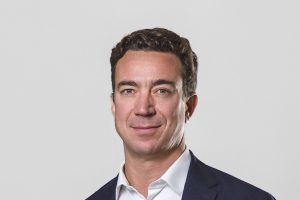
cornerstone of its global strategy, Regeneron is accelerating its European expansion under the leadership of Antoine Catton. In less than two years, the affiliate has built full operational capabilities, secured major access milestones, and forged partnerships with leading research institutions, cementing its role within France’s thriving oncology ecosystem. Backed by one of the world’s largest private DNA biobanks and a fully homegrown R&D engine, Regeneron embodies a rare, science-driven model in today’s pharmaceutical landscape.
How has Regeneron evolved over the years, and what role has its long-standing partnership with Sanofi played in shaping that journey?
Regeneron was founded in 1988 and remains led by its two founders, Dr Leonard Schleifer, our CEO, and Dr George Yancopoulos, our President and Chief Scientific Officer. Over the past 37 years, we have evolved from a small, research-focused biotech into a fully integrated biopharmaceutical company, while maintaining a strong scientific foundation. In the early stages, our medicines reached patients mainly through alliances, which is how our long-standing partnership with Sanofi was formed.
Some products are fully marketed by Sanofi, while others began as a joint effort in the United States and have since grown into a broader co-promotion model across multiple markets. Likewise, another asset for age-related macular degeneration and other retinal diseases is commercialised by Regeneron in the US and, through a long-standing alliance with Bayer, across Europe and other regions.
A major turning point came in 2022 when we acquired full global rights to our oncology medicine.This allows us to oversee its development and commercialisation worldwide. This move strengthened our position in oncology and marked the start of a new phase of international expansion. We have since established direct affiliates in around a dozen countries, enabling closer collaboration with leading scientific communities and full end-to-end ownership from discovery to delivery. In France, we manage all oncology operations as the legal entity responsible for the marketing, distribution, and post-market surveillance of a medicine – ensuring regulatory compliance and accountability for the product throughout its lifecycle.
Meanwhile, in immunology, our second business unit, we continue the 50-50 co-promotion model with Sanofi of a targeted biologic therapy designed to modulate the immune system by inhibiting specific signaling pathways involved in type 2 inflammation.
Our strategy in immunology is to continue to extend the indications of this megablockbuster, while also look for therapeutic targets and develop new molecules. In immunology alone, we have several programs in our pipeline, including new indications.
What prompted Regeneron to establish a direct presence in Europe, and why was France chosen as a key strategic country?
Regeneron has always been a profoundly science-driven organisation, and that philosophy continues to underpin every strategic decision we make. In 2024, we invested around USD 5.1 billion in R&D – approximately 36 percent of our total revenue – well above industry norms and a clear reflection of our priorities. Our goal is to let science lead the way, focusing on where innovation can bring meaningful solutions to patients with serious diseases, rather than being guided primarily by economic considerations. This long-term, purpose-driven mindset stems from the continuity of our leadership; having the same two founders at the helm for 37 years has allowed us to build a culture grounded in scientific excellence, integrity, and consistency of vision.
The decision to establish a direct presence in Europe was driven by our desire to take full ownership of drug development and build stronger ties with leading research institutions. France naturally stood out within this framework. It has a long-standing reputation for excellence in oncology and haematology, a large and sophisticated pharmaceutical market, and a particularly robust research infrastructure. The country ranks second in Europe for oncology clinical trials, which remains its fastest-growing therapeutic area. Today, we are involved in around 40 ongoing studies in France, spanning both internal and academic research partnerships, which underscores the country’s central role in advancing our scientific ambitions and deepening collaboration with its exceptional healthcare and research community.
When you joined Regeneron two years ago, what was the mandate you were given, and how would you describe the organisation’s footprint in France today?
In addition to our immunology business, our foundation in France rests on our immunotherapy medicine , which is approved and reimbursed for three oncology indications .. Together with establishing the immunology unit, this this served as the starting point for establishing the affiliate. Once established the mandate was clear: to be fully operational in less than two years. I joined in 2023, shortly after the affiliate was founded that April, and by January 2024 we had become Marketing authorization holder (MAH). The months that followed were an intense period of preparation, completing regulatory submissions, setting up the necessary systems, and recruiting the initial teams. By March 2024, we had a field presence of around 50 people, and since then have doubled in size to about 100, including colleagues working within our immunology partnership with Sanofi.
This journey has been one of rapid but carefully managed growth, building organisational capabilities, attracting talent, and ensuring seamless business continuity for healthcare professionals and patients alike. It required a delicate balance between speed and structure, making sure every process was solid as we scaled. Looking back, it is remarkable how much was achieved in such a short time. At the outset, I genuinely thought it would be nearly impossible to meet the deadlines, but once everyone aligned behind a common purpose, the focus and determination across Regeneron made it happen. It was an enormous challenge, but one that proved how much can be accomplished when the entire organisation moves in the same direction.
France is often seen as a complex market for access and reimbursement. How have you approached these dynamics, and what have been the key lessons learned?
Our work in oncology in France has centered on our immunotherapy medicine . When we began, only one indication was already on the market, and we were simultaneously building the affiliate and advancing reimbursement efforts for the others. It truly felt like building the plane while taking off, setting up operations while navigating one of the world’s most demanding access landscapes. Recognizing the system’s complexity and working within it is essential, which is precisely why having a direct presence here matters: it allows us to anticipate expectations, align development plans with local requirements, and strengthen engagement with the French authorities.
Despite these challenges, we achieved something quite noticeable. At the end of 2023, the Transparency Commission of the Haute Autorité de Santé (HAS) granted a positive reassessment for one of our skin cancer indications, with reimbursement following in 2024. What made this particularly meaningful was that the decision was based on a robust indirect comparison, something newly permitted under the Commission’s updated framework when head-to-head trials are not feasible. We are very proud of this outcome, as it reflects not only the strength of our science but also our culture of perseverance and collaboration. It shows that when you engage openly and constructively with regulators, even in a demanding environment, progress is possible.
France has a strong reputation for clinical research and oncology excellence. What role does it play within Regeneron’s global R&D and collaboration strategy?
As a global organisation, the key development decisions are made centrally, but input from key markets is essential, particularly from leading research centres and clinical experts. France plays an important part in this process. When I mention 40 trials, that number includes both internal studies and academic collaborations. Our aim is to foster a mutually beneficial environment where we can gather the right scientific insights early in development and ensure that, when it comes to launches or regulatory discussions, we are fully prepared and aligned.
Regeneron is very conscious of the scientific potential that exists in France. Several public and private institutions are internationally recognised for their excellence, and there is a genuine willingness on our side to collaborate with the best. France ranks second in Europe for oncology clinical trials, which highlights the strength of its research base, though there remains room for improvement when it comes to speed and administrative processes. The environment can still feel more constrained than in some other countries. As an industry, we hope to see continued efforts from both government and health authorities to further enhance France’s attractiveness for clinical research and to streamline access to innovation for patients. Nonetheless, the scientific calibre and engagement of the French healthcare community make collaboration here extremely valuable and intellectually rewarding.
Regeneron’s pipeline is both broad and innovative, supported by platforms like the Regeneron Genetics Centre and Velocisuite. How do these technologies strengthen your research and product development efforts?
The scale and diversity of our pipeline are the result of a deliberate, long-term approach to research and development. The Regeneron Genetics Centre (RGC) has sequenced around three million exomes, making it one of the largest private DNA biobanks in the world. This vast genetic database enables us to identify and validate therapeutic targets with great precision and accelerate drug discovery. Complementing it is Velocisuite, our proprietary platform that allows us to generate fully human antibodies both rapidly and safely. Together, these two engines form an integrated research ecosystem; RGC identifies the right targets, and Velocisuite translates them into potential new medicines.
Today, this model supports a portfolio of about 45 investigational molecules, with close to half dedicated to oncology. Our research spans multiple tumour types, including melanoma, genitourinary, gynaecologic, and gastrointestinal cancers, while also advancing programmes in cardiovascular and metabolic diseases, obesity, and rare conditions. It is a broad yet coherent pipeline that reflects the depth of our scientific expertise and our focus on areas of high unmet need.
Regeneron’s overarching strategy is to address serious diseases where innovation can have a profound and lasting impact. Our work begins with a deep understanding of human and tumour biology, using that insight to design therapies that target the mechanisms driving disease. This is what makes Regeneron unique: nearly all our products are conceived and developed in-house. At a time when many companies rely heavily on external acquisitions, maintaining a fully homegrown research model is rare, and it speaks to the strength and continuity of our scientific vision.
As a relatively new player in Europe, how are you building Regeneron’s visibility and reputation within France’s healthcare ecosystem?
While our medicines have been present in Europe for quite some time, our direct presence is much more recent. Regeneron established its European business office in Dublin in 2013, followed by a manufacturing site in Limerick, Ireland, in 2014. In 2023, we opened our French affiliate. What makes this phase particularly exciting is that we are not only launching products but also establishing a corporate identity. It is rare in one’s career to be able to shape both the structure and the culture of an organisation from the ground up, and to take full responsibility for how it is perceived in the marketplace.
That mission drives our team in France. We are very intentional about the image we project and the messages we convey to healthcare professionals, institutions, and partners, while remaining faithful to Regeneron’s values and scientific heritage. There is a compelling story to share – one rooted in research excellence, authenticity, and long-term commitment – and our ambition is to ensure that this resonates consistently in every interaction. Although our corporate brand may still be young in France, among experts, scientists, and key opinion leaders, Regeneron is already highly respected. They recognise the quality of our science, our ability to develop highly effective antibodies, and the strength of our internal research. This scientific credibility forms a strong foundation as we continue to build our visibility and reputation more broadly across the healthcare ecosystem.
After achieving so much in such a short time, what would you highlight as your key lessons or takeaways from this experience?
Reflecting on these past two years, I would say the most important factors have been curiosity, trust, and alignment. Coming from outside the scientific field, I had to learn quickly and rely on others, which reinforced the importance of surrounding yourself with talented people and building an environment grounded in trust. The best ideas often come from within the teams, so empowering people, remaining authentic, and recognising what you do not know are essential. From there, it becomes about ensuring everyone moves in the same direction, united behind a clear vision and common purpose. Hard work is, of course, a given, but it is equally important to enjoy the process. I have always been competitive by nature, but I believe people give their best when they feel engaged and proud of what they do. Celebrating wins, big and small, and maintaining a sense of fun along the way are just as vital as achieving results. Ultimately, that balance between ambition, collaboration, and enjoyment is what makes even the most challenging goals attainable.
Looking ahead, what are your main priorities for Regeneron France over the next three to five years?
In the next three years, our focus will be on ensuring that our innovations reach the right patients and that we continue to strengthen Regeneron’s role as a key partner to the French research community. Beyond commercial milestones, I want us to be recognised for our scientific contribution and collaborative approach to advancing care.
Five years from now, my ambition is for Regeneron to be firmly established among the leading players in oncology in France, seen as both a preferred partner and a future leader in the field. Reflecting on the past two years, it has been remarkable to start from a blank page and build what we have today. We have an exceptional, trust-based culture and a team that truly believes in what we are doing, which makes me confident that we can achieve even more. Ultimately, we are fortunate to work in an industry where purpose is clear, we do this for patients, and that continues to be what drives us every day.