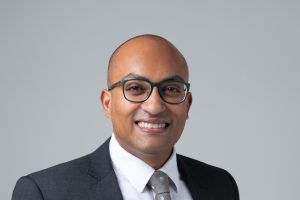
Anirvan Dutt Chaudhuri, General Manager of Novo Nordisk Hong Kong, brings nearly 15 years of commercial leadership experience across global markets including Denmark, Switzerland, the US, Turkey, and now Hong Kong. Since arriving in 2024, he has transformed the local affiliate by building critical functions, expanding cross-border collaboration, and driving market leadership in diabetes and obesity therapeutics, while navigating Hong Kong’s unique healthcare landscape.
Could you provide an overview of your trajectory within Novo Nordisk over the past 15 years, including the geographical markets and functional expertise you have developed?
I have been with Novo Nordisk for nearly 15 years, with my anniversary approaching next year. My journey commenced in Denmark following the completion of my education in the US. After establishing my foundation at headquarters, I undertook roles in the US, Switzerland, Turkey and now Hong Kong.
Throughout my career, I have maintained focus exclusively on commercial functions, blending strategic and operational responsibilities. In Denmark and in the US, I held mainly analytical roles, being responsible for forecasting and marketing effectiveness while in Switzerland, I led global market access for our rare endocrine portfolio, subsequently assuming responsibility for market development, expansion, and access across this therapeutic area. I then served as Executive Assistant/ Chief of Staff to the Executive Vice President for Rare Disease, who now oversees portfolio strategy at the enterprise level.
My next assignment took me to Turkey, where I directed commercial operations for Emerging Markets, encompassing approximately 70 markets across Africa, the Middle East, and former Soviet Union states. In this capacity, I held responsibility for all commercial functions: marketing, market access, commercial excellence, sales effectiveness, and pricing strategy.
I arrived in Hong Kong in October 2024 and have now spent around a year and a half in my current role as General Manager.
This represents your first General Manager position. What motivated you to pursue this opportunity in Hong Kong, and what were your initial impressions of the market?
I was genuinely enthusiastic about this opportunity. I approached the role without predetermined expectations with a commitment to derive satisfaction from the journey and establish meaningful impact. Hong Kong has exceeded my expectations considerably over this past year.
The city exhibits remarkable dynamism, visible across every facet of society. There exists an impressive “can do” mentality here. Despite its modest size, Hong Kong consistently performs well above its weight class. What particularly resonates is the prevailing ethos that time equals money and therefore merits protection – a principle evident everywhere from local establishments to premium retail environments. This represents a notable contrast to Turkey, where Mediterranean culture supports a more leisurely pace, with tea or coffee rituals forming obligatory elements of business interactions.
Regarding the healthcare sector specifically, I have been thoroughly impressed by the sophisticated knowledge base of our healthcare professionals. Several key opinion leaders in Hong Kong operate at world-class standards. Hong Kong benefits from exceptional universities and medical schools that attract students from neighbouring regions, fostering valuable cross-pollination of ideas and expertise. Because these clinicians possess fluency in English, Mandarin, and Cantonese, they frequently serve as speakers across China, in addition to international forums. This linguistic versatility amplifies their influence considerably.
Internally, the organisation itself punches above its weight. We comprise around 35 professionals – a highly seasoned team with substantial tenure and deep experience. However, upon my arrival, I observed that the affiliate was somewhat resource-constrained and, to a degree, isolated from the broader Novo Nordisk network. This insular positioning perhaps explains why our presence in Hong Kong remained relatively unknown externally.
My initial priorities focused on two critical objectives: first, constructing bridges to connect with the external Novo Nordisk ecosystem; second, deploying resources to mission-critical areas. Regarding connectivity, I established opportunities through short-term assignments, enabling team members to undertake placements in China, whilst simultaneously hosting assignees from other markets.
This represents a significant departure from historical practice in Hong Kong, where cross-border assignments were virtually non-existent. These exchanges have demonstrably enhanced our capabilities, deepened our knowledge base, and fostered greater intellectual flexibility.
Concerning resource allocation, we have established foundational infrastructure for several entirely new functions over the past year: medical affairs, people and organisation (human resources), financial planning, legal and compliance, business development and commercial excellence. Previously, the organisation maintained a heavily sales-dominated structure, thus lacking these essential enabling functions. The implementation of this infrastructure represents critical groundwork for our future sustainability. It has been an intensive year yet deeply rewarding.
Before these structural changes, how would you characterise the organisation’s commercial performance, given the absence of key functions like medical affairs?
I do not conceptualise growth through a short-term lens. While the organisation was performing above its weight class, it was doing so under considerable resource constraints. The lack of some of these functions would eventually manifest in poorer market performance, though perhaps not immediately. The infrastructure we are establishing represents seeds for our future – the foundation for building a more resilient and sustainable organisation over the long term.
From a commercial standpoint, Novo Nordisk Hong Kong has delivered strong results. We currently rank as among the fastest-growing pharmaceutical companies in Hong Kong. When I commenced my tenure, we occupied the twentieth position amongst pharmaceutical companies by market size; within twelve months, we have advanced to fifteenth position – a five-spot improvement. Last year marked a significant milestone as we secured market leadership in diabetes. These represent extraordinary achievements.
Diabetes affects around 10–12% of Hong Kong’s adult population; how is Novo Nordisk addressing this significant health challenge?
As market leaders in diabetes, we maintain substantial investment in addressing this escalating concern. A significant proportion of our activities targets awareness-building, not merely for diabetes in isolation, but for the broader cardio-kidney-metabolic syndrome – a complex health disorder wherein cardiovascular disease, kidney disease, diabetes, and obesity interconnect, mutually exacerbating one another and precipitating considerably worse health outcomes.
We collaborate extensively within this domain, partnering with organisations such as the Youth Diabetes Association (YDA), with whom we have executed numerous initiatives to elevate awareness and focus attention on this healthcare imperative. The YDA has recognised our contributions by designating us as a Caring Company this year.
We participated in the Diabetes Hong Kong Patient Congress, where my team engaged with 500 people living with diabetes, educating them about disease management strategies through innovative methodologies. Naturally, we support healthcare professionals through various initiatives to support our purpose of driving change to defeat serious chronic disease. We collaborate with virtually all prominent key opinion leaders in Hong Kong, supporting their participation in educational programmes at venues such as the European Association for the Study of Diabetes (EASD) and the American Diabetes Association (ADA) conferences.
However, the most critical element in diabetes management remains pharmaceutical intervention, and Novo Nordisk possesses the industry’s premier diabetes portfolio – a position unequivocally validated by our market leadership. We lead in every diabetes segment: we are market leaders in insulin and in GLP-1 therapeutics, and we offer the most sought-after diabetes medications available.
In terms of availability, our complete diabetes portfolio is accessible in Hong Kong across both sectors of the healthcare system. The public system, in particular, has listed all our key products – long-acting insulin, insulin aspart, human insulins, modern insulins, and semaglutide – each governed by distinct reimbursement criteria. This ensures that patients can access our therapies through varying levels of insurance coverage or out-of-pocket expenditure, depending on the channel and treatment prescribed.
Obesity’s recognition as a disease varies widely, often complicating its integration into healthcare systems. How is this issue currently addressed in Hong Kong?
Clinical guidelines for obesity do not presently exist in Hong Kong, though we anticipate this situation will evolve in the foreseeable future. We are collaborating with two healthcare professional organisations – the Hong Kong Obesity Society (HKOS) and the Hong Kong Association for the Study of Obesity (HKASO) – as they develop these clinical guidelines. We are supporting their efforts through educational resources, research assistance, and data provision, with publication expected in the near term.
Could you discuss the trajectory of your GLP-1 obesity medications in Hong Kong? I presume these represent relatively recent market entries, and are not subject to reimbursement?
We were the first healthcare company to introduce an anti-obesity GLP-1 product to this market, a once-daily injection. And recently we launched a once-weekly anti-obesity medication, which I consider to be a genuine paradigm shift for people living with obesity.
What particularly surprised me upon arrival was the obesity prevalence in Hong Kong. One in three adults presents with obesity, and when one incorporates overweight individuals, the ratio becomes one in two.
Obesity in Hong Kong, and more broadly across mainland China, predominantly manifests as central obesity: the “skinny fat” phenotype. It is not readily apparent to casual observation, unlike obesity patterns in the US or Middle East. Individuals here tend to accumulate adipose tissue around the midsection and, critically, visceral fat surrounding organs, which remains invisible and therefore considerably more difficult to diagnose. Visceral fat surrounding organs presents far greater health risks than subcutaneous fat.
This diagnostic challenge contributes to inadequate awareness. Additionally, cultural stigma surrounds obesity in Hong Kong. Obesity is frequently perceived as moral failure – an inability to exercise self-control regarding food consumption, associated with gluttony. In reality, obesity is a serious, progressive and multifactorial chronic disease. I conceptualise obesity as a “gatekeeper disease” because it links to more than 200 comorbidities, including cardiovascular disease – the leading cause of mortality globally.
We face a substantial challenge in Hong Kong, fundamentally rooted in awareness-building. With our once-a-week medication’s launch, I am confident we shall advance progress significantly, as this represents the most comprehensive anti-obesity medication available with benefits extending well beyond weight reduction.
We are substantially investing in this launch, implementing a comprehensive campaign to elevate awareness regarding the perils of failing to recognise obesity, obtain diagnosis, and take the condition seriously.
What regulatory pathway did you follow under Hong Kong’s “one plus” regulatory framework? What were the data requirements for real-world evidence or clinical trials, and did you incorporate data from mainland China?
For our upcoming launch, we did not utilise the one-plus pathway because we had already secured regulatory approval early last year. However, the one-plus framework represents a highly positive development for Hong Kong, and we are actively exploring how to leverage this mechanism for future products, whether for label expansions, indication expansions, or applications incorporating local data from Asian populations. This remains an ongoing strategic process.
Looking ahead, what real-world evidence capabilities do you plan to develop in Hong Kong? With increasing negotiations involving authorities, how do you collaborate with mainland China to gather robust data from Asian patient populations?
We are exceptionally fortunate to operate within Region China, as we receive valuable support from the mainland organisation. Despite Hong Kong’s modest size, the support has been outstanding. From my first day, I needed only to approach colleagues, and doors would open immediately. In addition to short-term assignments and other support mechanisms, we conduct regular exchange meetings with China that yield valuable insights.
Concerning data specifically, we shall certainly leverage evidence generated in China, but not exclusively. We can also examine data from Korea and Singapore to compile evidence for label expansions, access expansions and regulatory approvals.
Given Hong Kong is often described as a small market, probably how to stay relevant as a stand-alone affiliate is an important strategic question?
This is a valid question, and I continuously remind my team that we must perpetually demonstrate our worth and the value we bring to patients and society. I cannot predict the future or what structural decisions may emerge. However, this challenge extends beyond Novo Nordisk – it represents a concern for the entire healthcare sector in Hong Kong. We maintain active dialogue with government authorities, emphasising that they must provide the means for us to demonstrate our value to the broader organisation.
Given the “one-plus” framework allows reference to both FDA and Chinese FDA approvals, how is Novo Nordisk preparing for potential competition in Hong Kong from mainland China’s GLP-1 products, which are often priced more affordably?
Allow me to highlight a striking statistic: currently, fewer than two per cent of obese patients receive proper medical treatment. The market remains vast and largely unaddressed. I maintain considerable confidence in Novo Nordisk’s portfolio and our products. We offer exceptional treatment options, and we have only just begun to tap into this opportunity. Our internal calculations indicate that fewer than 10,000 patients currently receive appropriate anti-obesity medication, while more than 2 million people in Hong Kong exist with obesity complications.
To reiterate: one in three adults is either overweight or obese. Additionally, 1.3 million individuals have metabolic dysfunction-associated steatohepatitis (MASH), formerly known as fatty liver disease. Combined with the 10 to 12 per cent diabetes prevalence, substantial populations suffer from these disorders. The fundamental problem remains the exceptionally low treatment rate, for reasons I have already articulated.
Whilst competition will inevitably intensify, I welcome this development. Increased competition generates heightened focus and awareness. Working collectively, we shall hopefully advance meaningful progress.
With your new global CEO coming from international markets and having overseen emerging markets and global operations, do you expect this background to shape the company’s approach and growth in emerging markets and other regions?
I am genuinely enthusiastic about Maziar Mike Doustdar’s appointment as global CEO. He previously led our International Operations, a portfolio he directed with exceptional energy, delivering outstanding results. I eagerly anticipate his positive leadership as he assumes his new role at the organisation’s helm.
He has introduced an intensified focus on the commercial dimensions of our business, emphasising diabetes and obesity as our key therapy areas. Fortunately, we are already well-aligned with his vision and strategic direction in Hong Kong. My first action upon arriving in Hong Kong was to convene a meeting with my management team to determine our priorities and focus areas. Operating as a small organisation demands absolute focus – we cannot allow ourselves to squander limited resources or time pursuing multiple directions simultaneously.
From the outset, we established that our focus would be exclusively on diabetes and obesity. Within that framework, GLP-1 therapeutics would assume primacy. At that time our current launch had not yet appeared on our launch plans, but we determined as a team that securing this product was absolutely essential. We committed all our energy to making this happen, which is why I am particularly satisfied to report our success. We obtained authorisation to launch several months ago and now have launched in Hong Kong in November.
How would you like to close this interview?
This represents an exceptionally exciting juncture. For the first time, we relocated to new office facilities. We had occupied our current premises for 23 years, so the moment was right for a transition.
With a new office, new personnel, new functions, and new products to commercialise. I am tremendously excited about Novo Nordisk’s future in this market.