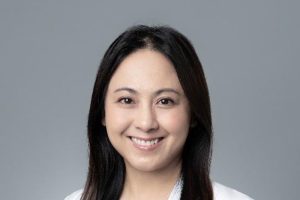
Amy Ho, General Manager of Roche Pharma Hong Kong, returns to the city with a unique blend of diagnostics and pharmaceutical experience at a moment when the healthcare system is redefining its future. Drawing on years of regional leadership, she offers a clear view of how Hong Kong can strengthen its innovation capacity, modernise regulation, and elevate patient care. Her perspective is both grounded and ambitious, shaped by a commitment to developing people and building a more resilient healthcare ecosystem.
What shaped your decision to move from diagnostics into pharmaceuticals, and how does this transition influence the perspective you now bring back to Hong Kong?
I spent more than two decades in diagnostics, and that experience has always been central to how I view healthcare. For many years, diagnostics were not widely recognised. People focused on the test result rather than the clinical insight or the patient’s story behind it. The pandemic changed that. It pushed the field to look beyond the laboratory and to consider how diagnostics can influence an entire healthcare system. That period gave me time to reflect on the broader impact I could make.
In my most recent Asia Pacific role, I worked closely with clinicians to introduce innovative biomarkers that could shift clinical practice and improve patient outcomes. That exposure expanded my perspective and made me consider how I could contribute on a wider scale. It prompted me to look again at pharmaceuticals and to think about how the two disciplines complement each other. Returning to Hong Kong felt like the right step. My regional responsibilities had given me a panoramic view of sixteen markets, including China, Japan, Korea, from north Asia to Southeast Asia, including India, down to Australia, New Zealand in the Pacific.. Yet I wanted to be closer to patients and closer to the practical realities of a single healthcare system. Taking on a General Manager role provided that opportunity.
What I bring today is the combined lens of diagnostics and pharmaceuticals. Diagnostics offers a deep understanding of the patient journey to diagnose a disease and its progression, while pharmaceuticals shape how we intervene throughout that journey. Together, they provide a complete and coherent view of patient management. I see this end-to-end perspective as an important contribution to Hong Kong at a time when the healthcare system continues to evolve. Returning also carries a personal meaning; Hong Kong shaped my values, my aspirations, and my professional character. Coming back feels like an opportunity to give something back to the community and the culture that supported my growth.
Now that you have returned after many years in regional leadership, how do you view Hong Kong’s healthcare ecosystem and its current direction?
Stepping back into the city after years abroad allowed me to look at Hong Kong with a renewed perspective. The strengths that people often highlight are real. Our scientific leaders are widely recognised for their exceptional capabilities in Asia, and their combination of expertise, pragmatism, and determination fosters an environment where progress can happen quickly when the conditions are right. That “Hong Kong spirit” has always been one of Hong Kong’s defining advantages.
The city has also been through a challenging period, yet I see encouraging signs. The economy is stabilising, people are choosing to stay, and the government is investing more deliberately in areas that set Hong Kong apart. Through our discussions with OASES (the Office for Attracting Strategic Enterprises), it is clear that there is a genuine ambition to build Hong Kong into a centre for medical innovation, and this direction is becoming more visible in policy and planning.
At the same time, we must recognise the structural pressures facing the system. An ageing population and the constraints of current financing models require careful attention. Sustaining innovation depends on a framework that can reward it, and that means looking beyond individual drug prices, short-term cost containment, to the overall cost effectiveness of care, long-term societal value and economic resilience. My exposure to diverse healthcare systems in the region reinforces how important it is for Hong Kong to evolve in this direction if it wants to remain competitive and build long-term resilience. This broader view, combined with my familiarity with the local culture and expectations, shapes how I think about the opportunities ahead for the healthcare system and for us at Roche.
How would you characterise the state of the affiliate at this stage, and which priorities have guided your first months as General Manager?
These first months have confirmed how strong our base is. The Roche team brings a deep understanding of Hong Kong, both in the way the healthcare system functions and in the way decisions are made locally, and that familiarity gives us a level of stability that is important in a market going through rapid change. What matters now is how we continue to build capability. Hong Kong’s environment requires people who can adjust to uncertainty, apply their skills in new contexts, and remain confident when the landscape shifts. Developing talent in a deliberate and sustained way is therefore central. People grow when they are encouraged to move beyond what they know, and I want to ensure they have the support and opportunities to do so.
Although we are a team of just over eighty, our ambition remains bold. It aligns closely with Roche’s global objective of delivering twenty transformative medicines in areas of high societal burden by 2029. The pipeline gives us a strong platform for growth. Oncology remains a foundational strength, yet we are steadily expanding our presence in ophthalmology, cardiovascular, renal, and metabolic diseases, including obesity, and we are advancing in neurology. The recent FDA approval of our Alzheimer’s diagnostic, together with the progress of trontinemab into Phase III, places us in a distinctive position to provide an integrated approach to Alzheimer’s care that links diagnostics with an investigational therapeutic.
All of this reinforces my confidence in the organisation’s trajectory. With the quality of talent we have, the science advancing globally, and Hong Kong’s position as a gateway to China and a connection to the world, I believe Roche Hong Kong is well-positioned to broaden its impact and move into its next phase of development.
How is your portfolio evolving in Hong Kong as Roche expands beyond oncology, and how are you supporting the system through this transition?
Oncology remains a cornerstone of Roche’s portfolio in Hong Kong, with our strong leadership in areas such as breast cancer treatment, particularly within the HER2 category. At the same time, we are expanding our focus to create a more diverse portfolio that addresses broader healthcare needs. Late-stage candidates like inavolisib and giredestrant, which showed impressive efficacy, particularly in patients whose tumours had ESR1 co-mutation, highlight this progress. Both candidates demonstrated encouraging results at the recent ESMO Congress, signalling a broader and more diversified oncology footprint that builds on our heritage while opening new clinical avenues.
Ophthalmology has become another important area of growth. Retinal diseases, including neovascular age-related macular degeneration (nAMD) and diabetic macular oedema (DME), are major causes of vision loss in Hong Kong, yet they have historically received less attention than cataract within the public healthcare system. The direction outlined in the 2025 Policy Address is therefore a significant step forward. Greater investment in ophthalmology, together with support for intravitreal injections as the standard of care, strengthens the system’s capacity to detect and treat disease earlier, which is ultimately what prevents avoidable vision loss.
An innovative treatment like ours for nAMD and DME is now accessible in the public sector as a self-financed item under the Safety Net, enabling eligible patients to receive care within the existing reimbursement framework. However, beyond ensuring availability, raising awareness is equally critical. According to the APAC Vision Health Survey 2024, 63.8% of Hong Kong respondents expressed concern about losing their independence due to impaired vision—the highest among all surveyed markets in the Asia-Pacific region (39.1%). Furthermore, despite awareness of diabetes-related complications, routine eye examinations remain inconsistent, with 25.4% of surveyed diabetic patients in Hong Kong failing to meet the recommended standard of annual eye checks, compared to 32.4% across the region. Bridging these gaps is crucial. By leveraging these local insights and collaborating with clinicians and district health centres within primary healthcare settings, we aim to emphasise the importance of retinal health while facilitating a well-informed and seamless expansion of our portfolio into new therapeutic areas, all while continuing to deepen our commitment to oncology.
How are you shaping the capabilities of your customer-facing teams as you move into new therapeutic areas?
The Patient Journey Partner (PJP) model has become an important part of how we work. It shifts the focus away from a purely product-driven approach and centres the conversation on the full patient pathway and partnership. Our teams learn to understand where patients experience gaps, how clinicians navigate those challenges, and where we can contribute meaningfully. This approach develops a broader set of capabilities that allows people to adapt as our portfolio evolves.
Although our PJPs remain anchored in specific disease areas to maintain strong clinical relationships, the core skills we build are intentionally transferable. The ability to analyse patient journeys, understand system-level barriers, and engage clinicians in constructive dialogue applies across different fields, and these competencies help create a more resilient organisation. At the same time, Roche is equipped with deep scientific expertise in specialist areas through our medical and marketing teams. This balance between depth and adaptability is what we need as we expand into new therapeutic spaces. It gives the team confidence to step into unfamiliar territory while ensuring that the quality of scientific engagement remains consistent. On top of this, going further into the digital and AI space would be the key for us to stay relevant and to improve our overall effectiveness and productivity.
How do you view Hong Kong’s ability to create room for innovation within its healthcare budget, and what elements are needed to ensure long-term sustainability?
A central question for Hong Kong is how the healthcare budget can more deliberately support innovation. Drug spending represents only a small proportion of total expenditure, around seven percent, and compared with the US or Europe, overall investment in innovative therapies across Asia is still relatively modest. If Hong Kong wants to maintain progress, it will need a framework that recognises innovation more explicitly and rewards it consistently.
This requires a broader view of value. Looking at price alone does not capture the wider impact of effective therapies, which can reduce long-term healthcare use, support economic participation, and improve quality of life. These elements carry significant societal benefit, and incorporating them into assessment processes would allow decisions to reflect the true contribution of new treatments.
Hong Kong does not yet have a formal health technology assessment framework, although interest in evaluating innovative medicines is growing. The recent Policy Address indicates early steps toward a more structured approach. Drawing on international experience while customising it to the local context will be crucial. Together, these changes could support the financial sustainability of the healthcare system while fostering an environment for meaningful innovation.
How do you interpret the “1+ mechanism” and Hong Kong’s ambition to become a primary regulator, especially with the shift toward faster evaluation pathways?
The “1+ mechanism” represents a meaningful step forward because it shortens the route between innovation and patient access. It creates a clearer, faster pathway for bringing new medicines to Hong Kong and gives us more flexibility to choose the most efficient registration strategy. In parallel, the government is preparing the future Hong Kong Centre for Medical Products Regulation (CMPR), which will gradually take on primary evaluation work. Establishing this framework requires significant resourcing, and this explains the temporary delays companies are seeing. Once the structure is fully built and staffed, I expect timelines to stabilise. For us, the direction is encouraging. It shows a strong intention to modernise the regulatory system and to create an environment that can support earlier access to innovation.
How do you see Hong Kong’s role as a footprint market for research and early clinical development evolving, and how this can interplay with the Mainland?
Recently, Hong Kong became one of the first places globally to recruit Chinese patients into a Phase I (first-in-human) clinical oncology trial, conducted in collaboration with the Clinical Trial Centre at the Chinese University of Hong Kong. This milestone demonstrated that the city can conduct early-phase research to global standards and further strengthened our case for placing more studies here.
Mainland China will always play an important role due to its scale and speed, but Hong Kong brings complementary strengths. Data generated here are influential in global publications and scientific dialogue, and the expertise of local key opinion leaders adds significant weight to clinical advocacy. Our collaboration with Roche China, China Innovation Centre of Roche (CICoR), also positions Hong Kong as an effective bridge between China-based innovation and global development pathways.
Partnership is another part of this story. Innovation in the region is expanding quickly, and we want to help foster that growth. Through the Roche Accelerator, working with Hong Kong Science and Technology Parks (HKSTP) and The Hong Kong Polytechnic University (PolyU), we support early-stage companies such as biopharmaceutical start-up ABRAM Therapeutics Limited while helping cultivate scientific and entrepreneurial talent. This combination of regulatory evolution, clinical capability, and local partnership gives Hong Kong a distinctive position as we prepare for future launches.
What does your new collaboration with OASES represent, and how do you expect it to shape your contribution to Hong Kong’s healthcare system in the coming years?
Being named a strategic enterprise under OASES (the Office for Attracting Strategic Enterprises) is a significant step for us, particularly after more than fifty years in Hong Kong. It gives us the platform to scale our work in a more coordinated way and to contribute more directly to the city’s ambition of becoming a leading life sciences and medical technology hub in the region. The collaboration is designed to accelerate healthcare innovation, but more importantly, it allows us to deepen our partnerships across the healthcare system.
A central focus is the Primary Healthcare Blueprint. Early detection and stronger chronic disease management are becoming essential, and we see clear opportunities to support that shift. In ophthalmology, for instance, earlier identification of retinal diseases is critical. AI-enabled Optical Coherence Tomography (OCT) could eventually be introduced into District Health Centres, which already manage common chronic conditions such as diabetes. Integrating this technology into community care would help identify patients earlier and streamline referrals into the Hospital Authority. Combined with innovations that reduce injection frequency, this creates a more sustainable pathway for managing vision-threatening disease.
Pandemic preparedness is another priority. The experience with COVID-19 revealed how vulnerable the healthcare system can be to respiratory outbreaks, and flu seasons are becoming increasingly unpredictable. Antiviral innovation has advanced significantly over the years, evolving from earlier-generation treatments to newer options that offer improved convenience, such as single-dose regimens, and faster viral load reduction. Hong Kong researchers are playing an active role in this field. A multinational clinical trial led by the University of Hong Kong demonstrated how newer antivirals can help reduce household transmission of influenza. Our ongoing cost-effectiveness evaluations aim to quantify how earlier viral control can alleviate the broader system burden.
We will also continue to advance oncology and chronic disease care. The recent first-in-human oncology clinical trial, conducted with the Chinese University of Hong Kong, showed that the city can run early-phase trials to global standards and aligns with the direction set out in the Policy Address. It reinforces Hong Kong’s position as a footprint market for global development.
Through OASES, the intention is not only to pilot new ideas but to scale them in ways that have lasting impact. By combining scientific innovation, system-level collaboration, and the strengths of Hong Kong’s clinical community, we aim to contribute meaningfully to the evolution of the healthcare system and deliver benefits that are felt across the population.
As you look ahead to the next few years, what would you consider meaningful progress for both the organisation and yourself?
For me, progress begins with people. The organisation’s ability to evolve depends on how far we can stretch our talent, encourage more ambitious thinking, and give colleagues the confidence to operate beyond familiar boundaries. Roche has been part of Hong Kong for more than fifty years, and we remain committed to supporting the city’s ambition to build a strong medical innovation hub. That requires close collaboration across the healthcare ecosystem, because no single actor can drive that shift alone. At the core, the aim is straightforward. We want to accelerate access to innovative therapies and strengthen patient care along the entire journey.
On a personal level, developing people has always shaped my leadership. I am grateful for the growth I have experienced over two decades at Roche, and I want to use that experience to contribute back to Hong Kong. One idea I often return to is the “Both/And” mindset. Many decisions are framed as trade-offs, yet real progress comes from balancing support with challenge. In practice, this means encouraging teams while pushing them to question assumptions, and supporting the healthcare system while also offering perspectives that help it improve.
Roche’s long-term orientation, grounded in its family ownership, reinforces this blend of ambition and pragmatism. It is an approach I intend to carry forward as we look to build momentum in Hong Kong in the years ahead.