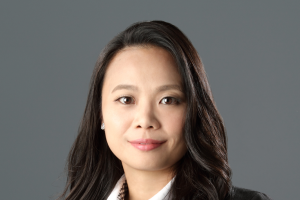
With Takeda preparing for global leadership change and Taiwan rapidly upgrading its innovation and access frameworks, General Manager Alexis Lin is navigating one of the most pivotal periods in the affiliate's 64-year history. Drawing on a career that began far from pharma, she has reshaped Takeda Taiwan into a regional testbed for digital tools, rare-disease solutions, and next-generation launches. In this conversation, Lin discusses portfolio renewal, patient-access breakthroughs, and how Taiwan can position itself as the fastest innovation adopter in Asia.
Could you introduce yourself to our international readers and describe your journey to pharmaceutical leadership?
I am the General Manager of Takeda Taiwan, a role I have held for around five years after serving nearly 5 years as Finance Director. My path into healthcare was rather unconventional: I began my career in finance, a skillset that proved transferable across industries, then spent several years in the automotive sector – hence my continuing passion for cars – followed by time in FMCG. It was only when I moved into pharmaceuticals that I found my true professional calling.
What I enjoy most today is the ability to apply my financial training to broader business leadership. I recently realised my time in these two roles is now almost equal, marking a significant evolution in my career at Takeda which has allowed me to combine analytical discipline with strategic decision-making in ways I find genuinely stimulating.
Takeda is preparing for a global leadership transition. As you enter this new period, what key priorities are guiding your work in Taiwan?
Takeda’s 245-year heritage provides strong continuity. Our organisation has always been anchored in clear values, and this gives me confidence during periods of leadership transition. The challenge for our incoming CEO, Julie Kim, is determining how best to navigate the next wave of innovation amid geopolitical complexity, shifting trade considerations such as Most Favoured Nation policies, and the disruptive impact of artificial intelligence. These forces are reshaping the global operating environment while we work to keep our portfolio relevant for patients.
In Taiwan, many people may not realise we are Takeda’s oldest affiliate outside Japan. This comes with visibility, but also with legacy and historical complexity. Several years ago we embarked on a cultural transformation to redefine who we are. For a long time, people associated Takeda Taiwan with our vitamin B product, Alinamin, or viewed us simply as “a Japanese company.” We needed a clearer identity. Together, we developed a strategic framework built around Collaboration, Innovation, and Agility – CIA – which has become our organisational DNA. This has guided our repositioning as both the global portfolio and Taiwan’s healthcare landscape have evolved.
Given this legacy in Taiwan, how significantly does the affiliate contribute to Takeda’s Asia-Pacific operations and global organisation?
Within Takeda Asia-Pacific, Taiwan contributes far more than revenue – which naturally reflects market size. Regional leadership consistently recognises Taiwan as an Innovation Hub, a place to incubate new capabilities and approaches.
Taiwan offers several advantages: a technology-oriented environment, a highly agile and curious talent pool, and a willingness to experiment. When regional initiatives launch, some markets hesitate to take the first step; Taiwan tends to volunteer. This has allowed us to establish ourselves as the pilot market for a wide range of initiatives.
This is especially visible in digital transformation. Taiwan’s openness to digital innovation has become a signature strength for our affiliate. We serve as a testing ground for digital tools and new operational models before they are scaled regionally.
Examining your current portfolio, how is it structured in Taiwan, and what are your primary growth areas?
Our portfolio is structured across three principal business units. Rare diseases form a significant component, reflecting the impact of the Shire acquisition in 2019. Oncology is another core area and continues to address major unmet medical needs. The remainder of our portfolio encompasses gastroenterology and autoimmune conditions, such as IBD.
Looking ahead, we aim to introduce vaccines to Taiwan. Our dengue vaccine has demonstrated exceptionally strong efficacy and we are hopeful about bringing this important public health innovation to the market.
How do you balance launching innovations with managing Takeda’s legacy portfolio, given Taiwanese physicians’ strong brand loyalty?
Balancing innovation with established products is at the heart of our strategy. We aim to be truly “ambidextrous,” maximizing current opportunities while preparing for the future. As an R&D-driven organization, our mission is to deliver breakthrough innovations and ensure patients have timely access to the latest advances. Since the acquisition of Shire, we have refreshed our portfolio, which now primarily features innovative, growth-stage medicines. At the same time, we remain committed to providing treatments for rare diseases where alternatives are limited. Our top priority continues to be investing in research and development to achieve better outcomes for patients.
How is your team accelerating patient access in Taiwan, historically one of Asia’s slower markets for approval and reimbursement?
We focus on patient access, not only market access. Reimbursement is the endpoint, but there are several steps before that.
Access begins with clinical trials, which provide the earliest opportunity for patients to receive investigational therapies. We then offer named-patient programmes prior to licensure, followed by various access schemes between licensure and reimbursement to address financial toxicity. Ultimately, reimbursement provides the broadest access. At each stage, we proactively identify ways to shorten the path for patients.
The government has been working more intentionally to compress timelines. Participation in local clinical trials reduces regulatory hurdles for NDAs. Priority reviews, orphan designations, and Japan’s alliance review – which allows us to leverage Japanese clinical data – all shorten approval time. In addition, Parallel Review has been introduced, which potentially reducing the overall regulatory & reimbursement review timeline by approximately 6 months.
Approval timelines have improved significantly, though reimbursement remains the harder step. Taiwan now employs several mechanisms to accelerate access: conditional listing for therapies requiring further evidence, the Cancer Drug Fund inspired by the UK’s NICE model, and Managed Entry Agreements. The government has been notably proactive in working with industry to explore every available route.
You referred to the Cancer Drug Fund, expected to reach nearly USD 300 million. Have you used it yet, and how effectively is it operating?
Not yet for our products, though we hope to in the future. The fund only launched in February, so we have just a few quarters of data. It is too early to judge performance or sufficiency.
That said, we appreciate the government’s commitment to creating this mechanism. It acknowledges the urgency of cancer care and aligns closely with the Healthy Taiwan initiative, which prioritises reducing cancer mortality.
From an industry perspective, we will be watching two indicators over the coming quarters: utilisation rates and the sustainability of funding once the programme transitions back into general budgets. This is the key question.
Importantly, the fund also provides a real-world case study for horizon scanning. Instead of working with projections, we now have live evidence that will help government make more accurate budget decisions.
Regarding horizon scanning and health economics, how extensively are these applied in Taiwan when evaluating new innovations?
Taiwan now uses all three components: horizon scanning, HTA, and Health Technology Reassessment (HTR).
Each year, we submit horizon scanning forecasts to inform government budget planning. Of course, we would welcome larger allocations for innovative therapies, but budget availability is an ongoing discussion. Encouragingly, Minister Hsueh actively looks for opportunities within the system to support innovation, and overall allocations have gradually increased.
Horizon scanning and HTA already apply to virtually all new drug submissions. The area still under development is HTR. The government officially released HTR relevant guidance this year, and we are monitoring how it translates into real-world implementation.
How are you leveraging Taiwan’s sophisticated rare disease environment and partnering with government and patients?
Taiwan offers an exceptionally strong environment for rare diseases. It was one of the first markets to introduce dedicated rare disease legislation and an annual budget line, which provides a level of predictability that many systems lack. We also benefit from a highly effective patient advocacy community – particularly the Taiwan Foundation for Rare Disorders – which has direct access to policymakers and ensures patients’ voices are heard despite small population sizes.
Our work fits into Takeda’s Sustainability Framework, which prioritises Patient, People, and Planet. For patients, we focus on the 3Gs: Good Product, Good Policy, and Good Care.
- Good Product reflects our role in delivering therapies for complex diseases where no alternatives exist.
- Good Policy involves working with legislators, regulators, and advocacy groups to support system-wide improvements, not only product-specific needs.
- Good Care includes patient education and building advocacy capabilities.
For example, in Short Bowel Syndrome we may only treat a very small population of patients in Taiwan, and reimbursement took 1,800 days. This therapy is driven by the needs of children, delivering meaningful and lasting impact on their lives – being able to go to school and grow up with normalcy – is immeasurable. This is what differentiates our work from my previous industries.
What is Taiwan’s potential for clinical trials, both for innovation access and for leveraging strengths like real-world data?
The government has created strong incentives for clinical trials. High trial volumes can qualify a company for price premiums, CPP requirements can be waived when Taiwan participates in trials, and local laboratories receive additional benefits. These are tangible mechanisms that encourage investment.
From an industry perspective, Taiwan’s biggest advantage is data infrastructure. The adoption of FHIR, a global data-interoperability standard, is a major step forward. Taiwan produces excellent clinical quality, but recruitment can be slower due to smaller population sizes. The real question is how quickly data can be aggregated. Standardised file formats – including structured symptom and disease documentation, not just prescription records – are the foundation. With FHIR now being tested across all medical centres, we expect Taiwan’s attractiveness for trials to increase significantly.
The main gap is Phase I capacity. Only limited sites can conduct Phase I studies today. Expanding this would greatly enhance Taiwan’s competitiveness.
We currently run multiple trials here, including autoimmune expansion studies, oncology programmes, and a Phase II gastroenterology asset. Taiwan remains a strong option for mid- and late-stage development.
How do you advocate for Taiwan to gain increased investment and visibility from the global organisation?
We work under two guiding principles: being externally relevant and internally efficient. I believe each affiliate should focus on where it can contribute most effectively.
To articulate Taiwan’s strengths, I developed the ABCDE framework:
- A – Accessibility: 99.9 percent of the population is covered under universal healthcare.
- B – Breakthrough: Taiwan government has introduced multiple initiatives to expedite the introduction of innovative medicines, aiming for the treatment options aligned with the international updated guidelines.
- C – Cost Containment: like all health systems, Taiwan must balance limited resources with growing demand.
- D – Digitalisation and Decarbonisation: Taiwan is highly advanced in digital health, and hospitals increasingly incorporate sustainability into KPIs.
- E – Engagement Matters: policymakers are accessible when you bring constructive, evidence-based proposals.
This serves as a narrative for global teams to understand why Taiwan is a strong hub for new product introductions, digital development, and talent. In 2026, we will launch five new products, reinforcing Taiwan’s role as an incubation centre. We are also pioneering EMR-based diagnostic tools to identify potential rare disease patients from historical data, an example of capabilities the global organisation regularly draws on.
How do you personally stay motivated – and how do you motivate your team through complex challenges?
Our CEO, Christophe Weber, often says: “GMs have the best job at Takeda – you create change and see its impact.” I agree. Some days are incredibly rewarding because you can directly see how decisions improve patients’ lives.
Takeda’s LoC-centric model empowers our Taiwan team to act as one agile unit. Clear accountability and shared goals let us quickly solve problems without red tape. This approach allows us to design initiatives that directly meet local patient needs, ensuring our work has an immediate and meaningful impact in the community. By collaborating closely and focusing on relevance, we deliver innovative solutions that truly make a difference for patients in Taiwan.
Personally, resilience comes from staying active. I run daily, play competitive badminton, and train with weights weekly. I often joke that either the workout will break you or the job will – so you need to stay strong.
For the team, motivation comes from purpose. We are trying to solve the hardest diseases. Elon Musk aims for Mars; we aim to cure conditions that were once considered untreatable. That sense of mission drives us.
Culturally, humility is essential. Technology is evolving rapidly, and there is far more I don’t know today than when I graduated with only PowerPoint, Excel, and Word to master. Now we talk about agentic AI and complex computational tools. Staying humble and eager to learn helps the team work cohesively. The goal is not to outsmart colleagues, but to enable each other’s success. That creates sustainable motivation.
Looking toward the future, what do you aspire to achieve for Takeda Taiwan over the coming years?
Looking forward, my priority is to bring a series of transformative therapies to Taiwan – treatments for conditions where options are limited or non-existent, from narcolepsy to dengue. These launches represent the next chapter for our affiliate and reflect the profound shift in our portfolio since the Shire acquisition, which now plays a significant role in our business.
At the same time, we must navigate an external environment shaped by Most Favoured Nation policies and global pricing pressure. Our exposure to tariffs may be limited, but the strategic implications remain. Internally, the defining question is how quickly we integrate artificial intelligence into our operating model. Workforce planning increasingly considers the balance between human roles and AI agents, and the organization will inevitably evolve into a function managing both people and intelligent systems. This transition is essential to sustaining our mission around Patient, People, and Planet.
More broadly, we aim to contribute to a more innovation-driven healthcare system. Policymakers in Taiwan, including Shih Chung-Liang, Minister of Health and Welfare, have shown real openness to experimenting with new models – from “Health Coin” preventive-care incentives to reimbursement approaches that reward measurable outcomes rather than activity alone. This willingness to pilot ideas is distinctive and aligns strongly with our view that health should be treated as an investment.
Ultimately, our responsibility – and that of every serious pharmaceutical organisation here – is to bring meaningful innovation, build strong partnerships across the ecosystem, and support solutions no single actor can deliver on their own.