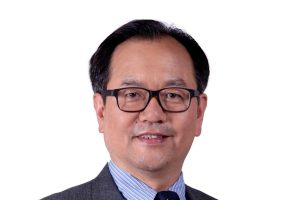
EnCureGen’s founder Dr Aimin Hui draws on a career spanning oncology, molecular biology and global R&D leadership to pursue the next generation of mRNA therapeutics. His role in driving the Fosun-BioNTech COVID-19 collaboration shaped his belief that mRNA can extend far beyond infectious disease, and from Guangzhou International Bio Island he is now building a platform aimed at overcoming the core scientific barriers to therapeutic cancer vaccination.
What experiences across your clinical and scientific career most influenced the path that ultimately led you to EnCureGen?
I began my career as an oncologist after graduating from Hebei Medical University, China’s first government-established Western-style medical school in 1894. My early years were spent as a surgeon in a cancer hospital, treating lung and oesophageal cancers, which provided a firm clinical foundation. I later moved to Japan, where I focused on liver cancer and living donor liver transplantation under Professor Masatoshi Makuuchi. That work led to a first-author publication on liver transplantation with a living donor in Transplantation in 2000 and ran in parallel with my growing interest in cancer biology. I completed a PhD and postdoctoral research, eventually becoming an associate professor at the University of Tokyo. Our group’s contributions to the molecular understanding of hepatocellular carcinoma led to my invitation to write the liver cancer chapter in the second edition of Molecular Genetics of Cancer, published in 2000.
I continued this trajectory at the National Cancer Institute in Bethesda, where I spent almost seven years in the Neuro-Oncology Branch working on translational research with a focus on oncology drug development. This period allowed me to integrate clinical insight, molecular mechanisms and early clinical development, and it became the bridge to my transition into industry. Roles at GE Healthcare and Cephalon provided the initial exposure to the biopharmaceutical environment and prepared me for broader responsibilities.
My work at Takeda in Cambridge, Massachusetts, marked a significant step. I led the global clinical development and registration of ixazomib for multiple myeloma as Global Clinical Lead and Global Submission Head, where optimising the clinical and regulatory strategy helped narrow a multi-year gap with a competitor to only a few months by the time of FDA approval. In China, we moved even faster, securing approval roughly three years earlier than that same competitor by designing a global Phase III trial with a China extension. This approach helped address the long-standing drug lag between China and Western markets and demonstrated how an integrated clinical development and registration path can reshape timelines.
I later served as Vice President of Clinical Development in Oncology at Sanofi, and subsequently as Executive President, President of Global R&D, Chief Medical Officer and Chair of the Scientific Committee at Fosun Pharma, also as a Fosun Global Partner. Alongside these roles I contributed to national committees focused on oncology research and vaccine development and became Vice Chairman of the Oncology Drug Clinical Research Committee under the China Pharmaceutical Innovation and Research Development Association. I also hold an industrial professorship at the State Key Laboratory of Respiratory Disease at Guangzhou Medical University. These combined experiences, spanning clinical oncology, molecular biology and global drug development, now inform the work we pursue at EnCureGen.
How did the early stages of the COVID-19 pandemic shape your engagement with mRNA technology and your role in the Fosun-BioNTech partnership?
My involvement with COVID-19 began almost immediately after the viral sequence was released. When BioNTech launched its Project Lightspeed initiative at the end of January 2020, I contacted Ugur Şahin, BioNTech’s co-founder and CEO, to explore a potential partnership for Greater China. We met soon after in Boston, then later in February convened with China’s Centre for Drug Evaluation (CDE) on a development plan in China and, by mid-March, formalised an agreement granting Fosun Pharma rights to develop and commercialise the vaccine across Mainland China, Hong Kong, Macao and Taiwan. My role was to initiate, structure and guide this collaboration during an extremely compressed and uncertain period, ensuring that the scientific and regulatory progress moved at the pace required by the crisis.
This work built on my earlier exposure to mRNA technology. After joining Fosun Pharma in 2017, I had already engaged in discussions with Moderna on potential oncology vaccine programmes and had followed the field closely. When COVID-19 emerged, we returned to those conversations, although we did not reach a final agreement. I then approached BioNTech. After negotiation, we established a structure that combined an upfront component with an equity investment, allowing us to move forward quickly. Within weeks, we had initiated preclinical work, filed the IND with the CDE and launched phase I and phase II trials of the BNT162 candidates in Chinese adults. These studies, involving more than a thousand Chinese participants, produced robust safety and immunogenicity data, together with preclinical data later published in Nature Medicine, The Lancet Regional Health, and Vaccine et al and led to regulatory decisions in Hong Kong, Macao and supported authorisations in several other Asian settings.
Given that no mRNA vaccine had ever been approved at the time, regulators naturally sought clarity on the science and safety framework. The responsibility of drug makers was to explain the platform and its controls in detail, which helped establish confidence in the approach. The strength of the early clinical data, together with the global results that followed, confirmed the scale of what was unfolding. In mid-2020 I predicted publicly that at least one COVID-19 vaccine would be authorised by the end of that year or early 2021, and the subsequent Pfizer-BioNTech phase III results aligned with that assessment. The scientific momentum, the speed of development and the clinical value demonstrated during the pandemic reinforced my conviction that mRNA would extend far beyond COVID-19 and shaped the direction I chose to pursue in the years that followed.
What factors guided your decision to establish EnCureGen, and how did you lay its foundations on Guangzhou International Bio Island?
I founded EnCureGen in 2023, when it had become clear that the impact of mRNA technology would reach far beyond the pandemic. I moved alone to Guangzhou International Bio Island in June of that year to register the mainland operating company and begin establishing our R&D base. Over the next few months, we launched our initial projects, built laboratory infrastructure and recruited the earliest members of the team. Starting in this focused, hands-on way allowed us to define the scientific direction from the outset and to advance quickly without unnecessary complexity.
The choice of Guangzhou was driven by practical considerations rather than the presence of an existing local mRNA ecosystem. My background spans clinical oncology, molecular biology, translational research and global drug development, and I already had deep experience with mRNA from the Fosun-BioNTech collaboration. What I needed was a stable base, access to capital and the ability to attract the right people. The Huangpu district and Bio Island offered policy support, facilities and a supportive industrial environment, which provided the conditions necessary to build the capabilities internally. Expertise in mRNA resides in people, not geography, and our task was to assemble a team capable of developing the platform independently.
Following my departure from Fosun Pharma, we completed a seed financing round through EnCureGen Holding Company Limited with the support of Guoju Venture Capital, Danlu Capital, Yingke Capital, Qinzhi Capital, and the local development zone fund. With this backing, we formalised the corporate structure, recruited our first scientists and began assembling the technical foundations for long term development. What started as a one-person effort has now taken shape as a functioning organisation with a developing pipeline and a growing footprint on Bio Island, built step by step from the ground up.
How are you deploying mRNA technology at EnCureGen, and what gives you confidence in the potential of therapeutic vaccines in cancer?
Our work starts from the premise that mRNA is not limited to preventive vaccination but can serve as a genuine therapeutic approach in oncology. Most of our programmes are designed as anticancer interventions built on mRNA, supported by a platform that also allows us to contribute to infectious disease vaccines when appropriate. The scepticism around cancer vaccines usually reflects the scientific obstacles that have hindered the field for years rather than an inherent limitation of mRNA itself, and I have always believed that progress depends on addressing those bottlenecks with precision.
For me, two elements determine whether an mRNA cancer programme has a chance to work: the quality of antigen selection and sequence design, and the performance of the delivery system. If either piece underperforms, the biology collapses. This is why we built five tightly linked internal platforms. enCureVac manages antigen and sequence optimisation; enCureNeo supports tumour antigen and neoantigen discovery, including personalised designs; enCureLip is our proprietary lipid nanoparticle system; enCurePro gives us GMP scale mRNA manufacturing capability; and enCureQua provides analytical and quality oversight. Together, they create an integrated framework from concept to clinical-grade material, which is essential for a modality that still lacks mature global standards.
Within that framework, the delivery system stands out as a major differentiator. Our lipid nanoparticles (LNPs) are not iterations of existing systems. They have distinct microstructures, demonstrate higher encapsulation efficiency and, based on our internal data, can achieve the needed delivery with a considerably lower lipid burden, which matters both for tolerability and cost. In preclinical comparisons, protein expression from our formulations persists longer than from reference LNPs similar to those used in the first generation of COVID-19 vaccines. Most importantly, mRNA vaccine encapsulated with our LNP, enCureLip, can be stably stored at -20 degree centigrade for at least a year, outperforming classical LNPs. On the mRNA side, we place heavy emphasis on untranslated region engineering. By combining AI-driven design with high throughput screening, we identified 5′ UTR sequences and 3′ UTR sequences that, according to our internal data and patent has been approved, can more than double protein expression relative to conventional designs. This is consistent with where the global field is moving and gives us the flexibility to build programmes that respond more effectively to the biological demands of cancer immunotherapy.
The real test, however, is whether the immune response can be strengthened and sustained at a level that gives patients a meaningful chance at durable control. Solid tumours relapse because the T cell response is either insufficient to clear all malignant cells or too short lived to maintain pressure on residual disease, especially within an immunosuppressive tumour microenvironment. Our approach is designed to address both challenges. We combine careful antigen selection, UTR optimisation and our LNP architecture with innate immune enhancers and an inbuilt adjuvant effect to generate stronger and more persistent T cell activity. In our preclinical models we see encouraging durability, but we remain disciplined about the steps ahead. We have confirmed the preclinical candidate, are preparing GMP grade material and completing the safety and toxicology work needed for an IND. If the data continues to progress, we expect to enter first in human studies around late 2026 or early 2027. The entire effort is driven by a simple conviction: if you address each of the scientific limitations directly, mRNA cancer vaccines can become a viable therapeutic class.
How are you approaching clinical development and global fundraising for EnCureGen, given the scepticism that still surrounds mRNA cancer vaccines?
The only credible way to convince investors is through data that show genuine differentiation. Capital will not respond to general enthusiasm for mRNA, especially now that many remain unconvinced about its viability in oncology. This is why I focus on technical problems that are still unsolved rather than competing with large pharmaceutical companies in established fields like antibodies, small molecules or ADCs. Those areas are already occupied by groups with scale, infrastructure and global development capabilities. A company of our size must pursue challenges where the technology barrier is high and where success can create real strategic value.
Clinically, we intend to move forward in both China and the United States. China provides a cost-efficient environment for early studies, while US participation strengthens scientific credibility and speaks directly to international investors. Structuring development across both geographies gives us more flexibility and allows us to build a programme that can resonate with global audiences as we prepare for larger financing rounds.
How do you think about the commercial potential of your LNP technology, and under what circumstances would you license it to third parties?
When we began, I designed our lipid nanoparticle systems to enable our own programmes rather than to build a separate licensing business. The priority was to establish delivery technologies we could fully control and optimise without relying on external partners. In recent months, though, interest has increased. Several groups in the United States, and China have approached us, including companies developing mRNA therapeutics and CDMOs that produce RNA-LNP formulations but do not hold strong lipid-related intellectual property. As a matter of fact, we just signed an agreement with a China-based CDMO. This reflects a broader structural gap in the field. Moderna protects its LNP technology through a strict patent and litigation strategy, while Acuitas Therapeutics has created a successful model around nonexclusive licensing to partners such as Pfizer, BioNTech and Bayer.
Given this demand, we have started to evaluate selective licensing opportunities. It requires careful judgment. I will not license the same LNP system to a group working on the same indication or target as we are. Even Acuitas structures its agreements narrowly by product rather than offering broad platform rights. For us, the most practical path is selective collaboration with CDMOs or developers whose programmes do not overlap with our own pipeline. This allows others to use our delivery systems while ensuring that the core strategic value remains with EnCureGen.
What direction have you taken with your oncology programmes, and how are you structuring financing and team resources to support them?
Our first oncology programme targets a tumour-associated antigen within a specific solid tumour type, an opportunity we estimate at approximately USD 300 million globally. In parallel, we are advancing a personalised neoantigen vaccine. The logic is straightforward. A tumour-associated antigen provides a defined path into the clinic, while the neoantigen platform allows adaptation across tumour types because the underlying mRNA and delivery technology remain constant and only the antigen design changes. This gives us both focus and flexibility.
To deliver these programmes, we completed a seed round of about RMB 100 million and we are preparing a pre-A round in the range of USD 20 to 25 million. Investor origin is not a constraint. Foreign investors can commit directly in US dollars, while Chinese investors can participate after completing the standard outbound investment procedure. The capital will allow us to advance two clinical programmes and two additional preclinical projects.
Operationally, we now have almost 30 people. It is a lean structure, but the team is highly specialised, with members who have several years of hands-on mRNA experience. I lead the organisation as chair and CEO and oversee scientific direction, even if I do not formally use the CSO title. This combination of focused leadership and technical depth allows us to move quickly and maintain the clarity needed for a first in human study.