
How can mid-sized European pharmaceutical companies, which lack the scale of both Big Pharma and the major generics players, compete in a country like France? Norgine – a specialist player which turns over around EUR 600 million annually – seems to have hit upon a solution: continuous adaptation.
“What distinguishes Norgine is the organisation’s constant evolution,” explains Cyril Tavier, Norgine’s general manager for France, Belgium, Luxembourg, and its home market of the Netherlands. Tavier has spent the past decade at the company following spells at MSD, Novartis, and Stallergenes Greer.
“Every few years, we revisit our structure, portfolio, or operating model, which creates a culture of movement and curiosity,” he adds. “That rhythm forces us to stay close to the realities of each market within Europe, adapt quickly when opportunities arise and build new capabilities as we grow.”
Still privately owned, but with Goldman Sachs Asset Management as the majority shareholder since 2022, the company’s latest operational shake-up has included shifting some of its legacy products into the non-reimbursed consumer healthcare space. Given the continuous, well-documented squeezes on reimbursed medicine prices in France, this move into CHC could have a sizeable impact on the revenues that these products can generate. However, it has required Norgine to adapt new marketing and engagement strategies, as Tavier explains.
“CHC depends on strong digital engagement and pharmacy activation,” he states. “We are also adapting distribution models to reflect evolving patient behaviours, all to provide more accessible and modern pathways for patients while ensuring our sustainability.”
At the same time, the firm has been striking deals with the likes of Alnylam and Lilly to bring niche specialised medicines to Europe. “As internal R&D became less viable for a mid-sized organisation like ours, we pivoted toward partnerships, licensing and targeted acquisitions,” explains Tavier.
“The expansion of our speciality footprint beyond its traditional scope, including into women’s health, reflects how mid-sized European companies can contribute to innovation across multiple fields, including areas of high unmet need.”
Perhaps most excitingly, last year Norgine bolstered its rare disease portfolio through the acquisition of French outfit Theravia, which already has five rare disease products on the market. This has particular relevance for France, which – as explained in depth elsewhere in this report – is a global leader in rare disease diagnosis and care.
“The French ecosystem is particularly effective at identifying rare-disease patients and supporting long-term treatment,” says Tavier. “Building on this expertise while expanding these products internationally is a central part of our strategy.”
For players like Norgine with limited resources, stepping into new therapeutic areas – especially those as complex and diverse as rare diseases – could be seen as a risk. However, Tavier is confident that the company’s collaborative approach will serve it well in any field.
“What truly differentiates us is the way we build relationships with the medical community,” he opines. “Over time, we established a partnership-driven philosophy in gastroenterology, which we have successfully carried into newer areas such as rare diseases. Trust has been built over many years through close interactions with physicians, scientific teams and regulatory stakeholders, allowing us to step into adjacent specialities with credibility.”
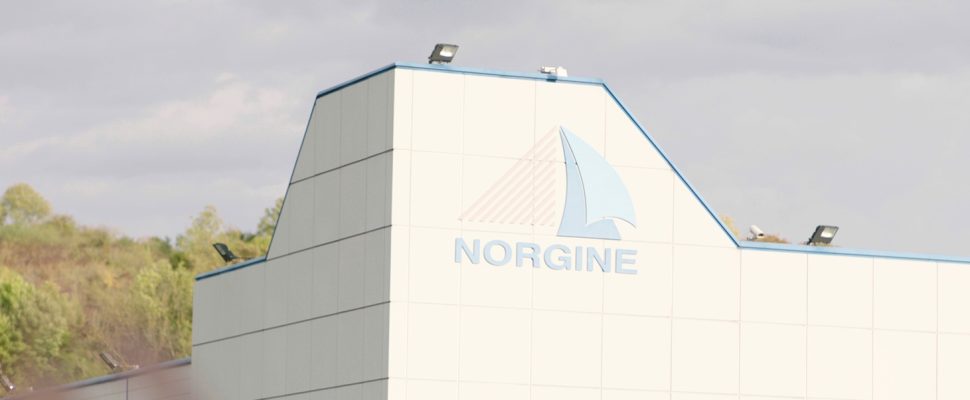
A final differentiating factor behind Norgine’s success is manufacturing. The town of Dreux, an hour west of Paris, plays host to one of Norgine’s two global production sites, allowing the company to both manufacture its own products within France and operate as a contract manufacturer for a select group of partners. “This blend of internal capability and external flexibility gives us a reliable and agile operational platform, which stakeholders value in development work, launch execution and industrial delivery,” notes Tavier.
Norgine’s Dreux site is also contributing to France’s industrial sovereignty goals. Like much of Europe, the country is attempting to wean itself off imported pharmaceuticals and ingredients, making local production a national priority. Despite its modest size, Norgine was even selected to participate in the 2025 ‘Choose France’ Summit, a major event held at the Palace of Versailles bringing together business and political leaders to promote industrial investment in France.
“Only a small number of companies across all sectors are invited to Choose France each year, so being included was both an honour and a strong signal of confidence in the direction we are taking,” beams Tavier.
Never standing still and never missing an opportunity seem, therefore, to be the name of the game for Norgine. Expect to see this unheralded but quietly impactful outfit maintain its deep commitment to France and Europe in the coming years, while constantly adapting to patient, market, and governmental need.