
European biotech’s recent struggles are well documented. Deep-pocketed investors with sufficient risk tolerance to fund potentially breakout companies are thin on the ground, and Europe is losing touch with both the US and China every year; recent data from ING shows that the percentage of global new drug approvals originating from Europe halved between 2015 and 2024.
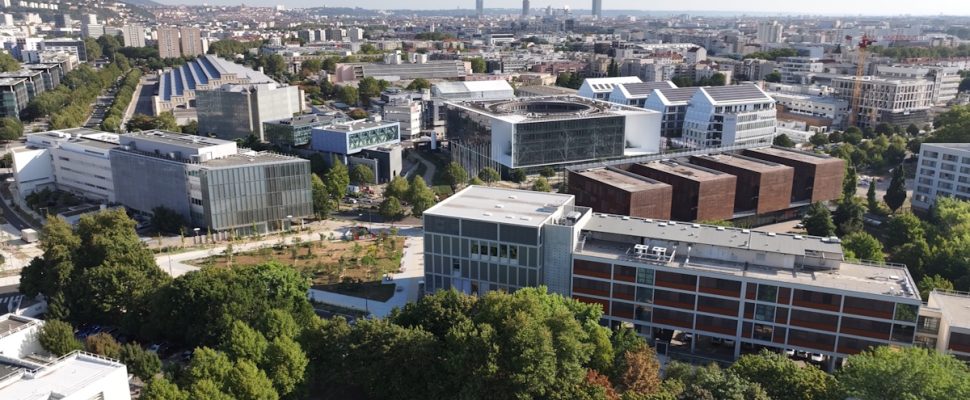
Within this challenging context, though, there are glimmers of light, not least from Lyon. Both talent and capital are emerging from the city’s well-established industrial giants, as well as its universities, with more health-related start-ups, spin-offs, and biotechs than ever before.
A full 200 of Lyonbiopôle’s 250 members are small and medium enterprises (SMEs) and, while Lyonnais companies are not yet attracting EUR 100 million funding ‘mega-rounds,’ the city has seen a high volume of smaller EUR ten to 40 million ‘industrial rounds, raising a record EUR 240 million for Lyonbiopôle members in 2025.
“Sanofi Pasteur and bioMérieux, along with animal health-focused Merial (now part of Boehringer Ingelheim) and the CRO Charles River have acted as anchors of the city’s start-up scene,” explains 33 Californie’s Stéphane Legastelois.
“Many professionals trained within these large companies went on to create start-ups, some growing into mid-sized enterprises. This has generated a dense network of CROs, CDMOs, and specialised firms in Lyon that is unique in France,” he adds. Legastelois’ fund invests in companies not yet sufficiently de-risked to attract venture capital funding via a Series A round and has achieved four exits thus far.
He continues, “for founders and investors, proximity matters. In Lyon, CROs, investors, non-profit funding bodies, and industrial partners are all accessible within the same ecosystem. This density significantly increases the likelihood of success for early-stage companies. It is the reason why around three-quarters of our investments are now based in Lyon, and why entrepreneurs increasingly relocate here to build their businesses.”
For founders and investors, this proximity is a competitive edge. In the biotech space specifically, recent success stories illustrate the region’s potential to produce high-value clinical assets.
Perhaps the most significant is Mablink Bioscience. Founded on research from the University of Lyon, Mablink developed the PSARLink™ platform, a proprietary hydrophilic “linker” that allows for more stable and effective Antibody-Drug Conjugates (ADCs). The potential of this platform was so significant that Eli Lilly acquired the company in late 2023 while it was still in the pre-clinical stage; a rare feat that underscored the value of Lyon’s platform science.
Then there is Amolyt Pharma. Specialising in rare endocrine diseases, Amolyt developed Eneboparatide, a therapeutic peptide for hypoparathyroidism. After successfully advancing the candidate through Phase II and III clinical trials using Lyon’s hospital network, the company was acquired by AstraZeneca for USD 1.05 billion in 2024, marking one of the largest biotech transactions in French history.
“Today, we see new emerging leaders reaching critical scale,” notes Lyonbiopôle General Manager Teddy Breyton, who highlights the story of MaaT Pharma. A pioneer in microbiome ecosystem therapies, MaaT has raised over EUR 130 million to date and is currently in a pivotal Phase III trial for their lead candidate, Xervyteg®, targeting acute Graft-versus-Host Disease (aGvHD).
Breyton also points to Osivax, which is developing a “universal” broad-spectrum influenza vaccine using its oligoDOM™ nanoparticle technology. Osivax has raised over EUR 42 million and is currently conducting the Phase 2b ‘Asuniva’ trial, with a major data readout expected in mid-2026.
Lyon’s service providers are also proving able to support the unique and complex needs of the city’s emergent biotechs. CDMO Skyepharma, for example, has been a crucial partner in MaaT Pharma’s journey to Phase III clinical trials.
“We launched the Skyehub Bioproduction model with MaaT Pharma in 2022, our first biotech resident, for whom we built a dedicated and fully equipped cGMP facility on our site, reputed to be the largest facility globally entirely dedicated to microbiota-based therapies,” explains Skyepharma CEO Sébastien Mas.
“Their teams work independently while relying on our industrial and quality systems, which allows us to collaborate closely on how their microbiome science is translated into reliable oral products. This set-up remains unique in the CDMO space and has generated strong interest from other biotechs and some non-biotech companies looking for a tailor-made, dedicated facility,” adds Mas.
Despite all these advantages, Lyon faces the same challenges as other prospective biotech hubs, especially those in Europe: building the financing systems and the risk tolerance to translate great science into sustainable and profitable companies.
“A considerable number of biotechs and start-ups with genuinely promising technologies now face the possibility of closure simply because they cannot secure sufficient funding,” laments Lyonbiopôle President Erick Lelouche. “We must therefore determine how best to support these companies, create more fluid financing pathways, and reinforce the ecosystem’s overall resilience.”
33 Californie’s Legastelois adds that “While the industrial, academic, and clinical foundations are strong, financing innovation is a critical challenge across Lyon, France, and Europe. Globally, competition from the US and, increasingly, China is intensifying. Europe risks losing its position if it does not address this gap.”
Lyon cannot solve all of Europe’s problems alone, but it does provide a case study of how a dependable, compact, and well-connected ecosystem, built on centuries of knowledge and investment, and with all stakeholders pushing in the same direction, can continue to birth innovative start-ups.