
Complementing the Lyon region’s strong industrial footprint is a dense network of hospital facilities, only bettered by Paris on the national level. Across 13 hospitals in the Hospices Civils de Lyon (HCL) network, the region hosts 12 percent of all hospital beds in France and makes a core contribution to national research output.
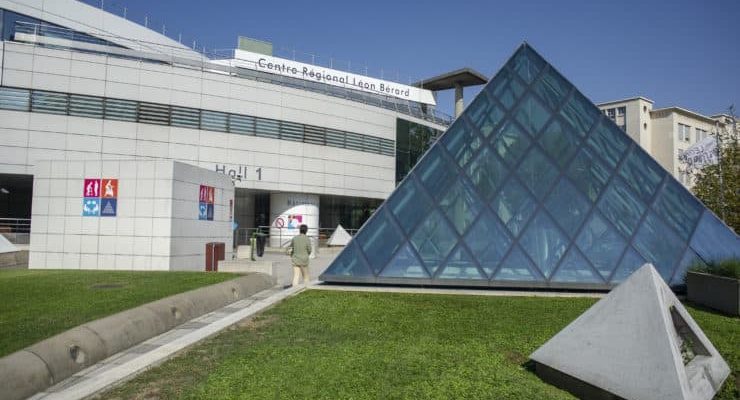
Moreover, the Centre Léon Bérard is France’s largest cancer research site, bringing together more than 350 clinical trials every year (48 percent of which are international trials, and 35 percent of which are very innovative), with 2,100 patients included in research protocols, and 120 clinicians.
Lyon excels at both translational research – testing laboratory discoveries on animal and human populations for the first time – as well as Phase II and III clinical trials further down the line.
This is the result of a concerted effort on the part of the region’s leading healthcare institutions. “In our cancer centres and federation, our oncologists are able to dedicate 50 percent of their time to research rather than having to focus exclusively on patient care,” explains Centre Léon Bérard General Director Jean-Yves Blay, a leading figure in European oncology. “Our strategic advantage lies in the sophisticated integration between basic research and clinical application, combined with our network capacity for rapid patient recruitment into clinical studies,” he adds.
The concentration of expertise within Lyon provides a critical “testing ground” for the local biotech sector, converting laboratory discoveries into market-ready assets. The efficacy of this pipeline is evidenced by recent high-value exits: AstraZeneca’s USD 1.05 billion acquisition of Amolyt Pharma in 2024 was secured only after the company’s lead candidate for hypoparathyroidism completed rigorous Phase II/III validation across Lyon’s clinical network. Similarly, Eli Lilly’s 2023 acquisition of Mablink Bioscience was driven by “PSARLink” technology that was refined using HCL’s specialised oncology patient data to prove its therapeutic index surpassed existing standards.
HCL even established a dedicated Innovation Directorate for translational research in 2021 to bridge some of the gaps between hospital specialties and from bench to bedside. “In practice, innovation within a university hospital is rarely compartmentalised,” says HCL Director General Raymond Le Moign, who manages 24,000 staff and an annual budget exceeding EUR 2.3 billion.
“Advances in technology are often inseparable from organisational change, digital transformation, or new clinical and care pathways. The directorate was therefore conceived to address innovation in all its dimensions, biomedical, digital, pharmaceutical, organisational, and social; its core function is to provide a single, coherent entry point for innovation projects.”
HCL’s Innovation directorate also collaborates closely with Lyonbiopôle and local technology transfer accelerator PULSALYS, thereby tying academic research projects with breakthrough medical potential more closely to market forces.
“By bringing together medical, technical, and managerial perspectives within one structure, the directorate enables these needs to be translated into structured, actionable solutions without recreating internal fragmentation,” concludes Le Moign.#
One extremely promising area for translational research projects within the HCL network is liver disease. This is centred around the Lyon Institute of Hepatology, established in 2023 as one of ten university hospital institutes nationally, with EUR 20 million in funding.
As Cyrielle Caussy, a professor of medicine in nutrition and endocrinologist-diabetologist at Lyon 1 University and HCL explains, “Lyon is the ideal setting for a comprehensive liver centre that addresses all aspects of liver disease. Professor Fabien Zoulim, the head of the institute, is very active in viral hepatitis research. We have a major liver transplant centre, paediatric liver disease expertise, and strong capabilities in the management of liver cancer and alcohol-related disorders.”
She adds, “We can also leverage large patient cohorts that we have built over the past 10 to 15 years, supported by technical platforms for metabolic assessment and transcriptomics that are being developed within the institute. We cover a broad range of techniques that enable translational research, and we are all well-connected with clinical departments. This integration allows us to rapidly envision and implement research findings into clinical care.” This “cohort-driven” approach is what attracts partners like Boehringer Ingelheim, who leverage Lyon’s deep expertise in metabolic and liver health to advance their own global pipelines.
The collaborative and interdisciplinary approach at HCL also extends to clinical development, where the HCL Center for Clinical Research hosts over 2,600 active clinical trials across cancer, viral hepatitis, infectious diseases and HIV, pulmonology, neurology, and internal medicine.
“Research only creates value when its different dimensions are connected,” notes Le Moign. “The conventional separation between fundamental research at universities, clinical research within hospitals, and industrial research led by companies no longer reflects how innovation actually progresses. Our objective in Lyon is therefore to ensure continuity across these three domains, with clinical research acting as a central interface between scientific discovery, technological development, and patient care.”
He continues, “This approach is anchored in a strong academic environment. Lyon has built integrated research structures such as the Centre International de Recherche en Infectiologie, which deliberately brings clinicians and researchers together across virology, immunology, and translational science. These efforts are closely linked with Université Claude Bernard Lyon 1, and with national research organisations including Inserm, CNRS, and the École normale supérieure de Lyon. This proximity allows fundamental research questions to be shaped by clinical realities and translated more directly into applied research that informs medical decision-making.” He concludes, “Our role as a university hospital is not to operate in isolation, but to engage with this environment through structured partnerships.”