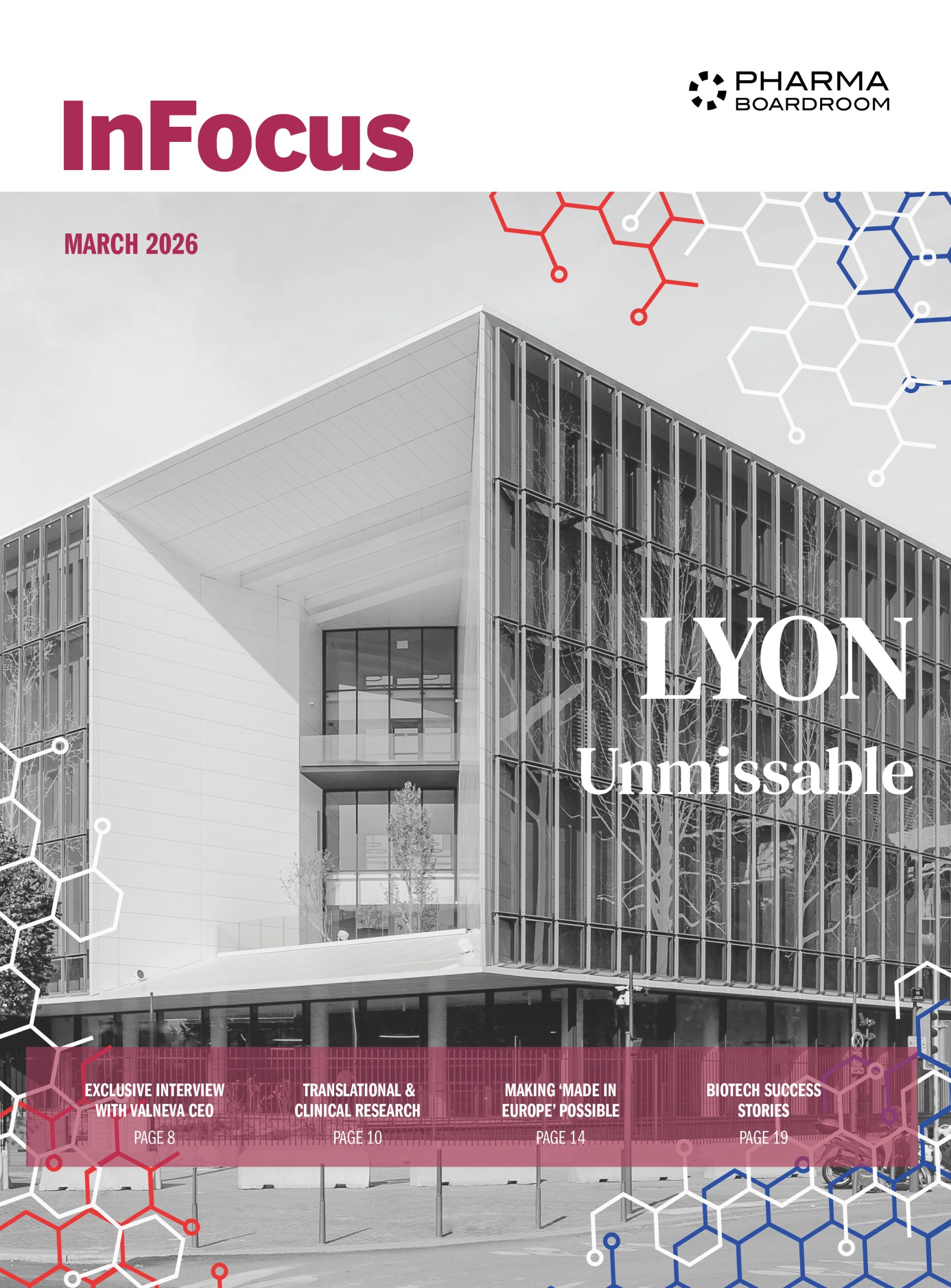

Lyon’s leading biotechs have caught the eye of global pharma in recent years, with two major acquisitions attesting to the quality and sophistication of the ecosystem and laying a path for others to follow.
Amolyt Pharma
When AstraZeneca’s rare diseases arm Alexion acquired Lyon-based Amolyt Pharma in a deal worth up to USD 1.05 billion in 2024, it represented one of the most significant international investments in French biotech in years and a shining example for other domestic firms hoping to take their innovations all the way to market.
Amolyt has an ongoing phase III programme for eneboparatide in rare endocrinology, the first results of which were positive and published in March 2025. Buoyed by these results and eneboparatide’s potential impact on patients living with chronic hypoparathyroidism, Alexion CEO Marc Dunoyer has claimed that it could become a blockbuster, generating over USD one billion in annual sales. The first hypoparathyroidism treatment – Ascendis Pharma’s Yorvipath (palopegteriparatide) – was approved for adults by the US FDA in 2024.
With Amolyt now under the Alexion/AstraZeneca umbrella, its Lyon site has become an important R&D centre for its parent company’s work on bone metabolism and rare endocrine diseases. “This deal highlights the global potential of French research,” says Celine Khalife, VP and general manager for France and BeLux at Alexion.
“Amolyt’s programme was already international, recruiting patients in France but also far beyond, and its team now contributes to a global development effort within Alexion,” adds Khalife. “This integration strengthens our scientific depth and reinforces our long-term ambition to expand our portfolio with late-stage, high-impact rare-disease assets.”
The Alexion deal is not former CEO and Rhône-Alpes native Thierry Abribat’s first rodeo, but it is his greatest success yet. His onco-haematology biotech Alizé Pharma II was acquired by Jazz Pharma for EUR 18 million in 2016, and a year later he sold Alizé Pharma, his first company, to US biotech Millendo Therapeutics.
“I had done well twice with very small, single-asset companies, but I wanted to have more ambition for this company, at the operational level, and even look at an IPO and commercialisation if given the opportunity,” explains Abribat. His strategy involved tying Amolyt to the US early-doors – opening an office in Boston immediately after securing Series A financing and building out an experienced team there – eventually securing the investors to take the firm through Series C and the acquisition.
Mablink Bioscience
Another major milestone for Lyon’s biotech scene came in 2023, when US giant Eli Lilly paid around USD 250 million to acquire preclinical oncology player Mablink Bioscience.
Created from research at the University of Lyon, Mablink’s PSARLink technology platform disguises cancer-killing molecules, allowing them to be delivered precisely to cancer cells while sparing healthy cells. Theoretically, this allows for the broader use of antibody-drug conjugates (ADCs) – a transformative technology that has had a massive impact on cancer patients and generated huge profits for its industry sponsors since AstraZeneca and Daiichi Sankyo launched Enhertu in 2020.
“Mablink’s agreement to be acquired by Lilly is a strong endorsement of our approach, our technology and our team,” said serial bioentrepreneur and Mablink CEO Jean-Guillaume Lafay at the time of the acquisition. “The values we share with Lilly, and our combined expertise are also a unique opportunity to leverage Mablink’s capabilities and endeavours to potentially bring transformative therapies to cancer patients with high unmet medical needs.”
Luc Otten, a former scientific advisory board member at Mablink, feels there were four key factors behind Mablink’s success: a “solid science based around PSARLink,” a “focused” R&D strategy on solid tumours, a steadily built up leadership team, and a strong connection with investors – co-founders Lafay and Warren Viricel raised EUR 35m in VC funding over two years on top of several public grants.
Mablink’s lead candidate MBK-103, known as LY4170156 since the Lilly acquisition, is currently in first-in-human Phase I clinical trials for serious ovarian cancers and is set to provide competition for candidates from the likes of AstraZeneca, AbbVie, and Genmab.
MaaT Pharma
Lyon-based MaaT Pharma is on the brink of a major global breakthrough for microbiome therapies. The gut microbiome is the vast community of bacteria, viruses, fungi and other microbes in our digestive tract. It helps digest food, trains the immune system, produces key metabolites like short-chain fatty acids, and is increasingly linked to everything from metabolism to mood. However, up until this point, research into therapies focused on the microbiome has been under-powered and under-funded, with no such medicines making it to market.
However, In June 2025, the European Medicines Agency accepted MaaT’s marketing authorisation application for a microbiota therapy in acute graft-versus-host disease, which, if approved, would become the first microbiotherapy authorised in Europe, the first microbiome-based therapy worldwide in oncology, and the first approved treatment for third-line aGvHD.
Founder and CEO Hervé Affagard – whose interest in the gut microbiome was sparked during a search for alternative therapeutic options for his cancer patient parents – has led the company from its inception in 2012. MaaT has since raised over EUR 130 million (including an IPO on Euronext, the first microbiome company on the exchange) and built a gut microbiome R&D and manufacturing ecosystem around the firm in Lyon.
“Back In 2014, no CDMO in Europe was able to manipulate a full ecosystem microbiome therapy because of the complexity of producing drug candidates using live bacteria,” reminisces Affagard. “At this time, the Accinov facility within the Lyonbiopôle health cluster was the only site prepared to host us. This later evolved into a more specialised CDMO and the largest full ecosystem manufacturing facility in Europe with Skyepharma.”
MaaT is eagerly awaiting the EMA’s decision on its lead candidate, potentially coming later in 2026, while also researching additional oncology indications such as solid tumours in combination with immunotherapies.
Other Regional Biotechs and Start-ups to Watch
– AIS (Anti-Infective Sugar) Biotech – Anti-infective biotherapies, preclinical
– Allergen Alert – Rapid allergy detection devices, pre-commercial, EUR 3.6 million seed funding, spinout from bioMérieux tech.
– Brenus Pharma – Off-the-shelf oncology immunotherapies, clinical stage, over EUR 30 million raised
– Edelris – CRO working with pharma/biotech clients globally on early-stage discovery tasks
– Osivax – Vaccines for universal influenza and emerging pathogens, clinical stage – lead candidate in Phase 2b trials
– PK Med – Regenerative medicine and cell therapies (injectable, biodegradable micro-implants), preclinical (but with FDA clearance to directly start a Phase II study for its lead candidate)
– Previa Medical – Digital biomarkers and analytics, early adoption phase
– THX Pharma (formerly Theranexus) – Rare neurological diseases, multiple CNS-focused assets, clinical stage, recently announced a USD 200 million licensing deal with Biocodex