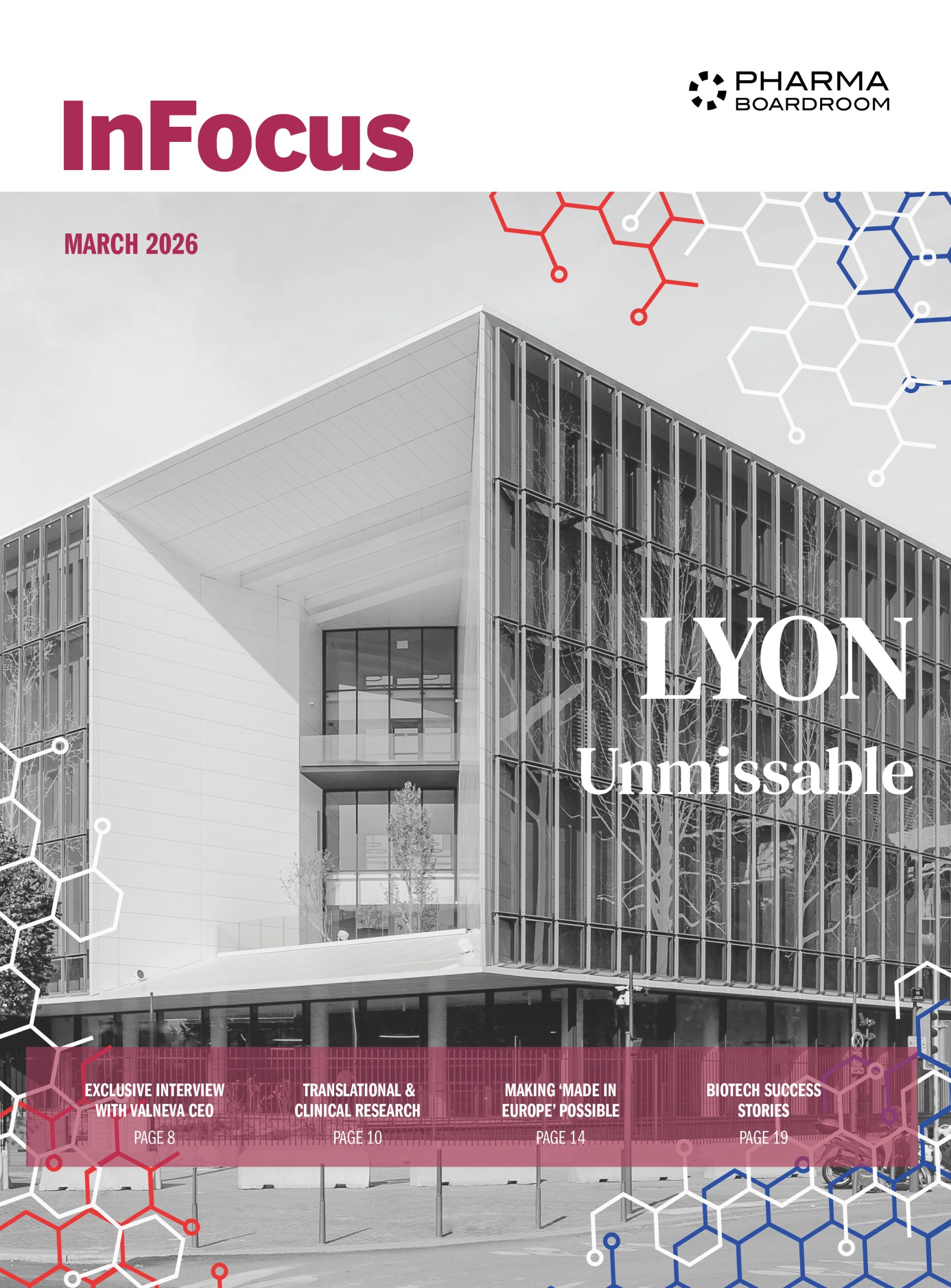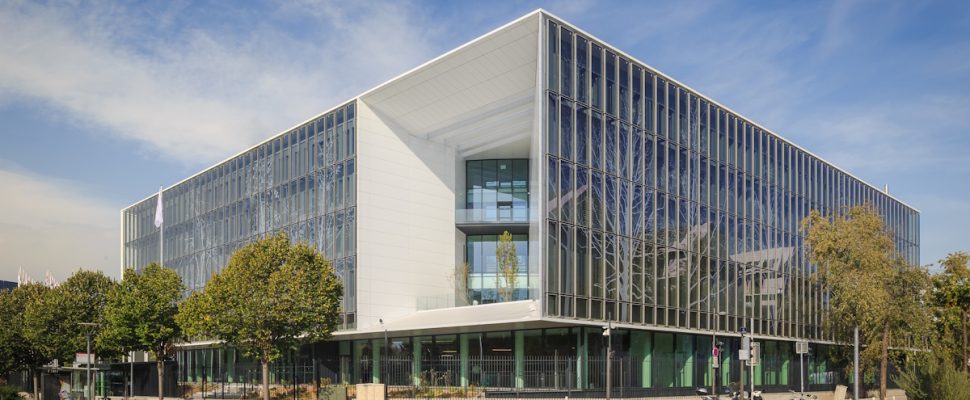

Lyon – recently announced as the host of BIO-Europe Spring 2027 – has long played a vital role in global health and, in 2026, it stands as one of Europe’s most investable life sciences hubs. While less well-known internationally than Basel, Barcelona, London, or Paris, Lyon stands out from the pack through its tightly knit ecosystem of hospitals, research institutes, pharma and medtech manufacturers, biotechs, and service providers. The density and breadth of the ecosystem mean that breakthroughs can be discovered, developed, tested and manufactured within a few kilometres’ radius.
Over 800 life sciences companies are situated across the wider Auvergne-Rhône-Alpes region, with 150 dedicated industrial sites, and Europe’s leading vaccine production centre. The region ranks first in France for biomanufacturing, API production and medtech manufacturing, and fifth among European health clusters.
Lyon’s positioning has not come about overnight; it boasts an enviable legacy as home to the world’s first veterinary school (established in 1761) and one of the earliest vaccine research and production centres on the planet (founded in 1897). Lyon is also where the stethoscope was invented, experimental medicine was first developed, and REM sleep was discovered.
Today, Lyon’s top-notch research institutes and hospitals make it a globally relevant centre for translational and clinical research, second only to Paris within France in terms of trial numbers, and with a proven track record for industry collaborations. Hospices Civils de Lyon, France’s second-largest university hospital, runs 2,600 active clinical trials and initiates more than 700 new studies annually. The wider region hosts 460 hospital facilities and nearly 12 percent of France’s
hospital beds.
Drawing on, but not constrained by, its history, Lyon continues to be France’s leading hub for immuno-infectiology research and employment. 2,500 researchers and over 8,000 jobs in the field are concentrated in the Lyon area which has hosted France’s BioCluster for Infectious Diseases since 2023.
The city has also emerged as a key node for research projects in other therapeutic areas via its network of specialised hospitals. These include Centre Léon Bérard, one of Europe’s leading comprehensive cancer centres, which treats 40,000 patients annually, runs more than 350 clinical trials each year, and is ranked France’s number one site for cancer research and rare cancers.
In cardiology, Hôpital Louis Pradel is one of the largest dedicated centres in Europe, while Hôpital Neurologique et Neurochirurgical Pierre Wertheimer is a major player in neurology and neurosurgery. With the 2023 founding of the Lyon Institute of Hepatology, Lyon has also cemented its position as France’s hub for liver disease research.
This research footprint is supported by a favourable policy environment. France’s Research Tax Credit, widely regarded as the most competitive in Europe, can offset up to 30 percent of eligible R&D expenditure, making researcher costs significantly lower than in Germany, Belgium, the UK, and more than twice as affordable as in the United States.
On the industrial side, the wider Auvergne-Rhône-Alpes region is France’s leading industrial region, with over 500,000 industrial jobs, and Lyon serves as the base for the vaccines division of the world’s ninth-largest pharma company, Sanofi, in vitro diagnostics outfit bioMérieux, and German giant Boehringer Ingelheim’s animal health division.
These firms are helping fulfil France’s industrial sovereignty goals, with Sanofi investing over EUR one billion since the COVID-19 pandemic on high-end biologics and vaccine manufacturing in Lyon. Supplementing these headline-grabbing investments, a cadre of smaller manufacturers have announced investments into the production of low-cost generics and active pharmaceutical ingredients in line with the France 2030 national investment plan.
In terms of human capital, Lyon is well-stocked with researchers, engineers, and executives, hosting 15,000 life sciences students and graduating 150 new PhDs every year from its academic institutions, including Claude Bernard Lyon 1, which ranks among the top 1.1 percent of universities globally. The region counts 9,000 life sciences researchers, nearly 100,000 healthcare-sector jobs, and accounts for 20 percent of all pharmaceutical industry employment in France.
Moreover, continuing the legacy of famed local businesspeople like the Mérieux family, over the past two decades, a new core of bio-entrepreneurs has emerged from Lyon’s labs and boardrooms to start their own firms. These biotech success stories include MabLink (acquired by Eli Lilly while still pre-clinical in 2023) and Amolyt (bought by AstraZeneca in 2024); compelling examples of how Lyon-incubated science can make it to global markets. They also burnish Lyon’s credentials as an emergent biotech hub (Lyonbiopôle member SMEs raised around EUR 2.5 billion between 2016 and 2025).
Finally, there is the city itself; Lyon has much to offer life sciences talent. Ranked as France’s most liveable large city, and just an hour and a half away from world-class skiing in the Alps, overall living costs are around 26 percent lower than in Paris, and the city is frequently cited as one of the gastronomic capitals of the world, boasting 20 Michelin stars. Connectivity is also excellent; the region borders both Italy and Switzerland and has three airports flying to over 120 destinations. Meanwhile, high-speed trains whisk travellers north to Paris, south to Marseille on the coast, or across the Swiss border to Geneva in less than two hours.
In a European market increasingly defined by capital discipline and industrial resilience, Lyon offers something rare: scale without congestion, density without fragmentation, and cost competitiveness without compromising scientific depth.