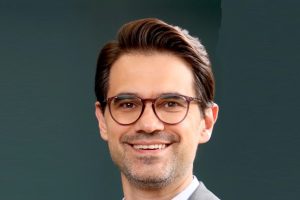
As Hong Kong positions itself as a regional healthcare and clinical research hub within the Greater Bay Area, multinational pharma companies are being asked to play a more active role in shaping access to innovation, generating local data, and integrating the territory into global development programmes. Joaquim Antunes Lopes shares how Boehringer Ingelheim is approaching clinical research, market access, and innovation-led launches in Hong Kong, one of Asia’s most tightly regulated and fast-evolving healthcare systems.
A year and a half into your first general manager role, and first job outside of your native Brazil, what has the experience been like so far? What have been the highlights, and what has surprised you most?
The first big learning has been cultural adaptation – how business is done, how people connect, and how trust is built. Different cultures approach relationships and business challenges in very different ways, and that was something I needed to understand quickly.
When I arrived in Hong Kong, my first objective was very clear: to get to know my team and the people around me. The second was getting to know the market itself. One very positive aspect of Hong Kong is that – while there is always room for improvement – it is a highly mature market. Processes are streamlined, interactions with government are well structured, and there is a strong level of transparency.
The third objective was about being close to the front line. Spending time in the field, interacting with sales representatives and account teams, and understanding how things work in real life. This is essential to get a genuine sense of how we are performing, but also where we can improve. Ultimately, it is about getting real-time feedback on how we can continue to enhance access to our products.
Bringing innovation to market and having products approved by health authorities is only the beginning. The real work starts afterwards, ensuring access is there, that it happens in a timely manner, and that we reach as many patients as possible.
I would also say that my team has made my life much easier. I have a very strong team here, with deep knowledge of local dynamics. When I arrived in mid-2024, the entire team was made up of locals, with a wealth of experience in the Hong Kong market. Combining my own perspective from other markets with this deep-rooted local expertise has really become one of our key strengths.
Across different markets, Boehringer Ingelheim’s portfolio can look quite different. How would you characterise the portfolio mix in Hong Kong – is it more innovation-led or still driven by established brands?
Hong Kong is really aligned with our most advanced and invested markets. Our newer innovations are the main growth drivers here. In some markets, you still see a stronger reliance on very mature brands, and it can take longer to fully embrace innovation. In Hong Kong, it is quite the opposite.
We are increasingly able to bring innovation early, and that is very much aligned with the ambition of the Hong Kong authorities to position the city as a healthcare hub. It is about leveraging those opportunities and making sure we can introduce innovation as early as possible.
Clinical trials are clearly part of Hong Kong’s and the wider Greater Bay Area’s ambition to become a healthcare hub. Recently, Boehringer Ingelheim announced its first-ever clinical trial in Macau, a Phase IIIb study in lung disease. Could you briefly explain why the company chose to place this trial in the local ecosystem?
Essentially, if we want to bring innovation to market earlier, we need more local data. The more clinical trials we run locally, the more opportunities we have to introduce innovation earlier, and in a safe and responsible way.
The Hong Kong authorities are increasingly encouraging pharmaceutical companies to move in this direction and at Boehringer Ingelheim, we want to play a proactive role in conducting more clinical trials here.
Importantly, this trial is a milestone for the ecosystem itself, as it is the first time a novel drug clinical trial is being conducted in Macau. From a Greater Bay Area perspective, it completes the clinical research network across Hong Kong, mainland China, and Macau, and opens the door for much deeper regional collaboration.
Data generated from local trials can support faster and more streamlined regulatory pathways. It also allows Hong Kong and Macau to participate as full contributors in global, multi-regional development programmes, rather than being seen as peripheral or late-stage markets. For instance, Hong Kong recently implemented the “1+” mechanism which allows companies to submit a registration application based on a single Certificate of Pharmaceutical Product from one reference country, combined with local clinical data and local expert evaluation reports.
If those elements are in place, it becomes possible to bring innovation to patients earlier. This really reflects how comprehensive and focused the Hong Kong authorities are when it comes to strengthening healthcare services. On one hand, there is a strong emphasis on getting the basics right in primary care, early diagnosis and timely treatment of common chronic conditions. On the other, there is also a clear intention to address unmet needs by enabling earlier access to innovation.
As the population ages in Hong Kong, which is a major topic here, new medical needs and conditions will continue to emerge, and some of them are still not optimally addressed today. That creates room for innovation. This is also where some of our upcoming launches sit, increasingly at the intersection of oncology and rare diseases, including rare cancers and rare mutations.
You mentioned that local data can support regulatory approval in Hong Kong. Given that Hong Kong is a relatively small market, with around 7.5 million people, is the longer-term intention that data generated here can also support regulatory submissions in larger markets?
Absolutely. The better we perform here in terms of patient enrolment, the more benefits there can be beyond Hong Kong itself. This can extend to other markets, and mainland China is one clear example.
While Hong Kong is a relatively small market in population terms, we have the right ecosystem in place. Most importantly, we have a highly educated workforce and a strong labour market , and that also applies to the medical community and research professionals. We are talking about world-class capabilities.
The expertise needed to conduct research to global standards is already here. It is really about leveraging that expertise and the willingness of investigators and institutions to contribute in a broader sense, ultimately benefiting other markets beyond Hong Kong.
China’s rapid progress in clinical development has been perhaps the defining industry story of the past decade, and Boehringer Ingelheim’s ‘China Key’ strategy reflects that momentum. How does Hong Kong fit into the Group’s broader effort to integrate China more deeply into global R&D and clinical development?
It is important to look at Greater China as a whole. We cannot think of Hong Kong as completely separate from the mainland, and the same applies in the other direction. The focus and investments under the China Key strategy also encompass Hong Kong. Our approach is very much about building long-term partnerships with leading clinical institutions across Greater China, rather than treating clinical trials as isolated or one-off activities.
Under China Key we have increased the number of clinical studies in Greater China significantly. To give one concrete example, in Hong Kong we saw a three- to four-fold recent increase in clinical studies. This clearly reflects the company’s intention to build a stronger clinical research footprint in China overall.
Hong Kong is very open to innovation, not only in embracing it early, but also in rewarding it. Here, we benefit from a regulatory framework that is moving in the right direction, actively encouraging research and earlier launches of innovation.
Overall, this creates a very strong ecosystem to benefit patients earlier. It is also important to highlight that when a product enters the “1+” mechanism, there are downstream benefits beyond regulatory approval. It is not only about getting approval earlier, but also about ensuring access. The idea is to connect a more streamlined and faster regulatory pathway with more efficient access pathways, so that innovation truly reaches patients without unnecessary barriers.
In a resource-limited public healthcare system like Hong Kong’s, where primary care has been made a clear policy priority, how do you make the case for investment in innovative but high-cost therapies for small and highly specialised patient populations?
Resources are limited. That is the reality. However, we do see a willingness to do things properly and address different medical needs in parallel. Hong Kong has a very clear focus on getting primary care right, but at the same time, it is not overlooking innovation. Innovation is also part of doing healthcare properly. Combining both is, in my view, the most comprehensive strategy for the benefit of Hong Kong patients.
Of course, this also depends on the value of the innovation we bring. It is not about incremental improvements or me-too products. It is about true innovation that addresses critical unmet needs, improves prognosis, and brings meaningful value to patients, especially in underserved diseases.
At Boehringer Ingelheim, we are confident that this is exactly where our pipeline is focused. If we have the right molecule and it clearly delivers value, then there is no reason to be afraid of these discussions. If we are talking about true innovation addressing unmet medical needs and we know the willingness to keep improving the health care services to an ageing population is there, certainly there will be ways to ensure access. In the end, it always starts with having the right assets.
Creating Asian data within global clinical trials is increasingly important, particularly in rare and niche indications where Western trials may rely on only a handful of centres. How important is it, from your perspective, to ensure Asian patient cohorts are properly represented in global development programmes?
Absolutely. From a strategic perspective, when planning clinical research today, having meaningful representation of Asian populations is no longer negotiable.
The benefits are clear, the need is clear, and the population impact is significant. By generating these data, we can serve patients earlier and more effectively. Ultimately, when we conduct research, our objective is to benefit as many patients as possible, and having robust Asian data is one of the key ways to achieve that.
There is a lot of discussion in Hong Kong at the moment around deeper integration with the Greater Bay Area, including through the Greater Bay Area International Clinical Trial Institute (GBAICTI). The idea is to combine Hong Kong’s clinical expertise with the much larger patient populations across the border. How have you seen this develop so far, and what opportunities does this create for Boehringer Ingelheim?
We are following the progress of this collaboration very closely. In Hong Kong, we have world-class researchers and clinical expertise. On the other side, within the Greater Bay Area, there is speed and scale in getting things done.
Bringing these strengths together and sharing best practices is a very important first step. Over time, this kind of structured collaboration can significantly improve patient identification and recruitment in complex and rare conditions, while maintaining the clinical and regulatory standards Hong Kong is known for. It really is about creating a win-win relationship. We learn from them, and they also learn from us.
We are already seeing more exchanges of best practices and closer collaboration between researchers in Hong Kong and those in the Greater Bay Area and mainland China. I would say this is still only the beginning, really the tip of the iceberg. Over time, we expect to see much deeper collaboration in clinical research, ultimately benefiting patients across Greater China.
Looking ahead, you are operating in a very dynamic environment where things move quickly. Over the next year and a half to two years, what sits at the top of your agenda?
From a business perspective, the first priority is clearly about leveraging opportunities to bring innovation earlier, so that we can benefit patients as soon as possible. At the end of the day, that is what we are here for.
This means continuing to follow the path we have already started. Making full use of mechanisms like “1+”, positioning Hong Kong as a Wave 1 launch market, and ensuring that new therapies can reach patients early. This approach has worked well for some of our recent launches, and it is the model we want to replicate for upcoming ones as well, including in areas like rare oncology.
On a more personal level, and when it comes to people, I also see an opportunity to encourage Hong Kong talent to think beyond Hong Kong. As I mentioned earlier, the workforce here is highly educated and very international, with strong English capabilities. If they wish, they can contribute beyond the local market and take on broader regional or global roles.