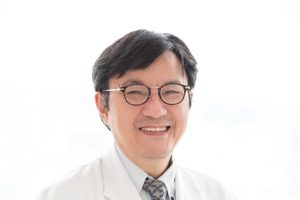
In 2024, Taipei Medical University reached a defining milestone. President Mai-Szu Wu oversaw a full digital transformation linking seven affiliated medical institutions and more than 3,000 beds into a unified data platform, creating a foundation for large-scale research, AI applications, and faster clinical-trial operations. This momentum has now extended nationwide through the Taiwan Alliance for Clinical Trials, which TMU helped launch alongside 31 medical centres and hospitals. The result is a university playing an increasingly strategic role in shaping Taiwan’s biomedical and clinical-research future.
TMU has grown into one of Taiwan’s leading universities, with around 7,000 students and seven affiliated institutions. How do you define the university’s mission, priorities, and approach to research and healthcare innovation?
We position TMU as an innovative university with measurable social impact, particularly in healthcare. Our mission rests on three pillars: cultivating talent across healthcare disciplines, generating new knowledge, and connecting to the future in an era of rapidly evolving technology.
Within healthcare, we focus on three strategic domains. First, digital implementation: we have transformed our affiliated hospitals and broader healthcare ecosystem, establishing a digital infrastructure that enables advanced technologies. Second, precision healthcare: our education, research, and clinical services are geared toward personalised medicine, recognising that optimal care requires tailored interventions. Third, sustainability, which we interpret broadly. It encompasses adaptability for mental and physical wellbeing, future orientation to anticipate emerging needs and opportunities, and financial sustainability to ensure resources are effectively conserved to support these initiatives.
TMU’s funding model is largely anchored in our affiliated institutions – including three major hospitals, a community hospital, two specialised centres, and a long-term care institution – which also serve as key learning, research, and service environments for students and faculty.
On the research front, we prioritise impactful, translational research. While we maintain a strong basic science portfolio, we continually ask: how does this advance frontline healthcare? Our approach ensures discoveries move toward practical clinical applications, sometimes via indirect pathways, from molecule identification to potential treatment transformation.
Finally, our 11 colleges span healthcare disciplines such as medicine, dental medicine, nursing, pharmacy, public health, healthcare administration, biomedical engineering, and extend to interdisciplinary medical studies involving humanities and social sciences, enabling rich teaching and research collaboration that reinforces our mission to educate, innovate, and deliver meaningful societal impact.
Within translational science and medicine, where does TMU demonstrate greatest strength and potential?
TMU focuses on six core areas. First, oncology; second, neuroscience; third, pulmonary medicine, encompassing lung cancer and inflammatory lung disease through our dedicated Research Center of Thoracic Medicine; fourth, metabolic disease – covering diabetes, kidney disease, and cardiology. Metabolic conditions are now a critical frontier, as improving cancer outcomes mean chronic diseases like obesity, hypercholesterolemia, hyperglycaemia, and hypertension increasingly determine longevity. This is reflected in our CKM framework: cardiology, kidney, and metabolic disease. Fifth, artificial intelligence in healthcare represents a major strategic focus, enhancing diagnostics, treatment planning, and research. Sixth, rare diseases, integrated with precision medicine initiatives, leverage comprehensive genomic and multi-omics data, combined with clinical information, supporting tailored interventions.
Two years ago, we committed to integrating databases across our affiliated institutions. In six months, we consolidated personnel and linked all systems, creating a unified platform with standardised protocols. While Taiwan is highly advanced in electronic medical records, hospital systems are far more complex, with roughly 30 distinct systems per hospital – including nursing, laboratory, imaging, and transport systems – which previously operated in silos. Our integration allows seamless communication across these systems, reinforcing TMU’s capacity for data-driven research and translational impact.
How has TMU’s integrated electronic medical record system and interoperable platform impacted research and industry collaboration?
The integrated platform has significantly expanded research opportunities. By unifying our data infrastructure across hospitals, clinics, and long-term care facilities – collectively covering over 3,000 beds – we can conduct extensive artificial intelligence and algorithmic research. This has attracted collaborations with major technology companies, including Google, and numerous industrial software partners.
Taiwan’s semiconductor and chip manufacturing ecosystem further enhances our capabilities, allowing manufacturers to develop systems on our platform. Our team invested six months post-database creation to implement the system across all institutes, decommissioning legacy systems and ensuring continuity even during holiday periods. Small hospitals posed the greatest challenges due to limited personnel performing multiple roles, but our platform now scales efficiently to these facilities.
From an industry perspective, pharmaceutical companies can access real-world evidence quickly through contractual partnerships. Queries about patient populations with specific characteristics can be answered almost immediately, facilitating upstream clinical trials and accelerating translational research. Transparency and integration sometimes reveal unexpected insights, substantially improving the speed and quality of research outcomes.
Taiwan currently accounts for only two to three percent of global clinical trials, lagging behind Korea and Japan. Why does this situation persist, and how is TMU contributing to increasing its share?
Historically, Taiwan’s clinical trial performance has been hampered by siloed data systems. While every institute maintains high-quality records, the inability to aggregate data rapidly and efficiently limited our capacity to operate at scale compared with neighbouring countries.
TMU has taken a proactive role in transforming this landscape. For example, we collaborate with an internationally renowned pharmaceutic company on a revolutionary drug development project for diabetes, which offers patients renal and cardiac protection among other benefits. Oxford University, which pioneered streamlined clinical trials managed by academic centres, designated TMU as the regional coordination centre for the study across Taiwan. Our openness, operational efficiency, and integrated infrastructure enabled coordination of 20 local sites under a single protocol, demonstrating the feasibility of large-scale, rapid recruitment.
This experience led to the creation of the Taiwan Alliance of Clinical Trial Centers. We implemented a unified protocol, a single Institutional Review Board, and standardised budget formulas, overcoming longstanding systemic barriers. We opened the first site around Chinese New Year 2025 and, within a year, achieved recruitment levels previously deemed nearly impossible – approaching 180 participants from an initial target of 400.
Through these initiatives, TMU is proving that Taiwan can efficiently host complex, regionally coordinated clinical trials, establishing a foundation for scaling participation in global studies and strengthening our position as a hub for translational medicine.
How capable are TMU clinicians in conducting clinical trials, and how does the institution ensure consistent performance?
TMU clinicians are exceptionally capable. Principal investigators and physicians play a vital role, and we operate a top-down matrix management approach to ensure participation and performance. Department heads mandate collaborative involvement across unified projects, while senior physicians’ mentor younger colleagues, creating a system where clinical trials are executed collectively rather than as individual endeavours. Recruitment metrics are monitored weekly, ensuring accountability and progress.
This structure aligns with TMU’s ethos of practising “near-future medicine.” Physicians engage with emerging therapies that have already passed preclinical and early-phase trials, allowing patients access to innovative treatments while providing a research-rich environment. Education, research, and clinical service are fully integrated, and our “one campus” concept links the university with all affiliated hospitals, fostering continuous learning across all staff, including administrators.
Next week, we will announce a significant milestone: 32 medical institutions joining the Taiwan Alliance of Clinical Trial Centers. This alliance leverages single protocols and a unified Institutional Review Board, addressing a major barrier in international clinical research where multiple sites often require protocol revisions. Single protocols enhance efficiency and appeal to industry partners.
The alliance aims to demonstrate operational efficiency, attract substantial multinational clinical trials to Taiwan, and identify opportunities for system improvements. Beyond trial execution, this initiative enhances patient access to new therapies, strengthens quality oversight, and serves as a nationwide educational programme, elevating standards of care across the country. By connecting with pharmaceutical companies, TMU establishes Taiwan as a trusted partner for global clinical research, expanding opportunities for both innovation and patient benefit.
How are you positioning the Taiwan Alliance of Clinical Trial Centers to pharmaceutical companies, and what are the strategic objectives for partnerships?
We are initially engaging pharmaceutical companies through their local offices, which act as the primary points of contact and convey developments to global headquarters. This approach ensures that TMU and Taiwan are recognised as trusted and reliable partners, capable of delivering high-quality clinical trials. TMU is likely to assume the inaugural leadership role as founding chair, working closely with our partner, Taichung Veterans General Hospital, to establish the foundational framework for the Alliance. Leadership may later transition to the institution best positioned to take the helm, depending on capacity and engagement, though TMU may continue if the member institutions vote to maintain our leadership.
The Alliance has been designed to address multiple critical aspects of clinical trial execution. First, we are streamlining ethical review processes by standardising documentation, ensuring that global sponsors engaging multiple hospitals need only submit one consistent set of materials, rather than duplicating submissions across institutions. This is complemented by harmonised contract templates, eliminating variations between member institutions and international sponsors to facilitate smoother negotiations. We are also prioritising visibility for our principal investigators and member institutions. By publicly highlighting the capabilities of all participating hospitals, we can attract international collaboration while clearly demonstrating Taiwan’s clinical strengths.
To further support sponsors, we are developing a searchable database of principal investigators, allowing companies to quickly identify qualified clinicians in specific therapeutic areas, with verified experience and proven track records. Patient engagement is another priority; we are engaging a national platform that enables patients to register for trials aligned with their specific conditions, offering sponsors transparent access to relevant populations. Alongside these operational improvements, we are also focused on talent development within the clinical trial sector, systematising training for principal investigators and study coordinators to address staffing challenges and enhance trial quality.
This initiative also positions Taiwan more prominently within the regional clinical research landscape, particularly in comparison with countries such as Singapore, Korea, and Australia. By uniting all 32 top-tier medical institutions, the Alliance strengthens Taiwan’s collective capacity and visibility, demonstrating our ability to deliver complex, multinational trials efficiently and effectively. Regarding funding, the model is initially institutional, with government support anticipated once the Alliance has demonstrated measurable performance. This collaborative structure ensures that Taiwan can contribute meaningfully to global clinical research while advancing patient access, education, and the quality of medical care nationwide.
Talent development and workforce shortages, particularly among nurses, pose a major challenge for Taiwan’s healthcare. How is TMU preparing the future workforce to meet these demands?
At TMU, we approach workforce development as both a strategic and practical priority. For clinical trials, talent grows naturally through active participation in research and operations. Across broader healthcare, our focus lies in improving working conditions for young professionals and encouraging them to enter the field. We are transforming workflows through automation and artificial intelligence, streamlining documentation, decision-making, and routine tasks. This not only reduces burdens but also allows staff to focus on patient care, enhancing morale and efficiency.
Education plays a central role in preparing the future workforce. We integrate hands-on, technologically advanced training into university programs, particularly in the third and fourth years of study, so students experience frontline operations before entering hospitals. Our simulation centres replicate hospital environments in real time, enabling students and professionals across disciplines to practise human-robot collaboration and complex procedures. These virtual hospitals allow single, paired, or group simulations, including surgery scenarios with multiple participants, all outside actual operating rooms. Approximately 20 percent of our surgical procedures already employ this approach, and the proportion continues to grow. By providing these immersive experiences, we bridge the education-to-practice gap, demonstrating that modern medicine is dramatically different from traditional perceptions.
The impact of these initiatives is tangible. Previously, our hospitals experienced nursing shortages of up to 20 percent, which would typically force bed closures. Through AI-enabled workflows and automation, our affiliated hospitals maintained and even increased service volumes, reducing overtime by more than ten percent. Routine tasks that once consumed over an hour per shift, such as documentation and patient handover, now take just ten minutes. This efficiency allows staff to return home earlier, enjoy time off, and maintain higher morale while ensuring exceptional patient care. By integrating advanced technologies into education and practice, TMU is cultivating a workforce equipped for the rapidly evolving landscape of healthcare, making the profession more appealing, sustainable, and effective for the next generation.
What does the future hold for Taiwan regarding biomedical innovation and medicine?
Taiwan stands at the threshold of tremendous transformation and opportunity in biomedical innovation, building on exceptionally solid healthcare and quality foundations. The country already possesses core capabilities, and the path forward is defined by one overarching concept: personalised healthcare. Leveraging comprehensive databases and healthcare infrastructure, we are integrating genomic studies with multi-omics data for each individual. This includes not only genomic, proteomic, and metabolomic information but also environmental data, such as air and water quality, maintained by our College of Public Health. By consolidating these datasets, we can create what we call a “digital twin” for every person, enabling predictive models of lifetime healthcare challenges and truly individualised care plans.
These capabilities are already being implemented in our hospitals. For instance, nurses can now provide personalised health recommendations based on genomic data, clinical conditions, and environmental factors. Patients with hypertension, for example, no longer receive generic guidance but tailored instructions specific to their unique profile. This level of personalisation transforms not only treatment but also health education and preventative care, ensuring that interventions are precisely targeted rather than broadly applied.
The implications for Taiwan’s universal healthcare system are profound. By demonstrating the value of personalised medicine, we can optimise resource utilisation without increasing costs. Low-risk individuals may not require extensive examinations or frequent visits, while predictive analytics allow proactive interventions for those at higher risk. Future medicine will increasingly be decentralised, with small clinics integrated into our network and empowered by algorithms and telemedicine tools, enabling patients nationwide to benefit from advanced personalised care.
In essence, the future of medicine in Taiwan is already unfolding. Through data integration, advanced analytics, and a commitment to individualised care, we are transforming the healthcare landscape, offering personalised, predictive, and preventative healthcare that is scalable across the nation.
As a final message to our readership from universities and pharmaceutical companies, what do you want them to understand about TMU?
TMU is an innovative university with tangible social and healthcare impact. We are exceptionally open to collaboration – across every facet of future healthcare. Pharmaceutical companies can engage with us on all types of clinical trials and access the data necessary for meaningful research. Patients benefit by receiving frontline, future-oriented therapies, while our faculty and physicians gain the opportunity to practice and collaborate on the cutting edge of medicine. For our students, TMU provides a real-time window into the future of healthcare, allowing them to learn, observe, and contribute to transformative medical innovation as it unfolds.