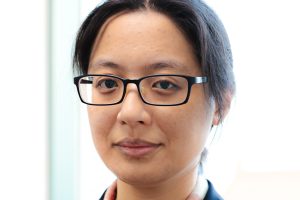
Hung Lai Wu, Chairperson of the Taiwan Alliance of Patients' Organisations (TAPO) and a home dialysis patient for 18 years, has transformed personal experience into systemic advocacy. Since becoming a member of the board of directors of TAPO in 2016, she has championed patient representation within Taiwan's National Health Insurance decision-making structures, securing observer status in pharmaceutical reimbursement meetings and formal committee membership. Her work addresses the tension between Taiwan's celebrated universal healthcare access and the financial constraints limiting innovative treatment availability.
Could you begin by introducing TAPO and your personal journey into patient advocacy?
This journey began with my own diagnosis. I have been a kidney dialysis patient for 18 years, starting when I was a university student – quite unusual, as most people associate dialysis with elderly populations or diabetes complications, not young students. I was studying life sciences at the time, but becoming a patient fundamentally reoriented my thinking about what I might contribute professionally.
During my studies, I explored medical sociology and anthropology, encountering narratives about patient advocacy movements, particularly HIV activism – patients fighting for treatment access whilst confronting social stigma. Those stories moved me profoundly. Whilst kidney disease differs vastly from HIV, I recognised common themes. Dialysis patients in Taiwan face certain stigmas. We have universal coverage under National Health Insurance with a global budget system, yet media narratives often suggest that because Taiwan has one of the world’s highest dialysis prevalence, we consume disproportionate healthcare resources – implying patients bear responsibility when insurance premiums must increase. This creates uncomfortable social positioning.
I initially sought to join a kidney disease patient association, assuming Taiwan would have an active National Kidney Foundation. What I discovered was rather absurd – we had a foundation, but it was essentially dormant, not functioning regularly. I felt tremendously frustrated, expecting to join an established organisation and learn systematically, but finding nowhere to begin. Eventually, I joined a smaller association focused specifically on peritoneal dialysis patients. I started as a volunteer, participated in activities, joined the board of directors, and ultimately served as chairperson for six years.
When we founded Taiwan Alliance of Patients’ Organisations in 2016, Taiwan already had numerous patient groups – some exceptionally well-resourced with substantial budgets and staff. Others, like our peritoneal dialysis patient association, operated with just one paid employee. We are a very small group. We wanted to bring everyone together because, despite representing different disease areas, we share common challenges. We wanted to collaborate and advocate collectively, particularly regarding patient engagement within National Health Insurance decision-making processes. We wanted patients to speak for themselves, ensuring patient voices are heard throughout policy development. That foundational purpose brought us together.
Could you outline some key milestones in Taiwan patient advocacy over recent years?
When we founded the Taiwan Alliance of Patients’ Organisations in 2016, we began with fewer member groups than our current 22 organisations. Early on, we engaged with the National Health Insurance Administration’s platform for new drug and medical device reimbursement decisions – the PBRS. These meetings include Health Technology Assessment for selected drugs and devices. The NHI Administration created an online platform where patients and patient groups can register and submit opinions on selected drugs, not all submissions. These opinions are compiled and incorporated into HTA reports during PBRS meetings. We began participating when the platform launched in 2015, before TAPO’s formal establishment, and have continuously worked to optimise this platform with our member groups.
Later, we advocated for patient group representation within the National Health Insurance Committee, which determines the global budget with numerous stakeholder representatives. Fortunately, starting in 2017, patient group representatives gained committee membership. I served on the NHI Committee for four years myself.
For PBRS meetings, we initially sought observer status to sit in the meeting room. Other representatives initially rejected us. We waited patiently until 2019, when the National Health Insurance Administration permitted two patient representatives as observers. Every month we have meetings – January, March, May for medical devices; February, April, June for new drugs. Since 2019, two patient representatives have attended monthly as observers.
This year, 2025, we achieved formal member status, though through somewhat convoluted arrangements. Membership categories are limited to union representatives, employer representatives, or medical service providers. There is a category called “the insured” – people covered by insurance – which includes employers and labour union members but no specific patient group category. The National Health Insurance Administration creatively interpreted “insured” representation to include patient group representatives. This proves rather tricky because we are indeed insured, but historically, this category meant labour unions or employer groups. The government used creative interpretation to seat us as formal members.
This remains precarious. Some stakeholders are unhappy because our presence means others lose seats. We continue advocating that Taiwan Alliance of Patients’ Organisations, as an umbrella organisation for patient groups, should have permanent, guaranteed membership in the National Health Insurance Committee. Since 2017, we have had representation, but only through periodic selection processes – different groups each cycle. We want TAPO to become a permanent member, ensuring a consistent patient voice regardless of political cycles or administrative changes.
How would you characterise Taiwan’s healthcare system from a patient perspective today?
I am not the only kidney patient in my family – my mother, who passed away two years ago, underwent dialysis for twelve years as well. When discussing universal health coverage, Taiwan performs exceptionally well. National Health Insurance covers over 99% of the population. I feel genuinely fortunate. Many Taiwanese working or living abroad return specifically to Taiwan when they require dialysis, trusting our healthcare system to provide optimal care. Dialysis represents an extraordinarily expensive treatment, making this return migration quite common.
Perspectives vary across disease categories, but Taiwan excels particularly in healthcare accessibility. Seeing a doctor is remarkably convenient – appointments can be made online via applications, or patients can simply walk into clinics without advance booking for general practitioners. This convenience proves transformative. In some countries, you might have the newest technologies or the best specialists, but the doctor sees only ten patients daily. You might have an exceptional surgeon, but waiting lists are extensive. In Taiwan, a single doctor might see 50 patients during a morning session – sometimes more.
This capacity reflects deep cultural patterns predating National Health Insurance. Taiwanese physicians strive to satisfy patients’ and families’ needs comprehensively. When patients seek help, doctors aim to resolve problems immediately rather than asking them to return tomorrow. This connects to Taiwan’s broader labour culture – we maintain long working hours generally. Growing up, I always saw clinics and hospitals filled with patients. That image defines my entire experience.
What aspects of the healthcare system require improvement?
National Health Insurance faces numerous unresolved challenges despite operating for 30 years now. Recently, considerable debate has centred on premium rate structures and fairness in contribution requirements. The fundamental problem concerns our global budget system, referenced from Germany’s model, though not identical. The global budget growth rate is legally capped at six percent annually. Each year we negotiate the following year’s budget, but this constraint creates serious problems given our rapidly ageing population and declining birth rates. Many people choose not to have children today, creating financial pressure on the National Health Insurance.
Taiwan holds major elections every two years – presidential and legislative cycles. During election periods, governments avoid actions that displease voters. Nobody wants to pay higher National Health Insurance premiums, so governments defer difficult decisions. This proves profoundly unhealthy policy-making because our population ages rapidly, generating more patients. Elderly populations are significantly more likely to require medical care.
Without adequate budget growth, we cannot provide innovative drugs and treatments, which are extraordinarily costly. We cannot exceed budget allocations – every category is strictly controlled. We have separate allocations for new drugs, new indications, rare diseases, HIV treatment, and so forth. The total global budget growth simply proves insufficient currently.
For patients requiring new technologies and treatments – cancer patients, particularly – this creates enormous burdens. While dialysis occasionally incorporates new technologies, it does not experience the frequent and major breakthroughs seen in cancer treatments, so dialysis patients like myself experience different challenges than cancer patients, facing limited access to cutting-edge therapeutics. These patients must pay out-of-pocket for expensive novel treatments, creating crushing financial burdens for families. Many of our alliance member organisations represent cancer patient groups, who consistently advocate for enhanced innovative care access. The limited global budget growth represents Taiwan’s most significant healthcare challenge.
How do Taiwanese patients view cost-share and out-of-pocket payments? Is there room for co-payment models where patients contribute toward innovative therapies?
We cannot claim patients should contribute nothing – that would be unrealistic and unfair. However, we must consider each situation individually. Some treatments are extraordinarily expensive, where even a one percent patient contribution becomes unbearable. We must differentiate based on treatment costs whilst considering patients’ economic circumstances. Some patients possess the financial capacity to contribute; others do not.
National Health Insurance premiums are calculated as a percentage of individual income. During the second-generation reform around 2013, experts attempted to base premiums on household income rather than individual income, which would have been substantially fairer, reflecting each family’s actual capacity. Unfortunately, that reform failed. We still debate this extensively because Taiwan maintains a significant underground economy. Night markets, for example, operate largely outside the tax system. Sometimes we joke that vendors in night markets might own multiple properties, whilst salaried workers earning far less pay considerably higher social insurance premiums. This inequity remains unresolved. I hope future third-generation National Health Insurance reform seriously considers household income as the basis for premium calculations – a genuinely fairer approach.
President Lai has announced ambitious Healthy Taiwan goals with 1.5 billion US dollars in funding. Healthcare appears prioritised at the highest government levels. What progress have you observed in strengthening patient voices in policy discussions? Are you involved in these new committees?
Honestly, we are not included in that particular committee. Last September, during our Taiwan Alliance event for Patient Safety Day, journalists interviewed me, and I openly criticised this exclusion. The committee comprises doctors and various experts, but no patient representatives. Patient perspectives are completely forgotten. This represents a significant oversight.
Looking ahead, what should be the next policy focus for Taiwan’s healthcare reform, particularly given ageing population pressures on National Health Insurance?
Multiple aspects require attention, but financial sustainability proves absolutely fundamental. This is insurance, after all – financial viability determines everything else. We must ensure long-term sustainability. Revenue requires careful attention, though expenditure remains reasonably well-supervised through our global budget monitoring. We need substantially greater healthcare investment in Taiwan.
The former Minister of Health and Welfare advocated revising legislation to permit global budget growth exceeding six percent annually. That was perhaps four years ago, yet nothing has changed. We must confront this reality because our population is changing dramatically – rapidly ageing with many elderly patients requiring expensive care. We can observe Japan’s experience, which forecasts our likely trajectory. Japan requires elderly populations to pay higher treatment costs, implementing increased co-payments even for senior citizens. I believe we cannot escape this pattern. Every Taiwanese must prepare to face this reality.
Beyond financial aspects, we must ensure patient access to innovative treatments. The past two years have shown improvement compared to the COVID pandemic era, when very few new drugs received approval – those were extraordinarily difficult years with minimal innovation entering Taiwan. We are still recovering from that backlog. Even with our newly established cancer drug fund, we face extensive waiting lists of treatments awaiting approval.
The fund is significant, but its lessons and mechanisms matter beyond oncology, because many non-cancer disease areas confront the same “financially toxic” challenge of treatments unaffordable for most families. Taiwan initially referenced the UK’s Cancer Drug Fund model – and the UK later evolved toward a broader Innovative Medicines Fund that covers non-cancer innovations – so while establishing the cancer drug fund was an important first step, I very much hope we will follow that example by creating similar funds for non-cancer innovative therapies to ensure equitable access across disease areas.
How would you characterise collaboration between patient organisations and pharmaceutical or biotechnology companies in Taiwan?
We continuously seek mutually beneficial arrangements. Pharmaceutical companies have their commercial objectives; we have our advocacy goals. These do not always align perfectly, but we consistently identify common ground. I find that pharmaceutical companies genuinely attempt to be supportive toward patients. They share examples of patient involvement in other countries, providing valuable learning opportunities.
Patient engagement in Taiwan is relatively advanced within the Asia-Pacific region, though we still have considerable progress to make compared to Europe or North America. International pharmaceutical companies with operations in Taiwan can connect us with resources and examples from their operations elsewhere. Sometimes we have opportunities to exchange experiences with fellow patient organisations across the Asia-Pacific. These prove tremendously valuable interactions.
We maintain regular dialogue with pharmaceutical companies. Annually, we share our advocacy goals with various companies, discussing potential support. Sometimes we exchange perspectives. Whether from our viewpoint or theirs, ultimately, everything we do serves patients and caregivers optimally.
What message would you convey to policymakers, healthcare leaders, and business stakeholders about the value of integrating patient voices in decision-making?
The fundamental first step is ensuring patient voices are genuinely heard. As a patient, I am a heavy user of the healthcare system – I experience every aspect comprehensively. We are not merely passive users. We want meaningful engagement throughout processes, especially policy decisions. You cannot forget patient voices in any decision-making steps.
Last year’s Patient Safety Day event taught us about the WHO Patient Safety Rights Charter, which emphasises empowering patients and ensuring their engagement in everything. However, engagement means more than simply having a patient present in the room when decisions are made. That proves insufficient. We must equip patients with skills to communicate effectively with different stakeholders. Patients require capacity building. We must empower patients to recognise they are not merely system users but can play far more important roles, helping society develop better healthcare systems. Patients are essential, and our voices deserve respect.