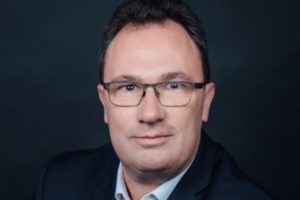
Norgine is redefining what a mid-sized European specialist can achieve, shifting from its gastroenterology heritage into a broader mix of consumer health, women’s health and rare diseases. These changes are taking shape across the organisation, with France playing an important role under Cyril Tavier’s leadership, from implementing new omnichannel models to the integration of ultra-rare disease expertise through the acquisition of Theravia. This interview traces how strategy, scale and timing intersect at a moment when Europe’s access pathways are evolving but still struggle to keep pace with scientific reality.
How would you introduce your background and the perspective you bring to Norgine?
I am French and have spent my entire career in the pharmaceutical industry, beginning with large organisations such as Merck and Novartis before moving into the mid-sized environment that has shaped much of my professional journey. That transition allowed me to take on roles in Germany, Italy and Spain with Stallergenes Greer, experiences that broadened my understanding of how different healthcare systems operate and how medical and commercial expectations vary across Europe. I now lead Norgine’s operations in France and the Benelux region, a role that draws heavily on this international exposure.
This is my ninth year with Norgine, and what distinguishes the experience is the organisation’s constant evolution. Every few years, we revisit our structure, portfolio or operating model, which creates a culture of movement and curiosity. That rhythm forces us to stay close to the realities of each market, adapt quickly when opportunities arise and build new capabilities as we grow. It also keeps the work engaging, because you feel part of an organisation that is willing to rethink itself while remaining grounded in the needs of patients and physicians.
What defines Norgine’s European identity today, and how is the portfolio evolving around this strategic focus?
Norgine has always positioned itself as a European specialist. With around 1,500 employees and revenues close to EUR 600 million, we have the scale to operate meaningfully across the region while remaining selective in where we deploy our resources. This focus allows us to bring innovation from biotechs in the US or elsewhere that may not yet attract the attention of larger players but still have strong scientific merit and clear patient value. Our history, which dates back to 1906, has created a deep base of expertise across Europe, reinforced by our direct presence in more than a dozen markets and our manufacturing footprint in France and Wales. We also maintain operations in Australia and New Zealand, though our intentional focus remains European.
The arrival of Goldman Sachs Asset Management as the majority shareholder in 2022 strengthened this direction. The Stein family continues to play an important role, and the partnership provides additional capacity to scale our brands and pipeline while reinforcing our integrated European platform. It also underlines a reality that shapes our daily work. Europe is not a single homogeneous market, but a mosaic of distinct systems that require real local insight. Our longevity and presence across these environments give us the credibility to operate effectively within that complexity.
Our portfolio mirrors this strategic orientation. We maintain a strong heritage in gastroenterology through our macrogol-based products for constipation and bowel preparation, complemented by long-standing activities in hepatology and supportive care. As internal R&D became less viable for a mid-sized organisation, we pivoted toward partnerships, licensing and targeted acquisitions, a model that enabled our entry into women’s health through the acquisition of Azanta and supported a broader evolution of the portfolio toward more specialised domains.
In parallel, we have been developing a broader consumer healthcare portfolio by extending our legacy brands into pharmacy, online and digital channels, which has become an important driver of our growth. At the more specialised end of the spectrum, we are expanding into rare diseases and paediatric oncology, supported by several recent agreements and acquisitions.
Our goal is not to move away from our heritage but to build a balanced, forward-looking portfolio that reflects our deep European roots and proven expertise. By combining depth, diversification and a clear European identity, we strengthen our ability to navigate complex regulatory landscapes and deliver life-changing medicines across the region.
How did you present the French affiliate during the 2022 acquisition process, and what strategic choices have shaped your model in France?
When discussions with Goldman Sachs Asset Management began in 2022, our narrative around France was straightforward. The affiliate was navigating a period of significant transformation. We identified opportunities to evolve traditional approaches and strengthen resilience in a changing healthcare environment. This included rethinking established models to ensure continued patient access and sustainability.
France also played an important role in broadening our therapeutic footprint by being the first launch market following the acquisition of Azanta, marking a step towards greater diversification and reinforcing the affiliate’s strategic relevance during a time of organisational change.
These adjustments were guided by evidence and market realities. Rising costs and regulatory constraints required innovative solutions to maintain continuity of care. Rather than withdrawing established treatments, we explored new frameworks that balanced access with long-term viability. While this meant adapting to different dynamics, it enabled us to protect essential services and uphold our commitment to patients who depend on them.
Industrial considerations were also part of the assessment, as they would be in any acquisition of this scale. We operate long-established manufacturing sites in Dreux and Hengoed, which have been modernised over time with further opportunities remaining to enhance efficiency and capacity. The French site in Dreux was seen as an asset with the potential for improvement, particularly in automation and productivity. This perspective aligned with our commitment to strengthening our European industrial base. We continue to invest in France and across Europe to ensure our operations evolve in line with organisational transformation and long-term development goals.
How is Norgine transforming its business, and what does this evolution mean for France, particularly as you expand into rare diseases?
We are reshaping the organisation along two main axes. The first concerns our legacy portfolio, where several long-standing products are better suited to a consumer healthcare environment. We are adapting distribution models to reflect evolving patient behaviours and digital engagement trends with omnichannel approaches, already live in some markets, and now being adapted for France. These changes aim to provide more accessible and modern pathways for patients while ensuring sustainability.
At the same time, our speciality footprint has expanded beyond its traditional scope, reflecting a broader commitment to therapeutic diversity. This evolution demonstrates how mid-sized European companies can contribute to innovation across multiple fields, including areas of high unmet need.
The second axis, and the most complex, is our move into rare diseases. Many promising treatments from smaller biotechs never reach Europe due to EU regulatory frameworks that rely on traditional methodologies. In ultra-rare conditions, large controlled trials are simply not feasible, which creates a gap between scientific reality and regulatory expectations. We have seen this firsthand and continue to work with authorities to explore solutions that balance evidence requirements with patient access.
We remain fully committed to the field. We are in active dialogue with French and other European authorities to find workable solutions to this challenging regulatory environment. We believe that collaboration across the healthcare ecosystem is key to ensuring access to rare disease medicines because, without adapted pathways, France’s ambition to improve access to innovation will be difficult to achieve.
At the same time, the country offers real strengths. Our recent acquisition of Theravia, a France-based rare disease company created through the merger of Addmedica and CTRS in 2022, strengthened our rare disease portfolio and further established Norgine as a partner of choice for commercialising rare and speciality pharmaceuticals in Europe.
The French ecosystem is particularly effective at identifying rare-disease patients and supporting long-term treatment, and building on this expertise while expanding these products internationally is a central part of our strategy.
How are you organising the affiliate to support both an omnichannel consumer business and a highly specialised rare-disease portfolio?
These activities call for different expertise, so we structure them distinctly while enabling collaboration where it adds value. Consumer healthcare depends on strong digital engagement and pharmacy activation, whereas rare diseases require deep scientific knowledge and close ties with specialist centres. Even so, we see that digital tools are becoming increasingly relevant for rare-disease teams. Specialists appreciate rapid and less formal ways to exchange information, and digital platforms support this particularly well, from sharing materials to navigating the authorisation processes required when handling patient data.
Our goal is to maintain clear lines of responsibility while creating an environment where both sides can draw on shared innovation. Digital capability will play an even greater role as the rare-disease portfolio expands, supporting more efficient communication and smoother interaction with clinical experts. The two models remain distinct, yet they strengthen one another in ways that enhance how we serve patients and partners.
How is Norgine perceived in France today, and what capabilities enable you to build strong partnerships with clinical, industrial and regulatory stakeholders?
Our identity in France is still evolving, as this repositioning began only two years ago, yet our expertise is already well recognised. We have supported several major players, including Alnylam and, more recently, Lilly, in preparing product launches across Europe. These collaborations reflect the confidence larger organisations place in our ability to operate with speed, precision and a solid understanding of European dynamics. On the industrial side, we combine our own manufacturing sites with carefully selected CMOs and, when relevant, we step in as a CMO ourselves. This blend of internal capability and external flexibility gives us a reliable and agile operational platform, which stakeholders value in development work, launch execution and industrial delivery.
What truly differentiates us is the way we build relationships with the medical community. Our history as a mid-sized organisation has shaped a partnership-driven approach that remains central to how we work. We established this way of operating in gastroenterology and have successfully carried it into newer areas such as rare diseases. Trust has been built over many years through close interactions with physicians, scientific teams and regulatory stakeholders. This consistency allows us to step into adjacent specialities with credibility and to transfer what we do well into new therapeutic fields without losing authenticity. It is one of the strengths that shape how we are perceived and how we create value with our partners.
What priorities are shaping your agenda for 2026, and what changes would you like to see in the broader French environment?
Two priorities will guide us as we move into 2026. The first is the continued development of our consumer healthcare activity, which only began at the end of last year and is still in an early phase of its build-out. We are now entering a more visible stage, including the launch of our first television campaign for a flagship product early next year. It represents an important step for us and reflects our ambition to establish a solid, modern platform that can scale over time.
The second priority is the integration of Theravia. Beyond operational alignment, our focus is on understanding the foundations of their long-standing success in ultra-rare diseases in France and applying that expertise to the assets we are preparing for the future, particularly in rare diseases and paediatric oncology. This is a fast-moving space. At the start of last year, neither the acquisition nor the opportunities that came with it were part of our roadmap. New partnerships often arise unexpectedly, which is why flexibility remains central to how we operate.
Outside what we directly control, I would welcome greater alignment between France’s political ambition to improve access to innovation and the practical conditions needed to deliver it. The intention is strong, yet the implementation does not always follow with the same clarity. Even so, I do not believe growth in France is out of reach. Every market has its complexities. Many companies hesitate to bring their products to Europe because the pathway appears too burdensome, and that is precisely where we see the value of Norgine. We offer a route for innovation to reach patients who might otherwise have no access at all.
What recent milestone best reflects Norgine’s commitment to France?
One moment that stands out is our participation in last year’s Choose France Summit. The initiative was created to reinforce the country’s appeal for industrial investment, and our selection was directly linked to the continued commitments we are making at our Dreux manufacturing site. Only a small number of companies across all sectors are invited each year, so being included was both an honour and a strong signal of confidence in the direction we are taking.
The summit also offered a level of access that is not always straightforward for a mid-sized organisation. It allowed us to engage directly with ministers, the head of ANSM and several other senior stakeholders, strengthening our visibility within the national ecosystem. It created an environment for open and constructive dialogue between authorities, industry and experts, and it reaffirmed the importance of investing in France’s industrial base. We were genuinely proud to be part of it and see it as an important marker of our long-term engagement in the country.