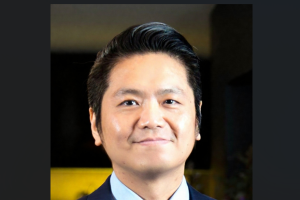
Yenchen Huang, Head of Investment, VP at Diamond Biofund, one of Taiwan's pioneering evergreen venture capital funds focused on life sciences, our interviewee brings a unique perspective combining scientific training with financial expertise. Since joining the fund in 2014, shortly after its 2013 establishment, Huang has helped guide early-stage biotechnology companies from laboratory concepts to commercial viability, working closely with university researchers and scientific founders to build Taiwan's emerging biopharmaceutical ecosystem.
Perhaps we could begin with your background. You have both scientific training and investment experience – how does that dual expertise inform your approach to investment decisions at Diamond Biofund?
Let me start by explaining Diamond Biofund’s rather distinctive structure. We were established in 2013 as an evergreen fund, which was quite deliberate. Most venture capital operates on seven or ten-year fund cycles, requiring liquidation and returns to limited partners within defined timeframes. This creates inherent constraints, particularly problematic for biotechnology, which demands substantially longer development horizons. Clinical trials, regulatory pathways, demonstrating genuine value – these processes cannot be rushed. Our shareholders created the evergreen structure specifically to eliminate time pressure, allowing us to maintain positions for as long as necessary to realise value properly.
This structure enables us to invest at extremely early stages within Taiwan’s biotechnology ecosystem, which remains remarkably nascent. We recognised that this emerging sector required investors willing to provide sustained, long-term support to start-up ventures. That conviction shaped our entire business model from inception.
I joined in 2014, recruited by our founder, William Lu, himself a prominent biotechnology entrepreneur and founder of MicroBio Co., Ltd.. I have cultivated a dynamic and diverse career path, always focused on maximising my impact within the healthcare ecosystem. I started my career at ITRI, the Industrial Technology Research Institute, as an engineer and researcher. Subsequently, I moved into consulting and market research before taking time off for further study and advanced training in Boston. Returning to Taiwan as an investor was unplanned, frankly. I had envisioned continuing in consulting. When Mr Lu approached me, I didn’t hesitate; having spent my entire career in healthcare, I possessed a clear insight into the sector’s urgent need for dedicated, long-term capital. This opportunity wasn’t just a change—it was a chance to leverage my cumulative expertise to directly address a critical industry requirement, which is why I embraced the role..
Our model operates from laboratory to market. We collaborate directly with universities and research institutes, working alongside scientists to identify technologies with genuine clinical translation potential. We then assist in company formation, attract co-investors, and provide capital. We describe ourselves as “entrepreneurs behind entrepreneurs” – not merely passive capital providers but active partners throughout the journey.
This proves essential because biotechnology differs fundamentally from, say, information technology, where entrepreneurs can launch ventures from garages with minimal infrastructure. Biotechnology typically requires five to ten years of foundational research before even identifying a viable commercial opportunity. The technological barriers are formidable, so founding teams inevitably include scientists, often the principal investigators themselves. When scientists cannot identify suitable chief executives, they frequently assume that role personally. This creates considerable challenges. Exceptional scientific capability does not automatically translate to management expertise. The most difficult aspect, candidly, is that many scientists believe they understand business comprehensively when, in reality, they do not recognise the extent of what they do not know.
How do you distinguish scientists capable of translating research into investable enterprises? What traits differentiate those who can make that transition successfully?
For very early-stage teams, we invest substantial time – typically six months to a year – simply establishing mutual understanding. We engage extensively with the scientists, including their families, understanding personal circumstances and motivations. They must understand our approach as well, because this relationship requires genuine partnership. Some scientists struggle initially with this adjustment – most do, actually. But certain individuals grasp relatively quickly what we are articulating and what challenges await them. They demonstrate willingness to evolve their thinking, opening themselves to different perspectives and engaging in genuine dialogue. When we observe intellectual flexibility, we begin considering whether a productive working relationship is viable.
Not everyone can make this transition. When that becomes evident, we decline the opportunity. This industry normalises failure – company failure, programme failure, these are expected outcomes. Success represents the anomaly. Therefore, we seek leaders possessing extraordinary resilience, unwavering commitment, and genuine willingness to engage collaboratively with investors. At the early stages, especially, investors bear enormous risk alongside founders. We stand together. This requires exceptional partnership quality and deep mutual trust.
We collaborate with six or seven universities currently, having incubated perhaps eight companies, half of which have achieved public listings or acquisitions. Our success rate is actually quite high, though we are highly selective. Rather than deploying small investments across numerous opportunities, when we commit to a team and technology, we concentrate substantial resources. Our model differs markedly from typical venture capital spray-and-pray approaches. We can provide significant capital in initial rounds, but this demands sustained, intensive engagement – an exhausting, challenging process, admittedly.
How do you reconcile biotechnology’s inherently long-term nature with shareholder expectations for returns?
We continue working towards an optimal balance, to be entirely candid. We listed publicly only in 2023, so we remain relative newcomers to capital markets. The decision to pursue public listing required extensive internal debate. Taiwan’s stock exchange released guidelines permitting venture capital public listings in 2016, but the concept seemed somewhat contradictory initially. Venture capital constitutes private equity by definition – having private equity access to public markets to raise capital from retail investors represents an unusual paradigm. Moreover, public listing demands transparency and considerable disclosure – you become rather exposed, losing significant operational flexibility.
In 2016, when guidelines emerged, we questioned whether public listing made strategic sense. Our initial answer was negative. Then, around 2020, several portfolio companies generated substantial returns. Our founder, Mr Lu, reconsidered the pathway, identifying two compelling rationales. First, public listing would enable broader investor participation in Diamond Biofund, providing indirect access to our private portfolio companies – an attractive proposition for investors seeking early-stage biotechnology exposure otherwise unavailable. Second, it would provide liquidity options for our original shareholders, primarily major financial holding companies and family office capital. Public listing would offer an exit pathway, should they desire it, though notably our major shareholders have not divested any holdings, demonstrating continued long-term commitment.
These considerations ultimately justified public listing, though it has indeed introduced considerable challenges. Public company obligations sometimes create pressure for near-term returns, which inherently conflict with early-stage biotechnology investment horizons. We are currently dedicated to optimally balancing these competing demands.
Moving to portfolio strategy – you invest at extremely early stages, often identifying technologies within universities. What defines your investment philosophy? What are you seeking?
Our approach evolves with industry trends and market needs, but fundamentally, we pursue genuinely novel technologies – first-in-class or best-in-class innovations. We embrace risk, but when we accept risk, we want the potential reward to be substantial. We favour transformative, innovative technologies and exceptional teams.
Over the past decade, approximately 70% of our capital has supported new drug development, with the remainder in medical devices and services. Roughly 70% of investments are Taiwan-based, with international positions in Israel, China, the US, and one Swiss company. We have limited European exposure currently, though we are working to expand there.
Let me illustrate with a recent example. One portfolio company, ImmunAdd, Inc., is developing adjuvants for vaccines. Their core proposition is elegantly straightforward yet potentially transformative. GlaxoSmithKline produces a herpes zoster vaccine using an adjuvant called saponin, which can only be extracted from a specific tree species in Chile. This creates profound supply chain vulnerabilities and extraordinary costs – medical-grade saponin costs approximately USD 300 million per kilogram. The raw material comes exclusively from tree bark extraction, an inherently limited, unstable supply.
The company we backed is an NTU spin-off, founded by a professor who has devoted her entire research career to synthetic saponin development. Her approach uses chemical synthesis to replicate these compounds – essentially printing money if successful, given natural product pricing and supply instability. The medical need is clear and substantial. This is precisely the type of opportunity we seek: straightforward value proposition, transformative if successful, addressing genuine unmet needs.
She has already engaged major pharmaceutical companies conducting internal research with her materials, with formal partnerships likely emerging. This exemplifies our selection criteria – we must identify powerful medical or market needs with unique solutions. Taiwan is a small market with limited research scale, so unless companies occupy very narrow niches or possess genuinely distinctive advantages, competing in crowded therapeutic areas like oncology becomes futile. Those spaces demand enormous capital and offer limited differentiation opportunities for Taiwanese companies currently.
For Taiwan, niche positioning proves essential – identifying specific problems where we can create meaningful market value. Choosing the right domain is absolutely critical.
When you examine Taiwan’s biotechnology landscape, what genuinely differentiates the island from other markets? What represents Taiwan’s authentic competitive advantage?
Taiwan possesses an exceptional foundation for advancing the global healthcare industry. Our clinical research infrastructure is genuinely world-class, underpinned by an outstanding talent pool. Taiwan’s brightest students overwhelmingly attend medical school, creating exceptional depth of clinical talent. Our healthcare system achieves global standards. This represents our fundamental strength for industry development.
This strength has now become a powerful catalyst for strategic cross-industry synergy. Recognising the next phase of billion-dollar growth, Taiwan’s dominant semiconductors and electronics industries are now seeking their next billion-dollar growth opportunities in healthcare. The top ten electronics companies have established healthcare business units, attempting to leverage their core competencies. They typically pursue digital health applications, capitalising on their hardware development capabilities, which they execute exceptionally rapidly.
While the dynamics of healthcare differ significantly from consumer electronics, the efficiency of our domestic healthcare system presents a unique market validation dynamic. The remarkable convenience of physical hospital access domestically means that local Digital Health adoption is driven by optimisation, not basic necessity—a powerful insight into system efficiency. This sharp contrast with markets like the U.S., where system inefficiency and high costs create massive, immediate demand for solutions, clearly defines our export strategy.
In the U.S. market, for example, Digital Health genuinely solves systemic problems, leading to strong financial incentives. AI diagnostic solutions receive substantially higher reimbursement than traditional physician diagnoses—perhaps USD 40 versus USD 10—because insurers are actively incentivising these advanced technologies. This earlier, digitally-enabled diagnosis translates to systemic cost savings, justifying premium reimbursement and validating robust business models.
Crucially, Taiwanese ingenuity enables rapid technological development. While our domestic environment provides a superb technical development platform, the strategic imperative is clear: companies must seek opportunities in the US, China, or other large markets with less accessible healthcare systems to effectively validate and refine viable business models. Thus, the very excellence of our domestic healthcare system sharpens our global focus, positioning Taiwan’s innovations to address major international market needs, thereby maximizing their worldwide impact.
Does Taiwan’s geopolitical position affect licensing opportunities and international partnerships? Why have we not seen more international success stories emerging from Taiwan’s biotechnology sector?
This relates fundamentally to mindset, though that is evolving significantly. The industry remains extraordinarily young; we are still learning how to execute business strategy effectively. Consider Israel’s mature biotechnology ecosystem – companies conduct early-stage research, establish proof-of-concept, then license out. They have perfected this model. Israeli entrepreneurs take pride in founding ten companies and successfully exiting six or seven. Different cultural framework entirely.
Taiwan’s business culture, influenced by both American and Japanese traditions, emphasises building sustainable, enduring enterprises. Everyone aspires to create the next long-term success story. That mindset shaped early approaches. Recently, however, this has shifted considerably. We have witnessed several significant global licensing transactions, demonstrating feasibility. Entrepreneurs increasingly recognise that shepherding a biotechnology company from inception through full pharmaceutical commercialisation is extraordinarily difficult, perhaps unrealistic for most organisations.
One of our portfolio companies, Oneness Biotech, concluded a licensing agreement worth approximately USD 500 million with LEO Pharma in Denmark around 2020. That transaction proved transformative for Taiwan’s perception. It demonstrated concretely that Taiwanese companies could secure major international partnerships. Following that landmark deal, we have observed numerous licensing transactions over the past three to five years. The precedent established credibility and shifted expectations.
As a venture capital firm, are you actively cultivating relationships with global pharmaceutical companies, or do you leave business development primarily to portfolio companies?
While our current connections with major pharmaceutical companies are developing, we recognise that Taiwan is still in the process of achieving greater visibility on the radar of many global pharmaceutical giants. Unlike markets such as Israel, where systematic engagement is demonstrated by Merck and Johnson & Johnson maintaining dedicated on-site offices and personnel, Taiwan represents an emerging and highly attractive market for proactive engagement. We see this as a significant opportunity for growth and strategic partnership development.
We proactively leverage our extensive networks in the U.S. and Japan, facilitating critical introductions and opening doors for our portfolio companies. We acknowledge that expecting small, rapidly growing organisations to independently navigate the complexities of establishing major pharmaceutical partnerships is demanding. To bridge this gap, particularly given the current local scarcity of seasoned business development expertise, our firm steps in as the crucial catalyst. We actively provide this specialised support, utilising our deep connections to ensure our portfolio companies can focus on innovation while we accelerate their path to global commercial partnerships.
Given current macroeconomic uncertainty and private market valuation corrections, how are you approaching capital deployment? Are you more risk-averse or maintaining investment pace?
Globally, I believe all venture capital has become considerably more conservative. However, Taiwan’s capital markets remain comparatively supportive of healthcare and biotechnology. Policy remains friendly, providing clearer exit pathways, so we continue investing domestically, albeit selectively.
We had intended to enhance US investment significantly this year, but American biotechnology faces extraordinary difficulties currently. This year will likely represent the most challenging IPO environment for biotechnology companies in recent memory. Early-stage companies cannot raise capital. We have exceptional US portfolio companies with remarkable technologies that simply cannot access funding.
For Taiwan investments, we remain active but highly selective. For international deployment, we favour more mature companies and proven teams currently – reducing risk exposure during this volatile period.
Looking forward, where do you anticipate Diamond Biofund’s value creation will emerge: revaluation of current holdings, or new platform technology investments?
While I wish I could offer a definitive formula for success, my experience provides a candid perspective on the realities of venture capital. When observing investors articulate their successful outcomes, it underscores a fundamental truth: Success is the synthesis of tremendous intelligence, rigorous hard work, and strategically deployed resources. Every leading firm is deeply committed to identifying optimal opportunities and providing intensive support to its portfolio companies. However, the ultimate distinction lies in the ability to anticipate and capitalise on market dynamics. Success favours the disciplined and the well-prepared who recognise the right opportunity at the optimal time. Our goal is to maximise the probability of success through exhaustive due diligence and disciplined support, understanding that the greatest returns often reside where preparation meets a pivotal market shift
You generate returns because you were fortunate. Luck plays an enormous role.
Every time we invest in a new company, on day one, I tell the chief executive: I will work tirelessly to help you succeed, but I cannot tell you how to succeed. No formulaic pathway exists – no step-by-step process guarantees success. You must work extraordinarily hard and be fortunate. Success requires both. What I can help you avoid is failure. I understand patterns that lead to company death – losing focus, burning capital too rapidly, and strategic missteps. My primary role is helping chief executives avoid fatal errors rather than prescribing success formulas.
That said, if you want directional guidance, we are focusing increasingly on nucleic acid medicine, cell therapy, and gene therapy. Metabolism-focused therapeutics receive enormous attention currently – a very crowded space. We monitor that domain but position ourselves at what I call a higher conceptual level: anti-ageing.
The world’s wealthiest individuals are ageing, and they are becoming progressively wealthier. Anti-ageing encompasses multiple layers. The most advanced involves gene therapy and cell therapy – areas we are pursuing actively, though regulatory frameworks remain immature. The FDA is beginning to re-engage seriously with gene therapy now. The middle tier involves metabolic medicine – GLP-1 agonists and similar pathways. The foundational tier includes nutritional supplements and cosmetic medicine, which also interests us.
We are investing across this anti-ageing spectrum whilst deliberately avoiding highly saturated areas like oncology.
To conclude, what message would you convey to an international audience potentially unfamiliar with Taiwan regarding the island’s biotechnology investment potential?
For those less familiar with Taiwan, the simplest framework references what people do know – our world-leading semiconductor and electronics industries. Artificial intelligence will undoubtedly play transformative roles in healthcare, though timing and ultimate winners remain unclear. Taiwan possesses unique advantages to capture meaningful positions in this convergence.
Allow me to provide a concrete illustration. One portfolio company’s core technology is an artificial retina. They use CMOS image sensors – products of semiconductor manufacturing – to replace damaged retinal tissue. They are developing flexible chips implantable beneath the retina. This project uniquely benefits from Taiwan’s semiconductor supply chain. Executing this development in the US or elsewhere would be extraordinarily difficult because the supply chain infrastructure simply does not exist there.
Leveraging semiconductor and electronics supply chains enables uniquely rapid, high-quality development for certain healthcare technologies. This represents genuine differentiation. For novel therapeutics or traditional drug development, opportunities are more case-specific rather than reflecting systematic structural advantages. The adjuvant example I mentioned earlier exemplifies a niche opportunity – exceptional within its domain but not indicative of broad platform strength.
Taiwan’s advantage concentrates where our existing industrial capabilities create genuine leverage. That intersection of semiconductor excellence and healthcare innovation represents our most compelling proposition.