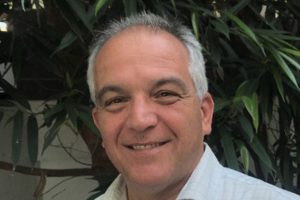
Under the leadership of Nicolas Bardonnet, Promega France has expanded its role from a broad portfolio provider to a more collaborative partner supporting key human health applications. Bardonnet has integrated elements of a One Health approach, establishing France as a key European application & training centre, with plans for continued development, and reinforcing global synergies between different branches.
Promega has evolved significantly in recent years. Could you characterise this transformation, particularly regarding drug development involvement?
Today we have expanded our support across more stages of the drug discovery and development workflow. We have established a strong presence in bioproduction, especially in quality control workflows that support batch-release testing for therapeutic monoclonal antibodies.
Our positioning has shifted considerably. Historically, pharmaceutical manufacturing focused on chemical entities for therapeutic treatments. The current therapeutic landscape is driven by biological modalities — antibodies, RNA-based therapies, and similar technologies. This transformation requires existing production facilities, originally designed for chemical synthesis, to adapt their capabilities or build new infrastructure. Many major pharmaceutical companies have invested in flexible, modern facilities to support these new modalities.
We additionally train customer teams to verify the biological activity of the products they manufacture. Producing an antibody is not enough — its functionality must be confirmed. For chemical products, mass spectrometry or chromatography typically sufficed. For antibodies and RNA therapies, biological activity must be demonstrated. This is a new area for many manufacturers.
Our solutions help support many critical experimental steps across these workflows.
Could we establish context for international readers? Perhaps you could reintroduce Promega – your positioning today and what France represents numerically?
Globally, Promega is an American company headquartered in Madison, Wisconsin. We employ around 2,000 people and generate close to USD 700 million in revenue.
A key differentiator is our investment in research and development: over 250 employees in R&D and more than 400 active patents. One major achievement is our new R&D centre — a large modern facility opened in 2021.
These investments reflect Promega’s long-standing commitment to advancing scientific discovery and providing high-quality tools that support researchers and clinicians around the world.
Your activities now span the entire value chain, reaching far beyond traditional scope. Could you elaborate on what this integrated model looks like in practice?
This reflects long-term commitment from our founder and CEO, who continues to invest strategically in strengthening Promega’s scientific and operational capabilities.
A key focus is the introduction of artificial intelligence across all processes — particularly in research and drug development. Our goal is to help pharmaceutical companies shorten development timelines. AI allows companies to compress these stages, which requires new, compatible tools. We deploy AI across production, logistics, and all operations, representing critically important activity dimensions today, even at branch level.
How is the business organised today, and which application areas have become your primary focus?
When we met several years ago, we maintained an extensive portfolio without focusing on specific market segments. Today, we operate increasingly within the One Health paradigm, principally focused on human medical treatment and human medicine. This does not preclude animal or environmental applications.
We develop tools that support human health applications, whilst remaining attentive to animal and environmental scientific needs.
Given the breadth of scientific domains you touch – from oncology to gene therapy – how do you prioritise your investment areas?
Historically, we maintain a robust presence across genetic and oncology domains, though we equally address infectious disease applications. We certainly remain focused on oncology. However, we demonstrate growing interest in neurological research: populations are aging, generating increased demand for new therapeutic approaches.
We are well positioned to support cell and gene therapy or monoclonal antibody development because our tools were originally designed for high-sensitivity biological workflows.
Our tools align well with the needs of today’s biological research.
Many of our enzymes and technologies were readily adaptable to RNA-based workflows.
For example, we now possess novel technology capable of complementing current immunoassay methodologies and adapted for QC batch release in routine. All technologies we maintain prove universal across diseases and pathologies. Our principal focus centres on drug discovery, particularly biodrug discovery, reflecting evolution from small molecule development toward biological drug development. Within biodrug development, you encompass monoclonal antibodies, cell and gene therapy, mRNA vaccines – all technologies we offer can support any biological drug type developed by pharmaceutical companies.
To what extent are your current capabilities the result of legacy expertise versus new strategic investments?
We invest substantially. Nevertheless, the foundational basis — tools developed throughout our 45+ years — fits well with emerging needs.
Our long history of developing foundational technologies positions us well for today’s applications.
Customers value partners who can help streamline scientific workflows.
The critical difference: they no longer perceive us as providers – they view us as collaborative partners. They require companies like us because we enable time and money savings through rapid execution within our expertise domains. Companies increasingly externalise operations.
Promega has developed into a European Scientific Application and Training laboratory in France. What explains this strong French footprint?
France has historically played an important role in supporting Southern European markets. After regional operations evolved, the site retained strong capabilities and later became home to our Application and Training Laboratory.
When I arrived, this laboratory employed three people. Today, eleven people are working in this lab – though space is limited.
We possess a relocation project. We obtained building permits several months ago, anticipating January signature and construction commencement next year.
This is a significant project involving a major expansion in laboratory space, with the goal of achieving modern, future-ready capabilities.
Our willingness genuinely aims preparing for at least the next 20 years, achieving top-tier standards.
Your remit spans multiple regions across Europe and Africa. How is this regional oversight structured within Promega’s global model?
My responsibilities extend beyond France and include several additional regions in Europe and Africa.
Promega operates 16 branches globally and maintains a presence in over 100 countries through direct operations and trained distributor partners.
Promega’s global revenues have nearly doubled. Has growth across your region followed a similar trajectory?
Growth has been global, supported by expansion in drug discovery, clinical applications, and bioproduction.
Diagnostics is also an area where we continue to see demand for reliable, high-quality tools.
Our conviction holds that maintaining robust academic research presence proves most important, as virtually all private companies originate there. Biopharma and clinical scientists invariably maintain university connections. Continuing presence proves essential as collaborations frequently emerge there.
For example, at the French level, we have initiated collaborations on organoid and cell culture work primarily within academic fields. Subsequently, when startups emerge, we naturally help and support these entities with our technologies. We remain present everywhere.
France is actively promoting the bio-production agenda through France 2030. How does Promega position itself within this national strategic framework?
I remain uncertain whether this represents territory Promega can easily access. Financial support preferentially targets French companies developing domestic production facilities.
For the French centre we are creating, we will continue to develop research and development presence. Currently, this emphasises development. The laboratory we are creating possesses capacity transcending mere development, designed for substantially more comprehensive research activities.
Looking ahead three to four years, what developments do you expect to highlight in terms of Promega’s European strategy and footprint?
Certainly, a major milestone will be the establishment of the new French Centre, including the new Application & Training Lab. We are committed to continuing our participation in local and national scientific ecosystems.
We are also working increasingly at the global level with other branches to coordinate partnerships more effectively and strengthen synergies.