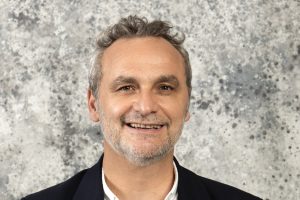
Biocodex has evolved from a pioneering French laboratory built around a single yeast strain into an international healthcare group spanning microbiota, women’s health and a focused orphan-disease activity. In this conversation, CEO Nicolas Coudurier reflects on the company’s scientific roots, its expansion across more than one hundred markets, and the way family ownership shapes long-term strategy, resilience and culture. He also explains how Biocodex is preparing its next chapter in a sector defined by rapid scientific progress and rising expectations for impact, responsibility and global reach.
What has shaped your journey at Biocodex, and how has the company evolved from its scientific origins into a global healthcare group?
Biocodex began in 1953 with a scientific intuition that proved far ahead of its time. Pharmacist Michel Hublot chose to build a company around Saccharomyces boulardii CNCM I-745 ®, a yeast strain first identified by Henri Boulard in Indochina in 1923 after observing local populations using lychee and mangosteen decoctions to ease digestive disorders. That insight laid the foundation for Ultra Levure and the many international formulations derived from the same strain. Long before the concept of the microbiota entered common scientific discourse, Biocodex was investing in a yeast-based medicinal product at a time when antibiotics dominated therapeutic thinking.
Ultra Levure received its first French marketing authorisation in 1961 and gradually expanded beyond France as clinical confidence in the CNCM I-745 ® strain grew. By the 1980s, co-prescription with antibiotics had become routine among French paediatricians and general practitioners, reflecting both clinical experience and a growing awareness of antibiotic-associated diarrhoea. The company’s early commitment to evidence generation, even when probiotics were considered peripheral, created a scientific and industrial foundation that allowed a small independent laboratory to remain ahead of a market that would only emerge many years later.
A decisive moment came in the early 2000s when Jean Marie Lefèvre, the founder’s son-in-law and a former executive from LVMH, took over the leadership of Biocodex. He brought with him a clear understanding that behind every patient is also a consumer who navigates choice, experience and trust. This perspective encouraged the recruitment of new skills, broadened the company’s vision and helped shift Biocodex from a primarily French organisation to an increasingly international one. Over the following two decades, we established subsidiaries across Europe, the Middle East, Africa, the Americas and Asia, most recently in Vietnam, the country where Saccharomyces boulardii CNCM I-745 ® was first isolated a century ago.
This transformation reflects the advantages of being a long-standing, family-owned company able to invest over decades rather than in short cycles. My own background at LVMH taught me to combine scientific rigour with an appreciation for how people interact with brands, products and care pathways. That balance fits Biocodex well. We remain anchored in science, yet we operate with a broader understanding of behaviour, quality and global reach. The result is a company that has managed to evolve continuously while staying true to its origins and to the long-term commitment that defines family ownership.
How would you define Biocodex today in terms of its identity, strategic pillars and the portfolio that underpins its growth?
Biocodex today is defined by its independence, its scientific heritage and a portfolio built around three strategic pillars that have evolved in a coherent and complementary way. With revenues of more than EUR 600 million in 2024, our activity reflects a balanced model anchored in long-term investment. Our microbiota activity remains the largest of these pillars and represents roughly half of the group’s turnover. It is supported by more than fifty years of accumulated evidence on Saccharomyces boulardii CNCM I-745. Production is anchored in Beauvais, north of Paris, where we operate a nine-hectare industrial site with one of Europe’s largest lyophilisation platforms for live biotherapeutic products. This capability allows us to supply more than one hundred countries and maintain our leadership position at a time when global interest in the microbiota has expanded across both science and public awareness.
Women’s health forms our second pillar and accounts for around fourteen percent of revenues. It was built by the acquisition of Laboratoires Iprad in 2020, bringing Saforelle, Mucogyne and Physioflor into the group. Saforelle is a leading intimate hygiene brand in France with strong positions in Belgium and Portugal. Scaling a consumer-facing women’s health portfolio requires different levers from those used in probiotic medicines. It calls for deep engagement with retail channels, digital communication and local market insight. We are consolidating leadership in our core European markets while preparing the portfolio for broader international growth through our network of subsidiaries and distributors.
Our third pillar is Orphan Diseases, focused on rare paediatric epilepsy through stiripentol, marketed as Diacomit ®. This pillar represents close to eight percent of revenues. The molecule was discovered in our R&D centre in Compiègne (France) and developed over many years with the long-term horizon that a family-owned structure allows. It is indicated for Dravet syndrome, a severe and ultra-rare form of epilepsy that places heavy pressure on children and families. Diacomit® received its first European approval in 2007 and later secured authorisations in Japan and the United States. This area demands deep scientific engagement and close work with specialist clinicians. It sits apart from our consumer-facing activities, yet it shows our long-term commitment to conditions with significant unmet need.
Alongside these pillars, we maintain a range of established and licensed products that reinforce our presence in France, mainly. This portfolio represents a little under one-third of our activity and covers several therapeutic areas where we have built long-standing credibility. It includes for France Otipax, a well-known treatment for otitis with decades of clinical use, Slenyto, a prolonged-release melatonin formulation indicated for sleep disorders associated with autism spectrum disorder, and Medikinet, an ADHD treatment widely prescribed in paediatric settings. These medicines, although not part of our global strategic pillars, carry strong recognition across the French healthcare system. They contribute stable revenues, support market access capabilities and help sustain trusted relationships with ANSM, HAS and CEPS, which remain central to our domestic footprint.
Taken together, these activities form a diversified portfolio that reflects both the scientific heritage of Biocodex and the evolution of healthcare markets. Microbiota remains a core engine of growth. Women’s health provides strong potential for international expansion. Rare paediatric epilepsy brings scientific depth and impact. The established portfolio strengthens our foundations in France. This balance, built over time and supported by patient investment, defines who we are today and how we continue to grow.
How do you ensure focus and long-term discipline while managing a portfolio that spans global pillars and locally anchored legacy brands?
Biocodex can sustain a broad portfolio because of its structure as an independent family-owned group. Our board, made up largely of family shareholders alongside two independent experts, operates with a long-term horizon and without the pressure of quarterly reporting. That gives us the freedom to take on products that serve a clear medical or societal need, even when they do not sit within our three global pillars, as long as they are grounded in strong science. This is why we support areas such as paediatric epilepsy globally or CNS care in France. These medicines have a direct impact on families, and they are chosen for their therapeutic value.
A portfolio of this size can create the risk of dispersion, and we address this by keeping our legacy and licensed products largely within the French market, where they rely on local expertise rather than global infrastructure. This allows us to direct our international resources toward the areas we fully own and intend to scale. Microbiota care, women’s health and Orphan diseases are the pillars that will drive our future growth, supported by organic development and selective acquisitions closely aligned with these themes. They offer the scientific depth and global potential needed to shape the next stage of Biocodex’s evolution.
Our financial model reinforces this focus. As a family-controlled company, we manage our resources with the prudence described in the French expression “gérer en bon père de famille”. We reinvest a significant share of our profits into reserves, which gives us the capacity to absorb shocks without compromising jobs or long-term priorities. Our position allows us to maintain stability. During the disruptions of 2020, when paediatric gastroenteritis dropped sharply due to school closures and public health measures, we absorbed the downturn without large-scale layoffs and without slowing our strategic investments.
This resilience protects more than our finances. It safeguards our ability to maintain teams, expertise and continuity across all three pillars, even when healthcare usage changes in unexpected ways. For a company active in microbiota, women’s health and orphan diseases, that stability matters. It ensures that scientific work continues uninterrupted and that we can build responsibly for the long term rather than respond to short-term volatility.
What guides your assessment of emerging microbiome ventures, and how do you determine which partnerships merit long-term strategic engagement?
Science is the foundation of every decision we make in the microbiome field. Our commitment goes far beyond product development, which is why we created two dedicated structures to advance understanding of the human microbiota. The Biocodex Microbiota Institute supports education for healthcare professionals and the public, while the Biocodex Microbiota Foundation funds national and international research through competitive grants. These initiatives reflect a long-term scientific orientation rather than a response to market trends..
When we consider investing in early-stage companies, we focus first on the strength of the biological rationale and the quality of the evidence emerging around it. Our initial investment in MaaT Pharma in 2016 was a genuine entrepreneurial step at a time when the microbiome field, particularly in oncology and graft versus host disease, was still forming its scientific base. MaaT is now one of the few players with clinical-stage data in both areas, which confirms that the fundamentals were sound. We apply the same scrutiny to other early ventures such as Exeliom Biosciences. Their work on single-strain live biotherapeutics, including candidates targeting NOD2-related immune dysfunction, is reviewed in depth by our R&D teams to assess the robustness of the biology, the credibility of the development plan and the long-term translational potential. These are early-stage bets, but they are grounded in evidence and aligned with the scientific directions we believe will matter over the next decade.
With MRM Health, we chose to continue going further. Their platform is very advanced, with clinical-stage programmes in inflammatory and immune-oncology indications, which made it possible to build a deeper strategic collaboration. As part of the agreement signed in 2025, we are investing up to thirty million euros and establishing a framework for joint development and future industrialisation. This allows our R&D and manufacturing teams to work directly with their scientists on next-generation live biotherapeutic products and positions us to play a meaningful role if these assets progress toward later stages.
Our long-term family ownership gives us the stability to take these decisions without being influenced by short-term market sentiment. We do not invest because a field is fashionable. We stay engaged when the evidence is convincing and when we believe the teams can deliver over time. Valuations may fluctuate, as they have for MaaT, but this does not alter our commitment. These programmes are still several years from the market, so it is premature to define a commercial strategy today. What matters for now is advancing the science, strengthening the partnerships and ensuring that, if these therapies succeed, we are prepared to support them with the right industrial and scientific infrastructure.
How do you navigate the uncertainty of the French environment while preserving Biocodex’s strong local base and continuing to expand internationally?
France remains our largest market and the centre of gravity for Biocodex. Our headquarters in Gentilly, our Beauvais manufacturing site and our R&D centre in Compiègne are all here, and nearly half of our workforce is based in the country. This creates a natural dependency on an environment that, at times, lacks clarity. The challenge is not only tax pressure, which can always be debated, but the broader uncertainty linked to shifting political cycles, the evolution of the PLFSS and the difficulty many people feel when trying to anticipate what lies ahead. As a citizen, I care about France, but as a CE,O I must recognise that this blurriness complicates long-term planning.
We manage this by keeping a strong French foundation while ensuring that our growth is geographically well balanced. Our seventeen subsidiaries and extensive partners network create a diversified footprint that helps mitigate shocks when other regions adjust regulation or trade policy overnight. At the same time, France remains a strategic asset. The Beauvais site spans nine hectares and houses one of Europe’s largest lyophilisation platforms for Saccharomyces boulardii CNCM I-745 ®. It is GMP certified, FDA approved and supplies products to more than one hundred countries. This industrial strength, coupled with the high calibre of our workforce, reinforces why France still matters profoundly to us.
There is also what I call the softer reality. People across France, and more broadly in Europe, are navigating a period marked by environmental concerns, political tension and rapid technological change. As an employer, we have a duty to provide stability and purpose. Our role is to offer a place where individuals can build careers, develop skills and feel supported at a time when the outside world often feels uncertain. That is why we continue to invest in culture, career opportunities and well-being initiatives across all teams.
How do you strengthen well-being and retention as Biocodex grows across markets?
Well-being is not an accessory for us. A few years ago, an employee engagement survey made it clear that people expected stronger support, which led us to reassess how we approached mental health, development and day-to-day life at work. Managers and HR remain central, but we also wanted to create a safe space where difficult conversations could happen without stigma. This is what guided our partnership with Teale, the Paris-based start-up that offers confidential digital tools, webinars and access to psychologists. It gives colleagues an additional channel to seek help, while preserving complete privacy since we only receive aggregate indicators. We complement this with practical gestures that reflect our culture of care. Saforelle is available in the women’s facilities. Expectant parents receive maternity kits. Parents of daughters entering their first period can request support kits as well. These initiatives may seem small, but they shape how people experience the workplace and reinforce the idea that they are seen and valued.
Retention remains strong, even though we are a mid-sized organisation and cannot always create vertical promotions on demand. We address this through internal mobility, exposure to global projects and a development model anchored in experience, collaboration and targeted training. The openings in Vietnam and Romania created real mobility opportunities for those who wanted a broader role. Our most recent engagement survey had a 93% participation rate, and our Employee Net Promoter Score rose to 28, a 47% improvement in one year. These results confirm that consistent investment in culture and development strengthens loyalty, which is essential for a family-owned organisation committed to long-term growth.
What guides your long-term vision for Biocodex as you look beyond the current phase of growth?
We are not pursuing growth for symbolic reasons. Being a family-owned organisation allows us to step back from the pressure to hit arbitrary revenue milestones and instead concentrate on building a company that can grow steadily and responsibly. Our path forward rests on a combination of organic development and selective acquisitions, but always with science, people and long-term value at the centre. A financial target reached more quickly would mean very little if it weakened our culture, strained our teams or pushed us off our environmental commitments. If profit expands but engagement deteriorates, that is not a win. If we pursue scale at the expense of purpose, it is not success either.
This is why our direction is not defined by a single objective. It is shaped by a set of priorities that must remain in balance over time: performance, people, planet and purpose. Managing these together demands judgment and adjustment, yet the aim is coherence rather than speed. This approach also reflects the nature of our business. With half of our activity rooted in microbiota, a field grounded in equilibrium, it is natural that we apply the same philosophy to the way we lead Biocodex.
Our ambition is to maintain that sense of balance while continuing to advance our scientific, industrial and human foundations. Growth will continue, but at a pace and in a manner that preserves the stability, curiosity and collective engagement that define who we are. The real objective is not acceleration for its own sake, but the continuation of a long-term journey built with care, intention and resilience.