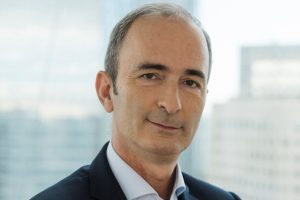
Nicolas Dufourt leads ALK France as General Manager, drawing on nearly two decades of tenure with the Danish allergy immunotherapy specialist. Under his stewardship, the French affiliate, comprising approximately 400 employees, has emerged as the company's second-largest market globally. His leadership navigates the complex intersection of increasing allergy prevalence, diminishing specialist availability, and France's challenging pharmaceutical pricing.
19 years with the same organisation is quite unusual in pharmaceuticals. What has sustained this relationship?
I believe this reflects a defining characteristic of Danish corporate culture – the capacity to build enduring trust between hierarchical levels and employees. I was initially recruited into marketing, and we collaboratively prepared succession planning with my predecessor. When the former Chief Executive appointed me as General Manager in 2017, it represented a commitment to continuity of business operations, relationships with headquarters, customer partnerships, and deep product knowledge.
Our products may appear simple, but the allergy immunotherapy business is remarkably complex. Having previously worked for Pfizer and Takeda, I can observe distinct differences. The proximity to leadership at ALK is extraordinary – my Chief Executive sits merely two levels above me. If I need to telephone our global CEO, Peter Halling, this afternoon, I simply ring him. Contrast this with large pharmaceutical corporations, where operational staff may never encounter the Chief Executive.
We operate with a highly focused team, working with fewer than 2,000 allergologists rather than the 10,000 or 20,000 general practitioners typical of broader therapeutic areas. This represents an exceptionally specialised and concentrated business model.
From your vantage point, how is the declining specialist workforce reshaping the wider allergy ecosystem in France?
We face a profound paradox: significantly increasing allergy prevalence with a steadily declining physician population. This creates two critical issues.
First, patient access becomes severely compromised. France exhibits profound geographical disparities in specialist coverage. If you reside in remote areas and your local allergologist retires, you may face journeys of 200 kilometres to access care. Despite telemedicine advances, this remains a significant challenge.
Second, the diagnostic bottleneck is severe. The first comprehensive allergy diagnosis typically occurs seven years after initial symptoms manifest. Parents and adolescents initially consult family physicians who prescribe antihistamines and corticosteroids. Symptoms progressively worsen, and severe allergies undergo what we term the “allergic march,” progressing from allergic rhinitis to asthma. The fundamental principle in disease management is early intervention – treating patients when very young to arrest disease progression. Currently, this is not occurring.
Meanwhile, physicians report seeing increasingly complex cases – poly-allergic patients presenting with severe respiratory allergies to multiple pollens, indoor allergens such as house dust mites and cats, plus concurrent food allergies. The increase is substantial and accelerating.
How is ALK addressing this structural challenge?
We endeavour to maximise our impact within realistic constraints. We develop awareness campaigns targeting patients and caregivers through digital platforms, websites, and social media. We maintain partnerships with patient associations. However, these efforts represent drops in the Ocean.
On prescriber development, we have taken a strategic approach in partnership with allergology associations and the French Society of Allergy. Until 2017, allergology was not an officially recognised medical speciality but only an additional qualification for general practitioners, which was clearly insufficient. Its formal recognition by the government created dedicated residency slots for the first time, with around 30 allergology training positions opened each year.
Simultaneously, we identified opportunities to expand our prescriber base. We collaborated with pulmonologists, who manage asthma; paediatricians, who encounter young patients early and observe significant food allergy presentations; and ear, nose, and throat specialists who perform diagnostics. We succeeded in cultivating new physicians interested in allergy management, capable of prescribing immunotherapy effectively.
How would you characterise the role of immunotherapy within the broader allergy treatment landscape today?
Immunotherapy is reserved for patients with severe allergies, a relatively small proportion of the overall allergic population, most of whom manage well with antihistamines. It demands a high level of commitment, typically involving a daily regimen sustained over at least three years. This places significant emphasis on patient motivation and on the clinician’s ability to select suitable candidates and ensure they fully appreciate the long-term nature of the therapy.
However, the objective justifies this commitment. Consistent compliance over three years can deliver a cure, fundamentally different from symptomatic antihistamines. For severe respiratory allergies, immunotherapy represents the only curative option. We maintain approximately 25 to 30 distinct allergens in France, including tablets for plus legacy liquid formulations. These address respiratory allergies exclusively. Currently, at ALK, no immunotherapy exists for food allergies, where management relies solely on avoidance.
France ranks alongside Germany and the Nordics as one of the three most important markets to ALK.
Given the increasingly challenging commercial climate in France, how sustainable is your current position?
This raises critical questions. France sits ten percent below the European average for pharmaceutical prices – we maintain among the lowest prices in Europe. Regarding market access timelines, France averages approximately 500 days from European approval to market availability. Germany achieves this in 50 days.
Germany employs a different system: they launch products immediately for patients whilst continuing price negotiations. France requires icing before launch, creating substantial delays. The consequence? Germany achieves 90% product availability across the European portfolio. France reaches only 60%. Introducing new products is growing increasingly difficult.
Could you outline the French pricing and reimbursement pathway and its implications for launch timelines?
Following European approval, we navigate a two-committee national process. First, the Transparency Committee assesses our comprehensive submission dossier. They assign what we term an ASMR (Amélioration du Service Médical Rendu – Improvement in Medical Services Provided) rating from one to five. Five indicates no added value; four signifies low added value. The vast majority – 90% of products – receive ratings of four or five. Exceptional products achieve one or two.
This rating determines our negotiating position with the Economic Committee, where we submit pricing proposals. Typically, we propose prices aligned with German or average European pricing. However, if we receive a rating of five, achieving reasonable pricing becomes very challenging.
International reference pricing heavily influences market strategy. How does this constrain product launches in France?
This creates our most severe constraint. French prices are referenced by fifty countries worldwide. These countries monitor French pricing and adjust their own prices downward accordingly. This makes launching products in France at prices below other major markets extremely problematic from a global business perspective. At ALK, we are regularly confronted with this issue, which is caused by both launch prices and regular downward revisions of our product prices. This leads to intense negotiations with health authorities and mobilises our internal teams. The ragweed allergy tablet provides a good example. This innovative product has never been launched in France.
How effectively is France’s dual pricing framework supporting market sustainability for innovative therapies?
This proves absolutely critical – without it, perhaps 50% of products would withdraw from the French market. We maintain two prices: the official list price published in the Journal Officiel, visible to international reference pricing systems, and our actual net price. At year-end, we remit this difference back to authorities through the “payback” mechanism. This system preserves official pricing for international reference purposes whilst reflecting actual economics. However, the national-level payback amounts have become so enormous that authorities increasingly struggle to manage the system.
ALK France delivered strong organic growth last year. What were the core drivers of this performance?
2024 represented an exceptionally strong year for ALK France. We achieved sustained growth across both portfolios – new international products and legacy formulations. This validates entering a new positive cycle after several challenging years.
You operate across multiple sites and functions. How have you structured the organisation to maintain cohesion and execution discipline?
We have a true leadership team with effective leadership. This matters enormously because we operate across three distinct sites plus field-based commercial teams. We have built a highly efficient management team of nine Executive Committee members representing quality, production, commercial operations, medical affairs, regulatory and pharmacovigilance, finance, and marketing, collaborating transversally across different sites and vastly different functional domains.
We have extended this philosophy by establishing a community of 50 managers representing all functions who cascade strategy and develop execution plans. We convene them three times annually for full-day sessions addressing performance, threats, and challenges, plus developmental topics like personality dynamics at work. These tri-annual gatherings prove essential for cultivating relationships and fostering cross-functional collaboration.
France hosts a significant share of ALK’s manufacturing footprint. What strategic value does this bring to the group?
ALK operates manufacturing facilities in Denmark, Madrid, and the US. France hosts one of the largest manufacturing footprints. Since the 2006 acquisition of Allerbio’s legacy business, we have doubled employee headcount and doubled manufacturing capacity. We recently invested two million euros in replacing gas heating systems with heat pumps.
This commitment to sustainability represents a core Danish corporate value. We operate on 100% green electricity. Our packaging transformation from plastic to sustainably sourced cardboard from French forests reduced carbon consumption by 16 and emissions by 19.
Should sustainability be weighted more heavily in market access evaluations?
Therein lies profound frustration. We have achieved a comprehensive green transition and invested substantially, yet we have the feeling that this has very low recognition in pricing discussions. No price increases – only decreases. This is why maintaining two production facilities employing 300 people becomes a critical asset in authority discussions. This is 100% Made-in-France production. We represent a key employer supporting local schools, shops, hospitals, and families sustaining entire local economies.
I firmly believe dossiers should also include a “Made in France” category with meaningful weight – recognition for green production and local manufacturing. Every Danish pharmaceutical company – Novo Nordisk, LEO Pharma, Lundbeck, Coloplast, and ourselves – maintains a significant French presence, demonstrating a genuine commitment. Then I read interviews discussing pharmaceutical sovereignty. But when you propose wave after wave of price cuts, what message does that send to Copenhagen headquarters?
France is a large market, but generating enthusiasm from headquarters sometimes proves challenging. I face internal competition with other European affiliates, where governments offer genuinely positive investment incentives. And now the USA has intensified the competition– manufacture in America or face additional tariffs, whilst simultaneously discussing benchmarking US prices against European markets, specifically France.
You helped spearhead the National Allergy Plan. What outcomes has it delivered, and what remains to be done?
We initiated the National Allergy Plan, launched in 2022 as a five-year roadmap through 2027, representing the collective voice of the French Allergy Federation, patient associations, allergologist unions, and all stakeholder organisations. The strategic insight was recognising that convincing stakeholders requires publishing comprehensive analyses.
The plan documented that with an average allergologist age of 57 years, one-third will retire imminently. We identified solutions like telemedicine for treatment renewals and medical assistants working with allergologists – genuine innovations. Leading allergology practices now employ medical assistants alongside physicians. Assistants can renew treatments under physician supervision, allowing physicians to focus initial consultations on new patients and further complex consultations. We also support development by enabling medical assistant congress attendance, where they share best practices.
Subsequently, we established the National Collective of Allergy in collaboration with the allergy-related professional bodies, patient associations, Stallergenes and Thermo Fisher. Together, we organised local meetings throughout France providing platforms for patients, physicians, politicians, administrators, and social security representatives. We continue developing awareness around a fundamental question: how do you anticipate managing exponentially increasing patient populations with current constraints? As such, 2026 will be a presidential election year and will be decisive in raising awareness of the condition and the challenges facing allergy sufferers among decision-makers.
What leadership capabilities do you believe are essential for pharmaceutical managers navigating the current French environment?
Uncertainty pervades business globally. However, one factor distinguishes our French affiliate: management excellence and cross-functional coordination. In September, our Executive Leadership Team conducted a comprehensive business review in France. Both longstanding and newly appointed ELT members specifically congratulated the French COMEX regarding the strength and cohesion of our leadership team.
We operate across three distinct sites – Paris, Vandeuil, and Varennes-en-Argonne – plus field operations, yet successfully built an exceptionally efficient management team working transversally. We collaborate effectively across sites whilst addressing vastly different operational challenges simultaneously.
This transversal coordination represents something distinctive to the French affiliate. I am convinced this management approach contributes substantially to our sustained commercial success despite challenging external conditions.
We place deliberate emphasis on fostering strong relationships across all sites. Human nature inclines individuals to interact primarily with those in close physical proximity, yet sustained performance requires broader connectivity. We therefore cultivate cross-site collaboration and shared project ownership in a structured and intentional manner. This people-centred management philosophy, embodied in our “stronger together” principle, remains a foundational pillar of the French affiliate’s resilience and long-term success.
Looking ahead, how are you positioning the organisation to remain resilient and competitive in an increasingly challenging environment?
We are pursuing several initiatives within our “Allergy Plus” strategic framework. Four pillars provide clarity: Focus on business fundamentals and both legacy and new products; Innovate with new diagnostic modalities like nasal provocation testing and paediatric indications; Cultivate through ESG commitments and sustainability; and Optimise for supply security across our two manufacturing facilities.
The challenge remains balancing France’s importance as the second-largest global market against increasingly difficult commercial conditions. We must continue convincing headquarters that French investment remains justified despite pricing pressures, regulatory complexity, and international reference pricing constraints. Success depends on maintaining our organisational effectiveness, expanding the prescriber base, and advocating systemically for recognition of our manufacturing footprint and sustainability investments.
The fundamental tension persists: how do we sustain commitment to a market that represents both enormous opportunity and substantial commercial challenge? The answer lies in demonstrating continued growth, maintaining operational excellence, and persistently advocating for policy frameworks that recognise the full value pharmaceutical companies contribute to French healthcare sovereignty and economic vitality.