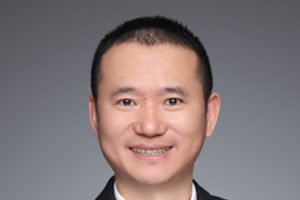
Founded in 2016, Mabgeek Biotech has quickly emerged as a promising innovator in immunology, pioneering long-acting antibody therapies for allergic and autoimmune diseases, particularly Th2-driven conditions such as atopic dermatitis and asthma. In this interview, Founder and CEO Dr Chenghai Zhang shares how a lean, discovery-driven model and a focus on type-2 inflammation have propelled the company’s lead asset, MG-K10, toward market approval and international expansion.
What inspired the creation of Mabgeek, and how is the organisation structured to achieve its mission?
Founded in 2016, Mabgeek was created with a clear vision: to advance next-generation antibody therapies for autoimmune and allergic diseases. The name itself reflects this mission, “Mab” for monoclonal antibodies and “Geek” for our deep scientific commitment. From the outset, we built Mabgeek as a discovery-driven platform rather than a fully integrated developer, focusing on early target identification and molecule design while partnering with CROs and CDMOs for preclinical, manufacturing, and clinical studies. Central to this approach is our proprietary TEADA platform, designed to accelerate antibody discovery and optimise candidates for developability and performance. This lean, partnership-oriented structure keeps us agile and focused on what we do best: scientific innovation and excellence.
Today, Mabgeek operates with around forty employees, including a core group of ten scientists who have worked together for over a decade. This long-standing collaboration has fostered deep trust, cohesion, and efficiency across the organisation. I co-founded Mabgeek with Dr Lingqiao Zhu, who got her postdoctoral training at the University of Michigan, and has been a veteran of antibody drug development, and together with our team of experienced PhD and master-level scientists, we have built a culture that values precision, creativity, and collaboration; an environment dedicated to translating strong science into meaningful biologic therapies.
How does Mabgeek’s antibody discovery platform distinguish itself within China’s competitive biotech landscape?
Our scientific strategy is deliberately focused on non-oncology indications, which present very different challenges from oncology. In cancer, efficacy often takes precedence over dosing convenience or delivery, whereas autoimmune and allergic diseases require therapies that are long-acting, stable, and easy for patients to use over time. From the outset, our vision was to combine strong therapeutic performance with formulation and delivery innovation. Mabgeek was among the first globally to pursue long-acting IL-4Rα antibodies, supported by a high-throughput discovery engine capable of screening thousands of variants to identify molecules with exceptional stability, solubility, and developability, qualities essential for high-concentration subcutaneous formulations and pre-filled syringes.
Beyond injectables, we are exploring inhaled antibody delivery, which requires maintaining biological activity and structural integrity through drying and reconstitution processes. Achieving this level of molecular stability expands treatment possibilities for chronic inflammatory conditions where adherence can be a major barrier. Our goal is not simply to create new antibodies but to redefine how biologics fit into patients’ lives, enabling infrequent, convenient dosing without compromising efficacy. This integrated focus on molecular design, patient usability, and manufacturability reflects the scientific culture we have built at Mabgeek, one that values precision and practicality as much as innovation itself.
What therapeutic areas best capture the focus and long-term vision of Mabgeek’s research?
We concentrate on allergic and autoimmune diseases driven by type-2 inflammation, with atopic dermatitis and asthma as our principal focus areas. When we founded Mabgeek in 2016, there were no effective biologics for atopic dermatitis available in China, and Dupilumab (Dupixent) had not yet been approved globally. At the same time, allergic conditions were becoming increasingly prevalent, particularly among children in large cities, where environmental factors are thought to play a role. I have seen this shift personally, my own son developed atopic dermatitis in infancy, and many of his peers face similar struggles with asthma or eczema. This experience reinforced our conviction that type-2 inflammatory diseases represented both a growing medical need and an opportunity for meaningful innovation.
We identified IL-4Rα as a highly validated yet still optimisable target and began developing MG-K10, our lead long-acting monoclonal antibody designed to improve dosing convenience, molecular stability, and overall patient experience. MG-K10 has completed a Phase III trial in China with positive outcomes, and we have submitted a Biologics License Application to the NMPA, with approval anticipated within twelve months. We are also preparing to file BLA in Singapore, leveraging its membership in the Access Consortium to facilitate regulatory alignment across the United Kingdom, Canada, Australia, and Switzerland, as well as to strengthen our expansion into Southeast Asia. This dual strategy, anchored in China but oriented toward global standards, embodies our broader ambition to build Mabgeek into a discovery-led biotech capable of delivering world-class innovation from Asia.
How does MG-K10 distinguish itself from existing therapies, and what is Mabgeek’s vision for its global development?
MG-K10 represents the next evolution in IL-4Rα inhibition for atopic dermatitis, designed to build upon Dupixent’s clinical success while addressing its key practical limitations. Dupixent remains the global benchmark for this mechanism, but its biweekly dosing poses challenges for long-term adherence. MG-K10, also known as Comekibart, is a long-acting humanised monoclonal antibody that delivers comparable or superior efficacy through a once-monthly regimen, offering patients a more convenient and sustainable approach to chronic disease management. Within China, it stands among the most advanced long-acting IL-4Rα antibodies in development. While other domestic players, such as InnoCare Pharma, are pursuing alternative pathways like TYK2 inhibition, these remain at earlier stages and are not directly comparable to our biologic programme.
Our completed China phase III trial in adults with moderate to severe atopic dermatitis showed strong efficacy across key clinical endpoints, including EASI 75, EASI 90, and clear or almost clear skin on the Investigator’s Global Assessment. The results appeared numerically favourable when viewed against published Dupixent data, but only through indirect, cross-trial comparisons that require caution. The safety profile was also encouraging, with a lower incidence of conjunctivitis and injection-site reactions, issues often seen with IL-4Rα inhibitors. To maintain development speed, we chose not to run a head-to-head study, which would have extended timelines, and instead built a global programme supported by complementary datasets.
This China Phase III study serves as the foundation for this global effort, to be followed by a new multi-regional Phase III clinical trial in the United States, EU, Japan, South Korea and China. Both the FDA and EMA have expressed openness to integrated development strategies when supported by robust, high-quality data. We have partnered with a leading global CRO to manage trial execution and are finalising site selection to ensure that the programme upholds the highest scientific and regulatory standards. The first patient enrolment of the MRCT is expected in March 2026.
How are your strategic collaborations shaping the commercialisation and regional rollout of MG-K10 in China and beyond?
We have established a strategic partnership This collaboration reflects a carefully designed model that combines our scientific expertise and manufacturing oversight with CMS’s extensive commercial infrastructure and market access capabilities in dermatology and immunology. While Mabgeek continues to support process development, supply, and production, CMS will lead launch execution and reimbursement strategy across these priority markets. The agreement also includes an upfront investment valued internally at around RMB 1,120,852 (an 8.13 percent stake in the company), underscoring CMS’s confidence in MG-K10’s differentiation as the first long-acting IL-4Rα antibody approaching market approval in China. Pricing discussions and public reimbursement considerations are ongoing, but the commercial framework is now well established to support a successful regional rollout.
How are you preparing to advance MG-K10 into global development and expand its international footprint?
We initiated the global development programme for MG-K10 independently and have already held constructive discussions with both FDA and EMA. Our plan is to begin a multi-regional Phase III trial by the end of this year or early next, building on the strong Phase III results achieved in China. In parallel, we are in active dialogue with potential partners ranging from major multinationals to regional leaders in the United States, Japan, and Europe. Both out-licensing and co-development models remain under consideration, depending on the partner’s scale and strategic alignment. Our CMC and manufacturing work is supported by Chime Biologics, which completed process validation for MG-K10 earlier this year, ensuring readiness for large-scale production and regulatory submission.
Although MG-K10 is not first-in-class, it represents the first long-acting IL-4Rα antibody to reach late-stage global development. We believe that with its once-monthly dosing, it offers the same validated mechanism as Dupixent while providing improved convenience and potentially stronger treatment adherence. This makes MG-K10 a compelling option for companies seeking a clinically de-risked yet differentiated biologic in the growing atopic dermatitis market. Our goal is to secure a strategic partnership within the next two years as the multi-regional programme advances. A dedicated internal business development team continues to lead these efforts, focusing on collaborations that can strengthen MG-K10’s global positioning and accelerate access for patients worldwide.
Beyond MG-K10, what other programmes illustrate Mabgeek’s broader scientific direction?
Our second most advanced programme is a long-acting monoclonal antibody targeting thymic stromal lymphopoietin (TSLP), another key cytokine in type-2 and non-type 2 inflammation. The programme has completed Phase I and is now in Phase II clinical trials for asthma in China. It is designed to achieve dosing intervals of up to six months, representing a significant leap forward in treatment convenience and adherence for chronic respiratory disease. In parallel, we are evaluating combination approaches that integrate IL-4Rα and TSLP inhibition to enhance therapeutic efficacy across a broader range of allergic and inflammatory conditions.
All ongoing clinical work is currently based in China, but this time we are engaging international partners much earlier in development. One of the lessons from MG-K10 was the importance of initiating business development discussions before reaching late-stage milestones. With global interest in Chinese biologics for inflammatory diseases now accelerating, we have begun these dialogues at the Phase II stage to ensure that new programmes can advance globally from the outset. This forward-looking approach allows us to align scientific innovation with strategic partnerships that will help bring our next generation of long-acting antibodies to patients worldwide.
What is driving Mabgeek’s plan to go public, and how will this strengthen its next stage of growth?
Our decision to list is a strategic step to expand visibility and secure the resources needed to scale globally. Although we remain a small discovery-driven biotech, we have built a differentiated portfolio focused on type-2 inflammatory and autoimmune diseases. Going public is not about investor pressure but about elevating recognition among global partners while funding the next phase of growth. The IPO, targeting around USD 150 million, has already progressed with a listing application filed on the Hong Kong Stock Exchange under Chapter 18A, with CICC acting as sponsor. Proceeds will be directed toward multi-regional Phase III trials for MG-K10 in the United States and Europe, as well as the development of next-generation biologics designed as global assets from inception.
Investor sentiment has been positive. MG-K10 remains the only long-acting IL-4Rα antibody at the BLA stage, positioned in a market validated by Dupixent’s success. Even with lower pricing in China, the commercial potential is significant; our partner CMS projects domestic annual sales exceeding RMB 10 billion. Through Singapore’s Access Consortium framework, we can also leverage aligned regulatory pathways into markets such as the United Kingdom, Canada, and Australia. While investors recognise the opportunity, they also emphasise the importance of securing a strong global partnership. We see this as a key next milestone and are advancing discussions with potential collaborators to strengthen MG-K10’s international profile.
Following the IPO, we intend to strengthen our scientific capabilities and international reach, expanding beyond our 40-person core team while maintaining a discovery-led structure. MG-K10 continues to progress across multiple Phase III indications in China, including atopic dermatitis, asthma, seasonal allergic rhinitis , and prurigo nodularis, alongside additional IND approvals for other Th2-driven diseases. To sustain momentum, we will scale our discovery group, currently ten scientists, and attract global talent with international experience. With , we remain financially stable. Discussions with cornerstone investors are ongoing, reflecting growing confidence in our long-term strategy and pipeline potential.
Looking ahead, what message would you like to convey to potential partners and investors about Mabgeek’s broader vision?
Our strength lies in discovery. We are dedicated to developing next-generation biologics that address type-2 inflammatory and autoimmune diseases, with an emphasis on long-acting antibodies that combine efficacy, stability, and patient convenience. Two of our monoclonal antibodies have already reached late-stage development, while several early programmes, including bispecifics, are advancing toward what we believe could be best-in-class profiles. IL-4Rα remains one of the most validated targets in immunology, and our long-acting IL-4Rα antibody continues to show the potential to redefine therapeutic standards in this field.
We are building a sustainable discovery engine designed to deliver a steady pipeline of differentiated molecules with clear clinical and commercial relevance. Our ambition is to work with partners who share our commitment to scientific excellence and global patient access. With focused expertise, proven execution, and a collaborative mindset, we aim to shape the next wave of innovation in immunology and bring transformative medicines to patients worldwide.