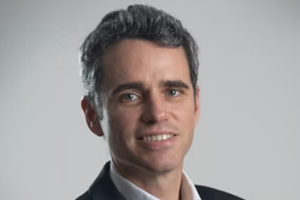
Launched in 2022 under the France 2030 biocluster programme, the Paris-Saclay Cancer Cluster (PSCC) is rapidly positioning itself as a new epicentre for oncology innovation in Europe. Under the leadership of CEO Benjamin Garel, it brings together world-class hospitals, leading universities, and major pharmaceutical partners with the mission of transforming France’s outstanding research into breakthrough treatments for patients.
What is the Paris-Saclay Cancer Cluster (PSCC) and how did it come into being?
The Paris-Saclay Cancer Cluster (PSCC) is a non-profit foundation created in 2022 under the France 2030 biocluster programme with the ambition of transforming France’s excellence in oncology research into tangible solutions for patients. It was founded on a unique partnership between leading academic and industrial institutions. On the academic side, our members include Gustave Roussy, one of the world’s foremost cancer centres; Institut Curie; INSERM; Institut Polytechnique de Paris; and Université Paris-Saclay, which consistently ranks among the top global universities. On the industry side, Sanofi was present from the beginning and has since been joined by Servier, Ipsen, and GSK, underscoring the cluster’s international outlook.
France has an outstanding scientific base in oncology; it ranks second worldwide in terms of publications, but this strength does not yet translate into patient impact at the same scale. The country ranks only 13th for patents and below 20th for startup funding, while more than 90% of new medicines approved by the FDA originate from startups. If we want to see French research reach patients, we must help principal investigators and young companies navigate the journey from the laboratory to the market. That is the role PSCC was created to play.
How is the PSCC supporting researchers and startups to accelerate innovation in oncology?
Our work is structured around four main pillars. The first is infrastructure. At Campus Grand Parc in Villejuif, adjacent to Gustave Roussy, we are building a site that will eventually cover 100,000 m² of offices and laboratories, offering space for startups, CROs, CDMOs, and large pharmaceutical companies. The Hive, one of the initial buildings, is already welcoming early tenants. The vision is to create an environment where academic and private laboratories operate side by side, enabling collaboration at every stage of development. The facilities range from plug-and-play benches for researchers leaving academia to larger laboratories and long-term office leases. Central laboratories, animal facilities operated by a private partner, and potentially a major CRO will also form part of the campus. We often describe it as the “Station F of oncology,” an international hub comparable to Boston’s life sciences ecosystem, but here in Paris, anchored by Gustave Roussy, which treats almost 50,000 patients every year and enrols over 20% of them in clinical trials.
The second pillar is support for startups and principal investigators. We run dedicated training sessions for researchers who wish to establish companies, ranging from week-long intensive programmes to year-long courses with weekly sessions. To date, we have selected around 80 startups, most in preclinical or Phase I, each of which benefits from monthly coaching and access to expert guidance. Because questions around CMC or market access cannot always be addressed within academia, we connect these startups with specialists from Gustave Roussy, Curie, INSERM, and from our industrial partners such as Sanofi, Merck, and GSK. The feedback we receive is consistently strong: entrepreneurs tell us that, although Paris offers many incubators, PSCC is unique in that we accompany them throughout their journey, not just for two years. Our guiding principle is to help every startup reach a successful Phase II trial as quickly as possible, recognising that beyond that stage, most will be working with large pharmaceutical partners.
The third pillar is our scientific offer, which involves investing in advanced platforms to strengthen collaboration between hospitals, startups, and industry. At Gustave Roussy, we have supported the establishment of single-cell and spatial transcriptomics facilities, as well as a patient-derived organoid (PDO) platform and an ex vivo tissue-slice culture system that preserves the tumour microenvironment for up to 15 days. We are also backing a potentially world-first ex vivo liver perfusion platform that keeps resected human livers viable for several days, opening new possibilities for translational research. At Institut Curie, we are supporting the development of next-generation cell therapies, including CAR-T, CAR-NK, and CAR-M. Alongside these platforms, we have invested tens of millions of euros in structuring real-world data across hospitals. Our multi-centre portal allows feasibility queries – for instance, identifying patients with small-cell lung cancer treated with anti-PD1 who developed resistance – and provides access to files and genomic data within approximately three months. Finally, we facilitate access to biological samples, which remains one of the biggest challenges for startups, and we are already connecting young companies with hospitals to secure the material they need.
The fourth pillar is ecosystem animation. Innovation depends not only on facilities and data but also on networks. We organise regular “ecosystem breakfasts” where CROs present their services, and our “Jeudis du PSCC” bring together researchers, industry executives, and venture capitalists. These sessions are deliberately structured to combine scientific insight, industrial perspective, and investment expertise, and they always end with informal networking. Through these initiatives, we act as matchmakers, accelerating the creation of connections between academia, industry, and finance, and ensuring that startups can quickly access the networks and resources required to advance their projects.
How is France positioned in the global oncology innovation landscape compared with regions such as China or the United States?
France’s position is anchored in the quality of its science and the strength of its hospitals. Our country has long been recognised for the excellence of its basic research, and our clinical infrastructure matches this standard, with institutions such as Gustave Roussy and Institut Curie capable of running Phase I, II, and III trials of exceptional quality. This generates robust data that is highly valued internationally. Another distinctive strength is our healthcare system, which offers equal access across the population. Unlike settings where clinical trials reach only a fraction of society, in France, data are drawn from diverse patient groups, making them broader, more representative, and therefore highly relevant for global development.
Just as important is the cultural transformation that has taken place in recent years. For a long time, researchers moving from academia to entrepreneurship were regarded with scepticism, as if pursuing a company meant abandoning the rigour of science. That perception is changing. Figures such as Sébastien Amigorena, immunologist at Institut Curie and research director at CNRS, show that it is possible to combine an outstanding academic career with entrepreneurial activity, and he is far from an isolated example. This new mindset is reshaping our ecosystem and making it more dynamic. Added to this is a geographical advantage that is truly rare in Europe: Gustave Roussy, ranked among the world’s top five cancer centres, is only twenty minutes from central Paris, yet still surrounded by space that can be developed. This combination of proximity, scale, and available land allows us to create a genuine oncology innovation district.
France is sometimes criticised for bureaucracy, taxes, and regulation. How do you respond to these perceptions when speaking to international audiences?
Indeed, France is often associated with a heavy administrative and fiscal framework, but it is important to view the overall balance. Employers here are not weighed down by the very high insurance costs faced in the United States, and salaries – even in Paris – remain well below those in hubs like Boston. When considered together, these factors make the operating environment more competitive than is often assumed. Beyond this, Europe provides something particularly valuable: reliability and usability of data. Clinical and genomic data generated in France can be used with confidence in international development programmes, while in China, despite the impressive progress of its scientific community, restrictions often prevent data from being exported or shared. This creates a clear differentiator.
We are realistic: France is not leading on every front. But when we combine the quality of our science and hospitals, the inclusivity of our healthcare system, the cultural shift towards entrepreneurship, and the security of our data, we believe we are well-positioned to strengthen our role in global oncology innovation.
Who are the key partners of the PSCC, and how are they contributing to its development?
The cluster rests on the strength of several major institutions. Three hospitals form its clinical core: Gustave Roussy, widely recognised internationally and particularly in the United States; Institut Curie; and AP-HP, which brings together all of Paris’s public hospitals. These centres have long been accustomed to working with large pharmaceutical groups, but they are less familiar with startups. One of our responsibilities is therefore to identify promising young companies and connect them with these hospitals, reassuring both sides and enabling partnerships that might not otherwise take place.
In addition, we work closely with INSERM, which federates medical researchers across France, and with Université Paris-Saclay, one of the nation’s largest and most highly ranked universities. We also collaborate with Institut Polytechnique de Paris (IP Paris), an institution historically rooted in engineering but now excelling in mathematics and artificial intelligence, areas of growing relevance to biology. By bringing together clinical excellence, academic depth, and technological expertise, PSCC offers a uniquely strong platform to foster innovation at the intersection of science, medicine, and technology.
What is your approach to attracting international participants, and how do you identify the most promising startups to join the ecosystem?
Our ambition is to make PSCC a recognised hub for oncology innovation at both the European and global levels. We already host startups from the United States, Argentina, Italy, the United Kingdom, and Canada, many of which are connected to France through clinical trials at Gustave Roussy or because their founders studied here. The aim is to concentrate the most promising young companies within a single environment, while ensuring that major pharmaceutical groups are also present to interact with them, provide feedback, and build strong partnerships. For startups, this dialogue with industry is essential to sharpen their strategy and accelerate progress, which is why we invest heavily in organising events that encourage high-quality exchanges between entrepreneurs and pharma.
To reach and select these startups, we combine broad outreach with close institutional partnerships. We maintain visibility through our website, LinkedIn, and other channels, but we also rely on trusted organisations such as Fondation ARC, which runs competitive funding calls to support the best oncology projects. When they identify outstanding initiatives, they connect us with the principal investigators, whether their work is moving towards a startup or an industrial collaboration. In the same way, we collaborate with La Ligue contre le cancer and other foundations financing high-level research. These partnerships, together with our own efforts, ensure that the companies joining the cluster represent some of the most promising talent in oncology innovation today.
As a young organisation, what performance indicators are you prioritising, and what is your longer-term vision for the cluster?
Over the next decade, our ambition is to help bring forward what could be “the next anti-PD1,” a therapy capable of reshaping oncology in the way PD-1 checkpoint inhibitors have done, saving hundreds of thousands of lives each year while also creating major economic value. The broader vision is to deliver life-changing treatments to patients while building a robust and sustainable ecosystem that continues to generate innovation well into the future.
To achieve this, we are developing a fully integrated environment that brings together startups, CROs, CDMOs, venture capital, large pharmaceutical partners, and top-level students in one space. Within this framework, a key KPI is the satisfaction of the startups we support: more than 90% already rate our impact at nine or ten out of ten, which gives us confidence in our approach. Another crucial measure is fundraising, and we aim for each company to secure new investment roughly every two years to sustain its growth. Beyond these indicators, we monitor the effectiveness of our other pillars, from the structuring of real-world data and the development of scientific platforms to the expansion of physical facilities, always asking whether these resources are truly aligned with the evolving needs of the startups.
Looking ahead, which areas of oncology innovation do you see as most urgent, and how is PSCC positioned to contribute?
Gastrointestinal cancers are becoming an increasingly pressing challenge, particularly as incidence rises among younger adults. Pancreatic and stomach cancers, for instance, remain extremely difficult to detect early and continue to show poor five-year survival rates, which makes innovation in these fields essential. At PSCC, we cannot predict where the next major advance will originate, which is why we deliberately adopt an open approach. We provide support across the full spectrum of oncology, from CAR-T therapies and checkpoint inhibitors to antibody-drug conjugates (ADCs) and lipid nanoparticles (LNPs). The latter are an especially promising area in which we are considering the creation of a dedicated platform. Our priority is to ensure that the most promising young companies have the tools, expertise, and environment to deliver, wherever the science leads.
Beyond scientific advances, how are you strengthening PSCC’s role in Europe, particularly in developing and retaining talent?
Our overarching ambition is to accelerate innovation and establish PSCC as the reference point for oncology projects in Europe. Talent is at the heart of this mission, yet it is also where many challenges arise. Startups that have just raised funds often need to expand quickly, which can compromise the quality of recruitment. To address this, we are designing targeted support to help them hire and train effectively. Students also play a critical role: in many cases, 30 to 50% of those undertaking placements in startups contribute meaningfully to the exploration of new directions. Strengthening these links with students and universities is therefore central to securing the next generation of innovators.
Even with world-class infrastructure, success ultimately depends on people. We aim to attract leading experts who, while not based here permanently, can return regularly to guide startups and share their expertise. This creates a collaborative dynamic that is already visible: during a recent session where CROs presented their services, discussions continued long after the event had officially ended, demonstrating the level of engagement within the community. That is precisely the spirit we want to foster, an ecosystem where startups feel part of a collective effort to innovate for patients and for France.
At the same time, PSCC is conceived as a genuine talent bridge. By bringing hospitals, industry, and startups together on one campus, we enable people to move fluidly between sectors, enriching each and ensuring that expertise remains within the ecosystem. This combination of concentration and permeability makes PSCC not only a catalyst for scientific progress but also one of the most attractive environments in Europe for developing careers in oncology.
What message would you like to share with the international community about your vision for PSCC and the opportunities it represents?
Gustave Roussy is ranked among the world’s top five cancer centres, yet until recently it remained somewhat removed from Paris. Startups often point out that with every metro stop further from the city, attracting talent becomes more difficult. Today, however, the hospital is seamlessly connected, and the campus now taking shape around it is effectively part of Paris itself. This shift changes everything: it will become the place to be, and I believe it is genuinely unique in Europe. In most capitals, when a hospital of this calibre is located near the city centre, there is no land available for expansion. Here, we combine the presence of a world-class hospital with space to grow, and that represents a rare and valuable opportunity.
As a former hospital CEO, I know how exceptional this is. What we are building is an environment in which all the conditions for innovation converge: a leading cancer hospital, proximity to Paris and other European capitals, room for development, access to top students and researchers from Université Paris-Saclay and Institut Polytechnique de Paris, alongside venture capital, startups, large pharmaceutical partners, and above all, patients. All of these elements come together at the edge of Paris, making this one of the most attractive and dynamic locations in Europe to create and grow an oncology startup.