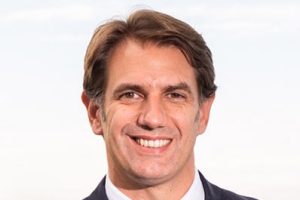
Gianclaudio Broggi is CEO and chairman of Megalabs, one of Latin America's largest biopharma organisations with operations spanning more than 20 countries and a workforce exceeding 9,000 employees. With over two decades at the company, he has been instrumental in its transformation from a 120 million USD enterprise into a 2.3 billion USD regional powerhouse. Megalabs today manages a diversified portfolio of more than 1,800 products across all major therapeutic areas, supported by 18 manufacturing plants and 12 research and development centres of its own across the region. The company has established world-class capabilities in Uruguay and is executing strategic expansion into the US market through its dermatology and nutraceutical platforms.
Megalabs has become one of Latin America’s largest pharmaceutical groups, operating in more than 20 countries. How would you describe the company’s strategic evolution over the past decade, and what pillars define its current growth model?
We have established ourselves as one of the region’s pre-eminent biopharma organisations – we emphasise “biopharma” because our portfolio encompasses both traditional pharmaceutical products and a substantial biologics business unit focused on biosimilars.
Megalabs was founded in 2002 through the merger of two established companies. We commenced operations with approximately 120 million USD in revenue and have since scaled to 2.3 billion USD, genuinely positioning ourselves amongst Latin America’s pharmaceutical leaders.
The past decade has been characterised by strategic consolidation. Between 2014 and 2016, we established our headquarters in Uruguay alongside our principal manufacturing facilities and our regional research and development centre. The plant became operational in 2016, marking the beginning of aggressive regional expansion.
A pivotal transformation occurred in 2018 when the Strüngmann family, notable investors in the healthcare sector and co-founders of BioNTech, acquired 100 percent ownership of Megalabs, marking their second-largest investment in the pharmaceutical industry and their most significant one in Latin America.
This ownership transition catalysed accelerated growth, particularly our expansion into critical markets including Brazil and Mexico, culminating in our 2022 entry into the US market. Today, we maintain operations from the US through Argentina across more than 20 countries. Additionally, we export select molecules beyond Latin America to markets including Australia, China, South Africa, and Europe – not our entire portfolio, but strategically chosen compounds where we maintain competitive advantages.
What long-term strategic rationale underpinned the acquisition of DS Laboratories, and how do you plan to scale the brand within Megalabs’ wider ecosystem?
As a biopharma enterprise, dermatology represents a highly significant therapeutic focus for Megalabs, supported by a long and successful track record driven by our prestigious Medihealth line. Our portfolio spans medical dermatology and dermo-cosmetics, forming a solid foundation for continued growth in the field. We have also expanded into the minimally invasive aesthetic medicine market through the acquisition of Croma-Pharma Brazil and the distribution of its products across Latin America, offering therapies such as hyaluronic acid fillers, neuromodulators, skin boosters, and regenerative fillers. Complementing this ecosystem, DS Laboratories focuses on developing scientifically backed solutions for hair care and scalp health, completing an integrated dermatology platform that combines science, innovation, and patient well-being.
DS Laboratories possessed substantial market share in Mexico, which fundamentally motivated the acquisition. This transaction immediately positioned us amongst the leading dermatology and dermo-cosmetics companies in the Mexican market – we now hold leadership positions in that therapeutic category.
Critically, DS Laboratories also operates in the US through a sophisticated e-commerce platform – an entirely distinct business model from our traditional Latin American operations. They leverage digital and influencer marketing and maintain export capabilities to China and Australia, operating as a genuinely global brand. Our strategic intent is to expand DS Laboratories internationally, but the acquisition’s primary value derives from strengthening our dermo-cosmetics capabilities. This business unit maintains presence throughout our footprint from the US to Argentina across all countries.
With multiple business lines, from aesthetics to biosimilars, how do you ensure strategic coherence and alignment across such a diverse portfolio?
We manage the organisation as an integrated team whilst structuring operations across four distinct business units to maintain strategic clarity.
Our largest division is primary care – the traditional pharmaceutical business encompassing cardiology, central nervous system disorders, gastroenterology, ophthalmology, pain relief, and gynaecology. This represents our foundational commercial platform.
Our second-largest segment is our biologics business unit, specialty care, operating under the Iclos brand, dedicated to the research, development, and production of both chemical synthesis and biotechnological products. Specialty care, particularly oncology, represents a critical growth priority in our strategic plan. We intend for specialty care to expand more rapidly than primary care. This segment encompasses all biosimilars and oncology products. Our third division is over-the-counter consumer health. I should emphasise that many significant Latin American pharmaceutical companies lack substantial consumer health operations. In our case, approximately 30 percent or more of total revenue derives from this division, making it strategically material. Dermo-cosmetics resides within this business unit. We engage dermatologists through medical representatives whilst simultaneously maintaining robust retail presence and influencer partnerships – a fundamentally different commercial model.
Our fourth and newest business unit addresses nutritional supplements. We entered this category in 2021 through acquiring Victus a nutritional business developed in the US, which we subsequently expanded throughout Latin America to capture the broader food supplement market opportunity.
These four business units operate under unified management as one integrated team, though each maintains dedicated leadership accountable for performance within their respective domains.
Looking toward future therapeutic expansion, are you evaluating additional therapeutic areas such as oncology or rare diseases?
Specialty care – particularly oncology – represents a critical growth priority in our strategic plan. We intend for specialty care to expand more rapidly than primary care. This segment encompasses all biosimilars and oncology products.
Additionally, diabetes has emerged as strategically paramount in our current business plan. We are systematically launching the comprehensive diabetes portfolio – liraglutide, semaglutide, all contemporary diabetes molecules available globally. Specialty care and diabetes represent our most significant growth investments.
We are simultaneously advancing our over-the-counter strategy, which continues performing exceptionally well and warrants sustained investment.
What strategic value does your recent partnership with Bayer offer, particularly in the context of expanding your footprint in Latin America?
Despite our scale, we have maintained limited licensing arrangements with multinational corporations historically. The Bayer partnership represents our first major collaboration of this nature.
This agreement operates primarily in the three largest Latin American markets – Argentina, Brazil, and Mexico. Understanding this requires historical context. Megalabs was formed through merging two companies that operated throughout Latin America while maintaining independent structures in those three key markets. Following the merger, all other country operations across the region were consolidated under Megalabs.
Consequently, we entered Argentina organically in 2008, Mexico in 2011, and Brazil in 2016 – relatively recently compared to our established presence elsewhere. Building substantial market presence organically in these sophisticated markets whilst deploying capital and free cash flow from our other operations has been strategically important but challenging. Meaningful growth in these markets requires complementing organic expansion with mergers, acquisitions, and strategic partnerships.
Bayer recognised Megalabs’ potential precisely because we offer complementary capabilities without portfolio overlap. We possess commercial infrastructure to promote their brands effectively. We understand pharmaceutical marketing with sophistication. This creates genuinely win-win economics – we acquire well-established, prestigious Bayer brands whilst they gain access to our commercial sales force and market expertise.
For us, associating with a company of Bayer’s calibre enhances our reputation with physicians, consumers, and retailers. When an organisation like Bayer entrusts Megalabs to promote their products, it validates our capabilities and elevates our market positioning.
Given the inherent risks in licensing partnerships, how do you mitigate the possibility of partners reclaiming successful brands?
Such risk exists, particularly with established brands. When we develop and launch products from inception, we naturally negotiate contractual protections and longer-term agreements. With well-established Bayer brands, the risk profile differs.
However, we require these partnerships to accelerate growth in Mexico and Brazil. As I explained, we entered these markets later than our other territories. Our commercial platform requires anchor brands to drive performance and amplify the impact of our proprietary products. At our current development stage in Mexico and Brazil, accepting this risk is strategically essential for Megalabs.
The potential benefits – platform strengthening, revenue acceleration, and enhanced credibility – outweigh the inherent partnership risks given our market position in these critical territories.
Operating across 20 jurisdictions with fragmented regulations, what operational lessons have you drawn from managing such regional complexity?
European observers, for instance, frequently struggle to comprehend the Latin American regulatory landscape. They often mistakenly conceptualise the region as analogous to the European Union – a unified regulatory framework with harmonised standards and procedures.
Success requires extensive accumulated experience. We have developed deep expertise across all countries through maintaining both corporate centres of excellence and robust local teams, whilst cultivating relationships with health authorities throughout the region. Managing this complexity successfully demands experience – we have assembled exceptional teams that navigate these challenges with sophistication.
Crucially, you must understand the regulatory requirements and procedural nuances in each market. We have mastered these rules, which enables us to offer our platform to pharmaceutical companies lacking Latin American operations. We provide comprehensive regulatory and commercial infrastructure to facilitate product launches under our platform – offering turnkey market access capabilities that would take years for organisations to develop independently.
How do you work with national health systems to ensure broad access to essential treatments, particularly for your biosimilar portfolio?
An important distinction: approximately 90 percent of our sales flow through retail channels rather than institutional procurement. We do participate in tenders in Uruguay, Colombia through their public health system, Chile, and certain Central American markets, but this does not constitute our primary business model.
Our commercial focus centres predominantly on out-of-pocket retail purchasing. However, we maintain extensive relationships with health authorities and governments. During the COVID-19 pandemic, for example, we fulfilled a strategically critical role. Whilst global attention concentrated on vaccines, the pandemic severely disrupted logistics for conventional medicines across 17 countries. We possessed manufacturing capacity throughout Latin America to produce essential medicines for cardiology and other therapeutic areas.
At that moment, vaccines dominated public health discourse, but populations continued confronting the same chronic health conditions requiring ongoing treatment. Because we maintain manufacturing plants in most countries across our footprint, we ensured Latin American citizens maintained uninterrupted medicine supply.
This contrasted sharply with Europe’s experience. European markets depend heavily on active pharmaceutical ingredient imports from India and China. When India closed its borders, Europe confronted severe supply shortages of essential products – metformin being one notable example of a routine medicine experiencing critical scarcity. This did not occur in Latin America because regional and local manufacturers possess the capability to supply medicines domestically, ensuring population needs are met without interruption.
Could you tell us more about your R&D centre in Uruguay, and how you ensure that molecules developed locally meet international quality and regulatory standards?
All molecules we develop here undergo rigorous validation before market authorisation. First and foremost, we must demonstrate bioequivalence – this is non-negotiable. Every product we commercialise has successfully completed bioequivalence studies.
Our development focus targets blockbuster molecules – typically those losing patent protection within five to seven years. This strategic timing is critical because we specialise in branded generics and biosimilars.
We identify which blockbuster products will face patent expiration, then develop high-quality, bioequivalent versions at affordable price points – naturally lower than originator pricing. For healthcare systems predominantly characterised by out-of-pocket expenditure, this accessibility proves crucial. In many cases, the originator product remains unavailable in Latin America, making our participation as a regional manufacturer vital for healthcare access.
Our quality standards are uncompromising. We develop products meeting international regulatory requirements whilst ensuring pricing enables broad patient access throughout the region.
Given the push for regional vaccine production, do you see Megalabs playing a future role in biomanufacturing within Latin America?
We made a strategic decision not to enter vaccine manufacturing, focusing instead on biologics where we can leverage stronger competitive advantages.
We currently have a new biologics facility under construction at Parque de las Ciencias. Combined with our four existing facilities, this provides considerable capacity to manufacture biosimilars. Critically, we also develop proprietary biosimilars. We operate one of the region’s most sophisticated biosimilar development platforms, located in Argentina, established through partnership with the University of Santa Fe.
We develop biosimilars internally while also maintaining strategic collaborations with leading European companies. Our shareholders, the Strüngmann family, bring extensive experience and long-standing investments within the European biologics ecosystem, providing strategic advantages that enable us to offer Latin American patients European-developed biological products at accessible price points, manufactured locally to combine international innovation with regional affordability.
What are the two most critical internal shifts underway to future-proof the company for the next decade of growth?
We initiated a comprehensive transformation programme approximately two to three years ago encompassing multiple dimensions.
First, we are re-engineering processes throughout the organisation – back-office operations, core business processes, and operational workflows. However, transformation extends beyond process optimisation.
Second, and equally important, we are systematically building organisational capabilities to prepare for potential future scenarios – including a possible initial public offering. To be absolutely clear, an IPO is not a definitive decision, but we are establishing the standards, compliance frameworks, diversity initiatives, and sustainability programmes necessary to operate as a public company.
This transformation means identifying and addressing capability gaps. The distance we needed to traverse has narrowed substantially. Today, we operate with standards comparable to multinational corporations – we are prepared for public company requirements should that strategic direction materialise.
With over 9,000 employees across 20 countries, how do you foster a unified corporate culture and attract top pharmaceutical talent regionally?
Our People and Culture department collaborates closely with local People and Culture teams throughout the organisation to cultivate company culture and reinforce our purpose.
Critical to success is robust corporate communication internally. We conduct regular town halls to communicate decisions, strategic direction, and organisational updates to our entire 9,000-person workforce.
We have established a Leadership Academy at the corporate level, complemented by local leadership academies operating with aligned strategies. These programmes engage all managers – finance managers, country chief executives, and other C-suite leaders. The objective is developing career progression pathways systematically throughout the organisation.
This investment in leadership development and internal communication creates cultural coherence despite our geographic dispersion and market diversity.
You have been with the organisation for over 20 years. How did your journey with Megalabs begin?
I joined what became Megalabs through one of the companies in the Dominican Republic that merged to form the group. I participated in the initial merger negotiations that created Megalabs in 2002, initially serving as Chief Financial Officer and Director from the company’s inception.
Subsequently, I became deeply involved in developing our Uruguayan operations – establishing our headquarters, manufacturing facilities, and research centre. This proved strategically advantageous, as my longstanding shareholder relationships helped foster a constructive dialogue with the Uruguayan government, enabling strong institutional support for our substantial infrastructure investments. The decision to consolidate operations in Uruguay as a standalone company, following the merger of two firms with distinct legacies, proved transformative for our corporate identity and market positioning.
Looking ahead to 2030, what does being a global Latin American company mean to you? Do you envision Megalabs evolving from a regional champion to a genuinely global player?
Our primary aspiration is achieving regional championship in Latin America. We face formidable competition from several exceptional organisations led by highly capable and respected executives. These are serious competitors.
Our goal is securing position amongst the top three pharmaceutical companies in Latin America. Simultaneously, we are expanding operations to other markets through strategic partnerships rather than wholesale geographic diversification. We remain committed to Latin American focus whilst selectively extending reach through collaboration.
With over 20 years at Megalabs, what leadership lessons have shaped your approach to guiding the company today?
My leadership philosophy centres on entrepreneurship. I prioritise ensuring all managers cultivate entrepreneurial spirit – this is essential for our culture.
I provide substantial flexibility within appropriate governance frameworks and compliance parameters. I empower leaders to make decisions rapidly because we are scaling significantly. Our aspiration is avoiding the bureaucratic constraints that often characterise multinational organisations. We strive to maintain the agility that has defined us since our origins.
The critical capability is decisiveness – making rapid, well-informed decisions. Competition is intense, and market opportunities are ephemeral. You must move swiftly and decisively to capture them. Straightforward thinking, rapid decision-making, and entrepreneurial action define our leadership culture.
For executives considering entry into Latin America, what practical advice would you offer based on your on-the-ground experience?
First, understand that Latin America constitutes a vast, heterogeneous continent. From Mexico through Central America, the Caribbean, South America, you encounter completely different cultures. Similarities exist superficially, but these are genuinely distinct countries requiring differentiated approaches.
You must understand people and culture deeply. For me, employing local leadership to run country operations is absolutely essential – individuals who comprehend local culture, understand how to motivate local teams, and navigate local business practices.
You must invest time understanding our cultures – Central Americans, Dominicans, Argentines, Brazilians each possess distinct characteristics. Understanding these nuances requires presence and engagement beyond what other regions might demand.
Finally, resilience is paramount. The region confronts persistent political volatility, economic instability, cycles of growth and contraction, currency devaluations followed by revaluations. Without resilience – both organisationally and personally as an executive – sustainable success becomes exceptionally difficult.
What message would you most like to convey to an international audience about the role of Latin American pharmaceutical firms today?
My message is straightforward: Latin American pharmaceutical companies – regional players like Megalabs – are exceptionally well-prepared to provide affordable, high-quality medicines to an important emerging region.
Latin America remains an economically developing region confronting persistent challenges. Regional and local pharmaceutical manufacturers will fulfil a critical role going forward. We believe regional and local players can be reliable partners for advancing healthcare access throughout this developing region.
We possess the capabilities, commitment, and infrastructure to serve this vital mission.