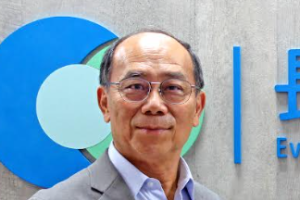
Dr Wen-Liang Huang, General Manager of Ever Supreme Biotechnology, brings over 40 years of clinical cardiology experience to biopharmaceutical leadership. Recruited by the company's founder, his medical background informs the translation of cell therapy innovations into meaningful patient treatments. Under his guidance, Ever Supreme has become Taiwan’s pioneering cell therapy company, achieving US FDA IND approval while developing a diversified model combining contract services with proprietary allogeneic CAR-T programmes for solid tumours.
Could you provide an overview of your professional background and what attracted you to Ever Supreme Biotechnology?
I was invited to join Ever Supreme by the company’s founder, who is both a physician colleague and a personal friend. He possesses over 40 years of experience in pharmaceutical development. My own clinical background spans cardiology, with particular focus on interventional procedures and acute cardiac conditions.
My medical training and clinical practice prove invaluable in my current leadership role. Our company specialises in cell and gene therapy, and my clinical department historically focused on surgical and non-oncological interventions. However, understanding the profound impact that cellular therapies can exert on cancer patients – including the potential adverse effects – enables me to bridge the gap between laboratory innovation and bedside application.
We develop not merely isolated cell therapies, but sophisticated approaches, including CAR-T (chimeric antigen receptor T-cell) therapies, wherein we genetically modify T-cells to recognise and eliminate tumour cells. We employ primarily autologous approaches – utilising the patient’s own cells – though we are advancing allogeneic platforms as well.
My clinical background enables me to comprehend how patients will ultimately utilise these therapies, what outcomes they require, and how treatment protocols must be designed to optimise both efficacy and safety. This clinical perspective directly informs our development strategy and regulatory approach.
Many biotechnology executives come from purely scientific backgrounds rather than clinical practice. How does your physician leadership distinguish Ever Supreme’s approach?
This represents a critical differentiator. When you examine other biotechnology companies, their chief executives and chairmen typically possess exclusively scientific backgrounds rather than clinical training. At Ever Supreme, our Chief Executive Officer and President both maintain physician credentials.
This clinical orientation throughout our management team enables us to intuitively understand patient needs and therapeutic application requirements. We do not merely develop scientifically elegant solutions; we develop clinically meaningful interventions. This perspective fundamentally shapes our product development priorities and commercial strategy.
Ever Supreme integrates allogeneic cell therapy development, exosome platforms, and contract development and manufacturing organisation services. How do these business areas complement one another strategically?
Our diversified model reflects pragmatic recognition of the biotechnology sector economics. Numerous biotechnology companies struggle to generate revenue during extended development timelines. Our CDMO services – leveraging proprietary know-how and established technological capabilities in autologous cell therapy – enable us to provide services to Taiwanese hospitals, generating immediate revenue streams.
This service revenue directly supports our investigational new drug development programmes, including our immune cell and stem cell platforms. The CDMO business effectively finances our longer-term innovation initiatives, creating sustainable corporate economics whilst we advance through clinical development stages.
Our CDMO operations currently constitute our primary revenue source, focused specifically on regenerative medicine applications within Taiwan’s healthcare system.
Ever Supreme’s recent acquisition of ShineOut Biotechnology expanded its capabilities. What strategic value did this transaction deliver?
Initially, Ever Supreme concentrated exclusively on oncology applications, with immune cell therapy targeting cancer patients and stem cell approaches addressing acute cardiac conditions and multiple sclerosis. However, we identified a substantial opportunity in neurodegenerative disorders, particularly Parkinson’s disease, which represents a significant unmet medical need globally.
The ShineOut acquisition provided Ever Supreme with a proprietary exosome platform capable of crossing the blood-brain barrier (BBB).
This breakthrough enables targeted delivery of therapeutics to the central nervous system, expanding our pipeline beyond oncology into neurological and neurodegenerative diseases.
Exosomes represent an emerging therapeutic modality with significant potential across multiple indications, and this acquisition has accelerated our entry into this high-value technology domain.
Several major pharmaceutical companies are investing substantially in cell and gene therapy. What differentiates Ever Supreme’s technology platforms in this intensely competitive landscape?
Our CAR-T programme for solid tumours represents genuinely distinctive innovation. When examining Taiwan’s biotechnology sector, most companies have essentially replicated established approaches, developing autologous CAR-T targeting CD19 for liquid tumours. These represent incremental advances rather than breakthrough innovation, and they cannot address solid tumours or overcome the immunosuppressive tumour microenvironment.
Ever Supreme has developed an entirely novel CAR-T construct targeting HLA-G and incorporating PD-1 checkpoint inhibition. We have secured Investigational New Drug approval for Phase I/IIa trials in both Taiwan and the United States, and we are observing encouraging preliminary efficacy data.
In one colorectal cancer patient, HLA-G expression decreased by 72%. In a glioblastoma patient, tumour burden decreased approximately 37%. Critically, we have not observed significant cytokine release syndrome or neurotoxicity, the dose-limiting adverse events that plague many CAR-T programmes. Our Phase I data suggest this represents a genuinely outstanding pipeline asset.
Regarding exosomes, the ShineOut acquisition provided access to highly distinctive targeting technology. Very few organisations globally possess the capability to engineer targeted exosome delivery. We have secured multiple patent applications protecting this technology internationally, positioning us favourably in this emerging therapeutic category.
Ever Supreme ranks among the few Taiwanese companies holding a US FDA Investigational New Drug approval for regenerative medicine therapy. What factors enabled this achievement?
Several elements contributed to this success. First, Ever Supreme was founded by China Medical University Hospital, providing extraordinarily strong institutional backing. This relationship grants access to extensive clinical expertise – numerous physicians and scientists serve as consultants to our programmes, informing both scientific strategy and regulatory positioning.
Second, our scientific team has developed genuinely innovative approaches to cell therapy rather than pursuing derivative programmes. This innovation foundation enabled us to construct compelling regulatory submissions.
Third, we have established partnerships with 26 hospitals across Taiwan through memoranda of understanding, creating an extensive clinical network. These relationships position us as pioneers in Taiwan’s cell therapy sector, with unparalleled clinical trial capabilities domestically.
The global cell therapy market is projected to reach 70 billion USD by 2030. What is your strategy for capturing meaningful market share?
The market bifurcates between allogeneic and autologous approaches, and Ever Supreme focuses predominantly on allogeneic cell therapy development. This represents a fundamental strategic distinction from most competitors.
Currently, only six to seven cell therapy products have secured FDA approval, and these concentrate almost exclusively on liquid tumours targeting haematological malignancies. However, liquid tumours represent merely ten percent of the oncology market. Solid tumours – which we are targeting – constitute 90% of cancer cases, representing a vastly larger commercial opportunity.
We believe Ever Supreme can capture substantial market share in solid tumour indications. We have already attracted significant interest – we have participated in the US BIO International Convention, and numerous companies have approached us regarding potential transactions. We are currently engaged in active negotiations with several parties regarding partnership or acquisition opportunities.
What do you identify as the principal challenges to scaling operations – manufacturing capacity, regulatory complexity, or other factors?
Multiple challenges exist. Price represents a significant consideration for cell therapies, given their substantial manufacturing costs. Additionally, pipeline risk remains ever-present – not every programme will successfully achieve marketing authorisation. We must maintain robust risk management through a diversified pipeline strategy.
For example, whilst our lead CAR-T candidate is advancing successfully, we are simultaneously developing in vivo gene editing approaches that can reduce GMP facility requirements and substantially lower manufacturing costs. This in vivo approach could deliver pricing comparable to current approved therapies whilst maintaining therapeutic efficacy, providing strategic optionality should our ex vivo programmes encounter obstacles.
This dual-track strategy provides strategic flexibility and resilience, ensuring that Ever Supreme remains well-positioned regardless of how the regulatory and market landscape evolves.
Looking ahead, do you see Ever Supreme evolving into a fully integrated biopharma company or continuing to rely heavily on CDMO services?
Both capabilities remain important for our future. However, our primary strategic focus centres on novel drug development. We must comply with evolving governmental regulations supporting regenerative medicine innovation. The US has established the 21st Century Cures Act regulatory framework, and we must align our development strategy with comparable regulatory pathways globally to maximise commercial opportunity.
What timeline do you project for bringing your lead CAR-T therapy to market, and what represent the critical milestones?
We secured both US FDA and Taiwan FDA approval for our CAR-T programme in 2024, enrolling our first patient in September 2024. We anticipate completing Phase I trials in the first quarter of 2026, with Phase IIa completion targeted for 2027.
Taiwan’s Regenerative Medicine Act provides for conditional approval if clinical trials demonstrate preliminary efficacy and safety data, granting a five-year conditional marketing authorisation. We expect to secure Taiwanese drug licensing in 2028. Concurrently, we plan to conduct multi-country, multi-centre trials globally, with European expansion commencing in 2028.
We are actively seeking international partners. Potential structures include joint ventures or out-licensing arrangements, depending upon which model optimises value for our shareholders. We remain flexible regarding partnership architecture, prioritising optimal commercial and strategic fit, and our preference targets global pharmaceutical companies with worldwide commercial infrastructure and development capabilities.
Taiwan’s Regenerative Medicine Act is often praised as progressive. What specific advantages does it offer innovative companies operating in this challenging field?
When comparing regulatory frameworks internationally, Taiwan’s approach offers distinctive benefits. Japan maintains comparable regulations, though its conditional approval extends seven years versus Taiwan’s five-year period. Many other Asian nations – including Indonesia and Malaysia – lack equivalent regulatory pathways entirely.
Taiwan’s framework is exceptionally beneficial for biotechnology companies. It enables patient access following Phase II rather than requiring Phase III completion, allowing us to provide therapeutic benefit earlier whilst generating revenue to support continued development. This creates value simultaneously for patients requiring treatment and for companies requiring sustainable business models.
Taiwan’s regulations draw from both US and Japanese frameworks, synthesising best practices from each system. I believe Taiwan possesses the capability to excel in biotechnology comparable to our achievements in semiconductor manufacturing and artificial intelligence through companies like TSMC and NVIDIA. The regulatory foundation exists; we must now execute numerous successful clinical trials demonstrating genuine patient benefit.
Our mission extends beyond merely treating cancer – we aim to rewrite what healing means for patients and their families.
Beyond regenerative medicine regulations, how would you evaluate Taiwan’s capabilities regarding clinical trials, advanced manufacturing, and workforce talent?
Taiwan’s healthcare system ranks among the top five globally – indeed, we have ranked first internationally for healthcare quality seven consecutive years. This excellence creates an exceptional clinical trial infrastructure. Our healthcare data quality proves outstanding and trustworthy – a critical consideration when contrasted with certain other markets where data integrity questions persist.
Consequently, numerous major pharmaceutical companies specifically select Taiwan for clinical trial execution because they trust our data quality implicitly. This represents an invaluable competitive advantage for Taiwanese biotechnology companies seeking to attract partnerships and validate programmes through rigorous clinical evidence.
Regarding manufacturing capabilities, we continue developing these competencies, learning from international best practices whilst building domestic capabilities.
Looking toward 2030, what milestones do you aspire to achieve? What will Ever Supreme have accomplished when we return to Taiwan in five years?
Ever Supreme was founded in 2016, achieving IPO in 2021 – a significant corporate milestone. We became Taiwan’s pioneering cell therapy company in 2021 by securing the greatest number of government-approved regenerative medicine programmes and enrolling more than 800 patients in clinical protocols. These represent substantial achievements within Taiwan’s biotechnology ecosystem.
Looking forward five years, our company is developing allogeneic cell therapy with global commercial potential. Our founder, Dr Huang, has articulated an ambitious goal: to support and help at least one Taiwanese biotechnology company enter the world’s top 100 pharmaceutical enterprises.
I believe Ever Supreme possesses the potential to achieve entry into the global top 100 to 200 biopharmaceutical companies within this timeframe. This represents our aspiration and strategic objective.
For potential partners reading this interview, why should they consider a partnership with Ever Supreme?
Our core technology platforms represent genuine innovation, including first-in-class therapeutic approaches. Our CAR-T programme has successfully passed initial safety assessments whilst demonstrating preliminary efficacy data in notoriously difficult-to-treat solid tumour indications.
Overcoming solid tumour challenges represents one of oncology’s most vexing problems. Most CAR-T programmes have failed in this indication due to the immunosuppressive tumour microenvironment and limited T-cell infiltration. We believe we possess potential solutions to these obstacles, as evidenced by our early clinical data.
Major pharmaceutical companies are actively seeking partners capable of addressing solid tumour CAR-T challenges. We believe Ever Supreme offers distinctive capabilities that complement Big Pharma development portfolios. For companies seeking to advance their solid tumour franchises through innovative cell therapy approaches, we represent a compelling partnership opportunity.
Allow me to illustrate with specific case examples. One colorectal cancer patient with microsatellite stable disease – representing 85% of colorectal cancers and notoriously resistant to immunotherapy – received low-dose treatment with our CAR-T construct. Her primary tumour decreased from 54 millimetres to 9 millimetres, with corresponding tumour marker reduction. Microsatellite-stable colorectal cancer represents “cold” tumour biology, extremely difficult to treat with immunological approaches. Our early data suggest the potential to address this substantial unmet medical need.
Similarly, in glioblastoma – another exceptionally challenging malignancy – we observed approximately 37% tumour reduction within one month of treatment, with ongoing response continuation. These preliminary results, whilst requiring validation in larger cohorts, demonstrate the potential differentiation our platform offers.