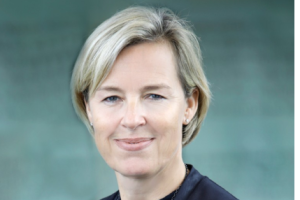
LEO Pharma – a global heavyweight in the dermatology field – is undergoing a period of renewal, combining a stronger focus on innovation with a cultural transformation aimed at greater agility and collaboration. At the centre of this evolution in France is Karine Duquesne, who is drawing on more than 25 years of international experience to steer the affiliate through shifting market dynamics, industrial challenges, and preparations for a potential IPO. With France serving as both a manufacturing hub and a growth market, she is determined to ensure the affiliate plays a pivotal role in the company’s future.
What has been your professional journey in the pharmaceutical industry, and what ultimately led you to assume the role of General Manager at LEO Pharma France?
I am a pharmacist by training, which provided me with a broad foundation rather than a narrow specialisation, and over the past 25 years, I have built a career by seizing opportunities to take on new and complex challenges. I spent more than two decades with Johnson & Johnson, working both in France and internationally, moving between medical affairs and commercial operations, and became among the first women in France to lead a team of several hundred representatives. This dual experience allowed me to bridge scientific expertise with commercial execution, shaping my conviction that the strongest strategies are those that align medical insight with patient needs and business priorities.
My career then took me to the United States, where I joined Johnson & Johnson’s global commercial team near Princeton, New Jersey. Working first in immunology and later in neuroscience, including Alzheimer’s disease, I gained invaluable exposure to R&D decision-making, long-term pipeline planning, and financial forecasting. Those two and a half years were a steep but formative learning curve, allowing me to operate at the heart of innovation while adapting to the intensity of the US market.
When I returned to France for personal reasons, I became General Manager of Actelion France, leading a rare disease business with a very small portfolio and a unique set of challenges. It was a different but equally rich learning experience that sharpened my understanding of how to operate in highly specialised therapeutic areas. After Actelion was integrated into Janssen, I was approached by Monica Shaw, then Executive Vice President for Europe at LEO Pharma. After more than 20 years at Johnson & Johnson, I decided it was time for a new chapter.
The attraction was not financial security, which I left behind at Johnson & Johnson, but rather the project itself. LEO Pharma was preparing to launch its first biologic, marking a pivotal evolution for an organisation with a strong dermatology heritage, and I was inspired by the pipeline and by the leadership style I encountered. The appeal of a mid-sized company was also decisive: with greater agility, we can test, adapt, and move forward more quickly than in a large matrix organisation. Ultimately, what convinced me was the possibility of making a real impact with my team while remaining anchored in France, which is why I accepted the role of General Manager.
How has LEO Pharma France evolved under your leadership, and what is its significance within the group’s global operations?
When I joined, I encountered a team that was deeply engaged and proud of belonging to the ‘LEO family,’ yet I also sensed that the organisation needed greater focus, challenge, and collective momentum to fully deliver on its potential. The context made this even more complex, as I arrived during the height of the pandemic and, for the first six months, all interactions with my leadership team and peers were conducted remotely. This limited the ability to build cohesion and slowed the natural exchange of ideas that typically shapes a shared culture. From the very beginning, my priority was to lay the foundations for a more connected and agile affiliate, one that could channel the strong commitment of its people into clearer alignment, greater accountability, and the ambition necessary to support both our local objectives and the broader transformation of LEO Pharma.
France today holds a central place in LEO Pharma’s global footprint. Of the group’s 4,000 employees worldwide, around 600 are based here, making the French affiliate one of the most significant. At its heart is the Vernouillet site near Dreux, the company’s first plant outside Denmark, established more than 60 years ago and still its largest manufacturing facility. It remains the only site in Europe producing syringes and injectables, with around 70% of its output exported globally. This enduring industrial presence not only underscores France’s strategic role within the organisation but also reinforces our position in national discussions on sovereignty and industrial policy, highlighting the importance of maintaining and strengthening pharmaceutical production on French soil.
What makes France a compelling location for pharmaceutical manufacturing today?
Despite the well-known challenges of taxation, France continues to offer clear advantages for manufacturing. Government mechanisms such as tax credits and co-investment projects can help offset costs, while the very fact of maintaining production here supports Europe’s strategic balance and sovereignty. France also retains recognised strengths in clinical research and biotechnology, which, although not matched by the same density of manufacturing plants as in the past, still add weight to its industrial relevance. For me, the greater risk would be to allow investment to disappear altogether, as losing this base would weaken both France and Europe.
From an economic standpoint, there is also a strong rationale. Pharmaceutical production depends on know-how that cannot easily be replicated. At our Vernouillet site, for example, the manufacture of injectables is so complex that it takes around two years to train a new operator to full proficiency. This makes production not only an investment in infrastructure but also in people, whose expertise is indispensable to ensuring quality. It is precisely this combination of government support, European strategic importance, and a highly skilled workforce that keeps France attractive.
What therapeutic areas does LEO Pharma prioritise in France, and how are you working to meet the needs of patients?
Dermatology and immunology remain dynamic fields, expanding globally by close to 20%, and France reflects this momentum thanks to stronger diagnosis and greater awareness than in the past. Psoriasis shows how far the landscape has advanced: when I was at Johnson & Johnson, we launched one of the first biologics, whereas today more than a dozen are available. Atopic dermatitis is on a similar path. We launched tralokinumab as the second entrant in France and much of Europe on the AD market, with further options now emerging. The growing range of therapies demonstrates that patients and physicians increasingly recognise the effectiveness and tolerability of modern biologics, and adoption continues to rise.
At LEO Pharma, our approach is not to be present everywhere but to focus where the medical need is greatest and where innovation can truly change lives. A clear example is chronic hand eczema. This year, we are introducing the first new mode of action in 15 years, made available in France through a special ‘direct access’ early access scheme inspired by the German model. Although often underestimated, the condition carries a heavy economic and social burden, with many sufferers unable to continue working because of its severity. Our new treatment is designed for patients with moderate to severe disease who have long relied on topical creams without lasting benefit. As a first-in-class therapy, it fills a critical gap where no new solutions have been available for more than a decade.
How does the French market access framework function, and what particular challenges does it create for sustaining innovation within a publicly funded system?
Access to the French market starts with a submission to the Haute Autorité de Santé (HAS), supported by global trial data. While it is preferable to have French patients included, it is not mandatory. HAS delivers an opinion on two dimensions: the Service Médical Rendu (SMR), which establishes whether and to what extent a drug will be reimbursed, and the Amélioration du Service Médical Rendu (ASMR), which measures the additional clinical value compared with existing treatments. A positive SMR guarantees reimbursement, while the ASMR rating frames pricing negotiations with CEPS.
France also remains almost entirely government-funded, with patients contributing very little themselves. The pandemic reinforced this approach: unlike in other countries, every COVID test was free of charge, even for foreign visitors. Today, patients contribute only one euro per box of reimbursed medicine, which strengthens the perception that treatments come at no cost. This fuels unnecessary consumption and waste, with people requesting prescriptions regardless of need or discarding unused medicines. To counter this, education is vital. Campaigns from the government and from LEEM, such as the well-known “antibiotics are not automatic” initiative, encourage prescribers and patients alike to take only what is truly necessary. Preserving the sustainability of the system ultimately depends on fostering this shared responsibility.
With mounting pressure on public finances, how are medicines budgets being treated in current negotiations, and what changes could help secure sustainability?
This is the central issue in the Projet de Loi de Financement de la Sécurité Sociale (PLFSS), which is an annual budget framework; what we need instead is a long‑term vision and perspective for investment in France. This annual approach, coupled with a model that continually requires the pharmaceutical industry to absorb costs, has reached its limits.. .. Today, almost every new medicine sees its price reduced immediately, which makes it impossible to sustain innovation; the result is that only mature products remain widely available, while French patients deserve the same timely access to breakthroughs as those in other countries. Industry already accepts significant annual reductions, yet unlike in markets such as the UK, where prices can remain stable longer, in France, they are revised downward every two or three years. For some biologics, prices have fallen to such an extent that we must organise distribution ourselves to secure access for French patients by controlling and managing stock availability to fulfil the French demand market.. This situation is clearly unsustainable and requires urgent correction.
Encouragingly, there are signs of progress. Recent provisions indicate that companies investing in environmentally sustainable production or maintaining manufacturing in France could benefit from greater pricing protection, aligning industrial policy with healthcare priorities. The new ‘direct access’ scheme is also promising, allowing earlier patient access while generating real-world evidence that strengthens dialogue with the authorities. Looking further ahead, some additional measures may be needed, such as modest patient contributions for very low-cost medicines. Although sensitive, such steps could help preserve the long-term sustainability of a system that otherwise risks being stretched beyond its limits.
How does LEO Pharma France contribute to the group’s innovation agenda and global partnerships?
France has a rich biotech and dermatology landscape. Having been part of the dermatology field for many years, I am sometimes approached directly by companies and scientists, and my role is to connect them with our business development team in Denmark. Not every conversation results in a partnership, but these exchanges are valuable and occasionally lead to promising, mutually beneficial projects. I see it as my responsibility to act as a bridge, ensuring the right connections are made with colleagues in Denmark. In that sense, I serve above all as a facilitator, helping to bring forward the most relevant opportunities from the French ecosystem into LEO’s wider global network.
While our global strategy is firmly focused on dermatology, in France our activities are also reinforced by the thrombosis and critical care business, which provides a strong complement to the affiliate’s role.
On the industrial side, the Vernouillet plant operates exclusively for LEO Pharma. We do not currently engage in contract development or manufacturing, but the site is large and equipped with a highly efficient new production line, meaning capacity could be made available in the future if the strategy were to change.,
What steps have you taken to shape the culture of the affiliate and foster a more collaborative way of working?
When I arrived, the set-up was very traditional: employees were largely confined to individual offices, many were still working remotely due to COVID, and the overall atmosphere offered little space for interaction or innovation. One of my priorities was therefore to rethink both the physical environment and the way we worked together. We replaced closed offices with shared spaces, created one common kitchen and coffee point to encourage spontaneous exchanges. In 2024, we relocated to La Défense and transitioned to a flexible workplace. We reinforced our hybrid model that allows colleagues to work from home while ensuring that time in the office is dedicated to collaboration, co-creation, and alignment. I have never believed in monitoring where people are at every moment; instead, I place trust at the centre, balanced with clear expectations of accountability and delivery.
Such a transformation inevitably required adjustment. Around ten percent of the team chose to leave, preferring the old structure and location, and we supported them in that decision. At the same time, it created an opportunity to recruit differently, not only for expertise, but also for mindset, leadership style, and willingness to collaborate. Over time, this has enabled us to reshape the affiliate around behaviours and attitudes that truly reflect our purpose, and to move forward as a more agile, open, and human-centred organisation.
With 2026 approaching and a potential IPO on the horizon, what are the main priorities for LEO Pharma France to ensure its contribution to the group’s success?
For us, 2026 will be a pivotal year in which we can truly return to growth. We now have the right organisation in place, restructured earlier this year, and a team that is fully prepared for this new chapter. In the past, every step forward was counterbalanced by price and volume cuts applied to our mature portfolio. Today, the landscape is different: most of our medicines are innovative, which means we can finally benefit from genuine, sustainable growth. With several important launches ahead, the outlook is far more promising than in previous years.
Beyond the portfolio, I believe the cultural transformation of LEO Pharma has been just as critical. Christophe Bourdon has encouraged the organisation to be bolder, to innovate, and to take calculated risks, and in France, we have worked to bring that spirit to life despite the constraints of a low-price market. What makes me especially proud is the team we have built: many are new, not necessarily young in age but united by a strong desire to be part of something larger than themselves. If you spent time with us, you would see a very different picture from the usual stereotype of French professionals as individualistic or closed. Here, the atmosphere is collaborative, transparent, and authentic, and I take great pride in leading such a committed team every day.