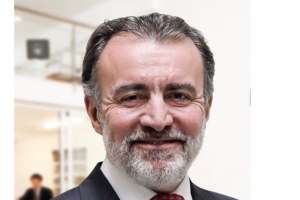
With only a handful of patients affected by each condition, rare diseases present a unique set of scientific, medical, and economic challenges. At the heart of this complex landscape is Recordati Rare Diseases, whose European headquarters and manufacturing footprint are anchored in France. General Manager Jean-Claude Roche shares his perspective on the company’s evolving portfolio, the realities of France’s market access environment, and the broader mission of serving patients who often have no alternative options.
What motivated your move into the rare disease field, and how did this experience differ from your earlier career in the broader pharmaceutical market?
I joined Recordati Rare Diseases in 2021 after many years working in very different parts of the pharmaceutical market. My career had followed the evolution of the industry itself, moving from general practitioners to specialists, then to the ultra-specialist hospital segment. Entering the rare disease field represented a profound change. Here, success is not measured in market share or salesforce strength but in how quickly patients can be identified, how swiftly treatment can begin, and how effectively therapy can be sustained over time. Our role is to work hand in hand with all stakeholders to accelerate diagnosis and ensure patients remain on treatment for as long as possible.
This shift also brings a different sense of purpose. In broader therapeutic areas, where thousands of patients are involved, the impact of one’s work can sometimes feel abstract. By contrast, in ultra-rare diseases, the numbers are very small; in France, for some conditions, we may treat only 25 to 30 patients. While we do not know them individually for ethical reasons, we connect with them through their healthcare professionals, and the sense of meaning is much more immediate. For me, joining this field at the age of 53 was like beginning a second career. The fundamentals of pharmaceutical work remain the same, but the mission feels entirely new, more intimate, more patient-centred, and ultimately more fulfilling.
How has Recordati evolved as a group, and where does the rare disease business fit within its overall structure?
Recordati will celebrate its centenary in 2026. Over the decades, it has steadily expanded, moving from over-the-counter medicines into speciality care, and in 2007 entered the rare disease field through the acquisition of Orphan Europe, a Paris-based company. This acquisition explains the strong footprint we maintain in France today, where our EMEA rare diseases headquarters is located, with around 130 colleagues.
France is also home to our specialised manufacturing and distribution centre in Nanterre, which exports many of our rare disease medicines worldwide. Unlike large-scale pharmaceutical plants, production here is defined by short, highly specialised series with limited shelf lives, requiring us at times to urgently ship only a few units to places as far apart as Japan or Argentina. This kind of agility and precision is distinctive to rare diseases and a source of pride for us. One of my key responsibilities is to ensure that France continues to offer the right conditions to maintain and strengthen this strategic footprint.
How would you characterise France’s role in rare disease care and research, and what opportunities and challenges does this create for Recordati Rare Diseases?
France has been a pioneer in rare disease care, launching its first National Rare Disease Plan in 2005 under President Jacques Chirac’s leadership and positioning itself among the most advanced countries for early patient management. The ecosystem combines excellent public research, dynamic startups, and strong collaboration between hospitals and industry. A network of reference and competence centres ensures that expertise is concentrated rather than diluted, allowing patients to be diagnosed and treated more effectively. While early identification remains the greatest challenge, once a condition is recognised, the French system is highly inclusive and ensures that no patient is left behind.
Digital infrastructure has also advanced significantly. The Health Data Hub manages the national health data system (SNDS), supports the rare disease registry (BNDMR), and collaborates with initiatives such as RaDiCo to consolidate cohort data. Although issues of interoperability and data linkage persist, progress is steady, and each year the system becomes more capable of driving discovery, fostering innovation, and enabling early access to treatments. My concerns lie less with scientific or organisational capacity and more with the unpredictability of healthcare decisions and the lack of adequate value recognition in pricing. Net prices for rare disease therapies in France remain well below the European median, which undermines the country’s attractiveness for sustaining long-term investment.
Despite these pressures, France retains an important role in our development activities. At Recordati Rare Diseases, our emphasis is more on development than on early-stage clinical research, but our global teams actively scout for innovation, and France’s startups and biotechs are a valuable source of solutions. Conducting studies here can be slowed by regulatory requirements, particularly from the data-protection authority (CNIL), yet the excellence of the hospital and university ecosystem leaves significant room for further engagement.
How has Recordati Rare Diseases’ portfolio developed in recent years, and what are the main areas of focus in France?
Our origins lie in small molecules, but the portfolio has expanded significantly, particularly since the acquisition of EUSA Pharma in 2021, which introduced biologics and niche oncology medicines such as Qarziba for neuroblastoma and Sylvant for Castleman disease. Alongside these products, we continue to offer small molecules and supportive care therapies, while increasingly prioritising rare oncology and biotherapeutics as part of our long-term direction. The acquisition of Enjaymo in 2024 is a strong asset that reinforces our position in this therapeutic area.
In France, our activities centre on three therapeutic areas. The first is metabolic disorders, which are still largely addressed with small molecules. The second is rare endocrinology, strengthened in 2019 through the acquisition of Novartis’ portfolio, including Signifor and Isturisa, which has become both a growth engine and an area of recognised expertise. The third is rare oncology, where we are investing heavily in innovation. Across these fields, we treat around 2,000 patients in France, with several hundred living with conditions such as Cushing’s disease and acromegaly, while in ultra-rare diseases like Castleman, the numbers fall to only a few dozen.
How do you view the contribution of patient associations in rare diseases, and how do you work alongside them?
Patient associations are often small by necessity. Unlike some well-established associations, such as the French Federation of People with Diabetes (AFD), which represents thousands, associations for ultra-rare diseases may bring together only a few dozen patients. This limited scale, compounded by the often-challenging prognosis of such conditions, makes it difficult to build strong organisations. Yet their role is vital, and we are committed to strengthening our ties with them while remaining fully aligned with compliance requirements.
One important example is SACHA, a national observational registry supported by the French association “Imagine for Margo” and managed by Gustave Roussy, the world-famous oncology centre based in the Paris area, in partnership with the French Society of Paediatric Oncology (SFCE). SACHA gathers real-world safety and efficacy data on innovative therapies prescribed to children, adolescents, and young adults who are not eligible for clinical trials. SACHA was pivotal in the development of Qarziba, our treatment of neuroblastoma. Although neuroblastoma is one of the tumours covered, the registry is broader in scope and offers valuable insight into off-label or compassionate use, helping clinicians and health authorities to assess how treatments perform outside controlled studies. These initiatives underline that we are not working in isolation; alongside healthcare professionals and payers, patient associations remain indispensable partners.
How would you describe the market access environment for rare disease medicines in France?
Historically, France has been associated with long delays in patient access, combined with relatively low prices and high volumes. However, in the field of rare diseases, the framework established through the National Rare Disease Plans has introduced important flexibility. Early access and compassionate use programmes enable patients to receive treatment rapidly, even when data are not yet fully consolidated, provided there is a clear unmet need. This represents one of the real strengths of the French system.
The challenge begins when a treatment moves from early access into formal pricing negotiations. The HAS (the French National Authority for Health) first evaluates the product and assigns an ASMR rating to measure its added clinical value, which then informs discussions with the CEPS (the Economic Committee for Healthcare Products). The outcome is twofold: an official list price and a net price, the latter reduced through rebates and paybacks for high-cost therapies. Since the 2021 agreement between LEEM (the French Pharma association) and CEPS, medicines with an ASMR rating of IV or better benefit from greater stability in list pricing, which remains broadly aligned with other European markets. However, the real difficulty lies in the net price, which can be cut by as much as 80-90%, leaving France far less attractive as a market.
Negotiations themselves are often lengthy, extending from six months to as long as two or three years. While both CEPS and industry recognise the need for acceleration, the reality is still slow. International reference pricing offers some protection, since France’s list price is included in many countries’ reference baskets, but the very low net price continues to erode margins. For complex biologics such as IL-6 inhibitors, where manufacturing costs are particularly high, the impact is even more pronounced. If France remains significantly below the European median on net prices, it risks diminishing its appeal both as a launch market and as a base for investment.
How does France’s early access and price negotiation system influence predictability for companies like Recordati Rare Diseases?
Early access is one of the great strengths of the French system, giving patients rapid access to innovative therapies while allowing us to generate valuable real-world data. The difficulty arises when formal negotiations conclude and companies must reimburse the difference between the early access price and the final net price, multiplied by the number of patients treated. After two or three years of discussions, this repayment can represent as much as 80% of the turnover generated during that period, creating considerable uncertainty.
This unpredictability is a major challenge, as large provisions must be set aside, and any misjudgment on the eventual outcome can prove costly. France accounts for around six percent of our global business and remains a key market, yet its value is constrained by low net prices. Greater visibility and stability in pricing decisions would make a critical difference in maintaining France’s attractiveness.
In light of broader economic pressures, how do you view the sustainability of healthcare funding in France, and where could value assessment be improved?
Like much of Europe, France is operating in a challenging economic climate, and healthcare is not immune to these pressures. It is tempting to say that saving lives has no price, but the reality is that it carries a cost that must be managed responsibly. More than ever, we aim to focus on the few as a company specialising in rare diseases. Our responsibility is to propose fair and sustainable prices, supported by models that reflect not only medical benefit but also the wider economic impact. Reducing hospitalisations, extending participation in the workforce, and improving quality of life all generate substantial value, and in many cases, this can be measured within the timeframe of a single government.
At present, such economic models are insufficiently developed and not fully recognised by the HAS. The assessment process continues to focus largely on clinical efficiency, which is necessary but not sufficient on its own to define price. Stronger integration of solid economic data would bring much-needed balance. The forthcoming European Union Health Technology Assessment (EU HTA) may also help by encouraging convergence. The French system, led by HAS, is rigorous and pragmatic, but there is scope to incorporate complementary approaches from other countries, particularly in the economic dimension, where further progress is clearly needed.
What factors shape the attractiveness of France as a base for rare disease headquarters and manufacturing?
France’s reputation for weak productivity is, in my experience, a misconception. While it is true that the number of working hours is lower than in some countries and that aspects of the system can be debated, what I observe within our organisation is a workforce that is deeply committed, skilled, and willing to work hard. In rare diseases, my teams and those of other companies here demonstrate a dedication that is difficult to capture in figures but very real, and it is one of the reasons why maintaining a strong base in France continues to make sense.
At the same time, commitment alone is not enough to secure the future of these operations. At Recordati Rare Diseases, despite low prices, combined with high taxation, heavy regulation, and a lack of predictability, we pursue and reinforce our engagement to invest in France; it deserves a strong signal from the authorities to recognise our efforts. Many of my peers who manage substantial assets in France face the same challenge: they are determined to preserve them, yet operate within global organisations that demand rational allocation of resources. Our contribution to the country is considerable, from employment and balance of trade to the security of supply.
At Recordati Rare Diseases, although bulk production originates from Europe, the US, or Canada, final manufacturing takes place in France, which directly supports national sovereignty. Recognising this contribution through greater visibility on pricing and policies that reflect the scale of investment required will be essential if France is to remain an attractive hub for rare disease headquarters and manufacturing.
As you look towards 2025-2026, what are your priorities for Recordati Rare Diseases, and what message would you like to share with the wider healthcare community?
One of my main priorities is to ensure rapid and comprehensive access in France to new treatments such as sutimlimab (Enjaymo) for cold agglutinin disease, an area of significant unmet need. Even in therapeutic fields where we are already established, there remains room for progress, and my focus is on ensuring that patients benefit from innovation without unnecessary delay.
At the same time, I want to strengthen our identity as an employer by investing in people. Recordati Rare Diseases does not yet enjoy the visibility of larger pharmaceutical companies, especially in France, and the most effective way to build our reputation is through our own teams. By supporting their development and recognising their contribution, we can ensure they become our most compelling advocates both inside the organisation and in the broader healthcare ecosystem.
Looking more widely, my message would be that France, while sometimes perceived as a complex environment for investment, is also a country where such investment can make real sense. It is not only a beautiful place to live and work but one with genuine potential for those willing to look beyond the challenges. My appeal to investors would be to take a second look, because with the right conditions, France can continue to play a leading role in rare disease research, manufacturing, and patient care.