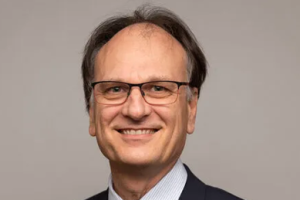
Professor Alain Puisieux, President of the Executive Board at Institut Curie, leads the renowned cancer centre through an integrated strategy combining cutting-edge research and patient care. With a scientific background in cancer cell plasticity, he focuses on accelerating translational research, interdisciplinary collaboration, and equitable clinical trial access. Puisieux emphasises the need for greater investment in biomedical research and digital infrastructure to meet rising cancer incidence and global competition.
Could you elaborate on your background and the strategic priorities you have established since assuming leadership of Institut Curie?
Institut Curie operates through a distinctive dual-pillar architecture comprising our research centre and hospital group, both dedicated exclusively to cancer care and investigation. Professor Steven Le Gouill directs our hospital operations, while Dr Claire Rougeulle leads the research centre. My role as president of the executive board involves defining our integrated strategic framework and ensuring seamless operational coordination between these entities to deliver on our fundamental missions: research, patient care, and education.
My scientific foundation was established through pharmaceutical and biological studies in Paris, with doctoral research conducted at Massachusetts General Hospital in Boston. Subsequently, I dedicated 27 years to developing the Lyon Cancer Research Centre, ultimately creating a comprehensive facility housing 26 scientific teams and over 500 research professionals. This experience in building research infrastructure from inception has proven invaluable in my current strategic responsibilities.
Scientifically, my work focuses on elucidating cancer cell plasticity mechanisms—specifically, how malignant cells evolve from initial transformation through disease progression, including metastatic dissemination and treatment resistance. These adaptive mechanisms represent critical intervention points for next-generation therapeutic strategies.
How do you conceptualise Institut Curie’s unique positioning in the cancer research landscape?
I characterise Institut Curie through the metaphor of a Celtic Tree of Life, where fundamental research constitutes our roots, translational research forms the trunk, and patient care represents our branches and fruits. The defining characteristic of this Celtic tree is the direct connection between roots and branches, symbolizing the essential integration between scientific discovery and medical advancement.
This foundational structure differentiates Institut Curie from other comprehensive cancer centres. Most institutions develop research capabilities secondary to their clinical operations. Institut Curie, however, was established by Marie Curie as a fundamental research laboratory, with our clinical capabilities subsequently developed to translate discoveries into patient benefits. This heritage creates a culture where discovery and understanding drive all activities, as Marie Curie articulated: “Nothing in life is to be feared, it is only to be understood.”
What strategic initiatives have you implemented to strengthen Institut Curie’s research capabilities?
My primary focus has been fortifying our Celtic tree through two complementary strategies. First, fostering authentic interdisciplinary collaboration and moving beyond traditional multidisciplinary structures toward integrated research units where biologists, chemists, physicists, and bio-informaticians work collectively on unified projects under single laboratory frameworks.
Our chemical biology of cancer unit exemplifies this approach, bringing together diverse scientific disciplines to investigate cancer cell plasticity mechanisms and pioneer therapeutic strategies targeting cancer cell adaptability. This represents the critical processes underlying treatment resistance and metastatic progression.
Second, I have strengthened the research-clinical interface through our strategy committee, which integrates leading clinicians, pathologists, and researchers to streamline translational processes, establish clear medical-scientific priorities, and launch collaborative programs spanning both hospital and research teams. This coordination culminated in securing our Institut Hospitalo-Universitaire designation under France 2030, the Institute of Women’s Cancers, specifically focused on women’s cancers intending to transform prevention, diagnosis, and treatment through integrated research-care approaches.
How do you assess France’s position in the global cancer research ecosystem?
France maintains exceptional strengths in cancer research, shaped by several defining characteristics. The French National Cancer Institute provides strategic coordination for our national cancer strategy, focusing on prevention, reducing care access inequalities, and accelerating innovation for poor-prognosis malignancies. Our network of 18 comprehensive cancer centres, coordinated through Unicancer, creates substantial collaborative infrastructure for research, care, and education activities.
France demonstrates recognised leadership in specific domains, including immuno-oncology, cellular therapies, molecular cancer characterisation, precision medicine, and advanced radiotherapy applications. Notably, while French research has declined in global publication rankings from sixth to twelfth position since 2006, Paris has maintained second place worldwide in cancer research publications, following only Boston.
However, we confront significant challenges. Cancer incidence has doubled since 1990, driven by population aging, improved early detection, and lifestyle factors, with global projections indicating 77 percent growth by 2050. We must enhance early diagnostic capabilities and develop more effective therapies for metastatic disease, where survival rates remain substantially lower than those of localised cancers.
Most critically, public funding for biomedical research has decreased in recent years by nearly 30% while increasing by approximately 20 percent in Germany and the United Kingdom. France allocates only 17% of research funding to biomedical research, compared to 30-35 percent in neighbouring countries, despite Senate recommendations for 30% allocation.
How does the French National Cancer Plan shape Institut Curie’s strategic priorities?
The current ten-year plan from 2021 to 2030, coordinated by the French National Cancer Institute, establishes four critical priorities. First, improving prevention with the ambitious goal of achieving 60,000 fewer cancer cases annually by 2040, particularly significant given that an estimated 40% of cancers could be prevented through enhanced prevention strategies. Second, limiting treatment after-effects and improving the quality of life for cancer survivors. Third, combating poor-prognosis cancers where therapeutic options remain limited. Fourth, ensuring that medical advances benefit all populations equitably.
Institut Curie contributes to this national roadmap through multiple strategic initiatives. We drive fundamental and translational research spanning molecular profiling to next-generation targeted therapies, immune and cellular therapies, and advanced radiotherapy techniques. We coordinate national and European clinical trials, ensuring laboratory discoveries transition rapidly to clinical applications. Additionally, we serve as a national reference centre for rare and complex cancers, including paediatric malignancies, ocular tumours, melanomas, and sarcomas.
However, we have identified two critical acceleration areas essential for maintaining scientific leadership. First, digital and data integration infrastructure, as most French cancer centres lack the technological foundation necessary to harness artificial intelligence and big data analytics effectively. We require a stronger national infrastructure and enhanced interoperability between institutions to analyse and share data across the healthcare system collaboratively.
Second, ensuring equal access to clinical trials, particularly for rare tumours and difficult-to-treat cancers. Currently, only patients in major metropolitan areas can access innovative trials, creating significant healthcare equity challenges that must be addressed systematically.
What is your assessment of France’s clinical trial ecosystem and competitive positioning?
France maintains strong clinical research capabilities, particularly in oncology, promoting approximately 15% of global oncology clinical trials. We benefit from robust hospital networks, highly trained investigators, and well-informed patient populations. However, competition intensifies from Asia and European neighbours offering faster regulatory timelines and enhanced industry incentives.
Our clinical research future depends on four strategic priorities. First, streamlining regulatory and administrative processes that have become counterproductively complex, slowing trial design, regulatory submissions, and data analysis. Second, reinforcing public support for biomedical research, which remains insufficient at current funding levels.
Third, reducing clinical trial costs that have become so substantial that only private companies can afford comprehensive programs, marginalising academic research and potentially compromising scientific relevance. Fourth, focusing on early-phase, biomarker-driven, adaptive trials where France maintains genuine advantages through our strong research-clinical continuum.
How does Institut Curie approach talent development and training in the current global context?
Training represents a fundamental mission requiring strategic focus on three priorities. First, attracting top international talent through highly competitive PhD and postdoctoral programs welcoming fellows from over 80 nationalities. This international appeal is particularly important given current threats to academic freedom in various regions globally.
Second, providing hands-on interdisciplinary training through immersive, project-based learning at the interface between basic research and clinical application. We operate specialised training programs in genome dynamics, cancer epigenetics, multi-omic approaches, immunology, artificial intelligence, and mathematical modelling in cancer biology.
Third, supporting career development through tailored mentoring, competitive startup packages, and access to advanced technology platforms, complemented by active participation in European training networks. Our research centre currently represents 78 nationalities, demonstrating continued international attractiveness rooted in our historical legacy and unique research culture emphasising fundamental understanding as the foundation for all discoveries.
What is your strategic approach to public-private partnerships and technology transfer?
Industry partnerships are essential for transforming scientific discoveries into patient solutions. We require not only academic excellence but also industrial expertise, resources, and market pathways that we cannot develop independently. We engage partners early in the research process, whether working with major pharmaceutical companies, biotech start-ups, or public-private European consortia.
Our Technology Transfer Office, established ten years ago, supports scientists throughout the innovation pipeline, from identifying promising discoveries through patent protection, funding acquisition, business plan development, and company establishment. This initiative has fundamentally shifted researchers’ mindsets, overcoming traditional French cultural barriers to industry collaboration.
Over the past years, we have filed more than 1,100 patents, created 32 start-ups with 23 remaining active, generated more than 400 jobs, raised around 870 million euros in funding, and delivered over 180 products, many progressing through clinical development. These outcomes demonstrate the effectiveness of integrating entrepreneurial thinking with academic excellence.
What are your strategic priorities for the next two years?
Our strategic framework centres on four keywords: People, Tools, Continuum, and Openness. First, prioritising our human capital: patients, caregivers, researchers, and support staff, through enhanced welcoming, integration, and support systems, particularly crucial given current healthcare and research profession challenges.
Second, investing in essential tools from research platforms to diagnostic systems, therapies, and digital infrastructure enabling competitive excellence. Third, protecting and strengthening our continuum model—the Celtic tree connecting basic research to patient care—which requires advocacy for strong research and healthcare policies while demonstrating effectiveness through flagship integrated projects.
Fourth, maintaining openness through partnerships with private industry and academic institutions, leveraging our exceptional scientific environment, including PSL University and Paris-Saclay University, while developing ambitious collaborative programs with Institut Pasteur and Institut Imagine.
Our transversal priorities encompass attracting and empowering talent, accelerating translational research, and expanding precision medicine through artificial intelligence development.
What message would you convey to the international cancer research community?
To the international community, I emphasize that in an era where science faces questioning, we must continue advancing knowledge frontiers to progress medicine. Every disruptive discovery originates from new understanding. Marie Curie’s principle that “nothing in life is to be feared, it is only to be understood” remains foundational.
Recent analysis of 28 transformative drugs revealed that 24 originated from curiosity-driven research rather than targeted molecular screening, validating our continuum approach. We operate in three historical periods: pre-1950, when cancers were considered incurable with eigh percent cure rates; 1950-1980, when empirical approaches achieved 30-35% cure rates through radiotherapy and conventional chemotherapy; and post-1980 when scientific understanding enabled targeted and immune therapies, achieving current 60-65% cure rates.
We now enter a new era focusing on cancer cell adaptability mechanisms. Following Darwin’s principle that surviving species are those that adapt rather than the strongest or most intelligent, we must understand and block cancer cells’ adaptive capabilities that enable metastasis formation and treatment resistance.
Our ultimate ambition remains contributing to a world where no cancer remains incurable. Through enhanced understanding of adaptation mechanisms, improved early diagnosis, and better prevention strategies, this vision becomes achievable. With our 240,000 annual donors supporting our mission alongside government funding, and our commitment to diversity across scientific disciplines, international backgrounds, and gender representation, Institut Curie continues advancing toward this transformative goal.