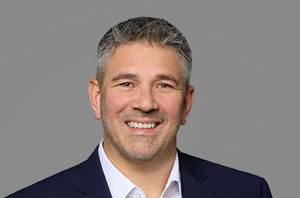
With more than 20 years of experience in the pharmaceutical industry and a track record at companies such as MSD, Abbott (later AbbVie), Eisai and AstraZeneca, Stuart Head brings a deep well of expertise to the Swiss affiliate. His career spans multiple therapeutic areas, including oncology, immunology, and respiratory diseases. A graduate of Brunel University in London with a Bachelor of Science with Honours, Stuart most recently served as Executive Director on the global team, where he was responsible for the strategic direction in lung cancer and played a pivotal role in shaping Gilead’s product pipeline.
In this interview, he shares his vision for Gilead in Switzerland, outlines the company’s strategic priorities, and reflects on his personal journey in the life sciences sector.
Can you briefly introduce yourself and share your journey at Gilead, leading up to your role as country manager?
With over 20 years of experience in the life sciences industry, I have always been motivated by the sector’s potential to positively impact people’s lives. Beginning my career in sales, I advanced through various commercial roles at different organisations.
My journey commenced at MSD, followed by a transition to Abbott, which later evolved into AbbVie. During this time, I gained experience in various affiliate and global roles. I then held a regional position at Eisai before joining AstraZeneca, where I managed a significant business unit in the UK.
An exciting opportunity arose to join Gilead, which I perceived as a chance to return to a more global and strategic role, aligning with my professional aspirations. After nearly five years in affiliate positions, I aimed to shift back to a broader, global viewpoint. At Gilead, I spent approximately four and a half years within the global organisation, focusing primarily on oncology and inflammation.
I was then delighted to accept a general management role in Switzerland, a long-term career objective. I believe the diverse experiences and skills I have accrued over the years will contribute to my success in this new capacity.
Was transitioning to your first general management role a natural step, or did you find it to be a significant adjustment?
It is definitely a new role, and while you can feel confident stepping into it, I must admit that it comes with a great deal of responsibility. Managing a large P&L and holding the legal entity is a significant step up, even though I have managed large teams before, including 200 people in previous roles. Here, as the GM, everyone looks to you for guidance, and while that was exciting, there is also a level of nervousness that comes with it.
What made it even more challenging was the fact that this is my first GM role in a country that is not my home country. I have had to quickly learn about the local culture, the people, the healthcare system, and the business environment. My first six months have been a steep learning curve, but it has been an incredibly rewarding experience.
I have thoroughly enjoyed the journey so far, and I must say the people here at Gilead and Switzerland as a whole have been very welcoming. I am really pleased to be here.
What aspects of the system have you focused on, both internally and externally, as you familiarised yourself with the role?
When I first arrived, I knew I needed to take a step back—to listen, observe, and truly understand. As someone who is naturally action-oriented, this wasn’t my instinctive approach. But I quickly recognised how essential it was to engage deeply with both internal and external stakeholders. Listening to their perspectives has been invaluable.
This deliberate approach has not only sharpened my leadership but also laid the groundwork for a culture of trust, openness, and collaboration. Most importantly, it has allowed me to become the kind of General Manager I aspire to be – one who leads with empathy, insight, and strategic clarity. By building this foundation of understanding, I’m better equipped to guide the organisation forward, balancing immediate priorities with a long-term vision for sustainable success.
We have got a fantastic, talented team here at Gilead, and I am very optimistic about the direction we are heading in for Gilead as a company and the patients/communities that we serve here in Switzerland.
What stands out most to you about Switzerland, considering your experience in various markets?
Switzerland has been very welcoming. There is a large expat community here, especially in the Zurich area, which is known as a hub for the pharmaceutical industry. It has been great to be part of that dynamic environment.
One of the things that struck me moving from London is how remarkably well-organised and punctual everything is here! Beyond that, Switzerland offers a wonderful work-life balance. People here are very dedicated and work hard, but there is also easy access to nature, which makes it possible to enjoy a much more balanced lifestyle. For me, the transition has been relatively easy, and I have really appreciated that aspect.
The location of Switzerland, and particularly Zurich, is also fantastic – it is such a central hub in Europe. Everything is easily accessible, which is ideal if you travel frequently, as I do.
Could you share your initial impressions of Gilead’s operations in Switzerland and how they align with the company’s global performance?
Gilead has been established in Switzerland for several years now, and we have a team of over 70 people here. Most of them work for the Swiss affiliate, but we also have global roles based in Switzerland, which adds to the depth of our presence.
Switzerland is a highly attractive market for Gilead. It is a forward-thinking environment with early access to treatments and efficient pathways to bring medicines to patients quickly, which is absolutely vital for us.
Globally, Gilead is in a strong position at the moment, and that is reflected here in Switzerland as well. We have seen great performance across the board – whether it is in HIV, liver diseases, oncology, or our cell therapy business. In 2024, we saw strong results, which is very encouraging.
But we are not stopping there. Our pipeline is something I am very excited about, and we have several new launches on the horizon in the coming months and years. While we have an established business that is performing well today, it is the future opportunities that truly excite me, and I look forward to seeing where we can take the business next.
Could you describe Gilead’s virology presence in Switzerland and how you continue driving innovation in this market?
If we take a step back, it is remarkable how far we have come. Thirty years ago, HIV was essentially a death sentence. I remember growing up, and the image of Freddie Mercury passing away was so poignant. Fast forward to today, and HIV is now a manageable disease, allowing people to live normal lives.
Thanks to continued innovation in HIV prevention, we are entering a new era where long-acting options—such as biannual or yearly injections—can play a transformative role in reducing new infections. While daily oral PrEP remains a cornerstone of prevention, long-acting PrEP has the potential to reach individuals who are underserved by current approaches. To fully realise this potential, we must address access barriers, tackle systemic inequities, and invest in person-centred implementation. With strong political will, targeted education, and collaborative partnerships, we can shift the trajectory of the HIV epidemic and move decisively toward ending it.
In Switzerland, we have continued to lead the charge in innovation. Along with other companies, we have pushed the boundaries of what is possible in HIV treatment, and we are not stopping here. Gilead is committed to further advancing these innovations. Our goal isn’t just to manage the disease but to work alongside society and healthcare systems to eliminate HIV.
How does Gilead approach partnerships with authorities and patient groups in Switzerland to address local healthcare needs?
It is important to remember that every country and market has its own unique perspective. For example, with HIV, we know that the epidemic is far more severe in regions like Africa, where access to affordable medicines is a major challenge. In response, we have entered into voluntary licensing agreements with generic manufacturers to ensure that these life-saving drugs are available in those regions at little to no cost, helping those who need them most but can’t afford them. I am really proud of Gilead’s approach in this regard – it is something unique and impactful.
In Switzerland, our approach is tailored but equally collaborative. In HIV, we’ve partnered for years with organisations such as Aids-Hilfe Schweiz, the Positivrat, and Checkpoints. In 2024 alone, we supported over 25 national and regional projects – all aimed at amplifying patient voices and reducing stigma
In oncology, we collaborate with patient groups across blood and breast cancer, such as HOPOS, lymphome.ch, EUROPA DONNA Schweiz, and Metastasierter Brustkrebs Schweiz, as well as cross-indication alliances like All. Can Schweiz and the Swiss Cancer Patients’ Alliance. Our focus includes peer support, capacity building, and early detection efforts, such as our partnership with the Pink Cube initiative for breast cancer awareness
Across all areas, our goal is to strengthen the voice of patients and ensure that partnerships lead to tangible improvements in care and equity.
How is Gilead addressing the stigma surrounding HIV and ensuring patients can access the treatment they need?
Stigma remains a significant issue. While some progress has been made, there is still a lot of work to do. Many people with HIV are reluctant to seek treatment because they are afraid of being seen going to a clinic or even worried that someone might discover their medication at home. This fear and stigma prevent people from getting the care they need.
Until we can remove this stigma, we won’t be able to truly address the underlying issues. It is vital that individuals living with HIV feel comfortable taking their medication without fear of embarrassment or persecution.
A large portion of the general public still doesn’t fully understand how HIV can be managed today. That is where a lot of our efforts focus – working with patient associations and engaging in education campaigns. By increasing awareness and understanding, we can ensure that people are more likely to seek treatment, stay adherent to their medications, and ultimately lead healthier lives.
What is Gilead’s current global position in oncology?
Oncology is very close to my heart, as we have made significant strides in this area over the last few years. Several years ago, we set ourselves an ambitious goal: to have a third of our revenues coming from oncology by 2030. That is a massive target, especially for a company that wasn’t traditionally focused on oncology.
One of our major moves was the acquisition of Immunomedics, which gave us access to an asset that is already making a great impact in breast cancer, particularly in metastatic HR-positive and triple-negative breast cancer. The improvements we are seeing in survival rates are significant, especially for young female patients in the second and third lines of treatment. While we are not yet talking about a cure, the progress we have made is transformative.
We are investing heavily in clinical trials, with several phase 3 trials, and the uptake has been strong, and patient responses have been very positive. Beyond that, we have a robust pipeline, with other phase 3 trials on the horizon.
We are committed to oncology, and this is an area where we will continue to invest, both in-house and through external partnerships, to further strengthen our portfolio.
And what is the situation in Switzerland? How is access to oncology treatments in the country?
The country offers early access routes, which is something I really appreciate. It is one of the better countries globally when it comes to facilitating access to new medicines.
Patients in Switzerland benefit from broad access to innovative therapies. For treatments that are still in the development pipeline, Article 71 offers a pathway to early use in specific cases, helping to facilitate the introduction of promising new options. The overall system is highly supportive, with minimal barriers to ensuring that patients can receive these therapies promptly.
We are excited to see what more we can achieve; however, there is still a lot of work ahead in oncology, and we are committed to continuing the journey.
What is your focus now in Switzerland? Looking at the big priorities you have been working on, what’s ahead for Gilead here in Switzerland?
It is a very exciting time for us. We have a strong existing business, and we are seeing significant revenue generation from it, which will continue to be a key focus. Fortunately, we are in a good position, with very few patents expiring on the horizon. We are one of the few companies in that situation. However, there are always external pressures, like pricing, that can impact our business.
Looking ahead, my focus is on both sustaining the strength of our current business and preparing for the successful introduction of future pipeline assets. This means continuing to deliver on our core portfolio while laying the groundwork for what’s next. A key part of that involves strong stakeholder engagement and shaping a policy environment that supports innovation and access. Senior leadership has set clear priorities, and we’re aligning our efforts accordingly—investing in areas that will drive long-term growth and ensure we’re well-positioned as new data emerges and potential launches approach.
One thing I am particularly proud of is Gilead’s reputation as a true partner in Switzerland. We have built strong relationships with our stakeholders, and we will continue to nurture that partnership. Another key priority is our people. I am committed to retaining talent, attracting new talent, and making sure that Gilead remains a company people are excited to join and stay with.
I truly believe we have a unique value proposition here. Not only are we committed to bringing potential cures to patients, but we also have the potential to end epidemics like HIV, and we are bringing new first-in-class medicines into other therapy areas.
So, a lot is going on, and while there are always multiple priorities to balance, my focus is on continuing to deliver today and setting ourselves up for success in the future.
Given Switzerland’s exceptional talent pool and the competition from other big players, how do you approach talent recruitment and internal development?
We want the best talent because without the best people, we can’t achieve the best results. We are also fortunate to be in a region like Zug, near Zürich, which is a hub for incredible talent across a variety of industries. The talent competition is fierce, but we have an advantage: we have maintained a very low turnover rate. In fact, we almost had no voluntary losses in the last two years, which is pretty unheard of in our industry.
While many people may look to move on to the next step in their careers, we believe our value proposition is strong. We offer people the opportunity to grow, to learn, and to work on groundbreaking projects that have a real impact. But beyond that, we also want to ensure we look after our people.
Internal talent development is key. Last year, over 50% of our organisation had a development opportunity, which is a significant portion and one that helps people feel they belong here and want to stay. We will continue to prioritise this and make sure we place the right talent in the right roles to keep pushing forward.
Looking ahead, what legacy would you like to leave for the affiliate?
For me, it is all about setting up further legacy for Gilead. That is the key. And what does that mean? It is about ensuring we have the right people in the organisation, and that we are continually at the forefront of innovation. I want Switzerland to be recognised as a key early launch market, with early access to medicines and inclusion in clinical trials. It is about ensuring Switzerland is not only on the map for Gilead, but that we are also delivering innovation to patients as quickly as possible.
I want to make sure that we have a sustainable business model, focused on the right areas, and ultimately, the impact we are making is positively affecting patients and the healthcare system as a whole. It is about being seen as a trusted partner. And with Gilead’s portfolio, I truly believe we have a unique opportunity to strengthen those partnerships and drive impactful change.