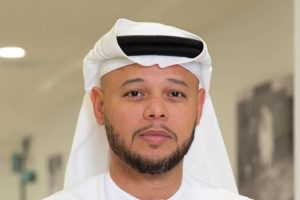
In less than a decade, the Abu Dhabi Stem Cells Center has emerged as a central pillar in the UAE’s ambition to build a fully integrated ecosystem for advanced therapies. From pandemic-era clinical trials to the establishment of the country’s first bone marrow transplant and locally manufactured CAR-T programmes, ADSCC reflects a deliberate effort to connect research, manufacturing, and patient care under one coordinated model. In this conversation, Yendry Ventura outlines how disciplined prioritisation, translational focus, and global partnerships position the centre not only as a national asset, but as a growing contributor to the international cell, gene, and regenerative medicine landscape.
What is the Abu Dhabi Stem Cells Center, and how did your background shape its mission and operating model?
I am a medical doctor specialised in immunology, trained to understand how dysfunction of the immune system underpins complex disease. I earned my medical degree in immunology from the University of Havana and later completed a Master’s in Healthcare Management at Johns Hopkins University. I moved to the United Arab Emirates in the late 2010s, and in 2019 I co-founded the Abu Dhabi Stem Cells Center as part of Abu Dhabi’s broader ambition to establish a fully integrated ecosystem for cell and gene therapy and translational medicine. My primary focus is cell and gene therapy, but my grounding in immunology allows me to work across biological and cellular platforms and to approach disease through immune biology rather than a single therapeutic modality.
ADSCC was conceived not as a stand-alone laboratory or hospital unit, but as an integrated platform designed to close the gap between discovery and patient care. From the beginning, the mandate was clear: combine research and development, in-house manufacturing, and clinical delivery within one coordinated structure. These three pillars operate in alignment, enabling us to move more efficiently from scientific concept to clinical validation and, ultimately, to patient access. In advanced therapies, fragmentation between research institutions, manufacturing sites, and hospitals often creates delays that can extend development timelines by years. Our structure was built deliberately to reduce that friction.
This model has been possible because of the UAE’s policy environment and long-term leadership vision, which support institutional integration at a scale that is difficult to replicate in more mature systems. While publications and fundamental research remain important, they are not the endpoint. For us, success is measured by whether innovation translates into safe, effective therapies that meaningfully improve patients’ lives. That focus on social and clinical impact has shaped ADSCC into a recognised national leader and a growing regional hub for translational cell and gene therapy.
What enabled ADSCC to move from concept to clinical execution so rapidly in a region where advanced therapies were still at an early stage?
What enabled that pace was a clear commitment to translational medicine, reinforced by consistent leadership direction. From the outset, we recognised that innovation rarely fails because of a lack of ideas. The real constraint lies in prioritisation and execution. Rather than pursuing long discovery cycles in isolation, we focused on identifying urgent societal needs and deploying the capabilities already in place to address them. That mindset allowed us to move with purpose, even while the ecosystem itself was still taking shape.
The COVID-19 pandemic crystallised this approach. Faced with an immediate global crisis, we chose to focus on a pragmatic intervention for patients with moderate to severe disease, rather than diverting attention to longer-term discovery projects that would not meet the moment. In 2020, ADSCC designed and conducted the SENTAD-COVID study, an investigator-initiated clinical trial evaluating an autologous stem-cell–based therapy delivered by nebulisation alongside standard care. The programme was developed entirely in-house, spanning research, manufacturing, and clinical execution, and the published data demonstrated a favourable safety profile with faster clinical improvement in treated patients. It was an early demonstration of how an integrated structure can accelerate translation from concept to clinic.
At the same time, the pandemic exposed a structural vulnerability in patient access, particularly for those requiring advanced procedures such as bone marrow transplantation. Travel restrictions made it clear that reliance on treatment abroad was no longer viable. Drawing on existing expertise, infrastructure, and good manufacturing practice capabilities, we proposed and implemented the UAE’s first comprehensive haematopoietic stem cell transplant programme in 2020. Performing the country’s first transplant during the pandemic was not only a clinical milestone, but also a response to a clear social need, creating local capacity at a moment when it mattered most.
That foundation then supported the progression to more advanced cellular therapies. Building on the transplant platform, we advanced CAR-T capabilities through a structured process of technology transfer, regulatory alignment, and in-house manufacturing, culminating in the UAE’s first locally manufactured CAR-T treatment in 2023. Across each phase, the principle remained consistent. Scientific progress only becomes meaningful when it is embedded within systems that allow patients to access it, and when innovation is aligned with responsibility to the community it is meant to serve.
Where is ADSCC concentrating its efforts today, and how do those priorities translate into structured programmes?
Our direction is not driven by technology alone, but by a clearly defined national health mandate. We concentrate the majority of our research, translational, and manufacturing capacity around a limited number of disease areas where advanced cellular and gene-based therapies can realistically alter clinical trajectories. These include oncology, multiple sclerosis, diabetes with a particular focus on type 1, and kidney disease. While our clinical services span additional specialties, our R&D investment is intentionally disciplined, centred on conditions where biological rationale, unmet need, and institutional capability intersect.
In oncology, our strategy has unfolded in a deliberate sequence. We began with haematological malignancies, establishing the UAE’s first comprehensive haematopoietic stem cell transplant programme as both an immediate clinical response and a foundational capability. That programme did more than expand access; it created the regulatory, manufacturing, and quality framework required for more advanced cellular therapies. From there, we progressed to CAR-T, extending next-generation immunotherapy to patients locally. Having consolidated these capabilities in blood cancers, we have moved into solid tumours. In 2025, we announced the UAE’s first programme focused on tumour-infiltrating lymphocyte therapy, following successful isolation of TILs from breast and lung tumours under Department of Health, Abu Dhabi-approved studies. This reflects a structured expansion from established cellular platforms toward more personalised and technically complex immuno-oncology strategies.
Multiple sclerosis represents a second core pillar, shaped by immunological reasoning rather than by therapeutic fashion. We adapted autologous stem cell transplantation for carefully selected MS patients, reporting favourable safety and stabilisation outcomes, and complemented this with a randomised Phase 1/2 trial of extracorporeal photopheresis aimed at modulating immune overactivity. Early peer-reviewed findings indicate a strong safety profile, and further clinical analyses are underway to determine progression pathways. Alongside this, we continue to investigate cell-based and T-cell engineering approaches that may enable more precise immune rebalancing in autoimmune disease.
In diabetes and kidney disease, the complexity of chronic pathology requires equally nuanced strategies. In type 1 diabetes, the challenge is dual: autoimmune destruction and limited regenerative capacity. Our approach therefore addresses both dimensions, combining a programme to generate insulin-producing beta cells from induced pluripotent stem cells, developed in collaboration with international partners, with parallel work on immune modulation. In kidney disease, we are advancing cell-based approaches for advanced chronic kidney failure and preparing additional clinical trials. Across all these areas, the guiding principle remains consistent: advance where biology is compelling, infrastructure is sufficient, and patient need is immediate, and build each programme step by step toward durable clinical integration.
How does ADSCC plan to move beyond clinical trials to ensure that its therapies reach patients at scale, and what role do partnerships play in that process?
ADSCC was established in Abu Dhabi, but it was never conceived as a purely local initiative. National healthcare priorities define where we begin, yet our responsibility is to develop solutions that can extend well beyond a single system. Advanced therapies only deliver their full value when they move past isolated trials and become accessible within broader healthcare frameworks. That requires more than scientific success. It demands regulatory credibility, robust manufacturing processes, and early alignment with global development and access pathways. Our strategy is therefore focused on positioning ADSCC as a globally relevant contributor in cell, gene, and regenerative medicine.
Partnership is essential to achieving that ambition. The complexity of these therapies makes it neither realistic nor desirable for one institution to advance programmes independently from early development to wide-scale adoption. We already collaborate extensively with academic institutions, biotechnology companies, and pharmaceutical partners across Europe, Asia, and North America, and we intend to deepen those relationships. Working closely with biopharma partners allows us to design programmes with scale, regulatory expectations, and eventual patient access in mind, rather than addressing those considerations only at the end of the process.
Academic partnerships play a similarly strategic role. Our collaboration with United Arab Emirates University, formalised in 2021, supports joint research, education, and translational training, while also providing access to complementary infrastructure and scientific perspectives. Internationally, our work with Kyoto University’s Centre for iPS Cell Research and Application, alongside Rege Nephro, has enabled technology transfer and local capability building in induced pluripotent stem cell platforms for diabetes. These collaborations are not peripheral. They shape how programmes are conceived, developed, and validated. For us, partnership is embedded from the outset, because delivering advanced therapies at scale depends on shared expertise, shared standards, and long-term alignment across institutions.
How can Abu Dhabi consolidate its global leadership in advanced therapies, and what role do clinical execution and genomics play in that ambition?
Abu Dhabi has already earned meaningful scientific recognition internationally, which is an important starting point, but long-term leadership is built on sustained execution rather than visibility alone. In our view, continued progress depends first on expanding the scale and quality of clinical trials. Clinical development is where scientific intention becomes measurable impact, generating robust data while delivering tangible benefit to patients. Increasing the depth and frequency of these programmes, always within strict regulatory and ethical frameworks, will further solidify the emirate’s position in cell and gene therapy as a serious, data-driven contributor to global innovation.
At the same time, durable leadership requires steady investment in fundamental research. Cell and gene therapy is not a field defined by rapid cycles, and meaningful advances emerge from sustained work in immunology, molecular biology, and genetics. The integration of artificial intelligence and machine learning offers new tools to accelerate discovery and refine target identification, but these capabilities must be embedded within rigorous scientific programmes. Population genomics adds another critical layer. Through engagement with Department of Health initiatives such as the Emirati Reference Genome Programme, we are able to access population-specific insights that strengthen translational research, particularly in complex conditions like type 1 diabetes. When clinical development, foundational science, and data integration advance together, recognition follows as a consequence of substance rather than ambition.
What milestones do you expect ADSCC to focus on over the next three to five years, and how will regenerative medicine shape that journey?
Over the next phase, we will continue to build on the immunotherapy foundations we have already established, particularly in CAR-T, bone marrow transplantation, and gene therapy, while deliberately shifting greater attention toward regenerative medicine. The aim is to move beyond managing disease at the cellular level and begin restoring damaged tissues and organs in a more durable way. Regenerative medicine addresses the fundamental loss of function caused by chronic disease, ageing, or trauma, and therefore offers a path to reducing long-term healthcare burden rather than prolonging dependency. One priority in this area is the development of stable, clinically robust cell lines suitable for transplantation, including insulin-producing pancreatic beta cells derived from induced pluripotent stem cells. While the broader field has already demonstrated early clinical feasibility, long-term success depends on rigorous manufacturing standards, safety assurance, and sustained functional performance, which is where much of our current effort is focused.
In parallel, we are advancing work in tissue engineering, including scaffolding technologies and 3D bioprinting. The future of regenerative medicine is not limited to cell delivery alone, but extends to engineered tissues capable of integrating, vascularising, and restoring organ-level function. Fully transplantable solid organs remain a longer-term objective due to scientific and regulatory complexity, but progress in tissue constructs is accelerating and offers realistic intermediate applications. Conditions such as kidney failure, type 1 diabetes, liver disease, and complex skin reconstruction illustrate both the scale of unmet need and the potential impact of these approaches. As these programmes evolve, our guiding principle remains consistent. Scientific ambition must translate into meaningful, durable benefit for patients, and every step forward is measured against that responsibility.