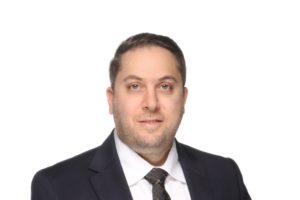
Global advances in rare blood disorders increasingly hinge on where evidence is generated, how patients are followed, and whether innovation reaches beyond a limited few. Khaled Musallam describes how clinical reality at Burjeel informs international research, trial design, and guideline development, while pressing for models that balance scientific ambition with global accessibility. From building integrated research platforms within Burjeel to shaping collaborative cohorts across continents, the discussion frames rare disease progress as a continuum, from observation to impact.
What first drew you toward rare blood disorders, and how did that early focus shape the direction of your career over time?
My medical training began at the American University of Beirut, where early clinical exposure to thalassaemia anchored my interest in rare blood disorders and motivated me to start my academic journey that early in my career. That focus also led me to pursue a PhD at Leiden University Medical Centre in the Netherlands, centred on clinical and outcomes research in thalassaemia. Working closely with leading European centres, particularly in Italy, reinforced the value of combining structured academic research with real-world clinical observation. It also marked my first sustained engagement with the clinical trials environment and with pharmaceutical partners, which would later prove central to translating evidence into practice.
Following my doctorate, I joined Novartis in Basel, Switzerland, working in global clinical development across thalassaemia and related haematological conditions. I was involved in large, multicentre trials, including programmes that led to first approvals of oral iron chelation therapies such as deferasirox, gaining experience in trial strategy, regulatory interaction, and global execution. I later founded Evida Medical to support pharmaceutical and biotechnology companies in clinical research and regulatory strategy, before integrating this work into AMICULUM, a UK-based global healthcare consultancy network, where I served as Global Medical Lead. In parallel, I co-founded the International Network of Hematology in London to strengthen collaboration, observational cohorts, and shared data across Europe and beyond.
In 2021, I moved to Abu Dhabi to join Burjeel Holdings as Group Chief Research Officer, with a mandate to build a comprehensive clinical research infrastructure across a network of approximately 20 hospitals. We established clinical trial units, a centralised Institutional Review Board, and governance frameworks capable of supporting global trials and real-world evidence generation. This coincided with a broader national shift in the UAE towards strengthening regulatory frameworks and research capacity. From this foundation, we launched the Thalassaemia & Sickle Cell Center at Burjeel Medical City to provide dedicated multidisciplinary care, alongside the Center for Research on Rare Blood Disorders, which swiftly became one of the global leading centres that integrates clinical care with registries, longitudinal cohorts, and international trials.
More recently, I assumed the role of Chief of Cell & Gene Therapy and Hematology and Deputy CEO at Burjeel Cancer Institute, overseeing adult and paediatric haematology, transplantation, and advanced cell and gene therapy programmes. Alongside these responsibilities, I serve as Adjunct Professor at Khalifa University in Abu Dhabi, focusing on translational research, and at Weill Cornell Medicine in New York, contributing to international cohort studies and real-world evidence initiatives. Across each stage of this journey, the guiding principle has remained consistent: start from clinical observation, build robust evidence, translate it into trials and regulatory progress, and ensure that this work delivers tangible benefit for patients with rare blood disorders.
How did thalassaemia move from being a regional clinical challenge to a disease area where research led from the UAE began influencing global practice and development pathways?
The foundation of this journey was simple but rigorous: start with what we were seeing in the clinic. Thalassaemia is highly prevalent across the Middle East due to genetic and demographic factors, including consanguinity and historical evolutionary patterns linked to malaria. This meant we were managing large patient cohorts whose complications did not always align with prevailing descriptions from Europe or the United States. Early work with Professor Ali Taher at the American University of Beirut made it clear that we lacked a structured understanding of the drivers of morbidity and reduced life expectancy, particularly in patients classified as having “intermediate” disease. Rather than accept established definitions, we began to build longitudinal cohorts to define natural history, quantify risk, and identify modifiable factors.
These programmes were conceived from the outset as international collaborations, particularly with centres in Italy and the United States, but structured as equal partnerships rather than regional participation. Over time, the data reshaped how the field conceptualised phenotype, shifting from historical labels such as “thalassaemia intermedia” to clinically meaningful categories of transfusion-dependent thalassaemia (TDT) and non-transfusion-dependent thalassaemia (NTDT). This functional classification reflected how patients actually behaved over time and proved critical for both care and trial design. Our findings challenged the long-held assumption that NTDT was inherently mild. We documented serious complications, including thrombosis and pulmonary hypertension, and demonstrated that chronic anaemia below haemoglobin levels of around 10 g/dL and progressive iron overload were clinically significant even without regular transfusions.
Through translational collaborations with colleagues in Milan and California, we linked these clinical observations to underlying biological mechanisms, particularly the pathways driving increased intestinal iron absorption. This integrated clinical and mechanistic evidence informed the design of the first large global randomised trial of deferasirox in NTDT. The results demonstrated that iron overload in this population was measurable, clinically relevant, and treatable, ultimately supporting expanded regulatory approval by the FDA. For us, this was a clear example of how structured observation in our region could translate into global trial design and regulatory change.
The subsequent focus on anaemia followed the same logic. Real-world data showed that persistent anaemia was not benign and that even modest haemoglobin increases could yield tangible benefit. These insights shaped the phase III programme of mitapivat, with eligibility criteria and endpoints grounded in thresholds identified in our cohorts. Participation from the UAE, Saudi Arabia, and Lebanon contributed to results published in The Lancet, followed by approvals in the UAE, Saudi Arabia and the United States, marking the first oral disease-modifying therapy specifically indicated for anaemia in adults with alpha- or beta-thalassaemia. Once again, clinical evidence generated locally informed global development strategy.
We also recognised that generating data was not sufficient in a rare disease field that receives limited attention at major haematology outlets and congresses. Sustained scientific advocacy was essential. Through consistent publication of reviews and expert guidance, as well as close collaboration with the Thalassaemia International Federation, we helped translate evolving evidence into practical global standards. Successive editions of internationally used guidelines, including the fifth edition for transfusion-dependent beta-thalassaemia in 2025 and the third edition for non-transfusion-dependent disease in 2023, reflect this effort. Together, this model of disciplined observation, genuine international partnership, pragmatic advocacy, and structured guideline development has allowed work led from the UAE and Middle East to contribute meaningfully to how thalassaemia is understood and managed worldwide.
To what extent can the thalassaemia research model be applied to other rare diseases, and what factors most often limit its scalability across the region?
The model is inherently transferable because it is grounded in patient concentration rather than infrastructure alone. In rare diseases, patient numbers remain the primary driver of evidence generation, visibility, and ultimately investment. Where conditions cluster geographically, the opportunity lies in identifying and organising those populations through registries, cohorts, and shared research agendas. In many rare diseases prevalent in the region, the patients are already present, but they remain fragmented across institutions, which limits the ability to generate data at scale. Patient organisations and clinician-led networks play a critical role in overcoming this fragmentation, as they connect care providers with patient communities and create the continuity required for meaningful research.
The same dynamics apply to clinical trials. Industry confidence in the region has grown, supported by improving regulatory frameworks and operational efficiency, particularly in parts of the Gulf, yet trial activity remains modest because collaboration is inconsistent. A single centre offering a handful of patients rarely justifies the cost of initiating a study, whereas a coordinated group of centres presenting a consolidated cohort becomes immediately attractive. The principal constraint is therefore not capability or readiness, but networking culture. Until collaboration across institutions becomes systematic rather than selective, the region’s full potential to scale rare disease research and clinical development will remain underutilised.
How does Burjeel’s structure and leadership philosophy enable the integration of advanced clinical care, research, and early access to innovation?
Burjeel operates as a regional healthcare platform with a network of around 20 hospitals, primarily in the UAE, alongside established operations in Oman, a growing presence in Saudi Arabia, and affiliated assets in India. That scale matters because it brings together patient volume, multidisciplinary expertise, and operational depth across multiple sites, all of which are essential for advanced care and multicentre research. When I joined, what stood out was not only the enabling regulatory environment in Abu Dhabi, but the internal alignment within Burjeel Holdings itself. Under the leadership of Founder & CEO Dr Shamsheer Vayalil, there was a clear and shared understanding that clinical research and trials are no longer separate from care. If we want to offer truly best-in-class treatment, particularly for patients with limited or no conventional options, innovation must be delivered locally rather than outsourced to centres abroad.
Burjeel Medical City functions as a quaternary care environment, with comprehensive medical and surgical capabilities and highly specialised programmes across disciplines. Yet even with that level of sophistication, the care pathway remains incomplete without access to clinical trials. Our focus has therefore been to embed research into routine clinical practice, not as an academic overlay, but as a core element of patient care. Once early programmes demonstrated that trial access improved outcomes and attracted patients who would otherwise seek treatment overseas, the model became self-reinforcing. The ambition is to continue building an integrated system in which advanced clinical care, translational research, and early access to innovation function as a single continuum, aligned around patient need rather than institutional boundaries.
What infrastructure and policy foundations are already in place in the UAE, and what is still needed to elevate research and clinical trial activity on the global stage?
From an infrastructure and policy perspective, the UAE is well positioned. In Abu Dhabi, the Department of Health has established an enabling framework that supports both care delivery and research. Through Malaffi, the emirate’s health information exchange platform, medical records are connected across public and private providers, allowing genuine longitudinal follow-up and real-world evidence generation. In parallel, the Emirati Genome Programme is building a national genomic database that can potentially be linked to clinical information. When integrated health records are combined with population-level genomics, they create a strong foundation for precision medicine and rare disease research. The tools, governance structures, and regulatory environment are largely in place.
What remains is less about capability and more about collective intent. Collaboration across institutions is still not systematic, and elements of institutional ego can at times outweigh a shared national ambition. In a country of this scale, research leadership should be viewed as a collective achievement rather than an individual one. Clinical research is not a zero-sum activity. Shared trials, shared publications, and shared visibility strengthen all participating centres. A similar opportunity exists at the interface between hospitals and universities. While productive partnerships already exist with institutions such as Khalifa University, Abu Dhabi University, and the Mohamed bin Zayed University of Artificial Intelligence, the translational link between patient care and laboratory science can be further optimized. Deepening these collaborations would help connect clinical insight with technical and scientific expertise, completing the research ecosystem and enabling sustained global relevance.
What are your main priorities over the next two to three years, and how will you measure progress?
The central priority is to continue closing evidence gaps in a structured and deliberate way. We are now applying the same longitudinal, data-driven framework developed in beta-thalassaemia to alpha-thalassaemia, where the global evidence base remains comparatively limited. The Alpha Thalassaemia Global Cohort has been established to generate real-world data across age groups, with the specific aim of informing future trial design and strengthening standards of care. This foundational work is essential. Without robust natural history and outcomes data, it is difficult to design meaningful interventions or evaluate impact with confidence.
At the same time, access has become an equally important focus. While continued investment in advanced cell and gene therapies remains essential, a truly global strategy must also address the needs of patients in regions where such innovations will remain unaffordable. That requires academic leadership rather than commercial drivers. Drug repurposing is one practical example. Older, off-patent agents with plausible biological mechanisms are already being used empirically in parts of the world, but without the clinical trial evidence required to support wider adoption. Pharma will not re-open development programmes for these molecules, which places the responsibility on academic networks to generate rigorous data. The objective is not to compromise innovation, but to broaden its reach so that progress translates into benefit for a much larger patient population.
What final message would you share with the international research and industry community considering engagement with the UAE?
The message is simple. Engage directly and assess the ecosystem based on experience rather than assumption. Organisations that have conducted studies here tend to return, because what ultimately matters to industry is quality, efficiency, and reliability, and those expectations are being met. Repeat engagement is the clearest indicator of credibility.
This is also a timely moment to engage. The research ecosystem is still evolving, which creates flexibility at the regulatory, institutional, and operational levels. There is genuine openness to learning from what has not worked elsewhere and to doing things differently. In long-established systems, change is often slow and constrained by legacy processes. Here, there is room to adapt and co-create. For partners willing to engage early, this is an opportunity to help shape a research environment designed for the next phase of clinical development.