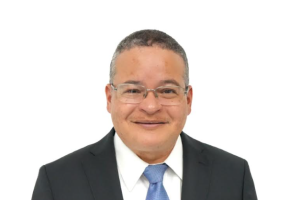
Víctor Ramos Otero, Secretary of Health for Puerto Rico, reflects on his first 100 days in office and the key initiatives to strengthen the island's healthcare system. He discusses efforts to address the exodus of healthcare professionals, improve access to care through telemedicine and new legislation, and combat disparities in federal funding for Puerto Rico's health services. Ramos Otero also emphasises the importance of investing in infrastructure and healthcare innovation to support residents and international partners.
You have completed your first 100 days as Secretary of Health. What have been the most immediate priorities?
As a starting point, we have been working based on Governor Jennifer González Colón’s platform, which includes 29 commitments directed at the health sector. Some of these commitments have already been fulfilled, and others are in progress.
Among the priorities is the exodus of healthcare professionals. To address this, we have a comprehensive plan that includes student loan repayment. We are negotiating to create a legal trust fund with a base fund assigned by Puerto Rico’s Fiscal Oversight Board, allowing people to contribute to the repayment of their loans.
Additionally, we aim to reduce licensing requirements without compromising professional quality. Currently, many unnecessary documents are requested, and there are over 30 regulatory boards with different laws and requirements. We want to standardise these processes through a unified health professionals code, simplifying procedures without lowering competency standards.
Regarding credentialing, we are working on a centralised database from the Office of the Insurance Commissioner, where insurers can access doctors’ documents. Insurers are already participating, and we are integrating hospitals and outpatient centres so everyone can access the necessary documentation for credentialing.
Another important topic is the tax incentive for doctors. Currently, only 3,000 of the 9,000 doctors in Puerto Rico receive a four percent tax incentive. We are negotiating with the Fiscal Oversight Board to increase this number without affecting public finances.
Payment to healthcare providers in Puerto Rico is lower than in the continental US. We have funding until 2027 under the federal law establishing Medicaid for territories, which differs from the law for states. Discussions on cuts are expected in 2027. Therefore, we plan to create a multisectoral committee by the end of the year to coordinate lobbying efforts in Washington, D.C. to seek at least an extension, and ideally an increase, of current funds.
It is noteworthy that Medicaid has two main programs that Puerto Rico does not cover: long-term care and payment of Medicare Part B for dual-eligible patients (Medicare and Medicaid). These represent approximately two billion dollars in funds Puerto Rico does not receive.
This situation affects healthcare professionals and patients, who migrate to states to access these services, incurring additional costs to the federal government. Therefore, securing adequate funding to maintain these services on the island is essential.
The exodus of doctors is clearly a major challenge, and you seem to already have a defined strategy. What other proposals are you working on?
During these first 100 days, five crucial laws have been approved: the new telemedicine law, the single medical record law, the rare diseases law, the folic acid awareness law, and the law establishing that obstetricians will be the primary doctors for pregnant women until one year after childbirth.
We will also address the labour and salary conditions of healthcare providers who do not bill medical plans, such as nurses, medical technologists, and respiratory therapists, aiming to improve their conditions. This is part of a study we are developing with the Institute of Statistics on the cost of medical practice in Puerto Rico.
Additionally, we will create a special prosecutors’ unit within the Department of Justice. There is currently a unit for provider fraud and abuse, a federal requirement for funding. The new unit will allow patients to file complaints against insurers, enabling investigations of possible civil or criminal actions.
Another major program we are implementing is focused on the eradication of hepatitis C in prisons. Since January, in collaboration with the Secretary of Corrections, we have conducted rapid hepatitis C and HIV tests on approximately 80% of inmates–around 7,000 people. This was possible thanks to the cooperation between the secretariats of Corrections and Health and the private operator of the correctional health system.
The next step is to perform confirmatory tests on those who tested reactive to link them to hepatitis C and HIV treatments. Hepatitis C prevalence in prisons is higher than HIV, and this disease is now curable. We are proud of this program, ensuring inmates are not deprived of their right to health.
Finally, we are also working on the opioid initiative, focusing on addressing the root cause—the use of drugs in prisons.
The Office of Rare Diseases seems like a very relevant focus. Could you elaborate on this?
The office was created for two reasons: to guarantee access to treatment for these conditions and to address rare endemic diseases such as Germán Kipulax syndrome and Jarcho-Levin syndrome, for which we have a responsibility to establish research protocols. In creating this office, we will work with pharmaceutical companies, medical schools, patients, and families, as established by the approved law.
Puerto Rico operates under US federal standards but with significantly lower per capita funding. What are the immediate consequences of this disparity?
We do not lack human resources. Our doctors, dentists, pharmacists, optometrists, and other health professionals are on par with their US counterparts, with the same credentials and exams. However, when it comes to equipment, technology, and the necessary resources to make everything work, there is a clear disparity between what hospitals in the US have and those in Puerto Rico, as well as in the availability of personnel.
This situation creates access problems, worsened by the migration of professionals, mainly affecting patients in non-metropolitan areas with more limited access.
In this regard, the recently approved telemedicine law will greatly help improve access to health services in these areas.
To tackle this infrastructure challenge, we will build a new hospital in Vieques, emergency and treatment centres (CET) in Mayagüez and San Lorenzo, and approximately 19 medical centres, including a new trauma hospital and the Medical Sciences Campus. We aim to certify the trauma hospital as a Level 1 facility, an important local certification. Renovations will also be carried out in several hospitals to benefit patients.
It is said that Puerto Rico leads the nation in Medicare Advantage enrollment, with over 85% of benefits under this program, yet receives the lowest reimbursement rates in the US. What is the impact of this?
What you mention is partially true. We receive a lower benchmark than states. The benchmark is the base amount assigned per patient. For example, a patient who becomes eligible for Medicare, without diabetes or hypertension, who runs a mile daily, is a healthy older adult. This patient is assigned a base amount, and as diagnoses are added, additional payments are made. Generally, payments for additional diagnoses are equal, but the deficiency lies in the base payment or benchmark.
There is a deficiency in Medicare Advantage regarding the benchmark. In Medicaid, Part B payments also present an approximately two-billion-dollar deficit. Regarding the benchmark, the difference is close to one billion dollars, which is significantly lower for Puerto Rico.
What final message would you like to send to the global healthcare community on behalf of Puerto Rico?
As the governor says, Puerto Rico is open for business in the health, tourism, and manufacturing sectors. I want to assure you that we have a healthcare system prepared to serve visitors and investors adequately. I invite you to explore Puerto Rico and consider investing in our region; we are willing to collaborate with all the professionals interested in working with us.
While there are many needs and problems to address, a new emergency arises every day in a hospital, diagnostic centre, or other facility requiring immediate attention. However, our team works with great enthusiasm and commitment. The Secretary of Health’s employees are dedicated to our mission, and we will not let them down.
We may not have the most robust system, but we are proud. For example, during the COVID-19 epidemic, while other systems collapsed in major metropolitan areas around the world, we did not. This was thanks to the joint work of public health, medical colleges, hospitals, and professionals. We did the best possible work under the circumstances, and we are proud, especially considering we had fewer resources.