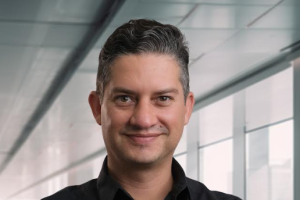
Jesus Manuel Laboy, President at VIBRA Inc., a company that provides predictive maintenance and reliability engineering services for industries across the Americas, shares the company’s evolution from its origins in Puerto Rico to its expansion across the Caribbean, Mexico, and the United States. With a focus on predictive maintenance, AI-driven solutions, and a strong family-led culture, VIBRA has become a pioneer in industrial reliability. Laboy discusses the challenges of technological adoption, the impact of reshoring policies, and how the company balances innovation with its deep-rooted values.
Could you share VIBRA’s story with our global readers? How did it start, and how has it evolved over the years?
VIBRA began as Vibranalysis Inc. in Puerto Rico in 1993, founded by my father, Eng. Félix Laboy Vazquez, and my mother, Leida De La Plaza. The company was built on the then-innovative concept of predictive maintenance—using technologies like vibration analysis to assess machinery health and prevent failures before they occurred. At the time, this was a revolutionary approach, shifting industries away from reactive repairs towards proactive reliability.
Our early focus was on two key markets: power generation, where predictive maintenance technologies were emerging, and pharmaceuticals, where my father had deep industry connections. Rather than simply selling equipment, we positioned ourselves as providers of critical data, helping clients interpret machine health in a way that optimised maintenance strategies.
By 2000, we developed our first predictive maintenance software platform, designed to consolidate data from various sources into a single, actionable system. This was a web-based solution—essentially a precursor to cloud computing—that allowed clients to monitor asset health remotely. When I formally joined in 2006, we were already seeing a shift in the pharmaceutical sector towards cost reduction, particularly in maintenance. This led us to challenge traditional practices, advocating for data-driven decision-making instead of following OEM-prescribed schedules. We also realised that transforming how technology is applied meant helping pharmaceutical companies rethink their entire maintenance strategy, which required a cultural shift, so we began offering training and seminars, something that remains a core part of our work today.
Our expansion beyond Puerto Rico began in 2007 with an office in the Dominican Republic, followed by Monterrey, Mexico, in 2012. These moves were driven by demand from multinational clients and a desire to test our solutions in less-regulated environments. By 2018, client demand led VIBRA to begin operations in the United States, particularly during the COVID years, using its Puerto Rico and Mexico offices to support a growing, digitally focused service offering in the mainland market. Today, our Puerto Rico office serves the Caribbean and Central America, while Mexico covers North America, and we have since established a digital hub in the United States.
What competitive advantages set VIBRA apart from other industrial service providers on the island, and now that you are in Mexico and the Caribbean?
Our greatest differentiator is business intelligence. After 30 years in this field, we understand that technology alone is not enough—it must be applied with the right processes and cultural mindset. Many companies make the mistake of assuming that buying advanced tools, like an AI-powered sensor, will automatically solve their problems. But without the proper context and expertise, the technology is underutilised.
We invest heavily in human talent, ensuring our engineers are not just skilled in using these tools but also in translating data into actionable business insights. For example, we run internship programmes with universities to nurture the next generation of “reliability engineers”. Additionally, we have built partnerships with technology providers worldwide—from in the US to firms in Spain and Turkey—allowing us to integrate diverse solutions into customised, client-specific platforms.
We believed from the start that the best way to support Puerto Rico was by building companies that create our own value, rather than simply reselling the value of others.
Another key advantage is our ability to adapt to local markets while maintaining global standards. When we expanded to Mexico, we learned that regulatory and operational expectations differed from Puerto Rico. Rather than imposing a one-size-fits-all model, we tailored our approach, blending our core methodologies with local industry practices.
So the pharmaceutical industry remains a significant market for VIBRA?
It is our second-largest market and one where we feel most at home. Because it is so heavily regulated, and we were raised in that environment, we thrive in it. In fact, one of our first clients in Mexico was a U.S.-based pharmaceutical company seeking vendors who were comfortable operating under strict regulatory standards. That played to our strengths. The pharmaceutical industry remains one of our core markets, where our familiarity with strict regulatory environments continues to be a key advantage.
VIBRA recently invested two million dollars in an AI platform to prevent equipment failures. Could you explain how this investment is transforming your service offerings and operational efficiency?
The AI investment stems from our belief that the next industrial revolution is not just about collecting data but making it speak meaningfully. In 2017, I attended a conference where Industry 4.0 was being hailed as the future, yet many of the concepts—like predictive maintenance—were things we had been doing for decades. The real breakthrough, however, lies in moving beyond prediction to prescription.
Our new platform does not just alert clients to potential failures; it provides actionable recommendations, much like a doctor offering a treatment plan based on diagnostic results. For example, instead of saying, “Your compressor will fail in two weeks,” we can say, “Adjust these parameters, and you could extend its lifespan by six months.” This shift required embedding decades of our operational knowledge into AI algorithms.
The platform also addresses scalability. Traditionally, our services relied on technicians manually collecting data. Now, with IoT sensors and cellular connectivity, we can monitor assets in real time across multiple countries, reducing downtime and enabling faster responses. This required learning the digital language—a challenge led by my father, who now heads our digital team. With this digital infrastructure in place, especially during COVID, we found no borders for collaboration, expanding our reach across South America, including Colombia, Peru, Chile, and Ecuador. Ultimately, scaling up through digital business intelligence has transformed how we operate.
Do you see any challenges or risks in this rapid technological adoption? Now that everyone is talking about AI, it sounds promising, but are there pitfalls?
One of the biggest challenges is cybersecurity. As we integrate more connected devices into industrial systems, data becomes a high-value target. Early on, we learned this the hard way when an IT executive at a pharmaceutical company confused, accused us of “stealing data” simply because we were collecting machine diagnostics. It was a wake-up call: data is now viewed as a strategic asset, and clients demand rigorous protections.
We have since developed strict protocols, hired cybersecurity specialists, and ensured compliance with regional regulations, which vary significantly. In Mexico, for instance, data sovereignty laws can be stricter than in other territories. Beyond security, there is the cultural hurdle of convincing teams to blend AI-driven recommendations with traditional, experience-based judgment. That requires education—another area where we have invested heavily, offering training programs to bridge the gap between technology and workforce adoption.
How has the America First trade policy impacted, or how do you think it can impact, your operations?
We believe it is going to be very positive. Puerto Rico has a lot to offer, and we can do so quickly. We can scale up our manufacturing capabilities in the life sciences sector rapidly, and that makes Puerto Rico an attractive location for business.
More jobs can be created here, especially in this type of market. We have excellent engineering schools, and graduates from these institutions can go on to work in Puerto Rican companies. There is a lot of value in what Puerto Rico has to offer, and not every country is in a position to provide this kind of scale.
What unique challenges and strengths come with being part of a family business in Puerto Rico?
I would say that no company gets beyond the first generation without strong values. From my own experience, my parents founded the company when I was about 11 or 12 years old. We are four siblings, and three of us work here today.
So, we were already operating as a family. We held meetings, made decisions together, and shared responsibilities. The challenge, then, is presenting ourselves not simply as a family business, but as a company that provides real value and results. Our success outside Puerto Rico proves that. We do not have any family members working in our operations in Mexico or the Dominican Republic right now, and yet those operations continue to thrive. So I would say it has been a strength rather than a limitation.
How do you cultivate a company culture that embraces both the rich heritage of the family business and an innovative mindset?
One of the core values in our family has always been integrity. For us, integrity means being transparent and doing what we say we will do. That allows us to be role models for the company and to lead by example.
If our family works according to those values, then our promise to employees and colleagues becomes clear: this is the way we operate, and this is the way we live. That has made it much easier to develop and maintain the company culture, which is so vital.
Looking ahead, what are VIBRA’s priorities for the next five years?
We are currently in a growth phase, and we do not want to underestimate its importance. We are putting all the infrastructure in place to scale our value proposition and our ability to deliver on it. We have learned a great deal through our expansions, especially about the importance of not underestimating cultural factors in each country.
Political and regulatory considerations also vary—tax policies, government interaction, commercial regulations—all of that must be taken into account. But we are making sure that these factors do not distract us from our core focus. That is what we are working on today: laying the foundational elements to ensure the company is where it needs to be five years from now.
Five years ago, you were named one of Puerto Rico’s top young leaders (40 under 40). What set you apart, and how has this recognition influenced your career?
I have been deeply committed to the company from the very beginning 19 years now. I started in the commercial side of the business because I enjoy being out there, meeting people, and making connections. Many of our customers have seen me grow up, and I am still here, wearing the same logo.
But it is not just about me. My brother, who is two years younger, was recognised last year by PRMA for his performance as Service manager. Two years before that, my sister—who works on the operational side—is also a leader in our operations. So I think what people see is a family that works together, stays consistent, and grows despite the challenges.
We have faced hurricanes, earthquakes, and pandemics. I do not like to dwell on the past, but those events have made us stronger. We would not be here today if we had not leaned on our values and worked as a team.
Personally, it was quite moving to realise that my brother’s eldest daughters are now at an age where they are starting to think about university applications. That made me feel that the third generation is already on the horizon, which tells me we might be doing something right.
As a family, we made a commitment that this business would not be limited by the family itself. We want to see where our systems and people can take us. With reshoring in the U.S., many companies will need to scale their operations, and we will be here for that. We are bilingual. We are also investing in our software to break down barriers. Today, we have English-only speakers in the U.S. reviewing diagnostics done by Spanish-speaking personnel. Language has been a significant challenge in our work, particularly because most technical literature and vendor materials are in English. We quickly realised that not everyone, even within Latin America, speaks English fluently—especially when it comes to business or technical terms. This was eye-opening for me after leaving Puerto Rico, where even locally, English proficiency varies. To address this, we invested in translating materials ourselves, not just into Spanish, but into regionally appropriate versions that reflect the differences between, for example, Monterrey and Puerto Rico. Understanding these nuances has been essential to building effective communication across our teams and clients.
Finally, what is your message to our readers about Puerto Rico’s potential?
Puerto Rico is a country ready to provide value to the world at scale. We have the talent and the people. There are many incredible stories of local companies that have survived and grown through tough market and environmental conditions. If we are still here, it is because we are special, and we are ready to contribute.
We also have a new generation emerging and developing in Puerto Rico. As they converge with more experienced generations, that combination—if handled well—can truly help the United States grow its pharmaceutical and life sciences industries.
Is there anything else you would like to add, something I might have forgotten to ask or something you missed from the presentation?
For us, VIBRA is about offering a new perspective on technology. We are still using the same values our father applied in the 1990s—using technology to add value in a human context. A scientist might say things are very different now, but for us the core purpose is unchanged: improving quality of life and building a better future. We are proud to contribute to the Puerto Rican ecosystem, and we hope people will continue coming to VIBRA for the next 30 years.