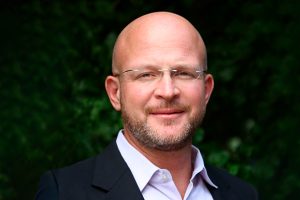
Umberto Donato, president of DDD Group, a construction firm specialising in complex sectors including pharma, reflects on the company's growth over the past decade and the role of infrastructure and facility design in attracting investment to Puerto Rico. He also discusses evolving client expectations, sustainability, the factors shaping the construction market on the island, and addressing talent shortages.
It has been 10 years since we last interviewed you—what have been the most significant milestones and developments for DDD Group since then?
A lot has happened in the last decade, both globally and for our company. We have evolved into more complex sectors, particularly in pharmaceuticals and military federal work. There have been large investments in these sectors in Puerto Rico over the past 10 years, and we havz seen projects grow significantly in both size and complexity. We have been working with military branches, like the Army Corps of Engineers and Customs and Border Protection (CBP), as well as pharmaceutical companies like Lilly and hospitals, which have been growing rapidly in the healthcare sector.
Do you have any standout projects or success stories in recent years?
We have several. One notable project is a USD 300 million construction project in partnership with a joint venture of four contractors. It is for Camp Santiago in Salinas, a military facility that includes headquarters buildings, barracks, and other military infrastructure.
We are also working on revamping Lilly Pharmaceuticals’ corporate image by making architectural modifications to their buildings. This is part of Lilly’s long-term commitment to Puerto Rico and aims to create an attractive work environment for new generations of employees.
Another key project is for the US Coast Guard in San Juan, La Puntilla. This is a USD 140 million design-build job where we are designing and constructing central utility plants and mission command centres, along with other infrastructure improvements to enhance resilience.
What role does infrastructure and facility design play in attracting investments to the island?
It is critical. A lot of clients, when they are doing feasibility studies early on, need to know how much things are going to cost and how long it will take. That is where pre-construction services come in. A client can come to us with a concept, hire us for pre-construction consulting, and we help with early conceptual estimating, scheduling, and all the digital tools to build cost and schedule models. This is critical for feasibility analysis and essential for attracting investment.
What policies or infrastructure changes are needed to keep Puerto Rico competitive?
First, we need to improve the technological infrastructure to allow for a better permitting process. But we also need to address the worker culture so that everyone involved in the industry and permitting process understands that they are providing a service for an essential industry. It is a complicated subject because some might think simplifying the process could result in cutting corners, which could negatively impact the environment or quality. But we have codes and laws for a reason, and we need to follow them. However, for Puerto Rico to evolve, we must be more efficient in evaluating projects. Large investments can take years to come together due to bureaucracy and other inefficiencies. Clients with significant investments are waiting too long because of this. Facilitating investment in Puerto Rico will improve everyone’s quality of life. If the process is made too complex, it could drive construction projects underground, without proper permitting, which has negative effects on the industry.
It is about making sure that we enable investments. Right now, the complexity of the system encourages people to bypass the rules, and that is harmful to the industry. The Secretary of Economy, Sebastián Negrón, is doing great work in trying to improve the permitting process, and that is key for Puerto Rico’s future. Additionally, labour laws need to be re-evaluated from a competitive perspective. Are they cost-effective compared to other jurisdictions? Are they balanced? Labour laws, like the permitting process, need to be competitive to attract the right workforce and keep the market functioning efficiently.
When I talk about a competitive labour environment, I mean that it needs to be flexible for both employees and companies. We need to be able to hire and incentivise the workforce that we need to provide the services to our clients. Puerto Rico has great talent, and that is one of the island’s biggest assets. It is crucial that we can tap into this talent, whether for skilled labour or for more senior roles.
Have client expectations and construction demands changed compared to 10 years ago?
Expectations have definitely risen. The level of complexity in projects has increased across the board. This includes not just the buildings themselves, but also the processes involved—costs, timelines, and quality expectations. Sectors like pharmaceuticals and the military have very high standards for quality, safety, and cost control. This has made the whole ecosystem of suppliers, consultants, and employees adapt to meet these new challenges. Additionally, factors like hurricanes, the pandemic, and geopolitical issues like the war in Ukraine have added to the complexity.
Are clients more aware of the value of productive maintenance and cost-saving design, or is there still a need for education?
I think there is still a lot of education needed at every level. I visit facilities at all levels, and it is usually a budget issue. People will spend on their cars, but they will not do it on their buildings. Typically, you need to spend about one to two percent of the building’s initial cost every year for maintenance, but most property owners do not do that. This was one of the main challenges when we were doing building maintenance. You need skilled workers, and of course, the pay rates for those skilled workers are going up, so it is costly. In the short term, yes, it can seem expensive, but in the long term, I believe it is not.
How has DDD supported integrated project delivery over the years, and how does your fully integrated model benefit clients today?
Our fully integrated model offers clients a significant advantage in managing the complexities of modern projects, which are affected by rising inflation, changing costs, supply chain disruptions, and labour shortages. We use a progressive design-build approach, where we work closely with clients throughout the entire project lifecycle. In this model, while we are designing, we simultaneously prepare schedules, budgets, and ensure they align with the client’s targets. At key stages, like 30 and 60 percent design completion, we provide clients with conceptual estimates and schedules, and continually refine these elements as the project evolves to ensure the final build aligns with their expectations in terms of time, cost, and quality.
For example, during a recent Coast Guard project in San Juan, we identified that a shift from cast-in-place concrete to precast concrete would help mitigate delays due to supply chain issues. This adjustment did not compromise the building’s performance, but instead allowed for faster construction, improved quality, and better long-term maintenance—all while meeting the client’s deadlines.
We also incorporate advanced technology such as Building Information Modelling (BIM) and virtual design and construction (VDC). This allows us to create digital twins of the project before construction begins, optimising the design process. We also use collaboration tools to enhance communication across teams, ensuring seamless coordination.
Additionally, I am actively involved in national committees, such as the AIA-AGC Joint Committee, which focuses on improving collaboration between design and construction. These discussions help refine our methods, including progressive design-build and other integrated delivery strategies, so we can continue to offer the best solutions to clients. For instance, in these committees, we explore different ways to enhance product delivery methods, such as improving the integration of construction services and adapting to the changing demands of the market. This ongoing collaboration helps us keep pace with industry changes and ensures we can deliver on client expectations, particularly in sectors like pharmaceuticals and military projects, where precision and coordination are key.
Through these initiatives, we can not only meet but often exceed our clients’ expectations by staying ahead of challenges and leveraging technology and integrated approaches.
How are you incorporating AI into your operations, especially with the growing role of technology in construction?
We are using AI, and we are in the early stages, but for example, we have a huge database of information that we have been storing with Microsoft SharePoint for almost 20 years. That is terabytes of information. Now, we are using a proprietary AI to mine that data so we can gain insights from all the estimates, costs, and projects we have done in the past. We are also using AI for design alternates. Our software can take a concept and use AI to generate iterations of that concept. We are even using it for meetings.
Sustainability is one of your core values. How do you integrate green building practices, and are there any certifications like LEED or others that you would like to highlight?
Sustainability is central to what we do. For example, we just completed a design-build job for the Food and Drug Administration (FDA) in San Juan, managed by the US Corps of Engineers. It is a LEED Silver project, and we are confident we will get the certification since we have more than enough points. Sustainability has evolved to a point where it is integrated into every project. We use the LEED system under the US Green Building Council, and we are also working on some projects under Green Globes. Some military projects prefer Green Globes over LEED Silver or LEED certifications. For example, all the projects we do for CBP and Homeland Security are designed to meet LEED Gold standards, though they are non-certified. We make sure that the buildings incorporate all necessary sustainability features, from water usage and electrical efficiency to material sourcing and maintenance.
What initiatives are you leading in Puerto Rico to address the challenges of retaining and developing talent?
One of the key initiatives we have launched is the AGC Workforce Development Foundation, which aims to address the talent shortage in Puerto Rico. This foundation created the island’s first open-shop registered apprenticeship system, which is a significant milestone as previous programmes were only specific to individual companies. Through this apprenticeship programme, we offer workers the opportunity to learn on the job, with pay increases as they advance in their training. They also receive a US Department of Labor credential, which is valid across the United States and its territories.
This programme benefits both employees and employers. It helps develop a better-trained workforce and provides employees with skills that increase their earning potential. We aim to incentivise the younger generation to enter the construction industry, where there’s stiff competition from other sectors like pharmaceuticals, technology, and media. Many of our skilled workers are nearing retirement, with a significant portion of the workforce being over 40, so attracting new talent is crucial.
Through this foundation, we are offering not just a job, but a career in construction. We have already started the first cohort of 50 apprentices, and we plan to run these cohorts regularly. The programme is an essential tool to close the workforce gap, which currently stands at about 80,000 workers, with half of them not in the formal workforce. This is an ongoing effort, and we’ve been working on it for the past three years, with full operational plans now in place.
The response from the industry has been positive, and we’ve seen collaboration from competitors, which is unique in Puerto Rico’s construction sector. This collective effort is crucial in addressing the workforce challenges post-Hurricane Maria and during the pandemic. Our focus is on professionalising the workforce, ensuring they have the training and certifications to succeed.
How do you see the construction market evolving locally in Puerto Rico?
There are a lot of positive forces shaping the construction market here. We have substantial funds from post-Hurricane Maria recovery, although some challenges remain with the current administration. However, with the funds available, there is still a lot of work to be done on the island. Additionally, there is significant military investment, billions of dollars being directed to various facilities, and growth in health and pharmaceuticals, like the new eye surgery hospital we worked on, which operates 1on 00 people a day. Infrastructure projects like aqueducts, electrical work, and highways are also booming, and we are seeing more large-scale projects being managed locally.
After Hurricane Maria, we realised large projects were not being done by local contractors. We created a joint venture with three contractors to compete with large stateside contractors for emergency repair contracts, including projects up to USD 200 million. One of our most significant projects was the USD 300 million Camp Santiago project, the largest bond ever issued for a project in Puerto Rico. The joint venture allowed us to combine resources and expertise to take on projects that we could never have managed alone. This partnership has made us one of the biggest bonding capacity contractors on the island, enabling us to tackle high-complexity projects.
By collaborating with trusted partners who bring value, we can successfully bid on and complete major projects that require significant resources, such as jobs with thousands of submittals, high safety standards, and design-build teams. This teamwork has allowed us to exceed expectations and take on projects we never dreamed of.
We have undertaken a few ventures, including one with Del Valle Group under the Small Business Administration’s Mentor-Protégé Programme. In this arrangement, we play the role of the smaller company, while Del Valle is the larger partner. We’re currently working on federal heavy civil highway and landslide projects, which are another area with a significant amount of work and potential for growth.
As you reflect on your company’s 25th anniversary, what are your expectations for the next five years?
Looking ahead, I am thinking about succession. I am 53 now, so in the next 10 years, I want to ensure the right team is in place to take the company to the next stage. Ideally, within 10 years, the next generation will take over and continue growing the company.
Do you have a final message you would like to share with our readers?
Stay confident—despite the challenges, there is a lot of opportunity. While the bad news can sometimes be overwhelming, there is much more good happening, and in that good, there is room for growth, both corporate and personal. Puerto Rico has a lot of potential, and it is essential to remain optimistic and keep looking for opportunities to contribute to the island’s development.