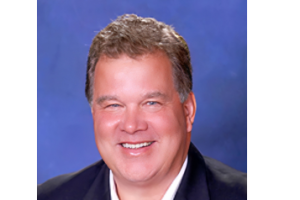
Thomas Nusbickel, Chief Commercial Officer, describes how Celltrion, founded over 20 years ago, pioneered biosimilars through a fully integrated business model. Its US office opened in 2018 and has since transitioned from partnerships to direct sales, launching several biosimilars in oncology, immunology and endocrinology. With a strong pipeline, a growing manufacturing presence in the US, and a renewed ambition to expand beyond biosimilars into innovative therapies, Celltrion aims to strengthen its US footprint, compete with major players, and enhance patient access through strong collaborations with payers and providers.
For our readers who may not be very familiar with Celltrion, could you provide the foundations of who the company is, your presence in the US historically, and where you are today?
Celltrion was founded more than 20 years ago by our Chairman, Seo Jung-jin, who continues to lead the company today. He envisioned developing biosimilars even before a regulatory pathway existed. His conviction was that by combining excellence in manufacturing and regulatory science within a fully integrated organisation, he could build a company capable of delivering high-quality biologic products and expanding global patient access to these therapies. It was a truly pioneering approach.
I first became familiar with Celltrion during my time at Hospira (which was acquired by Pfizer in 2015). Hospira had a partnership with Celltrion for biosimilar products, while Pfizer was also developing its own infliximab biosimilar. We all assumed Pfizer would move forward with its own product, but about a year earlier than anyone expected, Celltrion obtained approval for the first monoclonal antibody biosimilar of infliximab. That moment demonstrated Celltrion’s agility and leadership in this space.
I joined Celltrion in 2022, about eight years later. The US office had opened in 2018, but at that time, most of our biologic products were commercialised through partnerships with companies like Pfizer and Teva. A decision was made to transition to a direct sales model in the US, and I was brought in to establish the organisation and lead this new phase of growth.
In our first year, we launched two biosimilars, a biosimilar to Avastin® (bevacizumab), a key oncology therapy, followed by a biosimilar of adalimumab, a key monoclonal antibody used to treat a range of autoimmune and inflammatory conditions, including rheumatoid arthritis. Later that year, we received FDA approval for our novel subcutaneous formulation of infliximab. The FDA required two clinical trials in inflammatory bowel disease for this product, which we have since launched as a branded biologic alongside our biosimilar portfolio.
In less than three years, we have launched seven products and continue to expand our business. We are channelling Celltrion’s pioneering spirit as we prepare to bring 22 biosimilars to market by 2030 and advance several innovative assets, including antibody-drug conjugates (ADCs) and bispecific antibodies now in clinical development.
Today, we have established a strong commercial infrastructure in the US. We are well recognised by payers and are building trusted relationships with oncologists, gastroenterologists, and rheumatologists. We continue to learn how to adapt, applying lessons from global markets to our US operations. Personally, it has been an exciting opportunity to help evolve a company with such a rich legacy and innovative spirit, supported by a strong team and an exceptional pipeline.
While biosimilars have achieved greater market penetration in Europe, the US still has room for progress. At Celltrion, we are actively engaging with the FDA, CMS, legislators, and payers to support policies that expand biosimilar adoption and patient access. There is much to be done, and our goal is to move quickly and efficiently to help advance the biosimilar landscape in the US.
What was the rationale for moving from a distributor model to establishing a direct presence in the US, and what was that process like in building full commercial operations?
Our approach in the US was quite similar to how Celltrion entered Europe. We began by partnering with established commercial players to gain an understanding of the market, and once we built that foundation, we transitioned to a direct commercial and sales model.
The US operation was officially established in 2018, though at the time it was not yet focused on launching our biosimilar portfolio. The goal was to lay the groundwork to capitalise on the significant opportunities in the US market. Our partnerships with Teva and Pfizer have been and continue to be successful, but as a fully integrated company, we wanted to bring the same direct commercial capabilities to the US that we already have in other major markets.
This shift was a deliberate decision by our Chairman and executive leadership. Around that same period, Celltrion also began to invest more actively in innovative therapies, making it essential to have a strong US footprint to support both biosimilar and novel product launches.
It is well known that the US market is complex, with different incentive structures across therapeutic areas and between buy-and-bill and pharmacy benefit drugs. We have learned from both market types as the biosimilar space has evolved, and we now understand the baseline capabilities required to succeed here.
When I interviewed for the role in 2022, I summarised my view in one slide: to succeed in the US, you need capable people who understand the market and have strong relationships with key stakeholders like payers, providers, and policymakers. You also need deep expertise in both buy-and-bill and pharmacy benefit models, along with clear strategies, functions, and processes tailored to each.
We were part of the large wave of adalimumab biosimilars that launched in the US, which taught the entire industry valuable lessons about the influence of pharmacy benefit managers (PBMs). PBMs hold significant control in that space, and while they have yet to establish the same level of influence in buy-and-bill markets, we are seeing new models emerge like private-label arrangements on both the provider and PBM sides. These are opportunities we are also actively exploring.
Now that we have been operating directly in the US for three years, payers are starting to recognise Celltrion’s supply reliability and track record in both domestic and global markets. With strong sales and medical capabilities in oncology and immunology, we are well-positioned to compete across all major biosimilar segments while preparing for future innovative launches.
Transitioning from an unbranded to a branded mindset is a major change. I have seen companies struggle with it, including during my time at Amgen. At Celltrion, we are learning to navigate both worlds effectively, and our focus remains on bringing innovative, cost-effective options to patients.
Are there particular therapeutic areas that are priorities for Celltrion?
Our pipeline is primarily focused on immunology and oncology, with emerging opportunities in ophthalmology, asthma, allergy and bone health. In immunology, we have biosimilars for infliximab, adalimumab, ustekinumab, and tocilizumab. In oncology, our portfolio includes rituximab and trastuzumab, which are commercialised with Teva, as well as our own bevacizumab biosimilar. Most recently, we launched our biosimilar of denosumab for preventing bone complications in patients with advanced cancer or due to post-menopausal osteoporosis.
We plan to continue managing all future launches directly. Our oncology portfolio will expand as more major oncolytics lose patent protection, and our presence in ophthalmology will grow with the launch of our aflibercept biosimilar. We are also excited to offer the first omalizumab biosimilar next year.
Celltrion’s biosimilar pipeline is among the most extensive in the industry, covering both blockbuster and targeted therapies across key specialities. Payers have taken a strong interest in engaging with us as they recognise the breadth of our pipeline and the advantages of our fully integrated model, thanks to our proven supply reliability and competitive cost structure.
Beyond biosimilars, we are also advancing ADCs and bispecific antibodies, primarily in oncology and immunology. However, these assets may expand into new therapeutic areas depending on clinical outcomes. In my experience, innovation often leads to surprising results, and we are prepared to follow the science wherever it takes us.
How would you describe Celltrion’s most recent biosimilar launch?
We entered the market second, shortly after Sandoz, so we saw a clear opportunity to position ourselves competitively across both providers and payers. Denosumab is unique in that, while the base molecule is the same, the reference product was approved as two separate drugs, Prolia and Xgeva. That means our denosumab biosimilars, Stoboclo and Osenvelt, respectively, share the same FDA filing and the same code for reimbursement. We had to be very strategic with where to play and how to win because any contracting action on one product directly affects the other.
The Stobolco market is roughly three times larger than the Osenvelt market, but it involves far more customers in the primary care space, a customer group that is less familiar with biosimilars. Fortunately, we already had a strong foundation for Osenvelt, which is primarily used in oncology. Relationships and brand recognition had been built through our bevacizumab and trastuzumab biosimilars. Given differences between the denosumab reference brands, we developed a strategy to optimise results in both provider and payer segments.
We completed our first quarter on the market and have now established contracts with clinics and integrated delivery networks for both products. While our initial launch took place before we received a permanent Medicare billing code required for reimbursement, called a Q-code, which was assigned on October 1, we expect strong growth in the fourth quarter of this year.
With strong payer coverage, predictable reimbursement, and reliable supply, we have enabled providers to confidently switch to our products. Several large PBMs have already granted coverage, with more expected in early 2026.
As we continue to launch multiple biosimilars in the US, our focus has been on building a sustainable business. Success in this market depends on having a high-quality product, reliable reimbursement for providers, and broad payer access. These areas have been our strategic focus points.
Of course, the buy-and-bill market remains highly competitive, and managing pricing dynamics and rebate strategies requires constant evaluation. As our Chairman often says, you have to decide “where to put your dollar.” Whether that is through provider or payer incentives, our goal is to ensure every decision drives business value.
What has this experience revealed about the broader biosimilar landscape in the US?
Unlike Europe, where winning a tender essentially guarantees business, the US market demands continuous pull-through and account-level engagement, making it both more challenging and more expensive. This is why efficiency and a broad, diversified pipeline are critical, as they allow us to stay competitive and agile across therapeutic areas.
In some cases, we anticipate leading the market as a first mover, such as with our omalizumab biosimilar launching next year. The level of inbound interest we’ve received speaks volumes about its potential. In the biosimilars business, speed and adaptability are everything. You rarely get 18 months to prepare for a launch. Instead, you have to analyse data, act decisively, and adjust quickly to stay ahead.
While the environment is unpredictable, that volatility also creates opportunity. Biosimilars offer a clear solution for the US healthcare system: high-quality, cost-effective products that reduce reliance on intermediaries. The shifting policy landscape provides an opening for biosimilar manufacturers like Celltrion to make our case directly to regulators and policymakers. I’m optimistic that this momentum will lead to meaningful change in support of biosimilar adoption.
The acquisition of a new manufacturing facility in New Jersey is a major milestone for Celltrion. How does it integrate into the company’s US operations and broader global strategy?
This investment was part of a long-term strategic plan. When I first met our Chairman in April 2023, he already envisioned establishing both a research and a manufacturing presence in the US. Recent discussions on tariffs accelerated that vision and solidified the importance of having a US-based production footprint for supply stability.
Our goal is to achieve immediate utilisation of the facility. That’s why we acquired an existing plant and retained its workforce to ensure continuity and leverage existing expertise. The plant’s significant capacity will primarily serve US demand, helping reduce costs and mitigate tariff-related risks. Any additional capacity may be used for CDMO services internationally. Managing and optimising this facility will be a substantial undertaking, but one that positions us for long-term operational independence and efficiency.
Many industry peers were surprised at how quickly we executed this acquisition. Building a new biologics facility can take two to three years and cost hundreds of millions. By acquiring an existing site, we accelerated our US expansion dramatically. This investment aligns perfectly with Celltrion’s strategy to strengthen our presence in the US, enhance supply resilience, and support future innovation.
Looking forward over the next two to three years, how do you see the US market contributing to Celltrion’s broader development as an innovator? What are some of the priority areas or ambitions?
The US has always been a global hub for innovation, partnerships, and long-term business development opportunities. Having a strong presence here allows Celltrion to actively participate in that ecosystem, identify new opportunities, and plan strategically for the future.
Despite being the world’s largest and most influential pharmaceutical market, biosimilars typically launch outside the US before entering this market, whereas innovative biologics often begin their life cycle in the US. As Celltrion evolves from a biosimilar-focused company to a developer of innovative biologics, a strong US base with the right capabilities, relationships, and market understanding will be essential to lead that next phase of growth.
Going forward, our ambition is to increase the US contribution to Celltrion’s global performance and bring it closer to the levels seen in other leading multinational companies. Initially, that will come through continued success in biosimilars, but as we introduce more innovative products, we expect the US to become a key revenue driver for the entire organisation.
To achieve this, we must continue to grow our existing product portfolio while building an organisation that is agile, adaptable, and capable of sustaining long-term success. We are preparing for several important upcoming launches, including the subcutaneous version of our tocilizumab biosimilar for the treatment of inflammatory conditions and our omalizumab biosimilar in allergy.
As a company, our goal is to reach a point where Celltrion is recognised globally as a leading biologics company. To do that, we must be a strong player in the US market. We are already earning recognition from payers who see us as a trusted and established biosimilar manufacturer, but now we want to translate that perception into measurable commercial success.
As we expand our pipeline and bring forward innovative products, I am confident that Celltrion will be positioned among the world’s leading biologics developers.
As a closing message to the US and global healthcare community, what would you like to convey on behalf of Celltrion?
Celltrion’s mission is to bring high-quality, accessible biologic therapies to patients worldwide. To achieve that, we must be a strong and reliable partner to both public and private payers, as well as to providers and healthcare systems.
We are committed to building long-term partnerships based on trust, collaboration, and shared value. Above all, we will continue listening to our customers and pursuing our vision of becoming one of the world’s leading biologics companies by delivering innovative, affordable treatments that make a meaningful difference for patients everywhere.