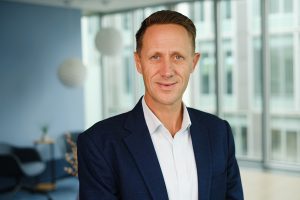
Steve Wright, General Manager of Boehringer Ingelheim Denmark and Norway, shares insights on how the company is advancing its ambitious pipeline and aligning with Denmark’s national healthcare priorities. In this interview, Wright discusses Boehringer Ingelheim’s strategic focus on innovation, access, and prevention, while reflecting on the company’s evolving role in supporting the future of healthcare in both Denmark and Norway.
How has your international experience shaped your strategic outlook as General Manager of Boehringer Ingelheim in Denmark and Norway?
Over the course of my 14 years at Boehringer Ingelheim, I’ve had the opportunity to work in several major markets, including the UK, Germany, China, and now Denmark. Each experience has provided valuable lessons that continue to shape my leadership approach today.
My journey began in the UK, where I worked within the oncology business unit, supporting the company’s initial oncology launches. From there, I moved into a global role at our headquarters in Germany, leading international launch strategies for therapies in non-small cell lung cancer and advancing our broader pipeline. Then came China, where I took on leadership roles overseeing cardiovascular and CNS business before leading the broader specialty care portfolio. That experience gave me the chance to engage with a large portion of our portfolio in one of the world’s most dynamic markets.
In 2022, I became General Manager for Boehringer in Denmark, and later took on leadership of the Norwegian affiliate as well. While each market has its own regulatory and cultural nuances, the decision to operate as an integrated Nordic affiliate was a strategic one. It’s allowed us to strengthen our regional footprint, encourage more collaboration between teams, and build a more agile, responsive organisation that can engage effectively with a diverse range of healthcare stakeholders.
What has remained constant, no matter where I’ve been, is Boehringer’s unique culture. As a family-owned company with a long-term vision and a deep commitment to improving patients’ lives, that consistency has been both grounding and energising. It’s given me a clear sense of purpose, which shapes how I lead, adapt, and collaborate with teams across different healthcare environments.
How is Boehringer Ingelheim structured across Denmark and Norway, and what is the scale and scope of its operations in the region?
Since taking on the role in 2022, I’ve joined an organisation in Denmark with a long-standing presence and a strong reputation for operational excellence. Together with Norway, we now operate as a unified affiliate with around 250 employees, covering both our human pharma and animal health businesses, including a production facility in Kalundborg that makes feed supplements for animals.
Our operating model strikes a balance between regional integration and local responsiveness. Central functions are managed from Copenhagen, while Norway is home to our customer-facing teams. This integrated structure allows us to work with clarity and scale, while still being flexible enough to respond to the specific needs of both markets. Commercially, our human pharma business is split roughly 60 percent in Denmark and 40 percent in Norway.
What’s particularly important is how this regional structure aligns with our broader ambition to be a comprehensive health company. Boehringer is one of the few global players with a strong presence in both human and animal health, and we see this dual focus as not only a structural advantage but also a reflection of how health is becoming increasingly interconnected.
How is Boehringer Ingelheim’s global portfolio reflected in Denmark, and which therapeutic areas are currently driving momentum locally?
Our portfolio in Denmark is closely aligned with Boehringer’s global therapeutic focus, with two key areas currently driving our strategy: cardio-renal-metabolic (CRM) diseases and interstitial lung disease (ILD). In the CRM space, a holistic approach to type 2 diabetes, heart failure, and chronic kidney disease (CKD) is crucial for the benefits of patients. These areas represent significant clinical needs, and we see them as a long-term commitment backed by a promising development pipeline that should strengthen our position even further.
ILD is our second strategic pillar, therapies have been available in Denmark and Norway for several years, offering significant clinical benefits to patients with progressive fibrosing lung conditions. We look forward to helping patients in the future with further advancements in this area.
Looking ahead, we’re excited to be developing further treatments in the areas of MASH, obesity, cancer, mental health and eye health. All of which represent areas where we see a significant need for patients. While CRM and ILD remain the core focus of our current operations, these emerging therapeutic areas reflect our ambition to evolve alongside scientific innovation and the healthcare priorities of the Danish system.
How is Boehringer Ingelheim aligning with Denmark’s healthcare reform priorities in cancer and mental health, and what role do you foresee for the company in these evolving areas?
While we haven’t introduced products in cancer or mental health in Denmark just yet, both of these areas have become strategic priorities under the national healthcare reform, and we fully intend to be part of this evolving landscape. We actively collaborate with industry partners and policymakers through our involvement in Lif, the Danish Association of the Pharmaceutical Industry, who keeps us connected with the priority areas of the National Cancer Plan V and the government’s long-term mental health strategy.
We strongly support the increased focus on ensuring broader and faster access to effective therapies in these complex and often underserved areas. As our pipeline advances, we see clear opportunities to contribute, not just through innovative medicines, but by partnering with the healthcare ecosystem to help deliver on its goals. Our commitment comes from the belief that timely access to the right treatments is crucial, and we aim to play a proactive role in helping make this access a reality for patients across Denmark.
Globally, Boehringer Ingelheim has moved to embrace a broader identity as a healthcare company rather than being viewed solely as a pharmaceutical company. How is this shift embodied at the local level?
Our identity as a healthcare company ties into a broader shift in the way we think about health – moving from reactive treatment models to proactive, preventive care. If we can intervene earlier, before conditions become acute, we have the potential to reduce the overall burden on healthcare systems. This is especially important as countries across Europe, and the world, deal with rising costs and the growing prevalence of chronic diseases. In this context, Boehringer can play a key role in helping to redefine care delivery, shifting from “sick care” to true healthcare.
Denmark offers an excellent example of this shift in action. The country’s Life Science Strategy, developed through strong collaboration across ministries, has created an ecosystem where innovation can thrive. Thanks to the advocacy of Lif, the strategy now includes pharmaceutical innovation alongside technological and institutional improvements. This acknowledges the essential role of medicines, not just in treating diseases, but in preventing them.
With over 50 years of operations in Denmark, how does the affiliate contribute to advancing health outcomes through innovation in the country?
Currently, we are being driven by an ambitious goal of launching 20 new products or indications in human pharmaceuticals globally by 2030. Achieving this requires not just scientific excellence but also organisational agility, close alignment with healthcare systems, and a precise focus on delivering real value to patients. What’s especially inspiring is the momentum we feel within the team. There is truly a shared sense of purpose and enthusiasm around our pipeline and the transformative impact these future therapies could have for Boehringer and the patients we serve.
Our commitment to innovation is not just a principle but something we actively put into practice. Globally in Human Pharma, we reinvested more than 27 percent of our net sales – EUR 5.7 billion research and development last year. In Denmark, this translates into a rapidly growing clinical trial footprint, which has expanded from 19 studies in 2021 to over 33 active trials today. These studies span all our core therapeutic areas of CRM diseases, ILD, cancer, and ophthalmology. Having an active clinical research footprint, highlights both our long-term commitment to the Danish market, and our drive to accelerate access to cutting-edge therapies through rigorous scientific exploration.
With having such a strong upcoming launch goal, how would you characterise your experience around market access in Denmark?
One of the standout features of Denmark’s healthcare environment is the openness of its regulatory institutions to engage in proactive and transparent dialogue. Over the past three years, we’ve found agencies like the Danish Medicines Agency and Amgros to be open and collaborative, with a shared commitment to improving patient outcomes through early engagement and open exchange. This culture of accessibility is a key driver of innovation and aligns strongly with Boehringer’s values.
Overall, Denmark offers a remarkably well-structured environment for life science innovation, where access to novel therapies is not only prioritised by government but supported by a national agenda that is both strategic and inclusive. The Life Science Strategy 2030 stands as a testament to this forward-thinking approach, providing a comprehensive framework that enables the timely introduction of innovative treatments while reinforcing Denmark’s appeal as a progressive healthcare market. Coupled with the depth of local talent and a vibrant ecosystem, these conditions make Denmark a particularly receptive environment for companies like Boehringer.
Among the more recent developments, the introduction of chronic care packages is a notable initiative aimed at strengthening long-term patient access. These measures are highly promising, and while the ambition behind them is clear, there remains a shared desire across stakeholders for accelerated implementation, given the pressing needs of many patient populations. We are involved in these efforts and fully committed to supporting the system’s evolution in a way that ensures innovation reaches those who need it most, without unnecessary delay.
It’s also worth noting that two-thirds of our current pipeline consists of assets with first-in-class potential, targeting areas of significant unmet medical need. We’re entering what may be the most active period in our clinical development history, with more trials underway than ever before. Therefore, this convergence of national leadership, regulatory openness, and scientific innovation marks a pivotal moment not just for Boehringer Ingelheim, but for the broader healthcare landscape we’re proud to support.
In your opinion, how does Denmark’s life science ecosystem measure up to that of the greater European landscape?
Denmark’s role as the rotating Presidency of the Council of the EU in the second half of 2025 is a true testament to the country’s leadership in the space, and the appointment is already influencing the broader regional agenda. We can see that the EU’s emerging life science strategy is visibly shaped by Denmark’s 2030 framework. The country is also a role model for holistic, patient-centric healthcare reform. For instance, Denmark’s prioritization of mental health, is a powerful example of this broader view of healthcare. By expanding the definition of care to include families, caregivers, and support networks, Denmark is actively working to address stigma as part of the public health dialogue.
This is an important moment for the broader life sciences sector in Europe. As innovation accelerates globally, particularly in the US and China, Europe must ensure that it remains a competitive force in medical research and development. As Hubertus von Baumbach (Boehringer Ingelheim, Chairman of the Shareholders’ Committee) has said, “Europe was once considered the pharmacy of the world,” and sustaining that legacy requires a shared commitment to scientific investment, regulatory agility, and system-wide innovation.
As a general manager with a strong ambition to further develop Boehringer Ingelheim’s position as a key healthcare partner in Denmark, how would you assess the availability of talent which will be necessary to achieve these goals?
Denmark provides an excellent environment for attracting and developing life science talent, thanks to its strong academic foundation and a deeply ingrained culture of collaboration. From my first days here, I was impressed not just by the expertise within our local affiliate, but also by the remarkable stability and consistency of the team. It’s driven by a shared purpose and alignment with Boehringer’s values.
As a company, we promote a culture that encourages long-term growth and internal development, and Denmark truly embodies this philosophy. Our local team includes people at every stage of their professional journey – from students just starting their careers to experienced professionals with years of industry knowledge. This multigenerational dynamic brings both energy and continuity, supported by a work culture that values expertise, collaboration, and doing what’s right for patients.
At our Danish affiliate, I work with many capable and dedicated colleagues. Their unwavering focus on patient access, scientific rigor, and organisational excellence is central to our continued success in the region, and it reflects both the strength of Denmark’s life sciences ecosystem and the long-standing values of our company.
As you look to the future, what message would you like to share with stakeholders in Denmark and beyond on behalf of Boehringer Ingelheim?
In Denmark, the collaborative ecosystem, openness to early dialogue, and strong policy frameworks have created a uniquely supportive environment for research-driven companies like ours. We currently have over 33 clinical trials active in the country, and we expect to initiate more than 10 new Phase II and III studies in the next 12 to 18 months. This highlights the depth of our engagement and the scale of our ambition.
Over the last three years, my own experience in the Danish health system has been exceptional. The fast access and seamless digital connectivity are things many countries are still working toward. It’s a powerful example of how structure, innovation, and patient focus can come together in practice.
Looking ahead, our focus at Boehringer Ingelheim is clear. Our mission is to advance science with purpose and to partner with health systems, ensuring innovation reaches the people who need it most.