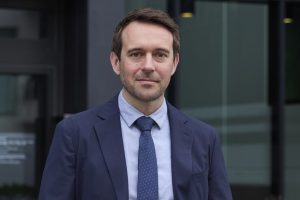
As Denmark and Europe enter a pivotal phase for healthcare and life sciences, Søren Granhøj Pedersen, Managing Director of MSD Denmark & Iceland, offers timely insights into how one of the world’s leading pharmaceutical companies is adapting and contributing. Drawing on a career shaped by international experience and cross-functional leadership, he reflects on MSD’s evolving strategy, the importance of sustainable innovation, and Denmark’s potential as a model for European competitiveness.
What experiences have defined your professional journey, and how have they shaped your transition into the role of Managing Director for MSD Denmark and Iceland?
Over the past two decades, I have built a career grounded in curiosity, cross-functional learning, and international exposure. I began working full-time while completing my university studies and quickly moved through a variety of roles, from corporate communications and R&D to global medical affairs. Later, I transitioned into international commercial functions, including a product launch in the UK during my time at Novo Nordisk. Since joining MSD, I have held regional, national, and global roles, most recently within a new therapeutic area, gaining a comprehensive perspective on the business. Having previously worked in the Danish affiliate, I returned to familiar territory when stepping into my first general management position. This foundation has allowed me to assume broader responsibilities with confidence and agility.
Taking on the role of Managing Director has been both an honour and a natural evolution. While the scope is considerably wider than the specialist commercial positions I held previously, the diversity of my experience has enabled me to approach it with clarity and conviction. At a strategic level, we are now entering a pivotal phase. Following a period of stable focus on a limited number of therapeutic areas, we are broadening our engagement to re-establish MSD as a comprehensive healthcare partner across multiple fields. This transition reflects not only internal momentum but also wider shifts in the national context. Although Denmark’s healthcare system has in recent years prioritised cost containment, I now see encouraging signs of renewed investment, in both patient outcomes and the life sciences sector itself. This evolving environment offers real opportunity, and I am enthusiastic about contributing to its continued progress. That said, it is also part of the picture that the latest EFPIA (European Federation of Pharmaceutical Industries and Associations) W.A.I.T. (Waiting to Access Innovative Therapies) Indicator showed that there is room for improvement regarding Danes’ access to new innovative medicines.
Can you give a brief overview of MSD’s current standing in Denmark?
MSD has maintained a significant and stable presence in Denmark for more than 55 years, operating as an independent affiliate and consistently investing in the country’s healthcare ecosystem. Today, we are among the top three companies in terms of clinical trials, with 66 ongoing trials. Around 20 percent of our Danish revenue is channelled back into clinical research in Denmark. This leadership in research is a testament to both our scientific commitment and long-term outlook in this market.
Like many in the industry, MSD Denmark has experienced challenges in recent years, including the impact of patent expiries and the return of certain products to our partners, which has naturally influenced our revenue profile. However, we now see this as a moment of renewal. MSD Denmark is entering a phase of growth, not only from a financial perspective but also in terms of therapeutic scope, and we are confident in our ability to reinforce our position across the Danish market.
Why is Denmark such a strategic hub for MSD’s clinical research activities, and how does this align with your broader role within the country’s life science ecosystem?
Clinical research is one of the most critical pillars of MSD’s global innovation framework. The ability to generate robust, high-quality data is essential for advancing new therapies through regulatory approval and, ultimately, into clinical practice. Denmark stands out as an ideal location for these efforts, offering an exceptionally well-developed ecosystem that brings together high-performing hospitals, respected research institutions, and highly trained professionals. The country’s infrastructure for data collection is both sophisticated and reliable. Institutions including comprehensive patient registries and advanced biobanks enable the generation of meaningful real-world evidence at scale. All together, these factors make Denmark not only an attractive site for clinical trials, but also a strategic investment location for long-term scientific collaboration.
Equally important is the country’s broader policy environment, which remains largely supportive of innovation. Investing in research is not just about running studies, it is also about helping build the conditions in which innovation can flourish. Where we invest in trials, we also support training, infrastructure, and local engagement, and it is often in these same environments that new therapies can more readily reach patients. This cycle between research and implementation is something we continue to advocate for, and while there is room for improvement, it is encouraging to see it reflected in Denmark’s national life science strategy as clear objective.
Beyond clinical trials, our presence in Denmark is anchored in long-term partnerships across the healthcare ecosystem. We collaborate with hospitals on strategic research initiatives, engage with authorities to ensure access to innovation, and work with a range of stakeholders to strengthen awareness, education, and ultimately, health outcomes. While we remain focused on these core areas, we believe that consistent, purpose-driven engagement is the most effective way to contribute meaningfully to Denmark’s life science landscape, and to the wellbeing of the patients we serve.
In which therapeutics areas is MSD Denmark currently focused?
At present, our strongest presence is in oncology, vaccines, and infectious diseases; three areas that continue to form the foundation of our strategy. As we look to the future, we are preparing to expand into cardiovascular disease, particularly with lipid-lowering therapies, as well as immunology and ophthalmology. Over the coming years, our pipeline will continue to evolve, opening new opportunities for health impact.
Beyond our therapeutic coverage, we are also observing and contributing to a shift in how care is delivered. While many of our treatments, especially in oncology, have traditionally been administered in specialised hospital settings, we expect to see a gradual transition toward more decentralised, primary care-oriented models. This evolution is already reflected in our vaccine portfolio and aligns closely with Denmark’s ongoing healthcare reforms. It reinforces our ambition to support the health system and the patients not only through innovation, but also by enabling more accessible and sustainable care pathways.
Last year, the Ministry of Health announced a proposed healthcare reform, “Health Close to You.” How might you anticipate this reorganization to affect care delivery, and where can industry contribute meaningfully to this evolving landscape?
While many elements of the reform are still under implementation, its general direction is to address mounting pressures in both primary and secondary care by rebalancing how services are delivered. The shortage of general practitioners across the country is well recognised, and hospitals are increasingly stretched by growing patient demand. This dual challenge requires a systemic response. For MSD, much of our current portfolio in areas like oncology and infectious diseases still relies on delivery within specialised hospital settings given the complexity of these treatments. Nonetheless, we see a significant opportunity to support the reform’s goals, particularly through the preventative potential of vaccines.
Vaccination offers one of the most effective ways to reduce the burden on the healthcare system. HPV vaccination, for example, helps prevent cancers before they ever enter clinical pathways, while pneumococcal vaccination could significantly reduce the approximately 29,000 hospital admissions Denmark sees each year for pneumococcal disease. These are not just reductions in hospital visits, they represent patients who never enter the system, and therefore easing pressure at every level. This shift toward prevention aligns closely with the reform’s aim of moving care upstream. It is further reinforced by complementary strategies such as Denmark’s recently updated national action plan on antimicrobial resistance (AMR), which highlights vaccination as a key tool to reduce infections and limit antibiotic use. These overlapping initiatives reflect a welcomed shift in Danish health policy toward sustainable, long-term solutions.
Looking ahead, we are particularly interested in the role of the new Prioritisation Council, which is expected to guide future resource allocation across the healthcare system. While its full mandate is not yet defined, we hope it will adopt a forward-looking view that recognises prevention not simply as a cost to be managed, but as a strategic investment in system sustainability. Today, the benefits of prevention are often distributed unevenly across stakeholders, leading to incentive misalignments that hinder adoption. A more holistic and integrated prioritisation model could help address this gap and bring prevention closer to the centre of healthcare planning. As MSD, we are committed to engaging in that dialogue and contributing practical solutions in support of these broader national objectives for the benefit of patients and society.
How would you characterise the evolving access landscape in Denmark, and what conditions are needed to re-establish the country as a leader in innovation uptake?
Denmark has historically been viewed as one of the most innovation-friendly countries in Europe, particularly in terms of early and comprehensive access to new therapies. However, that reputation has been challenged in recent years. We have seen a gradual move toward a more conservative stance, especially when it comes to the reimbursement of innovative medicines. The EFPIA (European Federation of Pharmaceutical Industries and Associations) W.A.I.T. (Waiting to Access Innovative Therapies) Indicator highlights this shift clearly. Denmark currently ranks ninth in Europe for access to new innovative treatments approved in Europe which is a step down from its previous position in the top five. The picture becomes more concerning when factoring in the conditional nature of access. When reimbursement is limited to specific schemes or patient cohorts rather than being universal and unconditional, Denmark’s rank drops further, to fifteenth. Methodological nuances aside, the overall trend is evident as access to innovation has become increasingly constrained.
That said, I do believe we are at a turning point. There are signs of renewed political focus, both in tone and in policy direction. The national life science strategy and the recently launched Cancer Plan V, A Better Life With and After Cancer, both express a clear ambition to improve access and align with international peers. But achieving that vision will take more than intent, it will require tangible action.
From our side as an industry, we must take shared responsibility. This means partnering with authorities to develop data-driven approaches, generating robust real-world evidence, and offering flexible solutions such as outcome-based payment models. It also requires a deeper alignment around what defines value and success in clinical practice. Encouragingly, I see a genuine willingness from Danish authorities to engage in this dialogue, and that gives me hope that we can collectively restore Denmark’s leadership position in access to innovation.
How do you view Denmark’s life sciences ecosystem as it relates to its broader European context?
While Denmark stands out as a strong and well-coordinated life sciences hub, it is inextricably linked to the wider European and global landscape. From my perspective, Europe’s current trajectory gives reason for concern. Life sciences is a sector of strategic importance, yet recent policy discussions seem increasingly focused on limiting incentives for innovation or reducing pharmaceutical costs, rather than recognising the value of long-term investment in the ecosystem.
Over the past two decades, approximately 60,000 patients across Europe have missed opportunities to participate in clinical trials, opportunities that have shifted to other regions. Europe’s global share of clinical trials has dropped from 22 percent in 2013 to just 12 percent in 2023. If this trend continues, the region risks weakening a sector that is not only essential for patient health but also critical to economic resilience and scientific leadership. Rather than asking how to restrict innovation, we should be asking how to attract investment, strengthen our infrastructure, streamline processes and ensure the region remains competitive on the global stage.
Denmark offers a model of what is possible through strategic planning and cross-sector collaboration. While there is still work to be done domestically, the greater opportunity lies in applying this mindset at the European level. Addressing healthcare and life sciences at a strategic cross-ministerial level rather than in silos, will be key to building an environment where both innovation and patient outcomes can thrive. That is the kind of conversation I believe we need to have across the EU.
Denmark’s takeover of the EU presidency is a unique opportunity to demonstrate Danish leadership in the EU and focus on enhancing Europe’s resilience and health. Key policy opportunities include the revision of EU pharmaceutical legislation, the EU Biotech Act, the EU Life Science Strategy among other important elements. Right now, Europe has a unique opportunity to create a regulatory framework that fosters innovation and attracts investments. This is particularly relevant for intellectual property (IP) protection frameworks, which must be appealing and robust to foster innovation.
Having had the initial months to gain your bearings, what are your strategic priorities for MSD Denmark over the next few years?
A key priority, and one that I brought into this role from the outset, is to cultivate an environment where people genuinely want to work, feel supported in their development, and can clearly see how their individual contributions connect to the performance and purpose of the broader organisation to create a healthy future for patients and communities Together with the leadership team, we are committed to building a culture that fosters motivation, leadership and collaboration in creating a healthier future for patients and growth.
At the same time, we are at a transformational point as a company. Looking ahead, we are preparing to broaden our scope significantly. Over the next three to five years, we aim to expand into a wider range of disease areas and establish ourselves as a more comprehensive healthcare partner in Denmark. But this is not just about entering new markets, we are determined to make a real impact in each space we enter, ensuring that our presence translates into better outcomes for patients. The ambition to evolve with purpose and deliver meaningful value across a wider spectrum will guide our actions and investments in the years to come.
With this being your first managing director role, how would you define your leadership approach and what kind of culture are you aiming to cultivate at MSD Denmark?
Stepping into my first managing director role has been both an honour and an opportunity to reflect on what leadership means to me, and on the kind of culture I want to shape. While authenticity has become a popular term in leadership discussion today, I believe it cannot be forced. Authenticity must stem from a genuine connection to one’s purpose and values. For me, that purpose is dual-sided: contributing to better outcomes for patients and fostering the growth and development of the people around me. There is immense fulfilment in seeing colleagues evolve and thrive, and I find that this sense of purpose provides a meaningful compass for leadership.
My style is grounded in trust, openness, and clarity. I value transparency in communication, collaborative decision-making, and building an environment in which people feel empowered to take initiative and engage fully. These are the behaviours I try to model consistently, and they are shaped by years of international experience across different markets and leadership contexts. While technical expertise and commercial acumen are essential, I believe leadership today is first and foremost about creating the right conditions for people to succeed.
Culturally, I identify strongly with the Nordic model of flat hierarchy, open-door accessibility, and a strong emphasis on shared responsibility. It fosters a sense of team cohesion, mutual accountability, and long-term engagement. That said, I also recognise that this style is not universally intuitive. In some cultures or organisations, the shift toward decentralised leadership and autonomy can feel unfamiliar at first. It is therefore essential to build the necessary context and trust for it to work. Empowerment is not about stepping back, but about knowing when to step aside so others can perform. So far, this approach has resonated well within the team, and I remain committed to evolving it in ways that align with both our people and our mission at MSD Denmark.
¹ https://efpia.eu/media/oeganukm/efpia-patients-wait-indicator-2024-final-110425.pdf