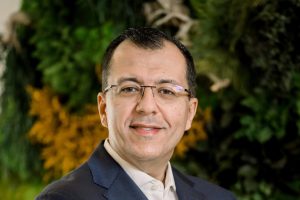
Rare diseases in the Middle East and Africa are no longer an afterthought. As regulatory frameworks mature and governments demand deeper partnership, access, science and local commitment are being redefined. In this interview, Sherif Basha explains how Versalya Pharma is building a rare diseases platform designed for long-term impact, translating Italfarmaco’s innovation into patient access while aligning with the region’s fast-moving healthcare transformation.
What led you to Versalya Pharma and to building a rare diseases business across the MEA region, and how does this role fit within the broader Italfarmaco Group strategy?
I trained as a physician and spent my early years in clinical practice, which gave me a strong scientific foundation and a lasting patient-centred perspective. I then moved into the pharmaceutical and biotechnology sector, where I have spent more than 25 years across marketing, commercial, strategic and general management roles, primarily focused on the Middle East and Africa, with additional exposure to other emerging markets. That combination of medical training, regional experience and long involvement in specialty medicine naturally led me towards rare diseases, where scientific depth and long-term commitment are essential.
Today, I lead the rare diseases business at Versalya Pharma across the Middle East and Africa. Versalya is an affiliate of the Italfarmaco Group, a privately owned company founded in Milan in 1938, with a diversified portfolio spanning women’s and children’s health, neurology and CNS disorders, cardiovascular medicine and general medicine, supported by sustained investment in research and development. As part of its evolution, Italfarmaco has strengthened its focus on rare diseases, most notably through the development of givinostat, a first-in-class therapy for Duchenne muscular dystrophy (DMD) that has secured regulatory approvals in the United States and the United Kingdom, as well as in Europe.
Versalya has been present in the Middle East and Africa for around a decade, historically focused on women’s and children’s health. In 2025, our mandate expanded to include rare diseases, and from April we began building the rare disease organisation in the region. The objective is clear and practical, to bring meaningful innovation to conditions with severe unmet need, starting with DMD, a devastating disease that primarily affects boys and for which treatment options remain very limited. Our role is to translate Italfarmaco’s innovation into real patient access across the region, by building dedicated local capabilities and working in step with the evolving healthcare priorities of Middle Eastern and African markets.
How do you define innovation in Duchenne muscular dystrophy, and where do you stand today in translating that innovation into patient access across the Middle East and Africa?
Duchenne muscular dystrophy represents one of the clearest examples of unmet medical need. It is an X-linked genetic condition that primarily affects boys, with symptoms emerging in early childhood and a relentless progression that leads to loss of ambulation and, over time, serious cardiac and respiratory complications. In this setting, innovation cannot be incremental. It has to be scientifically grounded, clinically meaningful, and capable of altering the trajectory of the disease rather than simply managing symptoms.
That was the rationale behind Italfarmaco’s development of givinostat (Duvyzat), a non-steroidal, first-in-class histone deacetylase inhibitor.. On that basis, the therapy was approved by multiple regulatory authorities around the world
In the Middle East, we are still early in the journey, but the foundations are firmly in place. Over the past months, we have established our local presence and built the core rare disease team, which is essential for credible engagement with regulators and healthcare systems. In parallel, we have worked through accelerated pathways available for innovative and orphan medicines in the Gulf. In the United Arab Emirates, this resulted in local registration being granted on a fast-track basis in August 2025, illustrating how the authorities are increasingly prioritising timely access to innovation in areas of high unmet medical need.
Our approach to market entry is deliberate rather than uniform. The UAE serves as our starting point , while Saudi Arabia is coming up in parallel as a key market.. We work closely across the countries with healthcare professionals and government authorities to identify the most appropriate regulatory and access pathways in each country. The emphasis is on building sustainable access, supported by local presence and early partnership, rather than pursuing rapid expansion without the structures required to deliver long-term impact for patients.
How do you view the evolution of the rare disease ecosystem across the Middle East, and where do you see the most meaningful shifts and opportunities today?
Looking back over the past two decades, the change has been substantial. Rare diseases were once addressed almost exclusively through distributor-led models, with limited local engagement and a primary focus on supply, often several years after approvals in the United States or Europe. Education, infrastructure and long-term commitment were secondary considerations. Over the past six to seven years, that approach has shifted decisively.
From an industry standpoint, innovation is now reaching the region far earlier, in some cases close to global timelines, which signals a broader recognition of the Gulf Countries as a strategic market rather than a secondary one. At the same time, the commercial mindset has matured. The assumption that access was simply a matter of price in wealthy markets has been replaced by a partnership-driven approach, centred on structured dialogue with governments, access programmes and shared objectives. Market access and public affairs have become integral to rare disease strategies, reflected in the growing number of formal partnerships and long-term agreements.
Governments have evolved in parallel. Policymakers increasingly expect companies to demonstrate commitment through a local presence, dedicated teams and a clear contribution to national healthcare priorities. Rare diseases have also moved firmly onto the policy agenda. In Saudi Arabia, Vision 2030 places strong emphasis on genomics and precision medicine, supported by initiatives such as the Saudi Genome Program. In the UAE, programmes like the Emirati Genome Programme are laying the foundations for population-scale screening and more personalised care. Across the Gulf, sustained investment in genomics, registries and innovation frameworks is steadily strengthening the rare disease ecosystem.
Regulatory systems have advanced alongside these shifts. Where uncertainty once surrounded pathways for therapies addressing small patient populations, most markets now offer clearer frameworks, including orphan designations and accelerated reviews. Collectively, these developments point to a region that is moving from late adoption to active participation, creating meaningful opportunities for companies prepared to invest locally, build credible partnerships and align with long-term national health ambitions.
How do orphan and rare disease regulatory pathways work in practice across the Gulf, and how do they differ from the traditional approval route?
In practice, these pathways are significantly faster than the conventional route, and that speed reflects a deeper change in how rare diseases are now viewed by policymakers. Twenty years ago, rare conditions were often treated as marginal or theoretical. Today, when a rare disease is raised with regulators, the discussion is structured and grounded in evidence. Authorities typically start by examining patient numbers, the quality of the clinical data, and the sources supporting prevalence estimates, before assessing whether there is a clear unmet need and a genuine gap in available treatment options.
When that case is well established, expedited mechanisms can be applied. The terminology varies by country, but the principle is consistent. In Saudi Arabia, the SFDA has introduced formal accelerated routes, including Priority Review, Orphan Drug Designation and the Breakthrough Medicines Programme, all designed to shorten timelines where medical need is high. In the UAE, the Emirates Drug Establishment operates a fast-track registration pathway for innovative and orphan medicines, supported by defined review timelines and decision-making processes. Across the region, regulators also increasingly rely on abridged or verification reviews when approvals from trusted reference authorities are already in place. In practical terms, this means that a medicine with established approvals from bodies such as either the FDA or EMA, and which addresses a serious unmet need, can move through regional systems far more efficiently than in the past. That represents a clear break from earlier practice and points to a regulatory environment that is actively enabling access rather than creating barriers.
Alongside regulation, diagnostics have evolved in parallel. Historically, rare disease diagnosis in the region depended heavily on sending samples abroad because of limited local capacity. Today, particularly in Saudi Arabia, governments are investing in domestic diagnostic infrastructure, with multiple laboratories now able to conduct genetic and molecular testing. While some specialised analyses still require external referral, the direction is clear. Taken together, these regulatory and diagnostic developments illustrate how rare diseases are now being addressed in a far more systematic and mature way across the region.
How are you approaching market access and partnerships following approval of rare disease medication in one country, and what does it mean in practice to go beyond the treatment itself?
Approval is only the starting point, particularly in rare diseases, where access is never defined by a single regulatory milestone. once the product is approved, The focus should move to shaping an access approach that reflects how governments now evaluate value. The conversation has clearly moved beyond price alone. Decision-makers are increasingly looking at health technology assessment, pharmacoeconomic evidence, disease burden and long-term budget impact, which has elevated market access from a technical function to a central strategic pillar.
In practice, this means working in close partnership with governments and institutions to design access frameworks that are both patient-centred and financially sustainable. Rare disease therapies are developed for small patient populations and involve significant scientific investment, which inevitably creates pressure on healthcare budgets. A purely transactional model no longer works. What is emerging instead are tailored access agreements that take into account patient numbers, disease severity, therapeutic performance and, in some cases, stage of disease. These models differ by therapy area and by country, but the objective is consistent, to create a balanced, long-term solution that secures access for patients without destabilising the system.
The region has shown a strong willingness to engage in this way. Across markets such as Saudi Arabia, UAE, Kuwait, Qatar, Oman and Bahrain, reimbursement for local citizens is increasingly supported by structured access models rather than one-off decisions. At the same time, there is a broader shift underway. These countries are no longer positioning themselves solely as recipients of innovation developed elsewhere. National priorities, particularly around genomics and health system transformation, place growing emphasis on local data generation, clinical research and real-world evidence. As a result, companies are expected to contribute through research collaborations, registry development and, increasingly, the use of advanced analytics and artificial intelligence to improve diagnosis and patient identification.
For us, this reinforces the importance of going beyond the pill. Even in a focused indication such as DMD, there is meaningful scope to support earlier diagnosis, generate local evidence and engage in research partnerships that strengthen the ecosystem as a whole. That transition, from access alone to active contribution, captures one of the most important shifts taking place in the region today and defines how we are building our role over the long term.
How do you define Versalya’s long-term ambition in rare diseases across the Middle East and Africa as the organisation enters its next phase of development?
Our ambition is clearly long term. Duchenne muscular dystrophy is the entry point, but not the endpoint. We are expanding geographically as we engage with governments and establish sustainable access frameworks, with the intention to move beyond the Gulf into North Africa and other parts of the continent as our capabilities mature. This horizontal expansion is complemented by a vertical one. Within Italfarmaco, givinostat has potential beyond DMD based on its mechanism of action, and the Group has established a dedicated rare disease unit with a broader pipeline and future indications in mind. Versalya’s role is to translate that ambition into the region in a disciplined, locally grounded manner.
What makes this moment particularly compelling is the pace at which the environment itself is evolving. Regulatory pathways, access models and expectations around partnership are shifting rapidly, and staying relevant requires constant adaptation. Our focus is therefore on building a platform that can grow alongside the region, combining geographic expansion, portfolio development and deep local engagement, rather than pursuing short-term milestones in a market that is moving quickly and demands long-term commitment.
How are you building the Versalya rare diseases team in the region, and what culture do you want to embed as the organisation grows?
When you build a rare disease structure, there is a clear order of priorities. You start with medical, market access and regulatory capabilities, because credibility, scientific depth and trust have to come before anything else. That is how we approached the region. In a relatively short time, we put together a focused team of key talents, deliberately weighted towards medical expertise, access strategy and regulatory engagement. Commercial activities will follow, but only once the foundations are solid and aligned with the realities of rare disease care.
The culture that develops in this context is very specific. In rare diseases, you work with patients who often have very limited or no treatment options. Cure is rarely the right word. The real objective is to slow disease progression, reduce complications and protect quality of life. That creates a different sense of responsibility. Our work is not framed first around numbers or forecasts, but around the tangible impact it can have on patients, families and caregivers. We hear those perspectives directly, through clinicians and patient communities, and that proximity influences how the team thinks and operates.
At the same time, the scientific bar is extremely high. These are complex, often genetic conditions, and the science evolves constantly as new trials and data emerge. You need people who can engage with that level of complexity while still communicating clearly with physicians and understanding what matters to patients. That balance between scientific rigour and human impact defines the culture we are building. As we expand into additional markets, we will continue to grow the team, but always with that mindset at the centre.
As rare diseases gain greater policy attention, what message would you leave with governments and the international community about the region’s future role in this field?
Rare diseases are now clearly on the agenda at the highest levels of government across the region, and that represents a meaningful shift. The ecosystem has matured quickly, from regulatory pathways and access models to diagnostics, data generation and structured partnerships. What is emerging now is a stronger emphasis on knowledge transfer, not only adopting innovation developed elsewhere, but contributing to it through local data, clinical research and real-world evidence.
The more challenging next step is early-stage discovery. There are conditions with higher prevalence in this part of the world, yet molecule discovery still largely takes place elsewhere before solutions return to the region. Encouraging local discovery alongside the progress already made in access and infrastructure would be a natural evolution. If that happens, the region can move from being primarily a recipient of innovation to becoming a credible contributor at a global level.