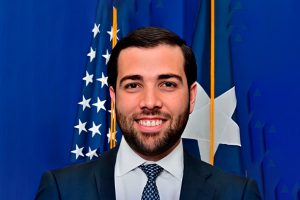
Sebastián Negrón Reichard, Secretary of the Department of Economic Development and Commerce, sees Puerto Rico's current economic landscape as one of immense opportunity, particularly with the US government's focus on reshoring. With a skilled workforce, strategic location, and historical economic strengths, Puerto Rico is poised to contribute significantly to national security priorities. Negrón's priorities include overhauling the permitting system and streamlining processes to support both large multinational corporations and small businesses. He also emphasizes the importance of Puerto Rico's pharmaceutical sector, which plays a vital role in both the islands and the broader US economy.
You have been in your current role for around two months. To begin, how would you assess the current economic landscape of Puerto Rico?
It is an exciting time for Puerto Rico, and I see our current economic landscape as one full of opportunity. We are at a unique juncture where Puerto Rico’s natural talents are aligned with broader global shifts. This moment is particularly relevant in the context of Washington’s efforts to bring manufacturing back to the US. With a highly skilled workforce, strategic location, and competitive incentives, Puerto Rico is ready to lead this reshoring initiative. This allows us to play an integral role in strengthening the US supply chain and supporting national security priorities.
This is a time for Puerto Rico to capitalise on what we do best—by improving areas where we can do better, such as permitting and energy. We are addressing these concerns directly. Overall, Puerto Rico finds itself in a rare opportunity to leverage its strengths in a way that can have a global impact. By doubling down on what has made us successful historically, and focusing on improvements where needed, we can position Puerto Rico as a key player in the global economy moving forward.
What are your top priorities for Puerto Rico’s economic growth, and what immediate steps are being taken to implement them?
Our top priority is to create the right conditions to make Puerto Rico a more agile, competitive, and business-friendly environment. That means going beyond fixing isolated issues—we are working to build an ecosystem that supports long-term investment and inclusive economic growth. This includes improving access to market data, strengthening and streamlining our incentive programs, ensuring first-class facilities for business operations, and promoting continuous upskilling of our workforce to meet evolving industry needs.
One of the most immediate and critical challenges we are tackling is the permitting system. It has long been a bottleneck that frustrates entrepreneurs, delays investment, and weakens our competitiveness. We’ve made it a priority to address both the immediate backlog and the structural inefficiencies. To date, we have identified over 800 projects of strategic economic importance—many tied to federal funding or capable of generating high-value activity—and we’ve already moved to approve 350 of them. That is real, measurable progress.
In parallel, we’ve seen a 5,500 increase in single-use permit approvals just between January and April of this year compared to the same period last year. These are primarily for small and medium-sized businesses, many of which are key suppliers to the multinational companies that anchor Puerto Rico’s economy. Supporting these SMEs strengthens the entire value chain and increases our local impact.
Still, reforming the permitting system is not the end goal, it’s a foundational step. My vision is that two years from now, permits are no longer a pain point or even part of the conversation. I want our focus to shift back to what truly differentiates Puerto Rico: our skilled, bilingual talent; our strategic location; and the advantages of operating within U.S. jurisdiction. We are building an environment where businesses can spend less time navigating bureaucracy and more time building, innovating, and hiring.
You have mentioned the importance of both multinationals and SMEs. Could you expand on how Puerto Rico is balancing the needs of both groups?
The challenge, and opportunity, is in supporting both sectors effectively. We don’t have to choose between them—we need to serve both. The goal is to ensure that the permitting system is no longer a bottleneck for anyone, whether they are a large corporation or a small family-owned business. We are focused on making sure that both groups can operate efficiently and contribute to the broader economic development of Puerto Rico.
To that end, we are making strategic efforts to streamline processes, such as designating a special permits manager to focus on priority projects. This manager is specifically tasked with ensuring that high-priority infrastructure and federal funding-related permits are pushed through the system as quickly as possible. Whether it is for a large-scale project or a small business looking to expand, they all need the support of an efficient permitting process.
Given Puerto Rico’s strong pharmaceutical sector, how do you see this industry continuing to impact both Puerto Rico’s economy and the broader US economy, especially with the US government’s focus on reshoring?
The pharmaceutical sector plays a pivotal role, not just in Puerto Rico’s economy, but in the broader US economy as well. Puerto Rico is a critical component of the US supply chain, and we are instrumental in supporting US national security due to the volume and importance of the drugs and medical devices we manufacture here. This is especially significant as we look at the global landscape, where the ability to produce high-quality pharmaceuticals is essential for both public health and national security.
At the state level, Puerto Rico’s manufacturing capabilities are truly unique for an island of our size. The breadth and quality of the products we produce here is unparalleled, and it is something we take great pride in. These manufacturing plants provide high-paying jobs to Puerto Ricans and offer stability and growth opportunities in sectors that are crucial to both Puerto Rico and the US.
Looking forward, one of my main goals is to work closely with my team, Invest Puerto Rico, and take a whole-of-government approach to support this sector. We want to retain the existing jobs in the pharmaceutical industry and expand upon them. Beyond maintaining our manufacturing base, we are actively expanding opportunities for Puerto Ricans and attracting top talent from the mainland. By fostering the growth of these companies, we can ensure that Puerto Rico continues to be a central hub for manufacturing, creating more jobs and economic opportunities for our residents.
What steps is the Department of Economic Development and Commerce (DEDC) taking to strengthen Puerto Rico’s role in life science and pharmaceutical industries?Puerto Rico has long been a leader in pharmaceuticals, medical devices, and life sciences. As we look to attract new companies, our message is clear: Puerto Rico is agile, ready, and committed to moving mountains to ensure businesses can establish operations here as quickly as possible.
In line with this, in February, the governor signed Executive Order 2025-012, which focuses on reshoring. This is a whole-of-government effort, spearheaded by the DEDC, ensuring we present a united front to companies looking to reshore operations. Whether it is relocating a plant to Puerto Rico or expanding an existing operation here instead of in competing regions like the Dominican Republic, Costa Rica, Ireland, or Singapore—Puerto Rico is a strong contender, and we are eager to win this opportunity.
We are assembling a task force, which includes key government entities such as Puerto Rico Industrial Development Company (PRIDCO), Invest Puerto Rico, the Puerto Rico Science, Technology and Research Trust, and departments handling permitting. This task force will enable us to approach companies with one voice and provide a seamless experience for those interested in expanding or starting operations here.
In practical terms, we are developing a ‘concierge service’ to guide companies through every step of the process. From initial conversations with Invest Puerto Rico and DEDC, to handling permits, infrastructure, and energy requirements, we will ensure companies face a unified process and aren’t bogged down by dealing with multiple agencies. Additionally, we are setting up a reshoring talent and workforce fund to invest in training the local workforce to meet the needs of these new companies. By leveraging federal funding, particularly through the WIOA program housed in DEDC, we will help cover the costs of apprenticeship and training programs. This initiative not only supports the companies but also ensures a well-trained workforce ready for the demands of the reshoring effort.
Our goal is to simplify the process for businesses relocating or expanding in Puerto Rico by offering a single point of contact and eliminating bureaucratic obstacles.
Despite Puerto Rico’s many strengths, investors often express concerns about energy costs and delays in the permitting process. What structural reforms are being implemented to create a more efficient, business-friendly environment on the island?
There are several key areas where we are focusing on structural reforms to improve the business environment in Puerto Rico. First, within the DEDC, we are prioritizing the clearing of thousands of applications currently in the backlog—whether for new incentives or amendments. This is a crucial step to streamline the process and ensure that businesses can operate more efficiently, and we will get it done to provide certainty and predictability moving forward.
At the same time, we are working on a complete overhaul of the permitting process to make Puerto Rico more business friendly. Our aim is to leapfrog Puerto Rico to the forefront of efficiency in permitting, eliminating unnecessary delays and creating a more welcoming environment for businesses. In terms of workforce development, we are committed to leveraging both public and private funding to enhance our talent pool, ensuring that Puerto Rico’s workforce is well-equipped to meet the demands of today’s businesses and remains competitive on a global scale. Additionally, we are improving regulatory processes, particularly through enhancing reciprocity agreements for occupational licenses, which will reduce barriers for professionals moving to Puerto Rico.
Energy remains one of the most pressing challenges, but we are making strides toward a more sustainable and reliable system. The governor has prioritized addressing both energy generation and distribution, with legislation passed to ensure flexibility in the current system while planning for future generations. Our goal is to ensure a steady, reliable energy supply for businesses and residents alike.
Given Puerto Rico’s resilience in the face of COVID, hurricanes, and earthquakes, we have implemented measures that have helped businesses continue to operate during challenging times. Many of our manufacturing plants, for instance, now have cogeneration facilities that allow them to operate without interruptions, even under adverse conditions.
Additionally, as part of our strategy to leverage the recent reauthorization of Puerto Rico’s transhipment waiver, we are taking proactive steps to enhance our position as a global logistics hub. The governor has worked hard to strengthen Puerto Rico’s role in the air cargo sector, particularly in sectors like healthcare and life sciences. Through the hiring of a specialist, DEDC is helping local manufacturers improve logistics and transportation of their goods. We are also investing in cold storage capabilities, employee training, and company certifications to manage sensitive products, with seven companies currently qualified to handle specific air cargo needs and plans to train four more. With a focus on building a strong community of stakeholders, Puerto Rico aims to be a competitive, reliable player in the global air cargo market while also supporting the growth of industries such as pharmaceuticals and life sciences.
Ultimately, these efforts are part of a broader strategy to create a seamless experience for companies relocating or expanding to Puerto Rico, ensuring the island remains an attractive destination for reshoring and global logistics.
What specific initiatives are being developed to bring back Puerto Rican talent to the island and ensure there are opportunities for them in these sectors?
Talent retention and attraction is one of our top priorities. As a young leader, I am deeply committed to ensuring that Puerto Ricans who have studied at our outstanding universities have jobs on the island, and for those who have had to leave, we want to create a path for them to come back and contribute to Puerto Rico’s growth.
We are focused on attracting companies that offer competitive salaries in high-value sectors. Additionally, we are rethinking our tax system to make it more attractive for talent to return. We are exploring ways to simplify the system and make it fairer, easier to navigate, and more aligned with the goal of bringing talent back to Puerto Rico. We are also considering adjustments to incentivize talent without necessarily relying solely on traditional incentives.
To that end, one of the ideas we are exploring is the possibility of reducing tax rates for everyone while broadening the tax base, which would also simplify the administration of the system. This is still in the works, and we are not ready to announce the full details yet, but these are the kinds of initiatives we are working on to support our talent and bring them back to Puerto Rico.
With the impending global minimum tax (GMT) framework, how is Puerto Rico preparing to adapt its tax incentives to remain competitive and compliant with international standards?
We are fully aware of the global changes in tax regulations, especially the global minimum tax framework. Puerto Rico has been in constant collaboration with industry stakeholders and policymakers to ensure that we remain not only competitive but also compliant with US law. The governor, the Secretary of the Treasury, and I have received clear instructions to ensure that Puerto Rico doesn’t lose a single job and continues to be an attractive jurisdiction for investment and employment.
We have spent significant time in Washington D.C., talking to Congress and the Treasury, and we maintain ongoing communication with local companies that could be impacted by these global tax changes. Puerto Rico remains committed to making sure we continue to support our local businesses and keep them competitive on a global scale.
We are confident that, in partnership with these companies, we will be able to navigate these changes effectively and find solutions that will minimize any negative impact from these international tax developments.
Looking ahead four years, what does success look like for Puerto Rico’s economic strategy, and how do you envision your legacy as Secretary of the Government?
In four years, we will no longer be discussing permits. Puerto Rico will have doubled down on its strengths, particularly in the high-value pharmaceutical manufacturing and medical device sectors. We will have expanded our R&D investments, making Puerto Rico more competitive and fostering a thriving bio and life sciences community. The government will be more aggressive in attracting investment, creating jobs, and leveraging local infrastructure, such as airports and roads, to support businesses. We aim to leapfrog small, incremental changes, focusing instead on making Puerto Rico a hub for innovation.
My endeavor during my tenure will be focused on creating optimal conditions for doing business in Puerto Rico. If we succeed in our goals, in four years, Puerto Rico should be a place where well-paying jobs are growing, where entrepreneurship is possible, and where the quality of life invites both locals and those who have left the Island to build a future here. If we can make this island more attractive to those who once left, and offer real reasons to return, we’ll also be improving our demographic outlook, strengthening our workforce, our communities, and our long-term economic resilience.
My legacy, I hope, will have helped turn a period of overlapping crises into an opportunity to reconceptualize prosperity. I envision looking back at having pushed bold changes, strengthened our talent, and thought outside the box to ensure a growing, vibrant economy. That Puerto Rico is seen not only as a place to invest, but as a place to live, to grow, and to thrive.