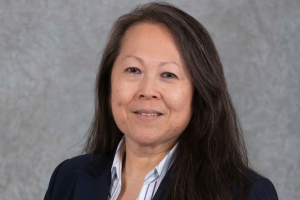
The FDA’s Sarah Yim discusses the evolving regulatory landscape for biosimilars in the US, the shift toward analytical-heavy reviews over large clinical studies, the legislative push to simplify interchangeability, and the agency’s commitment to increasing market competition and patient access through streamlined development pathways.
Could you describe the Office of Therapeutic Biologics and Biosimilars (OTBB)’s scope within the FDA’s Center for Drug Evaluation and Research (CDER) and how its role has evolved over the decade since the first US biosimilar approval?
I will take you back a bit further to when the biosimilar pathway was first passed. As the FDA began considering implementation, they established a therapeutic biologics and biosimilar staff group, starting with only a few individuals in 2011. That group grew during the early years of the development pathway until it was decided that a larger, dedicated group was necessary. Consequently, our office was formally established in 2019, making us approximately seven years old today.
When we first commenced biosimilar development, the process was entirely new. At that time, I was in one of the review divisions with the rheumatology group since I am a rheumatologist by training. Initially, it was mainly the subject matter experts within the review divisions who were determining how the process would function. However, over the years, we have developed enough experience to recognize commonalities across specialties and therapeutic protein platforms.
Looking ahead, we foresee a future where the process does not necessarily have to be tied to a specific specialty group. Our goal is not to re-prove safety and efficacy; we only need to demonstrate that a product is highly similar and has no clinically meaningful differences from the reference product. We essentially operate as a hybrid between the FDA Office of New Drugs (OND) and the Office of Generic Drugs (OGD), attempting to make the process as streamlined as possible to foster efficient development, lower prices, and increase access.
With 18 biosimilar approvals last year, the market is clearly at an inflection point. Given the recent announcement regarding changes to evidentiary expectations, what do these shifts mean in practice, and what impact do you anticipate?
We realized during our first decade of experience that we were requesting a significant number of comparative efficacy studies. These are large equivalence trials, often involving several hundred patients per arm – and in some cases, these studies were actually larger than those required for the initial approval of the reference products. It simply does not make sense to request large studies that provide minimal information if the goal is to bring competition to the market.
In recent years, we have worked to educate stakeholders on the fundamentals of biosimilarity, which primarily concerns analytical comparisons. One can analyse these products extensively to understand any differences. Fundamentally, biologics are complex because any dose contains various molecular variants due to being grown in cells that apply post-translational modifications. There is a level of variability in reference products that people often do not consider, and one must trust the manufacturer to maintain consistency and compare batches when changes are made. We have been working to communicate this to those accustomed to looking at clinical data, including physicians like myself. We had to educate our colleagues that biosimilars are different from new drugs that undergo a standalone safety and efficacy review and that a clinical study is not always required to show they work. If analytical similarity is established – starting with the same protein template and resulting in a similar mix of variants – we can predict potential issues based on the analytics alone.
At this point, we can rely on the expertise of our colleagues in the Office of Pharmaceutical Quality (OPQ). They can determine if a product looks like the reference product. By reducing the reliance on large clinical studies, we can save two or three years of development time and millions of USD in resources. This should translate into more products reaching the market in less time and for less money.
Building on a prior announcement last October, the FDA has just announced another draft guidance which recommends streamlining unnecessary clinical pharmacokinetic (PK) testing. What can you tell us about the intent behind this most recent development?
To help further streamline biosimilar development, the FDA has released revised draft Q&A guidance for industry that provides information on the data needed when using a non-US-licensed comparator to help demonstrate biosimilarity to the US-licensed reference product.
The recommendations describe scenarios in which a biosimilar applicant may use clinical data from outside the US without additional data from a three-way PK study, which uses the proposed biosimilar, the US-licensed reference product, and the non-US-licensed comparator product. The revisions also remove the earlier recommendation for at least one clinical PK study that directly compares the proposed biosimilar with the US-licensed reference product to support a demonstration of biosimilarity. Instead, a PK study can use a comparator product approved outside the US if scientifically justified.
This guidance provides much needed clarity and flexibility for biosimilar applicants and we are looking forward to seeing how the guidance contributes to increased biosimilar development and availability over time.
How do you balance scientific rigor with the motivation to advance regulatory approval for biosimilar products?
It is important to message that these products are not less well scrutinized; rather, we examine them from every possible angle. The key is that the data we prioritize is not clinical data, but rather the data essential for determining a similar safety and efficacy profile. We simply do not always need clinical studies to confirm that.
We are currently in a transition period where many biosimilar sponsors have already conducted clinical studies, so that data exists, but we are introducing the idea that this clinical data may not have provided new information. Our educational materials are being updated to reflect this shift. While most people are not initially comfortable switching from a reference product, we want to provide information that builds confidence. However, the average physician and patient still tend to look for clinical data or professional reassurance, so we must step up our focus on supporting the concept that clinical data may not be the primary driver in the future.
From a regulatory standpoint, are there other barriers to biosimilar advancement, such as interchangeability, that the FDA might evaluate to maintain this momentum?
The US is unique in that interchangeability is a separate designation, whereas it is not an issue in the rest of the world. However, it is written into our law, so we had to decide how to approach interchangeability versus biosimilarity. While there are different legal standards, my opinion is that if a product has no clinically meaningful differences as a biosimilar, it would likely meet the interchangeability standard as well. Functionally, there is very little difference between the two.
In 2024, we issued guidance stating that default switching studies are not always necessary, a move that was scientifically justified and made it easier for sponsors to seek the interchangeability designation. We went from having one interchangeable product in 2021 to 38 today. This shift occurred because we messaged that switching studies were not providing useful information. Ultimately, a change in the law would be required to simplify this further; this has been part of the FDA legislative proposals for the last couple of years and remains on the agenda for fiscal year 2027. We can propose the change, but Congress must take it up.
When it comes to advocating for the market uptake of biosimilars, how do you maintain your role as a regulator without overstepping into clinical decision-making?
It is important to understand that once products are transitioned to the marketplace, the FDA has limited authority over how they are utilized in clinical practice. Consequently, our primary responsibility is to serve as a resource for clarity. We focus on answering technical questions regarding the products and explaining the rigorous nature of the FDA approval standards.
To support this, we have developed a robust educational infrastructure tailored to different audiences, including a dedicated curriculum for healthcare professional schools and we are working with Medscape to provide continuing education courses for active providers. We ensure this content is timely and specialty-specific so that a prescriber in a particular field has the most relevant information at hand. Furthermore, we are addressing the patient level through a contract focused on developing various multimedia formats. We have worked hard over the last several years to expand our reach, and we will continue to ramp up these efforts. However, I believe the most significant shift will occur as we reach a point of greater market penetration. We saw this historical trend with generic drugs; initial apprehension eventually gave way to acceptance once patients and providers began to use them and realized the outcomes were consistent. Familiarity will ultimately breed the comfort necessary for the biosimilar landscape to fully evolve.
What are the common misconceptions about biosimilars that you encounter from patients and physicians?
We liaison extensively with patient advocacy organizations, so my impression may be skewed by those who are already knowledgeable, but I believe people are becoming more accepting of biosimilars as a valuable option with the same efficacy and safety profile. Resistance usually occurs at the individual level with chronic medications where patients develop brand loyalty and may be sceptical of switching simply for insurance cost reasons. Closed-loop organizations have been very thoughtful in their implementation, providing nurse educators and provider outreach, which resulted in a high proportion of voluntary switches. In systems that are not “closed-loop,” this is much more difficult.
Europe has extensive experience with mass switches and tenders. Do you look to their data to support US adoption?
I would love to see more data in the literature regarding those experiences. While there have been no major catastrophes reported in the news, more published real-world data from Europe would be extremely valuable for US systems and payers to convince stakeholders that switching is safe. Leveraging that experience would be a relevant way to connect the success Europe has had in terms of biosimilar adoption to the realities of the US.
Looking at the future of complex biologics, how are you preparing for potential biosimilar versions?
Many of those complex products are currently regulated within the Center for Biologics Evaluation and Research (CBER). We need to work to understand which products would benefit from biosimilar competition versus those that are too niche. The statute remains the same: a developer must show the product is analytically highly similar with no clinically meaningful differences. In principle, any product CBER characterizes could be eligible for competition, though the scientific issues will differ. For instance, I do not yet know what a follow-on for a CAR-T therapy would look like, as many of these innovations are highly individual.
In 2025, the total number of approved biosimilars in the US increased by 30 percent in just one year, and you have mentioned that you see the US biosimilar landscape at a tipping-point. How is the FDA preparing for a larger influx of biosimilar applications?
The Biosimilar Product Development (BPD) program provides us with some foresight into the future because we see who is requesting meetings. I expect an “accordion” effect where we will see a flush of biosimilars needing review as development becomes more efficient. We continue to work to make our complex review and approval processes as efficient as possible across approximately 20 different review divisions.
Given the significant workload of the review area signatories, FDA continues to explore ways to increase efficiency in the biosimilars review process, such as taking on more of the review work in OTBB.
What are your ambitions for the US biosimilar landscape over the next two to three years?
An IQVIA report on the “biosimilar void” identified that only about 10 percent of biologic reference products have biosimilar competition. My goal, and the FDA goal in general, is to make regulatory expectations so efficient that developers are willing to pursue biosimilars for non-blockbuster biologics. If the cost of development is not a barrier, we can cover more of the market while ensuring high quality and safety.
Do you have a final message on behalf of the OTBB to our international audience?
The FDA is committed to continuing efforts to update regulatory approaches to optimize efficiency while maintaining safety, efficacy, and quality for patients. We are also focused on increasing the understanding and acceptance of biosimilars in the marketplace. I believe we are at a time of significant progress that will ultimately translate into greater accessibility for patients who need biologic medications.
We intend to continue our current trajectory. We have made substantial progress in policy development at FDA and are now looking to tackle specific inefficiencies. For example, we are exploring how to more efficiently handle global comparators and addressing delivery device expectations, which we know have caused difficulty for sponsors.
Regarding the Biosimilar Action Plan, we continue to follow those original goals as they remain highly applicable. We are currently developing new deliverables and updating our policy areas to reflect this. Additionally, we are collaborating heavily with international colleagues through the International Pharmaceutical Regulators Programme. As the chair of that group, the FDA is initiating discussions on global comparators and working on an ICH multidisciplinary guideline. Our hope is to provide clarity for both regulators and industry on when a comparative efficacy study is necessary, defining those specific pockets where such data remains helpful. These are the primary initiatives we currently have in motion.