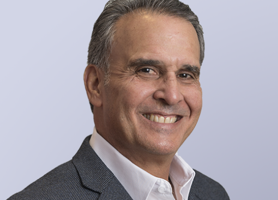
We are not only facilitating compliance, we are helping to rebuild confidence in Puerto Rico as a destination for medical careers.
How has your legal background shaped your engagement with Puerto Rico’s healthcare system and your leadership at CredeMtia?
My path into healthcare began through the legal system, with a focus on health law developed during my postgraduate studies at Loyola University Chicago in the 1990s. I entered the sector in Puerto Rico shortly after, working across hospital systems, physician groups, and government agencies as a legal consultant. Over time, I held roles that brought me into close collaboration with the Puerto Rico Hospital Association and culminated in my appointment as Executive Director of the Puerto Rico State Insurance Fund Corporation in 2005. These experiences exposed me to the deeper structural and operational inefficiencies embedded within the system.
By 2015, after years of advising on legal and regulatory matters, particularly in the area of risk management, I had become acutely aware of the operational vulnerabilities faced by providers, many of which stemmed from outdated systems and a lack of technological oversight. Recognising an opportunity to make a broader impact, I decided to take the entrepreneurial path and build a company that could deliver targeted digital solutions to healthcare providers. What began as the Health Industry Information Platform (HIIP) evolved into CredeMtia in 2022. Today, CredeMtia functions both as a software development company and a service provider, equipping healthcare organisations with the digital infrastructure necessary to manage risk, enhance efficiency, and improve overall performance.
In what ways does CredeMtia streamline credentialing and compliance for healthcare providers navigating Puerto Rico’s complex regulatory environment?
CredeMtia combines software development with credential management services to support healthcare providers in meeting Puerto Rico’s demanding regulatory standards. The company’s platform not only organises but actively verifies professional credentials, a vital function in a jurisdiction where failing to maintain up-to-date documentation, such as a Drug Enforcement Administration (DEA) registration, can result in legal liabilities and exclusion from insurer networks. This challenge is amplified locally, where the system requires more extensive documentation than in most parts of the mainland United States.
As a Credential Verification Organisation (CVO) accredited by the National Committee for Quality Assurance (NCQA), CredeMtia ensures that hospitals and insurers can trust that each provider within their network is fully licensed, legally compliant, and professionally qualified. In addition, the company offers contract management services that ensure all updated credentials are properly submitted to health plans, safeguarding providers against contractual breaches and administrative penalties. For medical groups working across multiple insurers, often with dozens of document requirements, CredeMtia acts as a crucial intermediary, reducing operational burden and enabling providers to focus on clinical care rather than compliance logistics.
How is CredeMtia combining technology and human-centred services to improve healthcare access in Puerto Rico?
While CredeMtia’s foundation lies in digital innovation, the company also provides consultancy services, particularly in helping physicians navigate Puerto Rico’s often complex credentialing and contracting environment, a role informed by my background in health law. One of our most recent developments is an appointment management platform, designed to address the significant delays many patients face in accessing specialist care. In some fields, it is not uncommon for patients to wait three to six months for an appointment. Although artificial (AI) intelligence has enabled more efficient scheduling, we believe that access to healthcare cannot rely solely on automation.
Our platform incorporates AI to support coordination but retains a critical human element through a live call centre. This hybrid model implemented in Cita Smart, Credemtia’s Medical Appointment Coordination Module, reflects our understanding that healthcare, especially in a jurisdiction where nearly a third of the population is aged 65 or older, demands empathy, clarity, and accountability. Older patients, who form the majority of appointment requests due to age-related conditions, often prefer to speak directly with a person, an option our system always provides. From both a legal and ethical standpoint, this human touch is essential. As an attorney and professor of law, I am acutely aware of judicial precedents in the United States holding providers liable when delays in care, particularly those resulting from inadequate digital systems, lead to harm.
Beyond product development, we see it as our corporate responsibility to contribute to the sustainability of Puerto Rico’s healthcare system. We actively support newly trained physicians, assisting them in overcoming administrative hurdles and encouraging them to establish their practices locally. Through partnerships with institutions such as The Puerto Rico Hospital Association, healthcare providers, and insurance plans, we are helping to make Puerto Rico a viable and attractive environment for the next generation of medical professionals.
Where do you see the root causes of Puerto Rico’s physician shortage, and how is CredeMtia responding to this critical workforce challenge?
CredeMtia’s platforms are developed entirely in-house by Puerto Rican professionals, a conscious commitment to local innovation. But our mission extends well beyond software. As part of our broader corporate responsibility, we actively support physicians who wish to establish or return to practice on the island. To date, we have helped more than 50 doctors relocate and navigate the often complex credentialing and contracting processes. In a system struggling to retain and replace ageing medical professionals, this kind of targeted intervention has a meaningful impact.
The physician shortage in Puerto Rico is frequently misunderstood. While some doctors have emigrated, the deeper issue lies in an ageing workforce and limited local training capacity. The average physician is now around 60 years old, and many are retiring, not due to dissatisfaction, but because they are financially secure, exhausted by bureaucracy, or ready to join family elsewhere. At the same time, although Puerto Rico’s four medical schools graduate approximately 450 students annually, fewer than half can access a local residency position. The remainder must leave the island to pursue specialist training, not because they want to, but because the system gives them no alternative.
This systemic gap stems from a major policy transformation in the 1990s. Historically, Puerto Rico’s healthcare model, rooted in Spanish and American systems, was government-led, offering extensive access and training infrastructure. Public institutions operated a tiered network of outpatient clinics, regional hospitals, and tertiary centres like Centro Médico, which hosted a wide range of residency programmes. However, reforms under Governor Pedro Rosselló shifted the model from provider to payer. Public facilities were sold to the private sector, and many state-funded residency slots disappeared almost overnight. As a result, a generation of aspiring specialists now finds itself without the training pathways their predecessors once relied upon.
At CredeMtia, we are not only facilitating compliance and credentialing, but we are also helping to rebuild confidence in Puerto Rico as a destination for medical careers. Supporting returning physicians and young graduates is not just a business function; it is a long-term investment in the sustainability of the island’s healthcare system.
What factors most commonly deter physicians from returning to practice in Puerto Rico after completing their training abroad?
Although physicians trained in the mainland United States are eligible to return and practise in Puerto Rico, the vast majority do not, largely due to a confluence of professional, personal, and systemic factors. Chief among them is the disparity in opportunity: those who complete residencies at top US institutions are often presented with significantly more attractive roles in terms of career growth, resources, and compensation. These offers are simply not comparable to what is typically available on the island. Equally influential is the quality of life. Once accustomed to living in cities such as Chicago, New York, or San Francisco, many find the return to Puerto Rico’s infrastructural limitations unappealing, particularly when it comes to services, security, and long-term stability. It is an uncomfortable truth, but one that must be acknowledged.
Beyond these factors lies the administrative challenge of reintegration. US state licensure, credentialing, and contracting are straightforward, whereas Puerto Rico’s processes are slow and complex. Tasks that might take three weeks in the mainland system can extend locally to four months or more, frustrating even the most motivated returnees. Unless Puerto Rico can offer compelling professional incentives, a higher standard of living, and more agile credentialing, privileging, and contracting processes, the island will continue to struggle with retaining and reclaiming its medical talent.
What is hindering the success of current initiatives to resolve Puerto Rico’s physician shortage?
Despite a range of initiatives from both the public and private sectors, progress in resolving Puerto Rico’s physician shortage has been limited, primarily due to the structural and procedural controls held by health insurers. These companies decide which physicians are included in their networks, and due to business decisions, such as maintaining network adequacy, they tend to limit the number of contracted physicians to manage the utilisation of services effectively, which directly affects health insurance operations economically. Though seldom acknowledged publicly, this quiet but pervasive practice is well understood across the healthcare system. Compounding the challenge, the government is legally restricted from interfering in private network decisions, an autonomy protected by longstanding Judicial precedent.
Unless this structural imbalance is addressed, the situation is likely to worsen significantly. By 2030, the physician shortage could escalate into a full-blown healthcare and economic crisis. Puerto Rico is already experiencing the effects of a declining and ageing population, coupled with a rising burden of chronic illness. As I witnessed during my time as Executive Director of the Puerto Rico State Insurance Fund Corporation, this dual demographic and health directly threatens productivity, particularly as businesses seeking to establish operations on the island are met with a diminished pool of healthy, working-age individuals.
The solution lies in building a comprehensive “country offer”, a cohesive strategy that combines healthcare system reform, infrastructure development, talent retention, and economic incentives. Other regions have demonstrated what is possible. A small town on the Mexican side of the Baja California border, for instance, has become a thriving centre of medical tourism by aligning local healthcare assets into a coherent, high-value proposition. Puerto Rico has the potential to do the same, but it must move decisively beyond fragmented efforts and embrace a vision rooted in long-term national competitiveness and well-being.