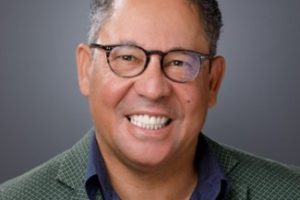
Biopharmaceutical innovation is advancing rapidly, yet inefficiencies in development and manufacturing continue to slow progress. OcyonBio, under the leadership of CEO Robert Salcedo, is changing that. By creating an integrated ecosystem that streamlines AI-driven research, advanced manufacturing, and regulatory support, the company is eliminating barriers that delay groundbreaking therapies. Operating from Puerto Rico, a rising hub for next-generation biomanufacturing, OcyonBio is not just adapting to industry shifts—it is building the future of medicine. As Salcedo puts it, “We are not just adapting to today’s challenges, but designing for 2050 to ensure Puerto Rico leads in pharmaceutical innovation.”
What led to the creation of OcyonBio, and how does it address a critical gap in the biopharmaceutical industry?
My career in biopharmaceuticals has been shaped by extensive experience across the sector’s most pivotal domains. After earning my degree at Cornell, I began at Genentech, where I gained hands-on expertise in quality, supply chain, and manufacturing, providing me with a comprehensive view of biologics—from discovery to commercialisation. I later joined Amgen, where I played a role in Project Opus, the initiative that transformed Puerto Rico into a global hub for large-scale biologics manufacturing. From there, I worked with Dey Pharmaceuticals, the original developer of EpiPen, before transitioning to Mylan following its acquisition. My next endeavour was leading the development of a Neulasta (Pegfilgrastim) biosimilar, after which I launched a consulting firm, advising biopharma companies across Latin America, the Middle East, and Asia on regulatory strategy and product development.
Through my consulting work, I observed a fundamental inefficiency in how companies approached manufacturing. Many were committing substantial capital to infrastructure before validating their products, leading to costly miscalculations. OcyonBio was founded to offer an alternative model—an integrated biopharmaceutical campus where companies can focus on discovery and development while leveraging a shared ecosystem for HR, procurement, warehousing, testing, and logistics. This structure significantly reduces upfront investment while ensuring operational efficiency and scalability. Beyond infrastructure, another crucial challenge we address is the gap between AI-driven drug discovery and real-world validation. While AI has revolutionised the development process by generating vast amounts of predictive data, these virtual breakthroughs must still be tested and refined in physical laboratories. OcyonBio is bridging this divide with state-of-the-art wet labs, supporting gene and cell therapy, large-molecule biologics, and small-molecule drug discovery, enabling companies to seamlessly transition from digital modelling to tangible therapeutic advancements.
Puerto Rico provides unparalleled advantages for this vision. The island possesses a highly skilled pharmaceutical workforce, though historically concentrated in commercial manufacturing rather than research and development. OcyonBio is enhancing this ecosystem by integrating a robust R&D infrastructure, supported by the over 20,000 science graduates emerging annually from the island’s universities. Our strategic location on Puerto Rico’s west coast, near the University of Puerto Rico at Mayagüez (UPRM)—whose industrial biologics program was developed in collaboration with Amgen—ensures a steady pipeline of industry-ready talent, allowing us to seamlessly merge cutting-edge research with large-scale production.
By eliminating inefficiencies in biotech development, bridging the AI-to-laboratory gap, and leveraging Puerto Rico’s unique strengths, OcyonBio is redefining the future of biopharmaceutical innovation, establishing the island as a premier hub for next-generation therapeutics.
What is the timeline for Puerto Rico’s emergence as a global hub for cell and gene therapy, and how is OcyonBio contributing to this transformation while addressing key challenges?
Puerto Rico is poised to become a leading hub for cell and gene therapy, driven by its long-standing pharmaceutical expertise and favorable tax incentives that can reduce R&D costs by over 50%. OcyonBio is playing a pivotal role in this transformation through a phased, strategic approach. The White Box initiative, launched in 2022, laid the foundation by restoring essential biopharmaceutical infrastructure, with $100 million invested in rebuilding a facility damaged by Hurricane Maria. By 2025, OcyonBio will establish Puerto Rico’s first sterile injectable CDMO/PDMO, capable of producing 60 million units annually, including vials, syringes, and cartridges. With key equipment set to arrive in the coming weeks, 2024 marks a critical foundation year, accelerating the island’s shift toward advanced biomanufacturing and positioning it for leadership in cell and gene therapy innovation.
Beyond manufacturing, OcyonBio is addressing a fundamental gap in biopharmaceutical development—the ability to transition AI-driven drug discovery into real-world application. While AI has revolutionised R&D by generating vast predictive models, these breakthroughs require physical validation, rigorous characterisation, regulatory approval, and clinical trials before reaching patients. OcyonBio is bridging this divide by establishing state-of-the-art wet labs, designed to seamlessly translate AI-driven discoveries into viable therapeutics, accelerating the path from concept to commercialisation.
One of the most pressing challenges is the regulatory bottleneck. While AI can dramatically speed up discovery, existing regulatory frameworks were not built to accommodate the volume and pace of AI-generated innovations. The FDA has recently introduced two AI-related regulatory guidelines, but they primarily focus on research applications rather than streamlining approval pathways. Without significant regulatory evolution, life-saving therapies could face prolonged delays, much like the early distribution challenges of the COVID-19 vaccine, where logistical hurdles initially slowed widespread access.
At OcyonBio, we are not only establishing the necessary infrastructure but also actively collaborating with regulators to develop solutions that ensure scientific breakthroughs can be translated into accessible treatments more efficiently. By tackling both technological and regulatory challenges, we aim to position Puerto Rico as a global leader in next-generation biopharmaceutical innovation.
How does OcyonBio’s model differ from a traditional CDMO, and what types of clients are driving demand for its services?
OcyonBio distinguishes itself from traditional Contract Development and Manufacturing Organisations (CDMOs) by integrating a Partnership Development and Management Organisation (PDMO) model, offering a more flexible and scalable approach to biopharmaceutical development. While a conventional CDMO provides standardised services—such as analytical testing, research, and manufacturing—on a transactional basis, OcyonBio’s model is designed to accommodate both turnkey manufacturing solutions and customizable, infrastructure-integrated partnerships.
For sterile manufacturing, our role aligns with a standard CDMO framework, where clients contract us to produce millions of vials or syringes, and we handle formulation, sterilisation, and packaging in compliance with regulatory requirements. However, early-stage drug discovery and development require a different approach, as companies often need more than outsourced manufacturing—they require dedicated space, specialised equipment, and seamless access to a controlled environment. This is where the PDMO model comes into play, allowing companies in clinical phases (Phase 1 to Phase 3) to leverage OcyonBio’s infrastructure without the need for significant upfront investment. Instead of spending $50 million to build their own facility, companies can secure fully equipped clean rooms, shared utilities (HVAC, security, power), and regulatory support, while retaining full control over their operations.
This model offers the flexibility to scale efficiently, allowing clients to select which aspects of the development and manufacturing process they handle internally and which they outsource. It’s akin to leasing an apartment, where we provide the essential infrastructure, but clients customise and operate their space as needed. As companies progress toward commercialisation, they can either expand within OcyonBio’s ecosystem or transition to standalone facilities, ensuring a cost-effective and strategic growth path.
Our client base reflects this dual approach. For drug product manufacturing, we primarily serve commercial biopharma companies that lack internal capacity, particularly in high-growth sectors like weight-loss treatments and protein-based supportive care therapies. On the early-stage development side, our clients include gene and cell therapy innovators who require specialised infrastructure and clinical-stage capabilities. By combining CDMO efficiency with PDMO flexibility, OcyonBio provides a comprehensive solution tailored to the evolving needs of biopharmaceutical companies at every stage of development.
How does OcyonBio ensure affordability and accessibility in gene and cell therapy, and what broader challenges does Puerto Rico face in attracting investment?
Ensuring that gene and cell therapies remain affordable and accessible is at the core of OcyonBio’s mission. Having come from a modest background, I firmly believe that lifesaving medical innovations should be within reach for everyone, not just those with financial means. Puerto Rico offers a compelling platform to achieve this, combining a highly skilled workforce, deep-rooted pharmaceutical expertise, and an exceptionally competitive tax incentive structure that significantly lowers development costs for biotech companies.
One of Puerto Rico’s greatest advantages is its stackable tax incentives, which can reduce R&D expenditures by up to 64% through benefits tied to job creation, research investment, and equipment costs. These incentives create a capital-efficient environment for companies, allowing them to recapture 94% of a $5 million investment over four years. In effect, businesses operating in Puerto Rico benefit from a 20% guaranteed annual return, making it one of the most financially attractive destinations for biotechnology innovation.
Yet, despite these advantages, perception remains a key barrier. When presenting Puerto Rico’s value proposition to executives, scepticism is often the first reaction—it seems too good to be true. The primary concern? Hurricanes. Investors fear that establishing operations on the island exposes them to an unpredictable natural disaster risk. However, this is a misconception. Just as California constructs buildings to withstand earthquakes, Puerto Rico’s pharmaceutical and industrial facilities are engineered to endure hurricanes. During Hurricane Maria, every major pharmaceutical plant resumed operations within 24 hours, demonstrating the sector’s resilience. The devastation frequently highlighted in the media largely affected residential areas that lacked proper construction standards, not the reinforced, highly regulated biotech and pharmaceutical facilities.
A more pressing issue is Puerto Rico’s energy infrastructure. Despite $40 billion in federal funding allocated for post-hurricane recovery, inefficiencies in execution have slowed progress. The island has the potential to modernise its energy sector through small modular nuclear reactors or large-scale solar infrastructure, yet bureaucratic inertia and a lack of political urgency have hindered these efforts. In response, the private sector has taken the lead, with OcyonBio investing $5 million in solar power and $3.5 million in backup generators to ensure uninterrupted operations.
Beyond infrastructure, Puerto Rico’s greatest untapped asset is its talent. The island is home to one of the top 20 engineering universities in the U.S., the University of Puerto Rico at Mayagüez, where students receive world-class education at a fraction of the cost—just $7,000 per year. However, rather than leveraging this advantage, Puerto Rico has lagged behind regional competitors like the Dominican Republic and Costa Rica, which have actively streamlined regulations and policies to attract investment. In contrast, Puerto Rico has the financial resources, the workforce, and U.S. market access but struggles with inefficiencies that slow its progress.
Unlocking Puerto Rico’s full potential requires a fundamental shift in infrastructure strategy, governance, and media engagement. The island possesses all the necessary components to become a global leader in biotechnology and advanced therapeutics, but achieving this vision demands decisive action, structural reforms, and a change in both perception and execution.
How does OcyonBio attract and retain top talent in the highly specialised field of biologics?
Attracting and retaining top-tier talent in biologics requires more than just competitive salaries—it demands a work environment where professionals feel valued, motivated, and invested in the company’s long-term success. OcyonBio has structured its approach to ensure that employees are not merely contributors but stakeholders in the company’s growth.
A key differentiator is our employee ownership model, which aligns individual and company success. Every employee who joins OcyonBio automatically becomes a shareholder. We calculate their salary, double that amount, and grant them stock options equivalent to that figure. As a result, 15% of OcyonBio is employee-owned, creating a culture where the financial success of the company directly benefits its workforce.
This model is inspired by my time at Genentech, where I experienced firsthand the transformative power of equity-based incentives. While my salary was competitive—around $180,000—my stock options exceeded $500,000, making me deeply invested in the company’s success. The same principle applies at OcyonBio: when employees see their work directly contributing to the company’s valuation, they are no longer just working for a paycheck but for their own financial future.
Beyond financial incentives, we foster an environment that encourages collaboration, innovation, and professional growth, ensuring that OcyonBio remains an attractive destination for top talent in the rapidly evolving field of biologics. By embedding this ownership-driven culture, we not only attract the best minds in the industry but also inspire long-term commitment and a shared vision for success.
How does Puerto Rico’s geopolitical position enhance OcyonBio’s growth amid global supply chain disruptions and the U.S. push for manufacturing resilience?
Puerto Rico presents a compelling strategic advantage, offering the stability of U.S. federal support and regulatory alignment, coupled with a distinct local tax framework that provides significant economic incentives. This unique positioning has been instrumental in OcyonBio’s success, creating an environment that fosters both financial sustainability and long-term growth. The biopharmaceutical industry operates in cycles, with phases of rapid expansion followed by financial constraints, particularly for emerging companies. Puerto Rico’s financial incentives serve as a crucial stabilising force, enabling companies to weather economic fluctuations without compromising investments in R&D, infrastructure, and workforce development. This financial flexibility has been a key factor in OcyonBio’s ability to establish and expand operations.
Currently, OcyonBio maintains a strong financial position, with over $15 million in positive equity, despite being in the early stages of scaling. The company is on an aggressive growth trajectory, with plans to expand its workforce to 300 employees, including an increase from 40 to 100 team members this year alone. By leveraging U.S. market access, financial incentives, and a highly skilled workforce, Puerto Rico provides an optimal ecosystem for biopharmaceutical innovation, ensuring that OcyonBio remains well-positioned for sustained growth in an increasingly complex global supply chain landscape.
How is OcyonBio leveraging partnerships with Indian companies to bring biosimilars to the U.S. market, and what strategic advantages ensure success despite adoption challenges?
OcyonBio has forged strategic partnerships with three leading Indian biopharmaceutical companies to develop and manufacture eight biosimilars, with two Biologics License Applications (BLAs) scheduled for filing next year. The technology transfer process is set to begin in August, marking a significant step toward regulatory submission and commercialisation.
While biosimilars have gained widespread acceptance in Europe and other global markets, adoption in the United States has been comparatively slower, primarily due to regulatory complexities, intellectual property disputes, and commercial barriers. To navigate these challenges, OcyonBio has adopted a regulatory-first approach, working directly with the U.S. Food and Drug Administration (FDA) to establish a clear development pathway before initiating large-scale production. This proactive engagement ensures that regulatory expectations are fully aligned from the outset, minimising approval delays and mitigating risks.
A critical component of OcyonBio’s cost-efficiency strategy is its ability to conduct clinical trials in India with FDA approval, significantly reducing development costs. Traditionally, biosimilar clinical trials conducted in the United States can cost upwards of $50 million, but by leveraging India’s well-established clinical research infrastructure, OcyonBio has reduced this expense to $15 million, creating a more sustainable economic model for biosimilar development. Another key strategic decision is deliberately entering the market as the fourth or fifth biosimilar competitor rather than as a first mover. This positioning allows OcyonBio to capitalise on an established regulatory pathway, avoid early-stage patent litigation, and refine its commercial strategy based on market precedents. By following this approach, the company can compete effectively on both quality and cost, leveraging Puerto Rico’s advanced biomanufacturing capabilities and strong financial incentives to ensure a highly competitive and scalable biosimilar portfolio for the U.S. market.
Why is Puerto Rico the ideal location for OcyonBio, and how do you see its role in shaping the future of the pharmaceutical industry?
Puerto Rico offers an unmatched environment for pharmaceutical innovation, combining U.S. regulatory oversight, a highly skilled workforce, and a business-friendly tax structure that makes it an attractive hub for biopharmaceutical investment. As a U.S. territory, it ensures full compliance with FDA regulations, while its distinct tax incentives provide significant cost advantages for R&D and manufacturing. With decades of expertise in pharmaceutical production, regulatory excellence, and biomanufacturing, Puerto Rico remains a strategic location for companies seeking both quality and efficiency.
Concerns about power infrastructure often arise, but pharmaceutical facilities here are engineered to withstand hurricanes, earthquakes, and other disruptions, ensuring operational continuity. At OcyonBio, we have implemented robust risk mitigation strategies, investing in power redundancies and data protection, recognising that these are essential to sustaining a reliable, high-performance manufacturing ecosystem.
Looking beyond immediate industry needs, OcyonBio is building for the future. We are not just adapting to today’s challenges but designing infrastructure for 2050, integrating AI-driven automation, next-generation wet labs, and advanced biomanufacturing capabilities. This forward-thinking approach represents a deliberate and strategic investment in the future of medicine, ensuring that Puerto Rico remains a global leader in pharmaceutical innovation for decades to come.
For those committed to advancing the next generation of biopharmaceuticals, Puerto Rico offers a sophisticated, innovation-driven ecosystem with world-class regulatory alignment, operational resilience, and access to premier talent. The opportunity is here, and I encourage industry leaders to see it firsthand because the future of medicine is being built in Puerto Rico.