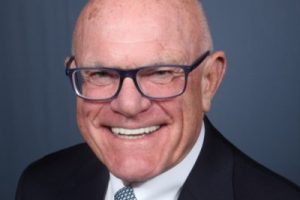
Rich Bendis, CEO and founder of BioHealth Innovation, discusses how the BioHealth Capital Region has grown into a leading US life sciences hub by connecting Maryland, Washington, D.C., and Northern Virginia through a regional, collaborative approach. From supporting early-stage companies with non-dilutive funding and strategic mentoring to helping international firms “soft land” in the US, Bendis highlights BHI’s role in combining world-class science, entrepreneurial expertise, and practical resources to drive innovation and growth.
Can you tell us what led you to found BHI and what unmet need you saw in the ecosystem?
BioHealth Innovation (BHI) is a 501(c)(3) non-profit, but we also operate a for-profit subsidiary, holding equity in around 25 early-stage life science companies through our support and services.
The idea for BHI began around 2009–2010. I had worked as a consultant and CEO across multiple US biotech ecosystems and often spoke globally about building vibrant bio clusters and finding early-stage capital. After a talk at the National Academy of Sciences, someone from Johns Hopkins approached me and said, “Rich, what you just described is exactly what we’ve been trying to do in Maryland for years, but we haven’t succeeded. Would you meet with our team?”
I began discussions with Montgomery County, the heart of the region and home to the FDA, NIH, Astra Zeneca, GSK, Amgen, United Therapeutics, and many others. Through a six-month study, interviewing about 90 stakeholders, it became clear that while Maryland had world-leading research and academic institutions, the commercialization of products was a weak spot. Industry and investors were largely disengaged, and government and academia were driving most initiatives.
We realized the region needed an innovation intermediary. It was important to be market-driven rather than lab-driven to connect private sector, industry, investors, and academia. This led to the creation of BioHealth Innovation in 2011. To succeed, we designed BHI to include public-private commitment at the board level, led by private-sector staff and guided by market needs, focusing on bridging the commercialization gap and accelerating products to market.
I initially took on the role of interim president, not intending to stay long-term. But the region’s untapped resources and connectivity potential convinced me to continue. I became CEO in 2012, and more than a decade later, the mission continues. Maryland’s ecosystem has made remarkable progress, rising from sixth or seventh to third among top US biopharma clusters, as defined in the annual rankings by Genetic Engineering and Biotechnology News (GEN), excelling in NIH funding, patents, jobs, and wet lab space. The next frontier is attracting more venture capital and creating new VC firms to further fuel the ecosystem’s growth.
What were the key steps in defining and establishing the BioHealth Capital Region as a recognized life sciences cluster?
Originally, the region was narrowly perceived as a five-mile stretch along Interstate 270 in Maryland. Our first step was to broaden that perspective and highlight the ecosystem’s true regional scale. Similar to Silicon Valley, Route 128 in Boston, or the Research Triangle, the BioHealth Capital Region encompassed a wider area of Maryland, Washington D.C., and Northern Virginia. We needed stakeholders to understand that the cluster’s strength lay not in a single corridor, but in the collective capabilities of the entire region.
Another critical challenge was branding. The area was often referred to as “DMV,” which caused confusion, sometimes referencing the Department of Motor Vehicles or ambiguously the states of Delaware, Maryland, and Virginia. Medimmune/Astra Zeneca convened stakeholders to define a unifying identity: the BioHealth Capital Region. The name reflects the convergence of traditional life sciences with emerging technologies like AI, machine learning, quantum computing, and digital health. “Capital” carries dual meaning: Washington, D.C., as the nation’s capital, and the importance of financial capital to the ecosystem, while “Region” emphasizes collaboration across state and city lines that historically had operated in silos.
From the outset, our vision was to build a truly regional initiative. Although BioHealth Innovation initially focused on Montgomery County and Maryland, industry and state leadership recognized the need for broader collaboration. In response, we strategically expanded our efforts to include Washington, D.C., and Virginia, establishing the foundation for today’s BioHealth Capital Region.
Can you elaborate on the existing financial and investment climate for biotech today? As you mentioned this as an area for growth, how is BHI helping close this gap?
The financing environment for biotech today is multifaceted and challenging. Beyond traditional venture capital, non-dilutive funding plays a critical role, particularly programs like the Small Business Innovation Research (SBIR) program. Across federal agencies, SBIR allocates a percentage of their research funding to early-stage seed grants, with NIH’s USD 1.4 billion program being the largest in the US. However, this program faces uncertainty, as reductions in NIH funding could proportionally decrease SBIR budgets. Decision timelines have slowed, and the win rate for Phase I awards has dropped from around 20 percent to closer to 10 percent, constraining early-stage entrepreneurship.
On the equity side, venture capital remains steady overall, but early-stage, preclinical investments have declined. Investors are increasingly focused on companies already in clinical development, where the path to exit is clearer. IPO activity has also been limited, with just six US life science IPOs in the first half of this year versus the 30–40 typically expected, making the early-stage funding environment particularly challenging. While deal flow is picking up, VCs are targeting lower-risk, later-stage opportunities that may deliver modest returns rather than the traditional high multiples.
Globally, strategic partnering and licensing with large pharma, biotech, and medical device companies have become a key mechanism to offset the decline in early-stage VC funding. Upfront licensing fees and collaborations provide companies with non-dilutive or equity capital while mitigating risk, and this activity has remained relatively constant, even increasing slightly.
BioHealth Innovation helps bridge these financing gaps by connecting entrepreneurs with both non-dilutive programs and venture capital, supporting companies through the preclinical and early clinical stages, and facilitating strategic partnerships. By leveraging its deep network across academia, government, and industry, BHI ensures that promising early-stage innovations can advance toward commercialization even in a constrained funding environment.
Are there any state-specific policies supporting life sciences across the region?
Maryland offers several unique programs to attract and retain early-stage life science companies. The Biotechnology Investor Tax Credit Program provides investors, regardless of residency, a 33 percent tax rebate or more, on investments in Maryland-based early-stage companies. If the investor has no Maryland tax liability, the state will issue a direct payment for up to 33 percent of the investment, making it one of the most investor-friendly programs in the US.
Additionally, Maryland provides matching SBIR funds for Phase I and Phase II awards, giving companies access to supplementary early-stage funding. Montgomery County goes a step further with its own matching biotechnology investor tax credit and SBIR programs, representing a rare and significant incentive structure that many other states do not offer. These initiatives help position Maryland as an attractive hub for early-stage life science innovation.
Also, both Virginia and Maryland have agencies that focus on making early-stage investments to emerging BioHealth companies, the Virginia Innovation Partnership Corporation (VIPC) and Maryland’s Technology Development Corporation (TEDCO).
Where does BHI come in as an intermediary? What are some of the specific activities and support you provide to early-stage companies?
BHI acts as a bridge between early-stage life science companies and the broader ecosystem, helping them navigate the path from concept to commercialization. We have a team of analysts who assist companies in evaluating proposals for non-dilutive funding whether it’s NIH, NSF, DOD, or other federal programs. If a company has potential, we help edit their pre-proposals, because we know the program managers and understand the priorities of the 27 NIH institutes, each with different disease focuses and SBIR programs. Over the past ten years, we’ve helped over 200 companies, with a success rate of about 45 percent. This is well above the national average, which has dropped to 10 percent in some programs.
We also help international companies that want to enter the US market. We show them why our region is strong, assist in forming US subsidiaries, provide fractional leadership teams, and introduce them to resources, strategic partners, potential funders, and key opinion leaders at the right time. For European companies, the East Coast cluster is particularly attractive due to ease of communication, while for Asian companies it’s more challenging, though not impossible.
Additionally, we help create spinouts from universities and large pharmaceutical or biotech companies. While we don’t have a direct venture fund, our for-profit subsidiary earns sweat equity by providing management services to companies that cannot yet afford full executive teams. Over the last 12 years, this approach has built a portfolio of about 25 companies and , with six successful exits. These exits are crucial for sustaining our mission and supporting BHI more entrepreneurial companies in the ecosystem.
A key part of our model is our Entrepreneur-in-Residence (EIR) program. We employ experienced executives who provide guidance on regulatory strategy, clinical development, reimbursement, intellectual property, investment introductions, and strategic partnerships. Currently, we have 35 EIRs across the US, supporting NIH, ARPA-H, academic tech transfer offices, and international companies. For example, ARPA-H approached us to provide EIRs to their PATIO office, which manages their SBIR program and initiatives like the USD 110 million Sprint for Women’s Health, as well as broad agency announcements funding high-potential research.
BHI operates as a unique intermediary, similarly to what consulting firms like Booz Allen, McKinsey or BCG do in the private sector, but we do it as a nonprofit. It allows us to engage deeply with entrepreneurs, investors, government agencies, and academia, accelerating the commercialization of life science innovations while building a stronger, more connected regional ecosystem.
You mentioned international soft landing and BHI has existing partnerships in Luxembourg, South Korea, and Greece. Can you discuss the role global partnerships play within BHI?
South Korea is a particularly interesting example. They’ve rebranded their life sciences sector as “BioHealth,” making it one of their major industry clusters. I think we’re ahead of the curve and we may have even influenced them a bit. They have a Korean Innovation Center here in Northern Virginia and hold an annual competition to identify five promising Korean companies looking to enter the US market but unsure how to do so.
We had a formal partnership with them to run a 12-week mentoring program for these companies. Our EIRs provide educational content and guidance on what it takes to enter the US market. This support is funded by the Korean Small and Medium Enterprise Agency, KOSME, in collaboration with the Korean Innovation Center and BioHealth Innovation.
To be honest, it’s not as straightforward as many think. There are major cultural differences, language and translation issues, and even very successful Korean companies often don’t know where to start. The first thing they usually ask is, “Help us find customers and distributors.” Many haven’t conducted competitive analysis, identified target markets, established a physical US presence, or appointed a US subsidiary. They also need to understand that federal funding programs typically require at least 51 percent US ownership for applicants.
Another layer is international scrutiny. All federal agencies are now closely reviewing partnerships and investments with foreign companies, particularly in sensitive areas like Russia or China, to protect American companies and intellectual property. Evaluating these international relationships is an important part of how we advise our partners.
As we wrap up, what message would you have to the international life science community about the BioHealth Capital Region? What should they consider or what misconceptions would you like to address?
America is and will remain the largest market for international life science companies, whether you’re working in therapeutics, biologics, vaccines, diagnostics, AI, machine learning, or digital health technologies. The FDA remains the global regulatory standard and gaining US approval is essential. Beyond that, the US offers the most robust early-stage and basic research environment in the world through the NIH and our top-tier academic universities. Regardless of public policy shifts or budget changes, the US will continue to be one of the most competitive and compelling markets for international companies.
If you want to be a truly global company, you’ll need to enter the American market at some point. My advice is: do your homework first. Conduct independent competitive analysis and market research to validate that a market exists for your product. Make sure someone will actually pay for it, because the reimbursement system here is very different from Europe or other markets. Assess your intellectual property carefully. Ensure it is protected, proprietary, and meaningfully differentiated. Strategic partnerships are key; finding trusted, value-aligned collaborators can accelerate your entry and growth.
At this year’s BIO International Convention in Boston, the international presence was noticeably strong. While some may perceive the US market as vulnerable, success rarely happens in isolation. Partnering with organizations like Virginia Bio, The Maryland Department of Commerce, and BioHealth Innovation enables top universities, or innovative companies to strengthen their ability to compete and scale.
The BioHealth Capital Region also offers unique ecosystem-building opportunities, for example hosting an annual BioHealth Capital Region Forum for which attendance is free. The forum connects partners and fosters collaboration globally. On the third day, we hold an investment conference, bringing together 30 to 50 investors and 100 pre-selected companies for one-on-one meetings. Neither investors nor companies pay to participate, making it an accessible platform for meaningful connections.
In short, come to the BioHealth Capital Region. You’ll find great opportunities across Maryland, D.C., and Virginia, and access to an unmatched network that can help your business grow globally.