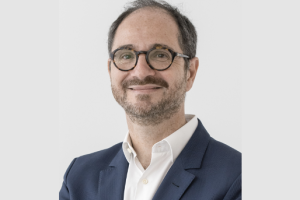
As European biotech continues to navigate tightening capital markets and increasing global competition, Kurma Partners is doubling down on its core belief: that world-class innovation can, and should, be built and scaled from within Europe. Managing Partner Rémi Droller shares how Kurma’s investment model combines early-stage company creation with long-term growth support across a pan-European platform, and why, despite structural challenges, he remains confident that the seeds for the next generation of biotech success stories are already planted.
How would you characterise Kurma Partners’ investment approach, and what distinguishes the BioFund within your broader platform?
Kurma Partners was established 15 years ago as a life sciences-focused platform operating across two complementary verticals: biopharmaceuticals which encompass drug discovery and development, and diagnostics and digital health. Each vertical is led by a dedicated team, and from the beginning we have maintained a strong emphasis on early-stage investment, particularly company creation. Approximately half of our portfolio consists of companies we have either co-founded or directly built from the ground up.
To extend our capacity to support innovation beyond the earliest stages, we launched the Kurma Growth Opportunities Fund. This fund invests across both verticals, targeting companies that have reached key inflection points, typically clinical proof of concept (Phase 1B or 2A) for biopharma, or commercial readiness in diagnostics and digital health. It also serves as a crossover vehicle, with the flexibility to participate in IPOs, and is designed to reinvest in companies already backed by our earlier funds, enabling us to accompany entrepreneurs over the full arc of their growth.
Today, our portfolio spans around 60 companies, managed by a team of 25 professionals based in Paris and Munich. Our investment scope is resolutely pan-European, we have active positions in most major innovation hubs across the continent, with Denmark standing out as a geography where we have been consistently engaged. As of April 2025, Kurma became fully integrated into Eurazeo, a listed private equity firm on Euronext Paris with EUR 36 billion in assets under management, and a strategic cornerstone investor in all our funds since taking its initial stake in 2021.
What has shaped your continued interest in the Danish biotech ecosystem, and which companies best reflect Kurma’s approach in action?
Our connection to Denmark dates back to the very origins of Kurma’s activity. Even before Kurma Partners was formally established, we co-led the Series B investment in Zealand Pharma in 2006. At the time, Zealand was already emerging as a leader in peptide chemistry with a focus on metabolic diseases, two areas in which Danish science continues to demonstrate world-class excellence. The company’s trajectory since then has been remarkable, and it remains one of the more prominent biotech success stories in our portfolio history.
More recently, we invested in IO Biotech, a publicly listed oncology company developing a therapeutic vaccine that targets the tumour microenvironment by activating T cells. This investment, made jointly through our BioFund and Growth Opportunities Fund, comes at a crucial moment as the company approaches the release of pivotal Phase III data that could significantly alter its strategic outlook.
Not all of our Danish engagements have followed the same path. In 2015, we participated in the Series B round for Orphazyme, a company developing treatments for rare neurological diseases. While their lead compound, arimoclomol, was eventually approved in the US as Miplyffa for Niemann-Pick type C in 2024, the investment did not result in financial returns although it did deliver real therapeutic value to patients. This reflected the broader challenge many Danish biotechs continue to face: limited access to sustained public or follow-on financing during critical stages of development, which can compromise otherwise scientifically sound ventures.
In your view, what defines Europe and Denmark in particular as a compelling region for early-stage biotech investment?
Europe continues to offer significant opportunities for biotech investment, particularly at the early stage, where Kurma Partners is most active. The scientific calibre is on par with the United States, but unlike the tight clusters of Boston or the Bay Area, innovation in Europe is more geographically distributed. This fragmentation demands a more agile and hands-on approach from investors, but it also reveals a broad and rich landscape of untapped potential. Over the past two decades, the European ecosystem has matured considerably: technology transfer offices are more professional, and founders are increasingly adept at navigating the complexities of company formation and early development.
Denmark is a prime example of how this progress translates into investable opportunity. The country boasts world-class expertise in biologics, peptide chemistry, and metabolic disorders, anchored by the success stories of companies such as Zealand Pharma, Genmab, and Novo Nordisk. This technical strength is reinforced by a uniquely supportive infrastructure, including the Novo Nordisk Foundation, the Lundbeck Foundation, and the BioInnovation Institute (BII), each of which plays a vital role in enabling early-stage ventures to take root.
Compared to the US, Europe’s investment environment remains less overheated, with more disciplined valuations and generally lower development costs. In today’s climate, where exit valuations are under pressure and public market windows are limited, these fundamentals make Europe an increasingly attractive alternative. Notably, the capital landscape has evolved: where Series B or C rounds once depended on US crossover funds, we now see experienced European venture teams successfully closing larger rounds on their own.
That said, financing gaps persist, particularly for ventures that underestimate the capital required to reach critical development milestones. Too often, companies set valuations based on future expectations rather than current achievements, only to find themselves misaligned with potential investors. This leads to stalled negotiations and delayed progress. In contrast, the US market tends to adjust valuations more decisively to keep companies moving forward, albeit with greater volatility.
At Kurma, we place strong emphasis on ensuring that our portfolio companies are adequately capitalised to reach their next meaningful inflection point, whether that means candidate nomination, IND filing, or clinical entry. This may involve larger syndicates or accepting some dilution early on, but we believe this discipline is essential to building resilient, scalable biotech enterprises.
Given the ongoing volatility in public markets, how do you advise portfolio companies in balancing strategic flexibility with long-term capital needs?
An IPO should never be seen as a strategy in and of itself. It is simply one potential financing route, one that must be weighed carefully against alternatives such as private equity, late-stage venture capital, or structured deals. There are periods, of course, when public markets offer favourable valuations and access to capital, but at times like the present, characterised by instability and limited visibility, we generally advise our companies to stay private and pursue more resilient funding strategies.
This advice reflects a wider structural challenge in Europe. While the continent has made tremendous progress in early-stage innovation, the public market infrastructure still lags behind. With the exception of Nasdaq in the United States, few exchanges offer the depth, sophistication, or consistency needed to support biotech companies over time. Too often, European firms go public prematurely on local exchanges where retail investors dominate and where there is limited understanding of biotech fundamentals. This can lead to severe volatility and misalignment, as investor expectations are shaped by metrics like EBITDA, wholly irrelevant in the context of pre-commercial science-driven companies.
Such environments can erode long-term investor confidence unless a company delivers exceptionally strong clinical data or becomes a clear candidate for acquisition. While a handful of European biotechs like argenx in Belgium and Zelanda Pharma and Genmab in Denmark have evolved into integrated global players, this remains the exception rather than the norm. In reality, biotech continues to function as the innovation engine of the pharmaceutical industry, with most value creation occurring through asset progression to late clinical stages and subsequent partnering or M&A.
At Kurma, our focus is on helping companies reach these key inflection points with adequate resources and a clear view of their strategic options. That may mean avoiding premature exposure to public markets and instead building robust private syndicates that provide both capital and flexibility. In the end, financing should serve the company’s long-term trajectory, not dictate it.
Zealand Pharma has become a prominent success story. From your vantage point, what factors were most critical in helping the company reach that level?
Zealand’s trajectory is often held up as a model of success, but it is important to recognise that it was not an easy investment. When we first backed the company, co-leading its Series B round in 2006, it had recently entered a licensing agreement with Sanofi Aventis for lixisenatide, a GLP-1 analogue that was far from being viewed as a blockbuster at the time. Sanofi regarded it as a follow-on asset, and the broader market had yet to grasp the therapeutic potential of the GLP-1 class. When Zealand listed in 2010, just after the financial crisis, it did so with strong investor support but faced a challenging refinancing environment. The process of building out the company’s pipeline, credibility, and partnerships took years of sustained effort.
Turning Zealand into a true platform company required not only capital but also active and consistent involvement from its investors. Our team worked closely with management during periods when market confidence was low and the underlying technology had not yet achieved recognition. The ability to stay engaged during such moments is critical, particularly within the lifespan of ten-year venture funds, and forms a core part of our investment philosophy.
The recent Roche partnership is clearly a validation of the science and the team’s resilience. However, it also raises a recurring concern in Europe: that innovation, once proven, often migrates into the portfolios of large US or Swiss pharmaceutical players. While this can be seen as a loss in terms of scaling local champions, it reflects the structure of our industry more broadly.
Biotech does not mirror the tech sector, where the objective is often to build a dominant, standalone platform. Over the past few decades, the pharmaceutical industry has fundamentally reorganised its value chain. Big Pharma has increasingly focused on late-stage development, regulatory navigation, and commercial execution, while early-stage research and validation have shifted to biotech. Today, as much as 80 to 90 percent of the pipelines of large pharmaceutical companies originate from biotech innovation.
This model means that the role of investors and biotech leadership is to de-risk novel science and advance it to a stage where it becomes a credible candidate for acquisition or partnership. There are exceptions that have scaled into integrated companies, but they remain relatively rare. More often, successful biotech innovation is absorbed by larger players with the infrastructure and global reach to bring therapies to patients. Far from being a structural weakness, this dynamic is a key mechanism through which value is created and science translated.
As European biotech competes with state-backed innovation in the US and China, what shifts are needed to strengthen the continent’s funding and regulatory environment?
I remain optimistic about Europe’s ability to compete globally in biotech. At its core, this industry is about transforming exceptional science into breakthrough therapies, and Europe continues to excel in this regard. We are seeing increasing interest from academic researchers, including some relocating from the US, who now view Europe as a strong environment in which to develop their work. Centres of excellence in Copenhagen and the broader Medicon Valley have matured significantly, combining world-class science with growing entrepreneurial strength.
Biotech differs from other sectors in that the most critical decisions like selecting a clinical candidate occur at an early stage, often when resources are limited and companies are still taking shape. Once that decision is made, the product’s direction is largely locked in. That is why having deep scientific and industrial expertise concentrated at the earliest stages is essential. If Europe can consistently bring that expertise to bear at the right time, it will increase the likelihood of success and position companies for more sustainable long-term growth.
Where Europe continues to fall short is in the depth of its funding ecosystem. The science is there, but the capital base remains thin, especially from institutional investors. Too few pension funds, insurance groups, or sovereign vehicles allocate meaningful capital to venture, and even less to life sciences. Allocations as low as one percent are still common. As a result, we remain overly reliant on US crossover investors for later-stage financing, and many promising European companies are pushed to list on Nasdaq to access growth capital and visibility.
This imbalance puts Europe at a strategic disadvantage. Investing in innovation is not just a matter of industrial policy; it is also a prerequisite for ensuring that patients in Europe can access the medicines being developed on the continent. At the same time, when properly funded and supported to clinical validation, biotech ventures offer compelling financial returns. This has been recognised in reports such as the one led by Mario Draghi, which highlighted the urgent need to align public and private capital more effectively. For Europe to fully realise its innovation potential, that alignment is no longer optional, it is imperative.
Looking ahead, where do you believe the most exciting biotech breakthroughs are likely to emerge, and what role can Europe play in shaping that future?
We have already made that bet, on Europe. Our investments are deeply rooted in academic spin-outs, and we firmly believe in the strength of European science, which remains the essential raw material of our industry. In fact, I believe Europe is now in a uniquely strong position, with solid scientific foundations and increasing interest from Asian investors seeking new avenues for collaboration.
One element we have not yet touched on is the vital role of collaboration in biotech. Every project, in one form or another, relies on partnerships. Europe’s openness, its willingness to engage with international players, and embrace multi-ethnic and multidisciplinary approaches positions it as a highly favourable environment for building and advancing biotech ventures.
If we can avoid major geopolitical disruptions in the coming decades, I am convinced that Europe has planted the seeds for the next generation of biotech success stories.
As for specific areas of innovation, I would point to inflammation and immunology. These fields are beginning to undergo a transformation akin to what we saw in oncology with the advent of immuno-oncology. There is still a significant unmet need in severe autoimmune and inflammatory diseases, and I believe we are on the cusp of meaningful breakthroughs.
More broadly, we are living through an unprecedented moment in medical innovation. The proliferation of advanced technologies like gene therapy, monoclonal antibodies, CAR-T, and in vivo modalities is opening entirely new frontiers. Many diseases that previously had no therapeutic options may now, for the first time, have viable paths toward treatment. It is an incredibly exciting time for our industry.