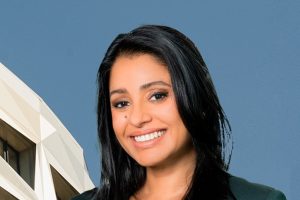
Sanofi's Preeti Futnani explores the rapid healthcare transformation underway in the UAE and Saudi Arabia, where governments are increasingly prioritising innovation and how Sanofi is leveraging its strong relationships and pipeline of breakthrough medications to align with regional goals. She touches on how Sanofi GCC is integrating digital tools to enhance operations and decision-making, and how it is scaling its local R&D efforts in the Gulf, conducting clinical trials, and engaging stakeholders to address regional healthcare needs.
You have recently transitioned from leading Sanofi’s vaccine operations in India to your new role as General Manager for Specialty Care in the Greater Gulf Region, based in Dubai. What excites you most about this new leadership opportunity?
There are three main reasons to be excited. First, looking at the region externally, there is a significant transformation happening, particularly in healthcare. Countries like the UAE and Saudi Arabia are undergoing rapid changes, with healthcare being a top priority for both governments. There is a lot of investment and focus on improving healthcare systems, and this presents a unique opportunity for Sanofi to partner with these governments and contribute to meaningful change. Sanofi has been in the region for around 50 years, and we have built strong relationships with both the Saudi and UAE governments. We are eager to align our efforts, especially with the ambitious health sector transformations happening in the Kingdom of Saudi Arabia.
Internally, there are two key reasons for my excitement. First, Sanofi has been increasingly driven by research and development, as our CEO, Paul Hudson, has emphasized. We are heavily investing in R&D to bring innovative medications to patients. Our pipeline is incredibly promising, with 12 potential breakthrough medications and vaccines that are set to redefine medical treatment for patients. In the region, for example, we have leading treatments in Type 2 inflammatory diseases, and rare diseases, which have the potential to be life-changing for patients. Our immunology pipeline is very exciting, including the next best-in-class treatment for atopic dermatitis.
Lastly, having spent time in this region and being part of Sanofi, I am thrilled to work alongside an incredibly passionate and dedicated team. The company itself is going through a transformation, and our teams here are truly committed to pushing boundaries. We are all driven by the mission of chasing the miracles of science to improve people’s lives, and I see that reflected in the work we do every day. These are the main reasons I am so excited to take on this new challenge.
Dubai is a truly global hub, bringing together diverse teams from different cultures and backgrounds. How does this diversity influence your leadership and operational strategy in such a dynamic region?
One of the reasons I was drawn to this role is the incredible diversity we have here. Across our affiliate, we have around 40 different nationalities represented among our 600 employees, spread across six countries. This diversity, combined with a wide range of age groups, really shapes the way I approach leadership. As leaders, we have to continuously adapt and learn, and I personally take a lot from these different perspectives. For example, 17% of our employees are under the age of 30, and they bring a fresh, dynamic way of working that is very different from what we might have seen in the past.
Globally, Sanofi is focused on diversity, equity, and inclusion, and this region is no exception. In the Gulf, 40% of our employees are women, which is another important aspect of our diversity. We are not only talking about gender diversity but also diversity across age groups and nationalities. This blend of cultures and perspectives makes this region truly unique, and it has a profound impact on our organization.
Sanofi Specialty Care in the Greater Gulf has successfully launched around 50 innovative products since 2021. What are the key factors driving this remarkable pace of innovation and market entry?
I can point to several key factors that have enabled us to achieve this level of market launch success. First, we are fortunate to have an exceptional pipeline, with 12 major assets, either developed through our own R&D or through acquisitions. These innovative solutions have allowed us to consistently bring new treatments to patients in the region. We are building on a solid foundation and leveraging the strength of our robust pipeline.
Another significant driver is Sanofi’s commitment to delivering innovative therapies to patients as quickly as possible. In the Greater Gulf region, governments and health ministries have a strong appetite to prioritize healthcare. They are committed to ensuring that their patients have access to the best available medications, and they want these therapies brought to market quickly. This alignment of priorities between Sanofi’s mission and the region’s healthcare vision has been instrumental in our success.
I also credit the work of my predecessor and our team. For example, we successfully launched our leading innovative monoclonal antibody treatment in multiple indications, which has been a game-changer. The openness of the region to embrace new therapies and focus on patient care has truly allowed us to become a launch powerhouse.
While openness to innovation is essential, regulatory frameworks must also evolve to properly evaluate and support these cutting-edge therapies. How well-equipped do you believe the region is in terms of regulatory readiness for the next wave of innovative treatments?
I agree that openness to innovation is critical, but it must be matched by a regulatory environment that can effectively support its uptake. While the region is clearly prioritizing its patients, the healthcare ministries also need to adapt and be agile in managing the influx of innovative treatments.
There is a lot of work ahead in fostering collaboration between multinational companies like ours, which are heavily invested in the region, and the governments, who are eager to bring these innovations to their populations. It is crucial to involve multiple stakeholders in these discussions, including physicians and patients, whose voices are becoming increasingly important. While patient advocacy groups are still emerging, the shift is happening, and we are starting to see more Middle Eastern representation at global medical congresses, which reflects a growing involvement from the region’s thought leaders.
Finally, for the regulatory authorities, a focus on value-based assessments, patients and transparency in how changes and modernization are implemented is key. There is still work to be done, but what gives us an advantage is that the healthcare environment here fosters these conversations. I truly appreciate the willingness to engage in open dialogue between health authorities and companies like ours.
Bringing innovative therapies to market often goes hand in hand with local research and development, which can accelerate patient access and familiarize regulators and physicians with new treatments. What role does the Greater Gulf region play today as a centre for R&D within Sanofi, and how do you envision this evolving in the next 5 to 10 years?
That local presence of innovative investment is one of the main reasons I am so excited to return to this region. As part of Sanofi’s global transformation, we have prioritized 10 key regions with a strong appetite for innovation and growth, and the Greater Gulf is one of them. This region is evolving rapidly, especially countries like Saudi Arabia, where healthcare transformation is a core pillar of Vision 2030. Bringing research and development to the region is a major focus, and Saudi Arabia, in particular, is investing heavily in this area.
When I joined Sanofi over seven years ago, there were few studies being conducted in this region. However, in the past five years, we have made significant progress. We have carried out over 16 real-world evidence initiatives, which have provided valuable insights for healthcare professionals, ultimately improving patient care and decision-making. We are also working closely with regional stakeholders to ensure that the specific needs of the Greater Gulf are integrated into our global strategy. This approach gives the region a voice at the table within our broader global framework, allowing us to address healthcare challenges specific to this region.
Looking ahead, we are committed to continuing our investment in R&D and building infrastructure capabilities. Where we once had no clinical trials, we are now bringing phase 3 and phase 4 trials to the region. I aim to facilitate transparent discussions between the region, our global headquarters, and local healthcare ministries to explore how we can do even more. Are we doing enough right now? That remains to be seen, but there is definitely an appetite to push further, and those conversations will help guide us.
Additionally, we are looking at how to leverage digital transformation and AI advancements in healthcare. These technologies have great potential to enhance clinical research, not only within Sanofi but across the entire region. There is much more innovation and development on the horizon, and I am excited about what is to come.
The region is positioning itself as a leader in digital transformation, and Sanofi is similarly emphasizing digitalization and AI across its operations. How do you see digital technologies shaping the future of your work in the coming years?
At Sanofi, digital acceleration and AI are key focuses, and as leaders, we are encouraged to leverage all the tools available to us across the entire organization. Whether it is AI in supply chain, research and development, or in the day-to-day lives of our sales and medical teams, the goal is to ensure that digital transformation is embraced at every level. One of the first steps I took when I transitioned to this role was to get a comprehensive understanding of the digital capabilities we have in the region. I wanted to know how much we are using these tools and how we can enhance our operations through them.
For instance, we have an AI-powered app called Plai, which provides real-time, reactive data and offers an unprecedented 360° view of all Sanofi activities. It aggregates internal data across various functions and uses AI to deliver insights and “what if” scenarios, allowing thousands of decision-makers to make informed choices in a simple, modern format. Every morning, I start my day by checking Plai to see how we are performing in the Greater Gulf and in other regions. It gives me insight into everything from business performance to patient recruitment in clinical studies and supply chain dynamics. The great thing about this tool is that it is accessible to everyone within the company, across all functions, not just sales.
Sanofi is also heavily investing in the digital upskilling of its leaders. Over the past few years, I participated in initiatives that focus on how digital healthcare is evolving and how we can use these advancements to make data-driven decisions. The emphasis is on moving away from relying on intuition or bias and instead using data to guide our actions. This approach is not limited to me as a general manager; it is something that extends across every function in the company. The only way to achieve real outcomes is by integrating these digital tools into every aspect of our operations. We have already seen significant progress in how we conduct business, and the push for digital transformation and AI continues to be a driving force behind our evolving strategy.
With the rise of AI and automation, how do you maintain a balance between leveraging advanced technologies and preserving the human intuition and experience that are crucial in healthcare decision-making?
When I approach AI-generated data, I always consider its accuracy not just in the moment but also how it has performed over time. Trends in data accuracy are important, but you are right—there is a balance to strike. There are two ways to handle AI: you can either be fearful and avoid it, or you can develop a healthy curiosity and prepare yourself for its inevitable integration. I believe the latter is the better approach. It is about educating yourself to understand how to use AI effectively while avoiding the pitfalls, rather than fearing it or assuming it will take over your job.
The way I see it, combining human intuition with AI creates a powerful synergy. AI can enhance human decision-making, not replace it. The key is in using AI as an additional tool—a faster, more efficient way to analyze data and make decisions—while still applying human judgment. At Sanofi, we strive to find that balance. We are not removing the human element; we are simply adding another layer of support to help us be more agile and make more informed decisions.
Of course, we are constantly challenging the data AI provides. When something does not seem right, we dive deeper to understand the reasoning behind it. The benefit of AI is that it provides a data trail, allowing us to go back and scrutinize the conclusions it has drawn. This is something that is not always possible with human decisions, which can sometimes be influenced by emotions. Over time, this process of checking and refining the AI’s conclusions helps us see how it evolves.
Personally, I find AI fascinating. I am far from being an expert—maybe at 1% of where I would like to be—but I know that if we are not actively engaging with these technologies, we will fall behind. It is important to understand what AI is capable of so we can stay in control of our environment. Letting it get ahead of us without understanding it would leave us with fewer opportunities to shape the future.
Sanofi’s current strategy is focused on best-in-class and first-in-class therapies, which indicates a shift away from some legacy areas the company was once known for. How are you working to reshape Sanofi’s image and strengthen relationships with stakeholders as you build the company’s future vision for the region?
That is a very interesting consideration that we often ask ourselves internally—how can we work together as a company to leverage our legacy while growing in the areas where we need to? Sanofi is structured into three main areas: our general medicines, , our vaccines division, and specialty care. Each of these areas is crucial to our overall mission, but we approach them with a unified mindset.
Our CEO, Paul Hudson, is very focused on promoting the “One Sanofi” approach. It is not just about focusing on individual portfolios like vaccines, general medicine, or specialty care—it is about Sanofi as a whole and the image we portray. As leaders, even within this region, we emphasize this mindset. For example, when I speak at town halls or meet with external customers, I do not limit the conversation to just immunology or specialty care. I also talk about the exciting developments we have in vaccines, like our respiratory syncytial virus launch, or what we are doing for type 1 diabetes and organ transplant patients with some of our upcoming treatments. We make sure that everyone understands where growth is coming from across the board and that all our global business units are aligned with Sanofi’s overarching mission.
While we are an R&D-driven company with a strong focus on immunology, we remain committed to all the patients we serve across different therapeutic areas. We model this “One Sanofi” philosophy in everything we do, ensuring that at the end of the day, we are not just representing one specific portfolio but the entire Sanofi vision.
Looking ahead, what key milestones are you aiming to achieve in your new role? What are your biggest aspirations for the coming years and what would success look like for you as the new General Manager of Specialty Care in the Greater Gulf region?
My vision for the coming years revolves around staying ahead of the innovation curve and proactively adapting to meet the evolving healthcare needs in the Greater Gulf region. With the significant transformation and prioritization of healthcare by regional governments, I want to ensure that our number one goal remains clear—providing patients with access to the most advanced treatments available. Over the next five years, I aim for our affiliate to continue leading the way in innovation while supporting the healthcare landscape in this region.
From an internal perspective, my aspiration is to foster a diverse and inclusive workplace that emphasizes continuous learning, career growth, and employee well-being. Sanofi has always offered that to me and many of my colleagues, and I want to ensure that our team feels empowered and valued. By investing in our people, we will continue to attract and retain top talent while equipping them with the skills needed to lead us into the future.
Externally, my goal is for Sanofi to be recognized as the most innovative company in the region. We are constantly evolving, and I am still in the process of learning and adjusting. Each country visit and conversation brings new insights, shaping our evolving vision for Sanofi. Ultimately, success will mean staying ahead of innovation, being there for our patients, and ensuring we deliver on our mission to improve lives with best-in-class healthcare solutions.