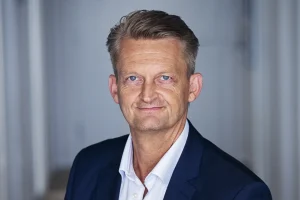
With a mandate spanning pharmaceuticals, medical devices, and clinical research, the Danish Medicines Agency plays a central role in shaping both national health policy and European regulatory alignment. Under the leadership of Nils Falk Bjerregaard, the agency is navigating a period of accelerated transformation, defined by digitalisation, real-world evidence, decentralised trials, and the strategic demands of Denmark’s Life Science Strategy 2030.
What are the core responsibilities of the Danish Medicines Agency, and how has the launch of the Life Science Strategy 2030 shaped your vision since assuming office?
The Danish Medicines Agency (DKMA) acts as Denmark’s national competent authority for pharmaceuticals, medical devices, and clinical research, overseeing regulatory approvals, safety monitoring, and inspections. With approximately 640 staff members operating under one roof, the agency functions as a unified and comprehensive regulator. In addition to our national remit, we play a central role within the European Medicines Agency (EMA) framework, contributing directly to EU-wide regulatory procedures, including scientific assessments and decision-making from the earliest stages of product review.
When I took office, it happened to coincide with the launch of Denmark’s Life Science Strategy 2030, an initiative that underscores the country’s ambition to enhance its global standing in life sciences. The timing could not have been more significant, as the strategy has provided a timely and structured mandate that has shaped many of our early priorities. While our mission remains the safeguarding of public health through the regulation of safe, effective, and high-quality medicinal products and devices, the strategy has broadened our focus by placing greater emphasis on the life science sector as a vital stakeholder. It has encouraged us to view our work not only through the lens of regulatory excellence but also as a facilitator of innovation, a partner to healthcare systems and patients, and a contributor to national competitiveness. In this way, the strategy has sharpened our direction while reaffirming the foundational responsibilities that define the agency.
How is the DKMA working to improve innovative access in Denmark, and what role does it play in the European scientific and regulatory landscape?
A core focus of DKMA in recent years has been to enhance access to innovative therapies, particularly by supporting early-stage development through scientific guidance. While large pharmaceutical companies often possess the in-house capabilities to navigate regulatory pathways independently, many other developers of advanced therapies such as academic institutions, start-ups, and small to mid-sized enterprises require more tailored support. To address this, we have prioritised the provision of early scientific advice, helping these organisations establish robust regulatory strategies from the beginning. This ensures that development efforts are aligned with quality and safety standards from early in the journey, reducing the risk of costly setbacks later in the process. The initiative has been well-received, with growing engagement from emerging developers and academia, and we view it as a successful step toward enabling innovative treatments to reach patients more efficiently.
At the same time, the DKMA’s regulatory responsibilities are inextricably linked to the broader European framework. The majority of our legislative mandate is derived from EU law, and most authorisations for advanced therapies, particularly in complex therapeutic areas such as oncology, endocrinology, and neurology, are handled through centralised procedures governed by EMA. Denmark is not merely a recipient of EMA decisions; we are an active participant in the scientific and regulatory processes that lead to them. Our experts are embedded in EMA committees, contributing from the earliest stages of assessment. Where appropriate, and when our expertise and resources align, we assume leadership roles as rapporteur or co-rapporteur, conducting evaluations on behalf of the entire EU network.
A notable example of this was our rapporteurship on the assessment of Moderna’s COVID-19 vaccine. Although we are a relatively small member state, Denmark ranks consistently among the top contributors to EMA-led assessments, reflecting both the competence of our agency and our strategic commitment to influencing European regulatory outcomes. This active engagement is not only a source of national pride but also a deliberate effort to ensure that Denmark continues to shape and strengthen the European regulatory environment from within.
Can you elaborate on the impacts of the EU-wide COMBINE initiative on clinical trials, and what is the Danish Medicines Agency doing to enhance the attractiveness of clinical research nationally?
The COMBINE initiative, led at the European level, addresses a longstanding regulatory challenge in clinical research. Specifically, the complexity of navigating studies that fall under multiple legislative frameworks. Clinical trials involving both medicinal products and medical devices often sit at the intersection of different regulations, creating uncertainty and, at times, contradictory guidance for researchers. COMBINE brings together national regulators across the EU to harmonise their approaches and ensure that applicants receive coherent, non-conflicting advice when planning cross-cutting studies. Instead of leaving sponsors to resolve inconsistencies on their own, authorities collaborate to integrate regulatory perspectives, providing a unified, reliable pathway to conduct complex trials across Europe.
In parallel, DKMA has made the enhancement of Denmark’s clinical research environment a strategic priority. Central to this effort is a regulatory culture rooted in openness, dialogue, and responsiveness. Rather than working behind closed doors, we engage stakeholders from across the ecosystem including industry, academia, healthcare professionals, and patient organisations to co-develop frameworks that are both scientifically robust and operationally sound. This engagement is carried out through both structured platforms, such as stakeholder councils, and more informal, day-to-day exchanges that allow for real-time feedback.
While we remain uncompromising in our commitment to safety, efficacy, and quality, we also recognise the importance of ensuring that regulation does not become an unintended barrier to innovation or patient access. By maintaining a continuous, structured dialogue with our stakeholders, we aim to strike that delicate balance. This allows the DKMA to foster a regulatory environment that is not only rigorous, but also adaptive, transparent, and enabling.
In what ways is Denmark leveraging its advanced health data infrastructure to advance real-world evidence, regulatory innovation, and decentralised clinical trials?
Denmark has long distinguished itself through the depth, quality, and cohesion of its national health data infrastructure. Anchored by a personal identification number assigned to every citizen, this centralised system enables the seamless integration of health data across all sectors. Combined with the country’s high degree of digitalisation, this infrastructure forms the backbone of Denmark’s leadership in data-driven healthcare and regulation. As a result, DKMA is uniquely positioned to incorporate real-world data (RWD) into both regulatory decision-making and scientific advancement.
The agency’s work with real-world evidence has gained significant momentum. Last year, 15 to 20 RWD projects were completed under the existing EU regulatory framework, with a target of around 50 for this year. This progress is supported by the Data Analytics Centre (DAC), established in 2020 as an internal hub for data science expertise and innovation. At the European level, DKMA remains closely involved in shaping strategy, with the head of DAC participating in the European Medicines Agency’s Network Data Steering Group. These efforts align with the broader implementation of the European Health Data Space (EHDS), launched earlier this year, which is set to accelerate the use of real-world evidence across the continent.
RWD is especially critical in areas where traditional clinical trial models are less feasible. For example, in rare diseases and personalised medicine where small patient populations limit the scalability of standard randomised studies. While we are not yet at a stage where real-world data can fully substitute clinical trials, both Denmark and the EMA are advancing pilot projects and exploring regulatory sandboxes to build evidence, test methodologies, and refine governance models. That said, the responsible use of health data depends not only on infrastructure but also on public trust. Denmark benefits from a high level of societal confidence in how data is handled. It is essential that we preserve this trust through transparency, compliance with the General Data Protection Regulation (GDPR), and clear public communication around the purposes and protections involved.
In parallel, DKMA has also focused on facilitating decentralised clinical trials to ensure that studies reach the patient populations who most need them. National guidelines have been developed to support this shift, and the response from clinical researchers has been overwhelmingly positive. Moreover, Denmark was one of the first EU countries to fully operationalise the Clinical Trials Information System (CTIS), the new European platform for managing trial applications, helping to ensure transparency, harmonisation, and accessibility across member states. Through this dual emphasis on real-world data and decentralised models, Denmark is working to modernise its regulatory environment in ways that are scientifically rigorous, patient-centric, and future-ready.
What is your long-term vision for the Agency, and how are you preparing the institution to remain relevant in an increasingly complex life sciences environment?
My long-term vision for DKMA centres on maintaining its relevance and impact within an increasingly dynamic healthcare ecosystem, both at the national level and within the broader European framework. Relevance, in this sense, is not merely about fulfilling statutory responsibilities. It is about remaining a trusted, forward-looking institution that consistently engages with and responds to the evolving needs of stakeholders across the spectrum for industry, patients, policymakers, and healthcare professionals alike. To achieve this, we must remain intellectually curious, open to dialogue, and transparent in our operations, while continuing to uphold the scientific integrity and consistency that define us as a regulatory authority.
Equally important is preparing the agency for the structural and technological shifts that lie ahead. As the life sciences sector in Denmark grows more sophisticated with increased focus on personalised medicine, digital therapeutics, and complex biologics, our regulatory responsibilities are expanding in both volume and complexity. Meeting these challenges will require a fundamental investment in capacity-building. This means equipping our teams with new skills, fostering a culture of continuous learning, and integrating advanced technologies such as artificial intelligence into our daily workflows and scientific assessments.
The future will demand new ways of working. The DKMA needs to be more agile, more data-driven, and more collaborative if we are to continue safeguarding public health while enabling timely access to innovation. Ultimately, our ability to regulate effectively must evolve in parallel with the sector we serve. Staying aligned with the pace of scientific and industrial transformation is not optional, it is essential to delivering on our mission with credibility, confidence, and resilience.