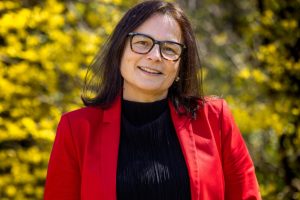
Curiosity has been the driving force behind Montse Jansà’s journey, a curiosity not only for science, but for the people, processes, and decisions that bring innovation to life. From a foundation in biology and clinical research to leadership roles across Europe, she has consistently sought opportunities to create meaningful impact. Now, as General Manager of Merck Denmark, Jansà is navigating one of Europe’s most advanced life science ecosystems with a distinctly human-centred approach. At the confluence of innovation, policy, and purpose, she is positioning Merck not simply as a pharmaceutical player, but as a long-term societal partner.
How has your career in life sciences evolved, and what drew you to lead Merck Denmark at this stage of your journey?
My path into the life sciences began with a degree in biology, driven by an innate curiosity and desire to understand not only biological systems, but also the people and processes behind them. That same curiosity led me into clinical research, where I was involved in trials that translated science into tangible outcomes for patients. While this early phase gave me a strong grounding in science, I quickly became intrigued by the strategic side of the industry. What were the decisions shaping which trials to pursue, the patient populations to target, and why. This prompted my transition into the commercial space where I held roles across sales, marketing, and management. These roles covering everything from widespread conditions like diabetes and hypertension to highly specialised rare tumours.
Over the years, I worked with a number of companies before joining Merck a decade ago. I was drawn in by the company’s values, which resonated deeply with my own. As a family-owned organization with 70 percent of its shares held by the founding family, Merck is able to take a genuinely long-term view into their business approach. This freedom allows the company to invest today in what may only come to fruition five or ten years from now. This approach is increasingly rare in our sector. Furthermore, Merck’s culture places a true emphasis on people, not only in terms of patient impact but also through internal talent development, which has become one of my core passions. Even the most ground breaking innovation will not succeed without the right people to bring it to market and embed it meaningfully within the healthcare ecosystem.
When the opportunity arose to lead Merck Denmark, it aligned perfectly with my drive to create impact. While this is my first general management role and my first position outside of Spain, what makes this role so meaningful is the ability to influence across three dimensions: first, through delivering value to patients; second, by shaping and empowering the teams within our walls; and third, by contributing more broadly to Danish society. As a company, our impact must extend beyond innovation. Merck has a responsibility to the communities in which we operate, and that is what continues to motivate me every day.
How does Denmark’s healthcare and life science ecosystem shape Merck’s strategic positioning and engagement in the country?
Denmark holds a unique spot in Merck’s European operations. It consistently ranks among the top countries in Europe for innovation and access, often following only Switzerland and Germany. This is driven by a well-structured life science strategy that’s more than just a vision, but a roadmap with concrete goals that address the entire value chain, from early stage research to patient access. Life sciences are Denmark’s leading export sector, contributing to a significant economic footprint, and there’s a strong national commitment to maintaining a globally competitive ecosystem.
What sets Denmark apart is the combination of several key factors: high levels of digitalisation, a culture of trust between institutions, and a long-standing tradition of public-private collaboration. These elements create an environment where innovation can quickly translate into benefits for patients. That said, like any market, Denmark does face its challenges. Recently, we’ve seen delays in the access pathway, particularly in oncology, which has led to some uncertainty.
Trust remains a cornerstone, but there’s still a need for more transparency in the market access process. This is specifically key in how decisions are made, why certain innovations are prioritised, and how final agreements are reached. Greater clarity in these areas would allow us to engage with stakeholders earlier and more constructively, align better with system needs, and ultimately ensure that promising treatments reach patients without unnecessary delays. The opportunity for partnership is already here, but strengthening the framework around it could make a real difference.
What are Merck Denmark’s key therapeutic priorities in the country?
Fertility is our most prominent therapeutic area in Denmark, where it remains a significant societal challenge. One in ten children in the country is born through fertility treatment, and Merck products support half of those cases. Beyond just providing treatment access, our goal is to help close the fertility gap. This means not only raising awareness about fertility health but also supporting young people in managing work-life balance and engaging with policymakers to help create a more supportive societal framework. We’re proud to work alongside healthcare professionals, youth groups, and political stakeholders to co-create long-term solutions.
We’re also deeply involved in oncology, with therapies targeting urothelial, head and neck, and colorectal cancers, as well as a product aimed at a rare lung tumour. Additionally, we continue to support the multiple sclerosis community, a particularly relevant focus in Denmark, where the disease disproportionately affects young women during the most active years of their lives. Another key area for us is hypothyroidism, where we offer a well-established treatment that’s been used locally for over two decades.
Merck’s presence in Denmark also reflects our broader identity as a science and technology company. Our life science division, which provides tools and technologies for medicine development and manufacturing, plays a vital role in a country known for its strong R&D and production infrastructure. Some of our largest customers are based here, and Denmark’s innovation ecosystem makes it a strategically important market for us across all three of Merck’s business sectors: healthcare, life sciences, and electronics.
What impact is Denmark’s Life Science Strategy 2030 having on access to innovation, and how might the country help shape Europe’s pharmaceutical future?
Denmark’s Life Science Strategy 2030 stands out because it’s more than just a vision. Following learnings from several previous life science and internationalization strategies, it’s a comprehensive framework with specific goals and timelines that give it real substance. In that way, it acts as a model for other countries, showing how strategic policy can actively support a thriving, innovation-driven ecosystem. With Denmark currently holding the EU Council Presidency, it’s in a unique position to share its experience and contribute to shaping Europe’s broader pharmaceutical agenda.
One of Denmark’s key strengths is its digital infrastructure, which supports both clinical research and patient empowerment. Despite its relatively small size, Denmark consistently ranks among the top countries in Europe for clinical trials per capita. This is a reflection of its ability to provide high-quality data, streamlined processes, and strong cross-sector collaboration. These advantages make it an attractive place for research investment and partnerships.
For companies like Merck, this environment offers a great platform to not only advance scientific progress but also to play an active role in shaping healthcare policy across Europe. Denmark’s combination of strategic clarity, digital readiness, and openness to collaboration allows it to make a significant impact, far beyond its size.
In what ways is Denmark contributing to Merck’s global clinical research activities?
Denmark has proven to be an excellent environment for clinical research, not only because of its collaborative ecosystem but also due to the high level of centralisation within its healthcare system. For example, when we launched our most recent innovation, a treatment for metastatic urothelial carcinoma, we were able to involve all the relevant hospitals nationwide in the clinical trial. Achieving this kind of coordinated participation across the entire country is rare, and it really highlights how conducive Denmark’s system is for conducting impactful studies.
In therapeutic areas like oncology and multiple sclerosis, where we’re active, the limited number of specialised centres actually works in our favour, creating critical mass and operational efficiency. Instead of having trials spread across many different sites, Denmark allows us to concentrate them where expertise and patient populations align, which strengthens both execution and data quality.
We’re also investing heavily in real-world evidence, which we see as a key component of modern healthcare. While clinical trials provide rigorously controlled insights, they’re often limited in scope. Real-world data, on the other hand, captures outcomes across large, diverse patient groups, giving us a much clearer picture of how treatments perform in everyday practice. This not only boosts clinical confidence but also informs new indications and supports broader, evidence-based decision-making.
Denmark, and the wider Nordic region, offers exceptional conditions for this kind of evidence generation. The country’s digital infrastructure, national registries, and access to high-quality data are incredibly advanced. The foundation is there; the next step is fully leveraging these assets, and that’s a challenge we’re excited to take on.
Beyond traditional marketing activities, how else does Merck create broader societal impact in Denmark?
Sustainability is a core priority for us, and it’s embedded in everything we do. This includes expanding access to medicines, building resilient and transparent supply chains, and promoting strong diversity and inclusion practices. Ecological responsibility is especially important in Denmark. We’re proud to be part of Returpen, the first industry consortium for recycling injection pens, together with Novo Nordisk, Lilly and Sanofi. We’re currently the only manufacturer of fertility pens actively participating. Our initial goal was a 25 percent return rate, but we’ve already exceeded 35 percent, and we’re now looking at ways to expand the programme across Scandinavia. At the same time, we’re in discussions with Amgros, Denmark’s hospital procurement agency, collaborating in including sustainability in tender evaluations, ensuring that environmental and social considerations are factored in alongside price.
We’re also very focused on engaging younger generations. Through Merck’s Europe-wide “Future” initiative, we’re creating spaces for dialogue between young people, researchers, and policymakers to help shape the healthcare systems of tomorrow. In Denmark, this effort recently led to the publication of a white paper on emotional well-being and fertility, issues that came up in roundtable discussions with youth representatives. They raised concerns about knowledge gaps, family planning pressures, and the need for more digital tools to manage these transitions. We’re planning a second roundtable later this year, with the goal of turning these insights into concrete, actionable proposals.
Taken together, these initiatives reflect our broader ambition in Denmark: to provide value not just through innovative therapies, but by contributing meaningfully to the long-term resilience of society through environmental, structural, and generational approaches.
How would you describe your leadership style at Merck Denmark, and what kind of culture are you aiming to build within your team?
My approach to leadership is built on service, adaptability, and inclusion. These are values that closely align with Merck’s high-impact culture and my own principles. I see myself as a servant leader, not because it’s the only way to lead, but because I truly believe that listening to people, identifying their strengths, and creating an environment where those strengths can flourish is one of the most effective ways to unlock potential. Supporting others isn’t passive. It requires presence, clarity, and intention.
Adaptability is also key. I’m a firm believer in situational leadership, the idea that no two people or roles are alike, so leadership must evolve based on the context. How you guide a student worker is different from how you support a senior team member or someone managing cross-functional teams. Leading a manager of managers requires a different mindset than coaching an individual contributor. A rigid approach simply doesn’t work in today’s fast-moving, complex environment.
Inclusion is another cornerstone of my leadership. For the first time, we have five generations in the workplace, each shaped by different life experiences and expectations. In Denmark, we’re fortunate to work with both students and seasoned professionals, many of whom will remain active well into their seventies as the retirement age continues to rise. Younger colleagues often seek purpose, direction, and authenticity, while more experienced team members value legacy and expertise. My goal is to make sure these generations don’t just coexist in parallel, but work in synergy, learning from each other and contributing as one team.
This inclusive and adaptable leadership style fits naturally within Denmark’s business culture, which values flat hierarchies, collaboration, and collective responsibility. Here, leadership is less about hierarchy and more about action. This means identifying a priority and asking, “Who’s best placed to move this forward?” rather than “Whose job is this?” Post-COVID, with many organisations now working in leaner structures, especially in customer-facing roles, this mindset has become even more important. It allows for greater agility and ownership, while reinforcing the collaborative spirit that defines both Merck Denmark and the broader Danish working environment.
What are Merck Denmark’s strategic priorities in the near term, and is there a message you would like to share with your stakeholders?
In the next one to three years, our focus will be firmly on three key areas. First, continuing to be a leading partner in fertility remains a top priority. We’re committed to supporting Denmark in addressing the fertility gap, not just through treatment access, but also by engaging with policymakers, healthcare professionals, and young people.
Second, we aim to accelerate our growth in oncology. With a strong internal pipeline that includes several molecules in Phase I and II, we’re gearing up for the next wave of therapeutic innovations. With this, we’re hopeful that Denmark will be one of the first markets to access them.
The third focus is sustainability. Our goal is to become a recognised leader in sustainable pharmaceutical practices. We want to make a difference not just in terms of ecological impact, but also through inclusive policies, transparent supply chains, and collaborative tendering frameworks.
Finally, I’d like to share this message: Merck is more than just a company; we are a long-term partner.
With over 350 years of heritage, and as the first foreign pharmaceutical company to set up operation in Denmark, we have the resilience, experience, and perspective to help shape the next 10, 20, or even 30 years of improving lives, advancing sustainable science, and transforming industries worldwide.
By addressing societal challenges, empowering future generations and advancing sustainability we are contributing to a healthier and more resilient Denmark and Europe.