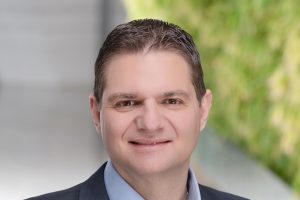
Michael Petroutsas, President and Head of Astellas Pharma US, reflects on the company’s ongoing transformation and the market’s growing strategic importance within Astellas’ global organisation. He goes on to highlight Astellas’ focused therapeutic portfolio in oncology and specialty medicine, investments in advanced modalities like gene and cell therapy, and commitment to improving patient access and outcomes across the healthcare system. Finally, Petroutsas shares how he embraces the company’s agile “One Astellas” culture locally.
Can you start by giving a brief introduction to your professional background and the journey that led you to joining Astellas?
I am a pharmacist by training and originally from Greece. I came to the US in the late 1980s to study pharmacy, as I have always had a deep curiosity for science and a desire to live a life of service. In Greece, pharmacists are often the first point of contact within the healthcare system, and the importance of helping others inspired my decision to build a career where science and service come together to make a real difference.
The US has always been a global leader in innovation, so it felt natural to begin my professional journey here. After completing my studies, I started my career with Pfizer, where I had the privilege of learning from exceptional mentors who guided my development. Eventually, my path led me towards oncology, first at Novartis, then leading the specialty and oncology business at GSK, and ultimately to Astellas.
Joining Astellas felt like a natural next step. In life sciences, you are only as good as your products and your people, and what stood out to me immediately was the company’s clarity of purpose. We are an organisation that is highly defined by our therapeutic “Focus Area Approach”. Astellas is also supported by an incredible group of talented, service-minded individuals who combine scientific excellence with humility and transparency. For me, that combination of a strong portfolio and an authentic, purpose-driven culture was the most compelling.
It’s also a very exciting time to be part of Astellas. The organisation is undergoing a significant transformation, with the US business taking on a larger and more strategic role within the group. I have always enjoyed tackling complex challenges, and contributing to this period of growth and change has been incredibly rewarding.
Astellas balances its activities across several core disease areas. Which therapeutic areas are currently the main commercial focus in the US?
One of the things I truly appreciate about working at Astellas is that we have a clear sense of who we are and who we want to be. We are a mid-sized pharmaceutical company, and rather than trying to do everything, we focus on the areas where we can make the greatest difference for patients.
In the US today, we have six priority brands led by Xtandi in prostate cancer and five strategic launch brands that represent our next wave of innovation. Within oncology, this includes Vyloy and Xospata which are already recognised as market leaders. Both products are precision medicines targeting specific genetic markers: CLDN18.2 for gastric cancers and FLT3 for acute myeloid leukemia (AML) respectively. We also have Padcev, developed in collaboration with Seagen (now Pfizer) and Merck, which has brought innovation to patients with urothelial and bladder cancers through advances in antibody-drug conjugate (ADC) technology. Together, these products form the foundation of our oncology portfolio, which continues to grow rapidly and deliver significant value to patients.
Beyond oncology, our strategic portfolio extends into women’s health with Veozah, a first-in-class non-hormonal therapy for hot flushes associated with menopause. The feedback we have received from women whose lives have been improved by this treatment has been incredibly positive. In ophthalmology, we are advancing care in retinal disease with Izervay, a treatment for geographic atrophy (GA), which is an advanced form of dry age-related macular degeneration. This is an area that has seen very little innovation in recent years, and Izervay is now leading in new prescriptions for GA because most existing treatments focus on wet AMD. We are also present in infectious diseases with Cresemba.
Looking ahead, our focus is on precision medicines and innovation. In oncology, we continue to invest heavily in immuno-oncology and in the field of protein degradation, which holds great potential in addressing “undruggable” tumours which represent roughly 90 percent of cancers. We are also deepening our commitment in ophthalmology, where our work in geographic atrophy is expanding into areas such as blindness and retinal regeneration. At the same time, we continue investing in cell and gene therapy (CGT) even as some companies re-evaluate their strategies. We firmly believe in the long-term potential of genetic regulation to transform outcomes for patients with ultra-rare diseases.
I am very proud of the balance between our current portfolio and our future pipeline. It’s an exciting time, and I am excited to be a part of Astellas journey in launching innovative products that make a real impact for patients worldwide.
In August, Astellas announced strong results for the use of its ADC Padcev in combination with Merck’s Keytruda for bladder cancer. How do you expect this new treatment to impact patient outcomes and strengthen Astellas’ position within the oncology space?
If you look across our portfolio, most of our products are either first-in-class or have become the standard of care in their respective areas. Veozah is a first-in-class and non-hormonal treatment for hot flushes in women; Izervay is the market leader in new prescriptions for geographic atrophy; Xtandi leads advanced prostate cancer; and Vyloy and Xospata are leaders within precision medicine respectively.
It’s inspiring to have a portfolio that delivers this much value to patients, and Padcev is another example of that. The recent data announced in collaboration with Merck is a major step forward in the treatment of bladder cancer, and we look forward to sharing additional data at upcoming meetings. These results reinforce our commitment to advancing care across both first- and second-line settings, and we believe this combination could set a new standard of care in minimally invasive bladder cancer as well. Following the presentation of this data, the U.S. Food and Drug Administration accepted for priority review a supplemental biologics license application for Padcev in combination with Keytruda for the treatment of certain patients with muscle-invasive bladder cancer, bringing us one step closer to impacting more patients facing this devastating disease.
ADCs have been in development for many years in the US, but this particular combination shows the full potential of what the technology can do when paired with immunotherapy. We believe it will not only set a new benchmark for scientific innovation but also serve as a model for future collaborations in the oncology space.
How do you assess the ability of the current healthcare system in the US to adopt innovative modalities like ADC and cell and gene therapies at a large scale? In your view, where are the areas that still require improvement to ensure broader access and integration of advanced treatments?
I wouldn’t say that the US healthcare system is fully ready to adopt the next wave of innovation because the future is always unpredictable. However, the important question is whether the system has the capacity to adapt and evolve.
At Astellas, our focus is on translating scientific innovation into real value for patients by improving outcomes. The healthcare system will only be able to sustain innovation if new treatments effectively help people live longer, stay out of hospitals, and have a better quality of life. If innovation only adds cost without tangibly improving outcomes, it will become unsustainable. We can’t continue to increase the burden on Medicare, private insurance, and patients without corresponding health improvements.
The second area that needs improvement is the regulatory process. Even under normal circumstances the current system can be slow and resource constrained. For the US to keep pace with the advances in fields like cell and gene therapy, regulatory processes need to become more agile and efficient. Faster, more adaptive review frameworks will be essential for both advanced modalities and for traditional small and large molecules. It will be interesting to see how technology like AI might help this transformation by streamlining data analysis and enabling parallel review processes between regulators and manufacturers.
Finally, we must strengthen the supply chain and distribution infrastructure to ensure that innovation reaches patients quickly and reliably. The current way of working relies on specialty distributors, wholesalers, and local providers. We need to think differently about how we move a product from manufacturing to the patient, focusing on speed, scalability, and efficiency. In many ways we need to learn from companies like Amazon that have incredible supply chain capabilities.
Xtandi has been listed among the selected drugs for Medicare pricing negotiations under the Inflation Reduction Act. What are the potential implications of these negotiations for Astellas, and how do you plan to engage with payers to strike the right balance between affordability and the sustainable valuation of innovation?
I don’t believe that direct government involvement in price controls for medicines is a healthy approach for the US. The current system based on IP protections is designed to encourage innovation while eventually allowing widespread access to affordable medicines. Companies usually have eight to ten years of patent protection before generic competition enters the market, and about 91 percent of all prescriptions dispensed in the US today are generic. This means that most Americans already have access to affordable medicines.
For branded products, pharmaceutical innovators negotiate with both government and private payers to ensure access at reasonable cost levels, while also reinvesting revenues into R&D. This cycle of innovation and reinvestment is what sustains medical progress. While we believe the current system largely works, the introduction of government-driven price controls under the Inflation Reduction Act (IRA) creates some uncertainty about maintaining that balance.
That said, we actively engaged in the IRA negotiation process for Xtandi, which was selected in the second round of the IRA Medicare Drug Price Negotiation Program. I can say that the discussions with the U.S. Centers for Medicare and Medicaid Services (CMS) were constructive.
In Xtandi’s case, our loss of exclusivity is expected in September 2027, while the IRA-negotiated price would take effect in January 2027. Given this timeline, the financial impact on Astellas is likely to be limited in the short term. However, my concern is whether negotiated prices translate into real patient benefit without unintended consequences.
It’s well known that we have been lobbying against the 340B Drug Pricing Program and pharmacy benefit managers (PBMs) alongside PhRMA and our industry peers. Our concern is that after negotiations, Xtandi could be disadvantaged in the Medicare formulary should PBMs change their rebating practices. This would put patients in an unfair position when it comes to access.
With this new program, we hope that all parties act responsibly and that patients ultimately benefit from these negotiations. However, we are concerned about the possibility of a medicine with a lower negotiated price becoming disadvantaged compared to a higher-priced competitor because of higher rebate incentives. Patients should not lose access to effective, lower-cost medicines because of misaligned rebate practices. This flaw in the system is exactly why PBM reform is so important.
Astellas established its gene therapy manufacturing facility in North Carolina in 2022. Could you elaborate on the strategic rationale behind this investment and how you see the facility contributing to Astellas’ ability to deliver gene therapies efficiently and strengthen supply chain resilience?
One of the things I really value about working at Astellas is our commitment to driving growth through innovation hubs at the country level. We believe that proximity between manufacturing and the markets we serve is essential. In fact, most of the medicines distributed in the US are also manufactured here. As Astellas continues to invest in advanced modalities such as CGT, sites like the one in North Carolina will ensure that we can both develop and manufacture these products close to patients.
This approach is not unique to the US either. It reflects Astellas’ broader strategy to build integrated operations in key regions. This investment strengthens our ability to deliver innovative therapies efficiently while reinforcing supply chain resilience.
Another benefit of the investment is the incredible scientific and technical talent available in the US. The country is at the forefront of developing next-generation technologies, especially in CGT. By establishing a presence in North Carolina, we are able to attract highly skilled professionals. So, in many ways, this investment is both a talent and an access strategy which allows us to be well positioned to deliver innovative therapies to patients.
The US is also home to the Astellas Life Sciences Centre and the Saku Laboratory. How do these sites reflect the strategic importance of the country for Astellas?
It’s fantastic to see how well established Astellas is across the US. I often find myself reminding people of just how deeply entrenched our presence is not only in R&D , but also in our commercial infrastructure and overall innovation ecosystem.
We have our Innovation Centre in Cambridge, Massachusetts and a West Coast Innovation Centre in South San Francisco, California. Aside from the facility I just spoke about in North Carolina, we also have a cell therapy site in Massachusetts, plus our US corporate headquarters in Northbrook, Illinois. Together, these locations create a diverse network that supports operations across key research, development, and commercial areas.
Another aspect of this holistic footprint is the opportunity it provides for knowledge building within Astellas. We frequently bring colleagues from Japan and other parts of the world to the US to participate in product launches, gain first-hand experience, and learn from the market environment. By taking those insights back to their home countries, they strengthen Astellas globally.
Ultimately, the US is an important to Astellas not only as a commercial market, but as a vital hub of innovation, learning, and global collaboration. Whether there are shifts in government policy or market access conditions, having a strong and integrated presence across the country means we can stay closely connected with our leaders in Tokyo and maintain alignment across the organization.
From a talent perspective, how does Astellas help to shape its team to best deliver on impact?
We have been able to recruit tremendously well across the country. Whether someone wants to work on the West Coast, the East Coast, or anywhere in between, Astellas offers flexibility and opportunity across a range of functions. We also operate a strong virtual framework that allows our teams to collaborate seamlessly across geographies, which is critical for both innovation and efficiency.
The breadth of our portfolio also creates exciting opportunities for professional growth. Employees can build their careers across multiple therapeutic areas, often moving from one field to another as their interests and expertise evolve. This diversity of opportunity, combined with our strong collaborative culture, makes the US organisation a powerful contributor to Astellas’ global success. It’s a place where innovation, partnership, and talent development come together to advance our mission of improving patient lives worldwide.
When CEO Naoki Okamura assumed the role in 2023, he emphasized building cross-functional teams to create a “One Astellas” approach. How do you translate this philosophy into your team’s daily activities?
It has been an ongoing journey over the past 18 months as we work to embed a more agile mindset across Astellas. The idea behind the “One Astellas” approach is to move away from operating in isolated functions and instead form small, cross-functional teams that can address complex challenges collaboratively. For example, the development process is no longer about completing research and then handing it off to the next department. Instead, teams from across development, clinical, or commercial areas come together to understand challenges, align on priorities, and collectively design the best path forward.
An important part of this shift has been creating a culture where we can learn from failure. Not every project will succeed, but the key is to set clear objectives, measure progress, and openly share what we learn. Celebrating lessons from both successes and setbacks is essential to building trust and agility within Astellas.
We recognise that Astellas is not the first company to adopt an agile working model, and we have looked outside our own industry for inspiration. Agile is not one-size-fits-all. It must be tailored to where it will be most effective. Therefore, we have also brought in external partners and coaches to help guide this transformation. They help teams understand best practices and build confidence in using these new of working.
It’s been an exciting journey, and it’s rewarding to see how the agile mindset is accelerating collaboration, empowering teams, and becoming a living part of how we operate every day across Astellas.
Looking ahead, what developments are you most excited about as Astellas enters its next stage of growth?
This is truly the most exciting time to be part of Astellas. As an organisation, we are experiencing the strongest growth in our 20-year history, with over 12 percent in the past year alone. Growth on this scale is not only rewarding, but it also allows us to reinvest more into science, helping us reach and support even more patients.
Looking ahead, I am particularly excited about our new Corporate Strategic Plan (CSP), which bridges our current achievements with our future ambitions. In the near term, we will continue expanding access to key products such as Veozah, bringing this important therapy to more women, and Izervay, reaching more people living with geographic atrophy. The same goes for our precision medicine portfolio, including Vyloy, Xospata, and Padcev. The next step is ensuring that more patients can access these innovative treatments.
Another exciting development within the new CSP is the organisational transformation led by our CEO, Naoki Okamura, which is reshaping Astellas around the patient axis. As we break down silos and bring R&D together with commercial, medical, and market access teams, cross-functional teams can better co-create value throughout the lifecycle of a medicine. This approach ensures that commercial and access insights are integrated from the very beginning, even for products that might not reach the market for another decade. With evolving factors like the IRA and broader healthcare system changes, it’s essential to think about these dynamics early in the development process.
On the value delivery side, our vision is to improve how we engage with customers across the healthcare ecosystem. Historically, interactions could be fragmented between our commercial, medical affairs, and market access teams. Now, we are uniting these functions to deliver a seamless customer experience. This way, when a healthcare professional or partner interacts with Astellas, it feels like one integrated team providing clear, coordinated support.
All in all, my hope for the coming years is to continue delivering on the scientific excellence, strengthen collaboration across teams, and build an organisation recognised not only for best-in-class science but also for best-in-class customer engagement.
What is your final message on behalf of Astellas to the US and global life sciences community?
As I’ve said throughout this discussion, this is an incredibly exciting time for Astellas. As we move beyond our current CSP and look to the future, our focus remains on continuing to help patients today while building a strong foundation for the innovative therapies of tomorrow. At Astellas, our mission is simple yet powerful: to help millions of patients see better, feel better, and live longer. That is the purpose behind everything we do.
To talented professionals who want to make an impact, I invite you to come and join us on this journey. Astellas is an extraordinary place to be, with outstanding science, meaningful innovation, and above all, great people. That combination is exactly what brought me here, and it’s what makes this organisation so special.